Varicella negli adulti e adolescenti
Revisione paritaria di Dr Doug McKechnie, MRCGPUltimo aggiornamento di Dr Colin Tidy, MRCGPUltimo aggiornamento 15 Apr 2025
Rispetta le linee guida editoriali
- ScaricaScarica
- Condividi
- Language
- Discussione
- Versione audio
- Aggiungi alle fonti preferite su Google
In questa serie:Eruzioni viraliMorbilloVaricella nei bambiniScarlattinaMalattia mani-piedi-boccaEsclusione scolastica per infezioni
Chickenpox causes spots (a rash) and can make you feel unwell. Symptoms tend to be worse in adults than in children. Treatments can ease the symptoms until the illness goes. An antiviral medicine may limit the severity of the illness if the medicine is started within 24 hours of the rash first starting.
Full recovery is usual. Serious complications are rare, but are more common in adults than in children. They are more likely to occur in pregnant women and in people with a weakened immune system, such as those on chemotherapy. If you are pregnant and have not had chickenpox (or been immunised) and come into contact with a person with chickenpox - see your doctor urgently, as treatment may prevent chickenpox from developing.
A colpo d'occhio
La varicella è un'infezione causata dal virus varicella-zoster.
I sintomi negli adulti possono includere febbre alta, dolori, mal di testa e un'eruzione cutanea pruriginosa e maculata.
I trattamenti includono paracetamolo per febbre e dolore, e creme lenitive per il prurito.
I farmaci antivirali possono essere utilizzati se iniziati entro 24 ore dalla comparsa dell'eruzione cutanea.
Gli adulti hanno maggiori probabilità di avere complicazioni dalla varicella rispetto ai bambini.
Dovresti consultare un medico se sviluppi sintomi preoccupanti come problemi respiratori o dolore intenso.
Alcuni gruppi, comprese le donne in gravidanza e coloro con sistemi immunitari deboli, dovrebbero consultare un medico urgentemente se contraggono la varicella.
What is chickenpox?
What is chickenpox?
Chickenpox on an adult's back
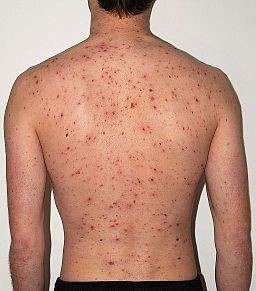
© F malan, CC BY-SA 3.0, via Wikimedia Commons
The chickenpox infection is caused by the varicella-zoster virus (VZV). The immune system makes proteins called anticorpi during the infection. These fight the virus and then provide lifelong protection against it (immunity). Therefore, it is uncommon to have more than one bout of chickenpox in a lifetime.
Most people have chickenpox as a child. Most children get chickenpox before the age of 10 years. About 9 in 10 people have had it by the age of 15 years. It is uncommon for adults to have chickenpox.
What are the symptoms of chickenpox in adults?
Chickenpox symptoms are usually more severe in adults than in children. Expect to have a few uncomfortable days.
High temperature (fever), aches and headache
This will often start a day or so before a rash starts.
Spots (a rash)
Spots appear in crops. The spots develop into small blisters and are itchy. They can be anywhere on the body and sometimes also in the mouth. Several crops may develop over several days. Some people are covered in spots; others have only a few.
Loss of appetite and tiredness
Sensazione di malessere is common as well. The fever and generally feeling unwell can last several days. The blisters gradually dry up and scab. They slowly fade over a week or so, but may take 2-3 weeks to go completely.
How to treat chickenpox in adults
Treatments to help adult chickenpox symptoms
Adult chickenpox treatments that may ease symptoms whilst your immune system deals with the virus include the following:
Having plenty to drink to avoid a lack of fluid in the body (dehydration).
Assumere paracetamolo to ease high temperature (fever), headaches, and aches and pains. Ibuprofene and other farmaci antinfiammatori non steroidei should be avoided unless advised by a doctor.
Soothing creams (emollients) put on the spots (rash) may ease itching. Calamine lotion is the most used, although it is not known how effective it is.
Compresse di antistaminico taken at bedtime may help you to sleep if itch is a problem at night. You can buy these at pharmacies, or get them on prescription.
Antiviral medication for adult chickenpox
Antiviral pills such as aciclovir can limit the severity of chickenpox. These pills do not kill the virus, but stop the virus from multiplying. Adults or teenagers over the age of 14 with chickenpox may be advised to take an antiviral medicine - but only if it can be started within 24 hours of the rash first developing. If it is started after this time it is not likely to have much of an effect. So, if started on time, an antiviral medicine may help to reduce the severity of the illness.
Antiviral medication is especially useful in situations where chickenpox in adults can be more serious. For example, for people who have a poor immune system, for newborn babies and for pregnant women. (Nota: antiviral medication is not normally advised for healthy children who develop chickenpox.)
Is chickenpox dangerous in adults?
Adults are more likely than children to have complications from chickenpox.
The spots do not usually scar unless they are badly scratched.
In some cases of chickenpox, some spots become infected with germs (bacteria). If this occurs, the surrounding skin becomes red and sore. Antibiotic medication may then be needed.
Inflammation of the lung (pneumonia) is a complication affecting about 1 in 10 adults with chickenpox. People who smoke are more likely to get this.
Inflammation of the brain (encephalitis) and ataxia (problems co-ordinating movements) are very rare complications.
Vary rarely, other serious complications develop. For example:
Inflammation of joints (arthritis).
Inflammation of various parts of the eye.
Therefore, although serious complications are rare, it is best to be watchful. Seek medical advice if you develop any worrying symptoms that you are unsure about, such as:
Problemi respiratori.
Debolezza.
Sonnolenza.
Convulsions.
Pains or headaches which become worse despite paracetamol or ibuprofen.
Being unable to take fluids, due to a severe rash in the mouth.
A very severe rash, or a rash which bruises or bleeds into the skin ('haemorrhagic rash').
Becoming generally more and more unwell.
In general, complications are uncommon. However, some people have a higher risk of developing complications from chickenpox in adults. Anyone in the following groups should see a doctor urgently if they have symptoms of adult chickenpox:
Donne incinte.
People with a poor immune system. For example, people with leucemia, con HIV/AIDS, taking terapia steroidea or having chemioterapia.
People with heart or lung disease.
People with severe skin conditions.
Very young babies - especially those less than 1 month old (neonates).
How do you get shingles?
Shingles is caused by the same virus that causes chickenpox and so is a delayed complication of chickenpox. Anyone who has had chickenpox in the past may develop shingles. Shingles is an infection of a nerve and the area of skin supplied by the nerve. It causes a rash and pain in a band-like local area along the affected nerve. About 1 in 5 people have shingles at some time in their lives. It can occur at any age, but it is most common in people over the age of 50.
The reason why shingles may occur is because the virus does not completely go after you have chickenpox. Some virus particles remain inactive in the nerve roots next to your spinal cord. They do no harm there, and cause no symptoms. For reasons that are not clear, the virus may begin to multiply again (reactivate). This is often years later. The reactivated virus travels along the nerve to the skin to cause shingles. See the separate leaflet called Shingles (Herpes zoster) for details.
Nota: you can catch chickenpox from being exposed to a person with shingles if you have not had chickenpox yourself. However, you cannot catch shingles from a person with chickenpox, or catch shingles from a person with shingles.
Adult chickenpox and pregnancy
If you are pregnant and have not had chickenpox (or been immunised) and come into contact with a person with chickenpox - see your doctor urgently. Chickenpox can be more serious if you develop chickenpox whilst pregnant. However, a treatment with a product called human varicella-zoster immunoglobulin (VZIG) may prevent chickenpox from developing. See the separate leaflet that deals with this in more detail, called Chickenpox contact in pregnancy.
Is chickenpox in adults contagious?
A person with chickenpox is very infectious. The virus spreads in the air from person to person. For example, if you have not already had chickenpox, you stand a good chance of catching it if:
You are in the same room as someone with chickenpox for more than 15 minutes; oppure
You have any face-to-face contact with someone with chickenpox, such as a conversation.
Nove persone su dieci che non hanno avuto la varicella la contrarrebbero dopo essere state esposte in questo modo.
It takes between 7 and 21 days (most commonly 10-14 days) to develop symptoms after catching the virus (the incubation period).
Protecting others from adult chickenpox
A person with adult chickenpox is infectious from two days before the rash and spots first appear until they have all crusted over (commonly about five days after the onset of the illness). You can usually return to work after this time if you feel well enough. (A child with chickenpox should stay off school for five days from the onset of the rash.) Whilst you are infectious, keep away from people who have an increased chance of having a severe illness if they get chickenpox. These people are listed above under 'Are there any complications?'.
Healthy people who have not had chickenpox as a child may also want to avoid catching it. So, friends and family who have not had chickenpox may wish avoid you whilst you are infectious. However, most adults and many children have already had chickenpox, and so are immune.
Nota: people with adult chickenpox should not travel by air until the spots have all crusted.
Treatment can also be provided to protect those at high risk of suffering from severe chickenpox and those who may pass on infection to those at high risk (for example, healthcare workers).
Aciclovir for recommended for those at high risk, except neonates, who may be given human varicella-zoster immunoglobulin (VZIG).
Are you a healthcare worker?
Healthcare workers come into contact with people with poor immune systems, pregnant women and newborn babies. They should be aware that if they catch chickenpox, they can be infectious for two days before a rash or illness appears, and be a risk to patients. So, if you are a healthcare worker and come into contact with someone who has chickenpox (or who develops it within the next two days), then:
If you have been immunised against chickenpox, or have definitely had chickenpox in the past, you are likely to be immune. You should continue working but contact your occupational health department if you feel unwell or develop a rash.
If you are uncertain about whether you have had chickenpox or been immunised, you should have a test to see if you are immune. If you are not immune you should:
Avoid contact with high-risk patients for 8-21 days after contact with chickenpox.
Report to occupational health before patient contact if you feel unwell or develop a high temperature (fever) or itchy rash.
Get immunised against the varicella-zoster virus (chickenpox virus).
Whether you have been exposed to chickenpox or not, if you are a healthcare worker and you have never had chickenpox you should have a test to see if you are immune. If you are not immune you may need to be immunised.
Is there a vaccine against chickenpox in adults?
Yes - there is an effective vaccine (sometimes known as the varicella vaccine) that protects against the virus that causes chickenpox. It has become part of the routine childhood immunisation programme in certain countries such as the United States, Canada and Australia.
Currently, there are no plans to make immunisation against chickenpox routine for children in the UK. In the UK, the vaccine is offered by the NHS to certain special groups. For example, to healthcare workers who are not immune to chickenpox. Also, to people who are not immune to chickenpox and who are in close contact with people with a poor immune system - for example, brothers and sisters of children who are on chemotherapy. The vaccine is widely available privately in the UK.
Scelte del paziente per Infezioni della pelle

Infezioni
Infezioni virali della pelle
Le infezioni virali della pelle sono un ampio gruppo di condizioni. Possono essere una reazione a un virus all'interno del tuo corpo, oppure possono essere un'infezione effettiva della tua pelle. Variano da completamente innocue a piuttosto serie (ma di solito non pericolose per la vita). Alcune sono contagiose; altre puoi toccarle senza contrarre nulla.
di Dr Toni Hazell, FRCGP

Infezioni
Scabbia
La scabbia è un'infestazione cutanea molto pruriginosa causata da un minuscolo acaro. Si diffonde attraverso il contatto stretto, come vivere con qualcuno o condividere un letto.
di Dr Toni Hazell, FRCGP
Domande frequenti
Gli adulti possono prendere la varicella anche se l'hanno avuta da bambini?
No, è raro prendere la varicella più di una volta. Una volta che hai avuto la varicella, il tuo sistema immunitario sviluppa anticorpi che forniscono una protezione a vita contro il virus.
Quanto dura tipicamente la varicella negli adulti?
Negli adulti, la febbre e il malessere generale possono durare diversi giorni. Le vesciche si asciugano gradualmente e formano croste in circa una settimana, ma possono impiegare 2-3 settimane per scomparire completamente.
Qual è il modo migliore per gestire il prurito intenso causato dalla varicella negli adulti?
Per alleviare il prurito intenso, puoi provare creme lenitive come la lozione alla calamina. Se il prurito interferisce con il tuo sonno, le compresse di antistaminico prese prima di coricarsi possono aiutare. Queste possono essere acquistate in farmacia o ottenute con prescrizione medica.
Ci sono attività specifiche o ambienti da evitare se ho la varicella da adulto?
Se hai la varicella da adulto, non dovresti viaggiare in aereo finché tutte le macchie non si sono incrostate. Dovresti anche stare lontano da persone che hanno un rischio maggiore di malattia grave se contraggono la varicella, come le donne incinte, coloro che hanno un sistema immunitario debole o i neonati molto piccoli.
Quando può un operatore sanitario tornare al lavoro dopo essere stato esposto alla varicella o aver sviluppato sintomi?
Se un operatore sanitario è stato esposto alla varicella ed è immune (sia attraverso la vaccinazione che per una precedente infezione), può continuare a lavorare ma dovrebbe contattare la salute occupazionale se si sente male o sviluppa un'eruzione cutanea. Se non è immune, dovrebbe evitare il contatto con pazienti ad alto rischio per 8-21 giorni dopo il contatto e segnalare alla salute occupazionale prima del contatto con i pazienti se si sente male o sviluppa febbre o un'eruzione cutanea pruriginosa.
Ulteriori letture e riferimenti
- Chickenpox: public health management and guidance; UK Health Security Agency. July 2014, last updated April 2022.
- Immunizzazione contro le malattie infettive - il Libro Verde (ultima edizione); Agenzia per la Sicurezza Sanitaria del Regno Unito.
- Linee guida sul controllo delle infezioni nelle scuole e in altri contesti di assistenza all'infanzia; Agenzia per la Sicurezza Sanitaria del Regno Unito (settembre 2017 - ultimo aggiornamento febbraio 2023)
- Varicella; NICE CKS, novembre 2023 (accesso solo nel Regno Unito)
Informazioni sull'autoreVisualizza il profilo completo

Dr Colin Tidy, MRCGP
Medico di base, Autore medico
MBBS, MRCGP, MRCP (Paediatrics), DCH
Il Dr Colin Tidy è un medico del NHS, con sede nell'Oxfordshire.
Informazioni sul recensoreVisualizza il profilo completo

Dr Doug McKechnie, MRCGP
Scrittore Medico
MA, MBBS, MSc, DRCOG, MRCP(UK), MRCGP(2021), FHEA
Il dottor Doug McKechnie è un medico di base del NHS che lavora a Londra. Lavora a tempo pieno in ambito clinico ed è anche Vice Responsabile del modulo di Pratica Clinica e Professionale presso la Scuola di Medicina dell'University College London.
Storia dell'articolo
Le informazioni su questa pagina sono scritte e revisionate da clinici qualificati.
Articolo disponibile anche in Inglese, Tedesco, Spagnolo, Francese, Italiano, Portoghese, Hindi, Ebraico, Arabo, and Svedese.
Prossima revisione prevista: 14 Apr 2028
15 Apr 2025 | Ultima versione

Chiedi, condividi, connettiti.
Esplora le discussioni, fai domande e condividi esperienze su centinaia di argomenti di salute.

Non ti senti bene?
Valuta i tuoi sintomi online gratuitamente
Iscriviti alla newsletter di Patient
La tua dose settimanale di consigli sulla salute chiari e affidabili - scritti per aiutarti a sentirti informato, sicuro e in controllo.
Abbonandoti accetti i nostri Informativa sulla Privacy. Puoi annullare l'iscrizione in qualsiasi momento. Non vendiamo mai i tuoi dati.
Più nelle infezioni
- Bronchite acuta
- Amebiasi
- Farmaci antifungini
- Infezione toracica
- COVID-19
- Intossicazione alimentare nei bambini
- Vaccino HPV
- Immunizzazione
- Vaccinazione contro l'influenza
- Puntura lombare
- Vaccino meningococcico per la meningite
- Infezione toracica post-operatoria
- Neuropatia post-erpetica
- Febbre reumatica
- Shigella
- Vaccino contro il tifo
- Neurite vestibolare e labirintite
- vaccino contro la febbre gialla