Pityriasis versicolor
Tinea versicolor
Peer reviewed by Dr Philippa Vincent, MRCGPLast updated by Dr Toni Hazell, FRCGPLast updated 10 Dec 2024
Meets Patient’s editorial guidelines
- DownloadDownload
- Share
- Language
- Discussion
- Audio Version
- Add to preferred sources on Google
Pityriasis versicolor is a fungal infection of the skin caused by a yeast-like germ that causes a rash to form It is not harmful or passed on through touching (contagious). Treatment can clear the rash. Some people who are prone to this condition need regular treatment to prevent the rash from coming back (recurring).
At a glance
Pityriasis versicolor is a common fungal skin condition, also known as tinea versicolor.
It causes pale or darker patches on the skin, often on the back, chest, or neck.
These patches may become scaly and are more noticeable on tanned skin.
The condition is not serious or contagious.
Treatments include special shampoos or antifungal creams.
It may take weeks or months for skin colour to return to normal after treatment.
The rash can recur, and preventative treatments are available.
What is pityriasis versicolor?
Small numbers of the malassezia germs that causes pityriasis versicolor commonly live on the skin and do no harm. However, some people are prone to this germ multiplying and spreading on their skin more than usual, which then leads to a rash developing. Often the germ multiplies and causes the rash for no apparent reason. In some cases, hot, sunny or humid weather seems to trigger the germ to multiply on the skin. In people who sweat more it may be more likely to occur.
Pityriasis versicolor is a common fungal condition. It is more common in young adults - people in their teens and 20s. It is sometimes called tinea versicolor.
Pityriasis versicolor symptoms
The rash
Pityriasis versicolor close-up
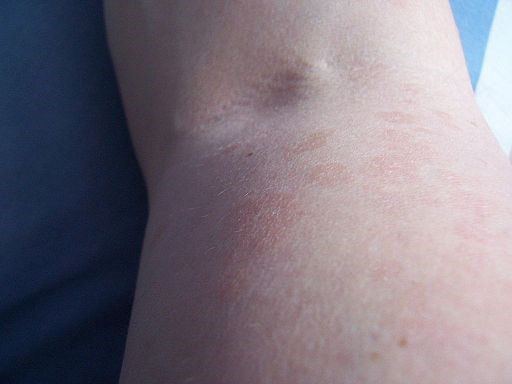
© Richardkiwi at nl.wikipedia (Own work), Public domain, via Wikimedia Commons
This usually starts as small pale patches. Sometimes the rash is darker than the skin in fair-skinned people, and in this case it looks like brown marks. In those with darker skin, it will be lighter than the usual colour of the skin. At first these usually appear on your back, chest, neck or upper arms.
The rash sometimes spreads to your tummy (abdomen) and thighs. Occasionally it may affect your face. More patches may appear and patches next to each other may join together. The affected skin may become slightly scaly.
Pityriasis versicolor on the forehead
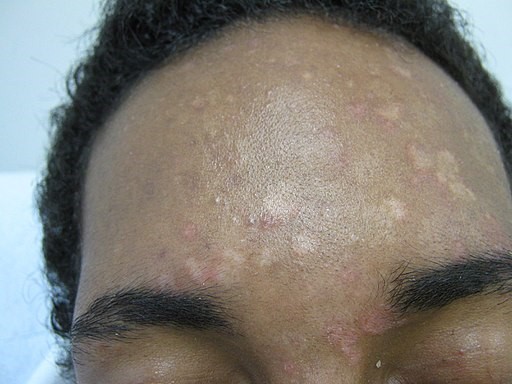
© Grook Da Oger (Own work) CC BY-SA 3.0, via Wikimedia Commons
The rash is usually pale and is barely noticeable if you are fair-skinned. You may not notice it until after you sunbathe. Affected areas do not tan and therefore the rash becomes more obvious on tanned skin. The pale patches are more obvious if you have dark skin.
There are usually no other symptoms. Sometimes it is slightly itchy.
Is pityriasis versicolor serious?
No. If you wanted an even suntan then this rash is a nuisance, as pale patches on tanned skin may look unsightly. It does not lead to any other skin conditions, or cause damage to the surrounding skin.
Is pityriasis versicolor contagious?
No - it is not possible to catch this condition from another person. The type of yeast that causes the rash is commonly found on the skin and usually does no harm. For reasons that are not clear, it seems that the germ grows out of control more easily with certain people, and causes a rash.
Pityriasis versicolor treatment
The type of treatment varies between cases and may depend on the location of the rash and also if you have had this condition before. It may take weeks or months for the rash to fully go after you treat it. The following are treatment options:
Ketoconazole shampoo (Nizoral®)
Ketoconazole shampoo (Nizoral®): is commonly advised. You can buy this at pharmacies and it is also available on prescription. Ketoconazole kills the germ that causes this rash. Apply the shampoo directly to affected areas and then wash off after three to five minutes. Repeat every day for five days.
Selenium sulfide shampoo
This is an alternative treatment. It is not strictly licensed for the treatment of this rash; however, it works. You can buy it from pharmacies or it is also available on prescription. Apply the shampoo to the affected areas and leave to dry for ten minutes and then rinse off. This should be repeated daily for a week. Diluting it (half water and half shampoo) may prevent it irritating your skin. This should not be used if you are pregnant. Selenium sulfide shampoo has been unavailable in the UK for some years.
Antifungal creams
These may be used if only a very small area of skin is affected. Clotrimazole (Canesten®) cream is one example. It should be applied twice a day for two or three weeks.
Antifungal tablets
Antifungal tablets may very occasionally be prescribed if the rash is over a large area of your skin, or is not cleared by the above treatments. The ones used are usually itraconazole or fluconazole.
Antifungal treatment may need to be repeated if this rash comes back (recurs) and becomes scaly again.
If you are prone to develop recurrent episodes in the sun then it may be advisable to use ketoconazole shampoo once a day for three days prior to going on holiday to the sun. This will help to prevent recurrence when you are away.
Note: after treatment, skin colour usually takes 2-3 months to return to normal. It sometimes takes even longer. As long as the rash is not scaly, this does not mean the treatment has not worked.
How to prevent pityriasis versicolor
Some people seem prone to this yeast-like germ multiplying on their skin and the rash may come back (recur) after treatment. One option is to apply one of the above shampoos to your skin every 2-4 weeks. This may keep the germ away, or prevent the numbers building up, which will prevent the rash from recurring. Alternatively, if you have frequent recurrences then you may be advised to take antifungal tablets for one day each month as a preventative measure.
Patient picks for Skin infections

Infections
Chickenpox in adults and teenagers
Chickenpox causes spots (a rash) and can make you feel unwell. Symptoms tend to be worse in adults than in children. Treatments can ease the symptoms until the illness goes. An antiviral medicine may limit the severity of the illness if the medicine is started within 24 hours of the rash first starting. Full recovery is usual. Serious complications are rare, but are more common in adults than in children. They are more likely to occur in pregnant women and in people with a weakened immune system, such as those on chemotherapy. If you are pregnant and have not had chickenpox (or been immunised) and come into contact with a person with chickenpox - see your doctor urgently, as treatment may prevent chickenpox from developing.
by Dr Colin Tidy, MRCGP

Infections
Eczema herpeticum
Eczema herpeticum is a rare and serious skin infection caused by one of the herpes viruses. It causes a blistery, painful skin rash. It most often affects children who have eczema. It is often confused with other skin infections. It should be treated as soon as possible to avoid complications. It can become very serious if not treated quickly enough. Treatment with an antiviral medicine usually works very well.
by Dr Philippa Vincent, MRCGP
Frequently asked questions
Can pityriasis versicolor go away on its own?
The article suggests that treatment is typically needed to clear the rash. While it doesn't explicitly state whether it can disappear spontaneously, the focus on various treatment options and recurrence prevention implies it generally requires intervention. The return of skin colour to normal after treatment can take 2-3 months, sometimes longer.
Does pityriasis versicolor cause any damage to the skin?
No, pityriasis versicolor does not lead to any other skin conditions or cause damage to the surrounding skin. It is considered a nuisance, particularly due to the appearance of pale patches on tanned skin, but it is not serious.
How long does it take for skin colour to return to normal after pityriasis versicolor treatment?
After successful treatment, it usually takes 2-3 months for the skin colour to return to normal. In some cases, it can take even longer. If the rash is no longer scaly, it indicates that the treatment has worked, even if the colour hasn't fully normalised yet.
Is it possible for pityriasis versicolor to come back after treatment?
Yes, pityriasis versicolor can reoccur after treatment. Some individuals are prone to the germ multiplying again on their skin. The article suggests preventative measures like applying shampoo every 2-4 weeks or, for frequent recurrences, taking antifungal tablets once a month.
What can I do to prevent pityriasis versicolor from coming back?
To prevent pityriasis versicolor from recurring, you can apply one of the prescribed shampoos to your skin every 2-4 weeks. This helps to keep the germ from multiplying. If you experience frequent recurrences, your doctor might recommend taking antifungal tablets once a month as a preventative measure. For those who get it when holidaying in the sun, it's advised to use ketoconazole shampoo once a day for three days before going away.
Further reading and references
- Pityriasis Versicolor; DermIS (Dermatology Information System)
- Pityriasis versicolor; DermNet NZ
- Pityriasis versicolor; NICE CKS, October 2023 (UK access only)
- Gupta AK, Foley KA; Antifungal Treatment for Pityriasis Versicolor. J Fungi (Basel). 2015 Mar 12;1(1):13-29. doi: 10.3390/jof1010013.
About the authorView full bio

Dr Toni Hazell, FRCGP
MBBS, BSc, FRCGP, DFSRH, Dip GU med, DRCOG, DCH (London, UK, 2000)
Dr. Toni Hazell qualified from St. Mary’s Hospital Medical School and did her VTS at Northwick Park Hospital.
About the reviewerView full bio

Dr Philippa Vincent, MRCGP
General Practitioner, Medical Author
MB BS, Bsc, MRCGP (2000), DCH, DFSRH, DRCOG
Dr Philippa Vincent is an NHS GP working in North London.
Article history
Article also available in English, German, Spanish, French, Italian, Portuguese, Hindi, Hebrew, Arabic, and Swedish.
Next review due: 9 Dec 2024
10 Dec 2024 | Latest version
Join the conversation
Share your thoughts or experiences with others in our patient communities.

Ask, share, connect.
Browse discussions, ask questions, and share experiences across hundreds of health topics.

Feeling unwell?
Assess your symptoms online for free
Sign up to the Patient newsletter
Your weekly dose of clear, trustworthy health advice - written to help you feel informed, confident and in control.
By subscribing you accept our Privacy Policy. You can unsubscribe at any time. We never sell your data.
More in infections
- 6-in-1 vaccine
- Aspiration pneumonia
- Bedbugs
- Bornholm disease
- Campylobacter
- Cellulitis
- Febrile seizure
- Fungal lung infections
- Fungal nail infection
- Head lice and nits
- Hepatitis
- Hepatitis A
- Kidney infection
- Lumbar puncture
- Malaria prevention
- Osteomyelitis
- Outer ear infection (otitis externa)
- Rheumatic fever
- Septic arthritis
- Urine infection in men