Indigestion
Dyspepsia
Peer reviewed by Dr Rachel Hudson, MRCGPLast updated by Dr Philippa Vincent, MRCGPLast updated 21 Aug 2023
Meets Patient’s editorial guidelines
- DownloadDownload
- Share
- Language
- Discussion
- Audio Version
- Add to preferred sources on Google
In this series:GastritisFunctional dyspepsiaStomach ulcerDuodenal ulcerHelicobacter pyloriGastroscopy
Dyspepsia (indigestion) is a term which describes pain and sometimes other symptoms which come from the upper gut (the stomach, oesophagus or duodenum). There are various causes (described below). Treatment depends on the likely cause.
At a glance
Indigestion, also known as dyspepsia, is discomfort or pain in the upper abdomen.
Common symptoms include bloating, belching, nausea, and feeling full quickly.
It can be caused by various factors, including certain medicines and H. pylori infection.
Lifestyle changes like eating regular meals and not smoking may help.
Antacids can provide quick relief for mild or infrequent indigestion.
You should seek medical advice if you have persistent or unexplained indigestion, especially if over 55.
Further tests may be needed if you have symptoms like unexplained weight loss or difficulty swallowing.
What is indigestion?
Indigestion (dyspepsia) is a term which includes symptoms that come from a problem in the upper gut. The gut (gastrointestinal tract) is the tube that starts at the mouth and ends at the anus. The upper gut includes the oesophagus, stomach and duodenum.
Indigestion symptoms
The main symptom of indigestion is usually stomach pain or discomfort in the upper abdomen. Other symptoms include:
Bloating.
Belching.
Quickly feeling full after eating.
Feeling sick (nausea).
Being sick (vomiting).
Symptoms are often related to eating. Heartburn (a burning sensation felt in the lower chest area) and bitter-tasting liquid coming up into the back of the throat (sometimes called 'waterbrash') used to be considered as symptoms of dyspepsia. However, these are now considered to be features of a condition called gastro-oesophageal reflux disease (GORD) - see below.
Symptoms tend to occur in bouts which come and go rather than being present all the time. Most people have a bout of dyspepsia, often called indigestion, from time to time - for example, after a large spicy meal. In most cases it soon goes away and is of little concern. However, some people have frequent bouts of dyspepsia which can affect their quality of life.
What causes indigestion?
Common causes
Most cases of repeated (recurring) dyspepsia are due to one of the following:
Non-ulcer dyspepsia. This is sometimes called functional dyspepsia. It means that no cause can be found for the symptoms. It often overlaps with symptoms of irritable bowel syndrome. See the separate leaflet called Non-ulcer Dyspepsia (Functional Dyspepsia) for more detail.
Duodenal and stomach (gastric) ulcers. An ulcer occurs when the lining of the gut is damaged and the underlying tissue is exposed. See the separate leaflets called Duodenal Ulcer and Stomach Ulcer (Gastric Ulcer) for more detail.
Duodenitis and gastritis (inflammation of the duodenum and/or stomach) - which may be mild or more severe and may lead to an ulcer. See the separate leaflet called Gastritis.
Acid reflux, oesophagitis and GORD. Acid reflux occurs when some acid leaks up (refluxes) into the oesophagus from the stomach. See the separate leaflets called Acid Reflux and Oesophagitis and Eosinophilic Oesophagitis for more detail.
Hiatus hernia. This occurs when the top part of the stomach pushes up into the lower chest through a defect in the diaphragm. See the separate leaflet called Hiatus Hernia for more detail.
Infection with H. pylori - see below.
Medication. Some medicines may cause dyspepsia as a side-effect:
Anti-inflammatory medicines are the most common culprits. These are medicines that many people take for arthritis, muscular pains, sprains, period pains, etc. For example: aspirin, ibuprofen, and diclofenac - but there are others. Anti-inflammatory medicines sometimes affect the stomach lining and allow acid to cause inflammation and ulcers.
Various other medicines sometimes cause dyspepsia, or make dyspepsia worse. They include: digoxin, antibiotics, steroids, iron, calcium antagonists, nitrates and bisphosphonates.
(Note: this is not a full list. Check with the leaflet that comes with any medication for a list of possible side-effects.)
H. pylori and dyspepsia
A bacteria called H. pylori can infect the lining of the stomach and duodenum. It is one of the most common infections in the UK. More than 1 in 4 people in the UK become infected with H. pylori at some stage in their lives. Once infected, unless treated, the infection usually stays permanently.
Most people with H. pylori have no symptoms and do not know that they are infected. However, H. pylori is the most common cause of duodenal and stomach ulcers. See the separate leaflet called Helicobacter Pylori for more detail.
Other uncommon causes of dyspepsia
Other problems of the upper gut, such as stomach cancer and oesophageal cancer, can cause dyspepsia when they first develop.
There are separate leaflets which describe the above conditions in more detail. The rest of this leaflet gives an overview of how dyspepsia is usually managed.
Diagnosing indigestion
A clinician is likely to do an initial assessment by asking about symptoms and examining the abdomen. The examination is usually normal with any of the common causes of dyspepsia. It is important to review any medicines being taken in case one may be causing the symptoms or making them worse.
How to get rid of indigestion
Following the initial assessment, depending on the severity and frequency of symptoms, one or more of the following plans of action may be suggested.
Lifestyle changes
For all types of dyspepsia, the National Institute for Health and Care Excellence (NICE) recommends the following lifestyle changes:
Make sure to eat regular meals.
Stop smoking.
For dyspepsia which is likely to be due to acid reflux, when heartburn is a major symptom, the following may also be worth considering:
Posture. Lying down or bending forwards a lot during the day encourages reflux. Sitting hunched or wearing tight belts may put extra pressure on the stomach, which may make any reflux worse.
Bedtime. If symptoms return most nights, the following may help:
Going to bed with an empty, dry stomach - not eating in the last three hours before bedtime and not drinking in the last two hours before bedtime.
Raising the head of the bed by 10-20 cm (for example, with books or bricks under the mattress or the legs of the bed if this can be done safely). This helps gravity to keep acid from refluxing into the oesophagus.
Antacids taken as required
Antacids are alkali liquids or tablets that can neutralise the stomach acid. A dose may give quick relief. There are many brands which can be bought and some are available on prescription. People with mild or infrequent bouts of dyspepsia may find that antacids used when needed are sufficient to manage their symptoms.
A change or alteration in your current medication
This may be possible if a medicine is thought to be causing the symptoms or making them worse.
Test for Helicobacter pylori (H. pylori) infection and treat if it is present
A test to detect H. pylori is commonly done if you have frequent bouts of dyspepsia. As mentioned, it is the underlying cause of most duodenal and stomach ulcers and many cases of gastritis, duodenitis and non-ulcer dyspepsia. This test is via a stool sample. For more information about the diagnosis and treatment of H. pylori, see the separate leaflet called Helicobacter Pylori.
Acid-suppressing medication
A one-month trial of full-dose medication which reduces stomach acid may be considered - in particular, if:
Symptoms are more suggestive of acid reflux or oesophagitis. H. pylori does not cause these problems.
Infection with H. pylori has been ruled out.
H. pylori has been treated but symptoms persist.
See the separate leaflet called Indigestion Medication for more information.
Further tests
Further tests are not needed in most cases. One or more of the above options will usually manage the problem. Reasons why further tests may be advised include:
If additional symptoms suggest that the dyspepsia may be caused by a serious disorder such as stomach or oesophageal cancer or a complication from an ulcer such as bleeding; for example if:
Passing blood with stools (blood can cause black tarry stools).
Bringing up (vomit) blood.
Losing weight unintentionally.
Feeling generally unwell.
Vomiting persistently.
Developing anaemia.
Having an abnormality on examination, such as a lump in the abdomen.
If aged over 55 and develop persistent or unexplained dyspepsia.
If the symptoms are not typical and may be coming from outside the gut, for example, to rule out problems of the gallbladder, pancreas, liver, etc.
If the symptoms are severe and do not respond to treatment.
If there is a risk factor for stomach or oesophageal cancer, such as Barrett's oesophagus, dysplasia, or atrophic gastritis, or had ulcer surgery over 20 years earlier.
Tests advised may include:
Gastroscopy (endoscopy). In this test a clinician looks inside the oesophagus, stomach and duodenum. They do this by passing a thin, flexible telescope down the oesophagus. See the separate leaflet called Gastroscopy (Endoscopy) for more detail.
A blood test to check for anaemia. Anaemia may be due to a bleeding ulcer or to a bleeding stomach cancer. The bleeding might not be noticed if it is not heavy, as the blood can be passed out unnoticed in the stools.
Tests of the gallbladder, pancreas, etc, if the cause of the symptoms is not clear.
Treatment depends on what is found or ruled out by the tests.
Preventing indigestion
The most important factors in preventing indigestion are:
Maintaining a healthy weight.
Not smoking - or stopping smoking.
Drinking alcohol within recommended limits.
Eating a balanced diet.
Eating small regular meals instead of large meals.
Avoiding eating too late at night before going to bed.
Avoiding foods that trigger the indigestion - in some people, they find that certain foods such as onions, garlic, tomatoes or spicy foods will trigger a bout of indigestion. Those people should avoid those triggers.
Understanding digestion
The upper gut
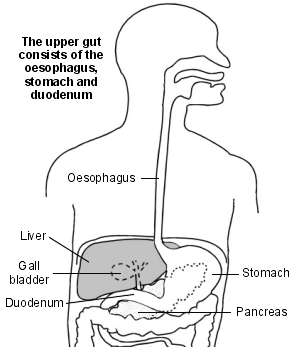
Food passes down the gullet (oesophagus) into the stomach. The stomach makes acid which is not essential but helps to digest food. Food then passes gradually into the first part of the small intestine (the duodenum).
In the duodenum and the rest of the small intestine, food mixes with chemicals called enzymes. The enzymes come from the pancreas and from cells lining the intestine. The enzymes break down (digest) the food. Digested food is then absorbed into the body from the small intestine.
Patient picks for Indigestion and heartburn

Digestive health
Functional dyspepsia
Functional dyspepsia (non-ulcer dyspepsia) causes pain and sometimes other symptoms in your upper tummy (abdomen). The cause is often not clear. Medication to reduce stomach acid helps in some cases. Infection with Helicobacter pylori (H. pylori) may cause a small number of cases. Clearing this infection, if present, helps in some people.
by Dr Rosalyn Adleman, MRCGP

Digestive health
Acid reflux and oesophagitis
When acid from the stomach leaks up into the oesophagus (tube carrying the food from the mouth to the stomach) the condition is known as acid reflux. This may cause heartburn and other symptoms. A medicine which reduces the amount of acid made in the stomach is a common treatment and usually works well. Some people take short courses of medication when symptoms flare up. Some people need long-term daily medication to keep symptoms away.
by Dr Doug McKechnie, MRCGP
Frequently asked questions
When should I be concerned about my indigestion symptoms?
You should seek further medical advice if you experience additional symptoms like passing blood in your stools (which can appear black and tarry), vomiting blood, unintentional weight loss, feeling generally unwell, difficulty swallowing, persistent vomiting, or developing anaemia. Also, if you are over 55 and develop persistent or unexplained indigestion, or if you have a family history of stomach or oesophageal cancer, further investigation may be advised.
Can certain medications make indigestion worse?
Yes, some medicines can cause or worsen indigestion as a side-effect. Anti-inflammatory medicines like aspirin, ibuprofen, and diclofenac are common culprits. Various other medicines, such as digoxin, antibiotics, steroids, iron, calcium antagonists, nitrates, and bisphosphonates, can also sometimes cause or exacerbate indigestion symptoms. Always check the leaflet that comes with your medication for a list of possible side-effects.
What is the difference between indigestion and acid reflux?
Indigestion is a broad term that includes symptoms like stomach pain or discomfort in the upper abdomen, bloating, belching, and feeling full quickly. Acid reflux occurs specifically when stomach acid leaks up into the oesophagus, and its main symptom is heartburn (a burning sensation in the lower chest), sometimes accompanied by bitter-tasting liquid coming into the throat ('waterbrash'). While heartburn and waterbrash were once considered indigestion symptoms, they are now primarily seen as features of gastro-oesophageal reflux disease (GORD).
What is H. pylori and how does it relate to indigestion?
H. pylori is a bacteria that can infect the lining of the stomach and duodenum. It's a very common infection, but most people who have it don't experience symptoms. However, H. pylori is the most common cause of duodenal and stomach ulcers, as well as many cases of gastritis, duodenitis, and non-ulcer dyspepsia, all of which can lead to indigestion symptoms.
Are there specific foods I should avoid to prevent indigestion?
While the article recommends avoiding foods that trigger your indigestion, it does specifically mention that some people find certain foods like onions, garlic, tomatoes, or spicy foods can set off a bout of indigestion. If you identify such triggers, it's advisable to avoid them.
How can posture affect my indigestion?
If your indigestion is linked to acid reflux, certain postures can make it worse. Lying down or bending forward frequently during the day can encourage reflux. Additionally, sitting hunched over or wearing tight belts can put extra pressure on your stomach, which may worsen reflux symptoms.
Further reading and references
- Gastro-oesophageal reflux disease and dyspepsia in adults: investigation and management; NICE Clinical Guideline (Sept 2014 - last updated October 2019)
- Dore MP, Pes GM, Bassotti G, et al; Dyspepsia: When and How to Test for Helicobacter pylori Infection. Gastroenterol Res Pract. 2016;2016:8463614. doi: 10.1155/2016/8463614. Epub 2016 Apr 28.
- Talley NJ, Goodsall T, Potter M; Functional dyspepsia. Aust Prescr. 2017 Dec;40(6):209-213. doi: 10.18773/austprescr.2017.066. Epub 2017 Dec 4.
- Dyspepsia - proven peptic ulcer; NICE CKS, December 2022 (UK access only)
- Dyspepsia - proven GORD; NICE CKS, July 2023 (UK access only)
- Dyspepsia - proven functional; NICE CKS, December 2022 (UK access only)
About the authorView full bio

Dr Philippa Vincent, MRCGP
General Practitioner, Medical Author
MB BS, Bsc, MRCGP (2000), DCH, DFSRH, DRCOG
Dr Philippa Vincent is an NHS GP working in North London.
About the reviewerView full bio

Dr Rachel Hudson, MRCGP
General Practitioner and Medical Author
MBChB, MRCGP (2008), BSc (Medical Science), DFSRH, DRCOG, DCH
Dr Rachel Hudson, is an NHS GP working in the North West of England.
Article history
Article also available in English, German, Spanish, French, Italian, Portuguese, Hindi, Hebrew, Arabic, and Swedish.
Next review due: 19 Aug 2028
21 Aug 2023 | Latest version
Join the conversation
Share your thoughts or experiences with others in our patient communities.

Ask, share, connect.
Browse discussions, ask questions, and share experiences across hundreds of health topics.

Feeling unwell?
Assess your symptoms online for free
Sign up to the Patient newsletter
Your weekly dose of clear, trustworthy health advice - written to help you feel informed, confident and in control.
By subscribing you accept our Privacy Policy. You can unsubscribe at any time. We never sell your data.
More in digestive health
- Acid reflux and oesophagitis
- Anal fistula
- Antacids
- Antispasmodics
- Bowel cancer
- Bowel cancer screening
- Diarrhoea medicine
- Faecal immunochemical test
- Hepatitis
- Hepatitis C
- Liver failure
- Nausea medicine
- Norovirus
- Oesophageal cancer
- Pancreatic cancer
- Primary biliary cholangitis
- Proton pump inhibitors
- Stomach ulcer
- Traveller's diarrhoea
- Ulcerative colitis