Costipazione
Revisione paritaria di Dr Toni Hazell, FRCGPUltimo aggiornamento di Dr Caroline Wiggins, MRCGP Ultimo aggiornamento 31 Mar 2026
Rispetta le linee guida editoriali
- ScaricaScarica
- Condividi
- Language
- Discussione
- Versione audio
- Aggiungi alle fonti preferite su Google
In questa serie:Costipazione nei bambiniFibre e integratori di fibreLassativiMalattia di Hirschsprung
La stitichezza significa che stai evacuando meno del normale, hai difficoltà a defecare o hai evacuazioni dolorose. Di solito è causata da un insufficiente apporto di fibre o da una scarsa assunzione di liquidi.
Punti chiave
Constipation is a common digestive problem that can affect people of any age. It involves infrequent bowel movements (pooing), hard or painful poos, straining, or a feeling of incomplete emptying.
It is commonly caused by dietary and lifestyle factors such as not eating enough fibre, not drinking enough fluid, a lack of physical activity, and changes in routine.
Most constipation can be relieved by increasing fibre and fluids, staying active, responding to the urge to open your bowels, and taking over-the-counter laxatives.
What is constipation?
Constipation means having difficulty pooing (passing stools), having fewer poos than usual, or having poos that are hard, dry, or painful to pass.
Some people with constipation can feel the need to strain to pass the poo, or feel that their bowels have not emptied completely.
This information leaflet discusses constipation in adults. For constipation in children, see our information leaflet called Costipazione nei bambini.
What is constipation?
Constipation symptoms
You may be constipated if:
Your poo is hard and difficult or painful to pass.
You're pooing less frequently than usual.
You have stomach ache or cramps.
You feel bloated or sick.
It does not feel as though you have emptied your bowel or 'finished' after pooing.
How long does constipation last?
Constipation can last for just a day, or several days, depending on the cause and if steps are taken to improve it.
Chronic constipation lasts for at least 12 weeks out of the past 6 months.
What causes constipation?
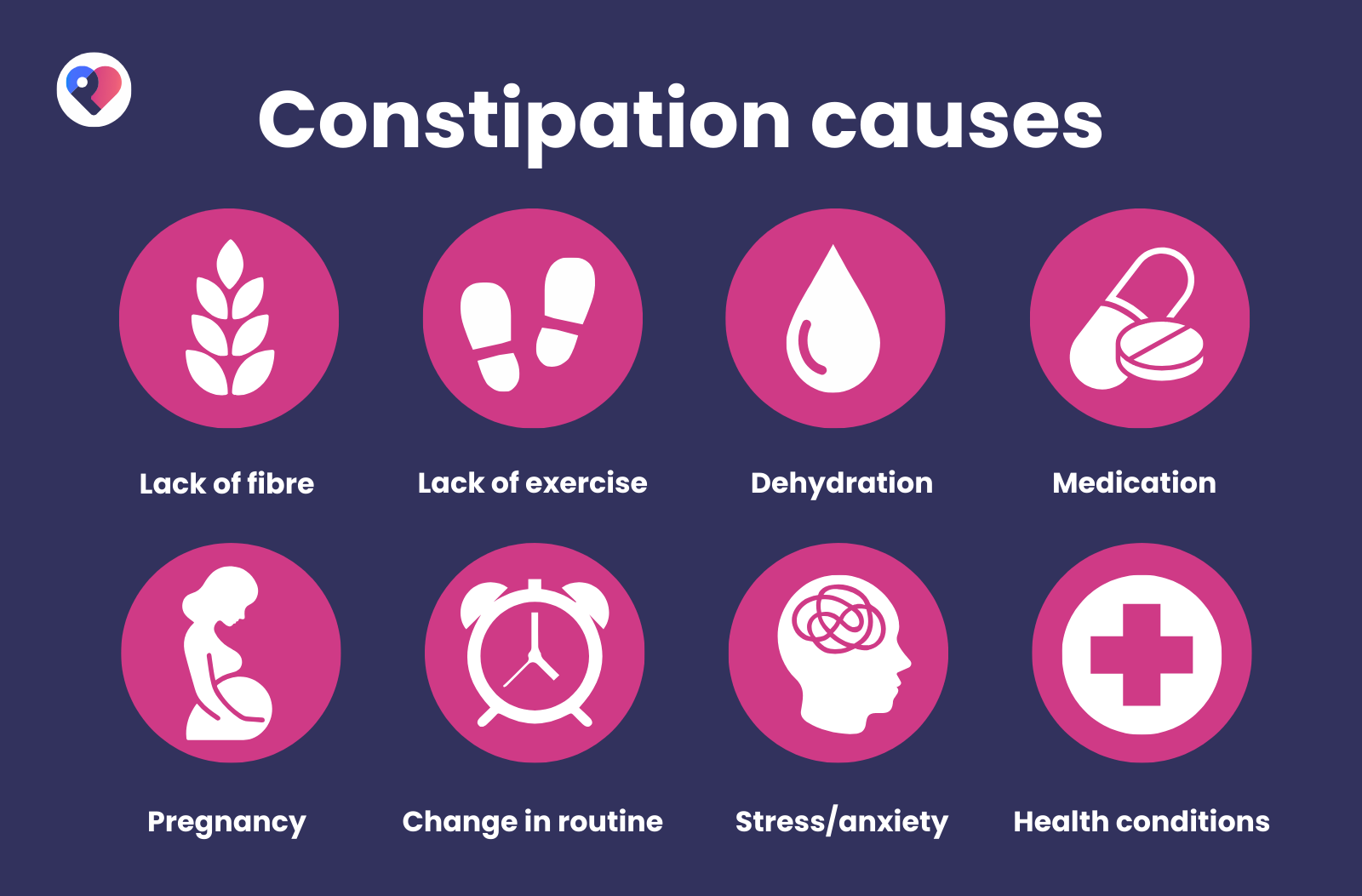
Common causes of constipation include:
Not eating enough fibra - this is found in foods such as fruits, vegetables, and cereals.
Not drinking enough fluids - which can lead to disidratazione.
Lack of physical activity.
Certain medicines – such as painkillers (especially ones with codeina), antiacidi, antidepressants such as amitriptilina, iron tablets, and some blood pressure medicines.
Medical conditions - such as an ghiandola tiroidea ipoattiva, sindrome dell'intestino irritabile, malattia diverticolare e colon cancer.
Pregnancy - caused by hormonal changes and pressure from the growing womb. About 1 in 5 pregnant women will become constipated.
Constipation can also be caused by:
Ignoring the urge to poo when you need to go to the toilet.
Changes to your routine.
Changes to your diet.
Stress, ansia, and depressione.
Difficulty accessing a toilet.
Functional constipation
Some people develop constipation despite a healthy diet, good fluid intake, and no underlying illness or medicines. It causes chronic (long term) constipation and has no identifiable cause. This is known as functional (primary) constipation.
It is common, affects women more often than men and it usually begins in childhood or early adulthood.
How to treat constipation
Lifestyle and diet changes
Gradually increase the fibre in your diet to 30g daily. Wholegrains, fruit and vegetables are higher in fibre than other foods. For information on increasing fibre in your diet see the information sheet on fibre by the British Dietetic Association (BDA) in Further Reading below.
Ensure you drink enough water each day to stay hydrated. The BDA information sheet on Fluid in Further Reading below shows why water is important and how much you need to drink.
Being fisicamente attivi encourages your bowel to move food along through your gut, avoiding constipation.
Go to the toilet to poo as soon as you feel the need to.
Over-the-counter medicine
Some medicines to help short term constipation can be bought over the counter at a pharmacy or supermarket. These medicines can be used for up to one week. If your constipation lasts longer than a week you should see a doctor. If you are pregnant or breastfeeding you should discuss your constipation with a pharmacist so they can advise you which laxatives are safe to use.
Quando consultare un medico
You should see a doctor:
If your constipation lasts longer than one week.
If you have severe tummy pain.
You are regularly experiencing constipation and cannot identify an obvious cause.
You are sick (vomiting) and constipated.
You are losing weight.
You notice bleeding from your bottom (anus).
The feeling of not emptying your bowels completely after you have a poo continues once the constipation has got better.
How to prevent constipation
You can help prevent constipation by following the diet and lifestyle advice in the section "How to treat constipation" above.
Domande frequenti
Can paracetamol cause constipation?
No, paracetamol does not cause constipation.
Are bananas good for constipation?
Ripe bananas can help improve constipation as they are high in fibre, but unripe bananas may contribute to constipation.
What foods should you avoid when constipated?
There are no particular foods to avoid, but try to focus on increasing wholegrain foods which are high in fibre and making sure you are drinking enough water.
How long should I sit on the toilet if I'm constipated?
There are no set rules. Instead, make sure you are relaxed when sitting on the toilet, sitting upright with your feet flat on a steady surface and stay on the toilet until you feel you have emptied your bowels.
Scelte del paziente per Condizioni intestinali
Ricerca sulla salute
Partecipa a uno studio che indaga su un nuovo prodotto batterico multi-ceppo per la stitichezza
Constipation can cause significant discomfort and disruption to daily life. A new research study run by The Functional Gut Clinic is investigating whether a multi-strain bacterial food product can help improve bowel regularity and gut function. The study has been approved by an independent ethics committee and adheres to Good Clinical Practice. Many people with constipation try different treatments before finding something that helps. This study aims to explore whether a targeted bacterial product could offer benefits for gut transit and digestive comfort.
di Thomas Andrew Porteus, MBCS
Salute dei bambini
Costipazione nei bambini
La stitichezza è un problema molto comune nei bambini. Per la maggior parte dei bambini, la stitichezza significa evacuare feci dure, con difficoltà, meno frequentemente del normale. L'evacuazione regolare (spesso scambiata per diarrea liquida) può indicare che un bambino ha una grave stitichezza che causa un blocco della parte inferiore dell'intestino (impattamento). Quando nessuna malattia o disturbo particolare è la causa della stitichezza, si parla di stitichezza idiopatica. È importante che la stitichezza venga riconosciuta precocemente per evitare che diventi un problema a lungo termine (cronico). Nota: per gli adulti, vedere il foglio informativo separato chiamato Stitichezza.
di Dr Hayley Willacy, FRCGP
Ulteriori letture e riferimenti
- Costipazione; NICE CKS, November 2025 (UK access only)
- Fibre; L'Associazione dei Dietisti del Regno Unito (BDA)
- Fluid. British Dietetic Association.
- Gastrointestinal tract (lower) cancers - recognition and referral; NICE CKS, agosto 2023 (accesso solo nel Regno Unito)
Informazioni sull'autoreVisualizza il profilo completo

Dr Caroline Wiggins, MRCGP
Medico di base, Autore medico
Laurea in Medicina e Chirurgia con Lode, MRCGP (2016), MSc.SEM con Lode, BSc con Lode
La Dott.ssa Caroline Wiggins è un medico di base supplente attualmente nel sud-ovest dell'Inghilterra.
Informazioni sul recensoreVisualizza il profilo completo

Dr Toni Hazell, FRCGP
MBBS, BSc, FRCGP, DFSRH, Dip GU med, DRCOG, DCH (London, UK, 2000)
La Dott.ssa Toni Hazell si è laureata presso la St. Mary’s Hospital Medical School e ha completato il suo VTS al Northwick Park Hospital.
Storia dell'articolo
Le informazioni su questa pagina sono scritte e revisionate da clinici qualificati.
Articolo disponibile anche in Inglese, Tedesco, Spagnolo, Francese, Italiano, Portoghese, Hindi, Ebraico, Arabo, and Svedese.
Prossima revisione prevista: 31 Dic 2030
31 Mar 2026 | Ultima versione

Chiedi, condividi, connettiti.
Esplora le discussioni, fai domande e condividi esperienze su centinaia di argomenti di salute.

Non ti senti bene?
Valuta i tuoi sintomi online gratuitamente
Iscriviti alla newsletter di Patient
La tua dose settimanale di consigli sulla salute chiari e affidabili - scritti per aiutarti a sentirti informato, sicuro e in controllo.
Abbonandoti accetti i nostri Informativa sulla Privacy. Puoi annullare l'iscrizione in qualsiasi momento. Non vendiamo mai i tuoi dati.
Più sulla salute digestiva
- Reflusso acido ed esofagite
- Ragade anale
- Fistola anale
- Appendicite
- Bile acid diarrhoea
- Sindrome da vomito ciclico
- Diverticoli
- Esofagite eosinofila
- Intossicazione alimentare nei bambini
- Dispepsia funzionale
- Malassorbimento gastrointestinale
- Nausea e vomito
- Norovirus
- Cancro esofageo
- Prolasso rettale
- Dolore nel quadrante superiore destro
- Rotavirus
- Ulcera gastrica
- Diarrea del bambino
- diarrea del viaggiatore