The latest superfood - what's the fuss around microgreens?
Peer reviewed by Dr Krishna Vakharia, MRCGPAuthored by Amberley DavisOriginally published 23 Nov 2023
Meets Patient’s editorial guidelines
- DownloadDownload
- Share
- Language
- Discussion
- Audio Version
- Add to preferred sources on Google
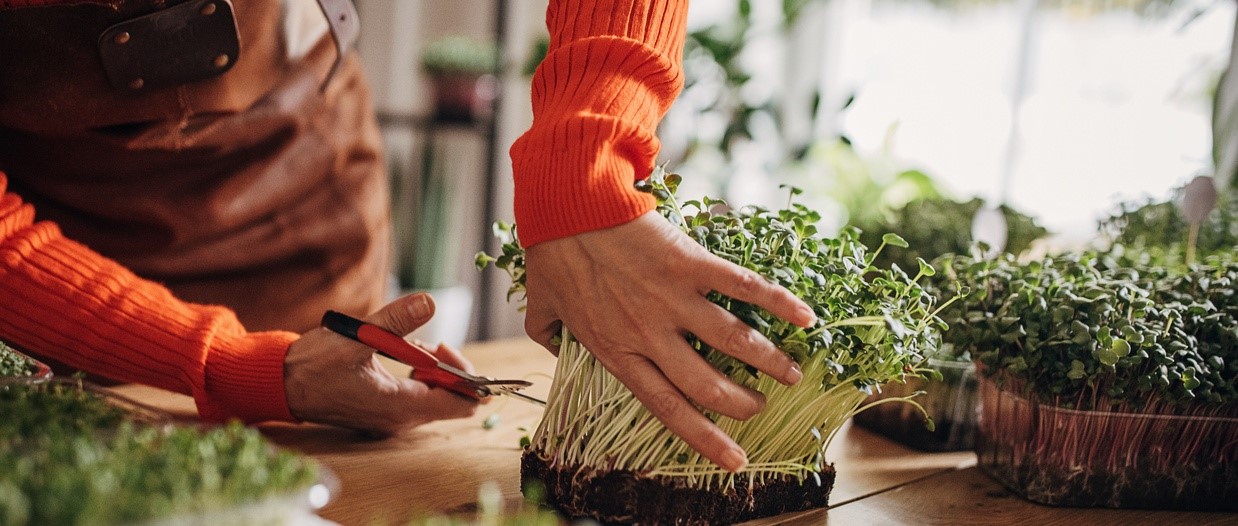
Microgreens are the newest category of vegetable getting high-end chefs, nutritional scientists, and people who grow their own food super excited. What these miniature herbs and vegetables lack in size, they make up for in flavour and health-boosting power. Find out why you might want to grow your own microgreens, and if it's straightforward to do.
What are microgreens?
Treasured for their densely packed nutrients and intense flavours, microgreens are both the latest superfood restaurant trend and an increasingly popular at-home hobby. Microgreens are younger and smaller versions of edible vegetables, herbs, grains and grasses.
Unlike the fully grown greens that can take months to grow, these immature plants can be harvested and eaten within 7-21 days, depending on the variety.
If you're wondering why you would want to downsize your veg, the headline is that microgreens are actually more nutrient-rich than larger greens. On top of this, they're faster and easier to grow and boast a more intense flavour.
We're not suggesting you should replace your usual veg with these mini superfoods, but you might like to add them to a salad, sprinkle on top of fish or steak, put them in a sandwich, or whizz them into a smoothie. We explore why.
What are the benefits of microgreens?
Microgreens are rich in vitamins, minerals, and other compounds that help keep us healthy. This is also true of their larger counterparts, but microgreens have 4-6 times more nutrients1. For example:
Red cabbage microgreens have 40 times more vitamin E and six times more vitamin C than fully grown red cabbage. This helps to fight disease and skin ageing, among other things.
Coriander microgreens have three times more beta-carotene than fully grown coriander. This antioxidant converts to vitamin A in the body, which we need for a strong immune system and good eye health.
Disease-preventing benefits of microgreens
A recent surge of scientific interest in microgreens has also uncovered their potential disease-fighting power. As of yet, no long-term studies exist to confirm their role in disease prevention, but their anti-inflammatory, high antioxidant, and anti-diabetic effects show promise for2:
Obesity - broccoli microgreens juice may be able to protect against diet-induced obesity by helping to reduce fat tissue mass and body weight.
Cardiovascular disease - microgreens may improve heart health by reducing the bad cholesterol in your blood.
Iron deficiency - fenugreek microgreens have a high iron content, which could be used to prevent and treat iron deficiency.
Cancer - while we don't fully know how some foods help to prevent cancer, those with the disease are advised to eat highly nutritious vegetables. Studies also suggest that eating cruciferous vegetables, such as broccoli, cauliflower and kale, may help prevent cancer.
Diabetes - some microgreens have been studied for their ability to lower blood sugar levels and improve insulin resistance. This includes broccoli and fenugreek microgreens. It's thought that this is due to their antioxidants, flavanoids, and phenolic compounds.
Because they are small, even people without garden space can grow microgreens at home in the kitchen. But before you swap your regular veg drawer for seeds and seed trays, remember you can't replace vegetables with microgreens. This is because of the cost and volume you'd have to eat to get the nutrition you need.
What you can do is include them as extras in your meals to enrich your diet with a more diverse range of health-boosting compounds.
Buying or growing microgreens
Microgreens are available to buy in many supermarkets and health food stores, but these can be pricey. Shop-bought microgreens can be sold either pre-planted in trays or pre-cut in containers. When buying, remember that pre-cut microgreens aren't as fresh and are therefore less nutritious.
A more budget-friendly alternative is to grow them yourself - either in your garden or on a kitchen shelf - as their seeds are much cheaper and equipment is minimal. This also ensures you can eat microgreens at their freshest, which means better flavour and maxium nutrients. So long as you buy organic seeds, you can also avoid pesticides, which can be harmful for both people and environment.
To make it even easier, while preserving their freshness, you can purchase prepared microgreen growing kits. However, this is typically the most expensive option.
These are the Royal Horticultural Society (RHS) has five simple steps for how to grow your own microgreens:
Find a small seed container - use small seed trays or recycle a food tub as a container. Then cut some kitchen roll or felt to the shape of the container and place it in the bottom.
Sow your seeds - first wet the felt or kitchen roll and then sprinkle your seeds on top.
Give them a warm home - place them either on a warm windowsill or in a glasshouse. The ideal temperatures for germination are 18-22°C (65-72°F).
Keep them moist - as the seeds begin to grow, regularly mist them or water them carefully, remembering they are delicate.
Taste test them as they grow - the flavours will develop gradually, so you can regularly taste them until you're happy to cut them with scissors and add to sandwiches, sprinkle in salads, garnish meats, or blend into smoothies. The seed packets should also give an idea of how many days before they are ready to harvest, depending on the variety, typically between 7-21 days.
Some of the most popular seeds for microgreens include:
Basil.
Mustard greens.
Kale.
Rocket.
Spinach.
Radish greens.
Peas.
Watercress.
Further reading
Patient picks for Nutrition
Diet and nutrition
Honey may be the natural buzz you need to fuel your workouts
Honey has been used by humans as a natural sweetener and energy source to sustain work and physical performance for thousands of years. Recently, it has re-emerged as a natural option for fuelling exercise, with some social media users claiming it’s the perfect thing to eat before a workout if you need an energy boost.
by Stephen Khan

Diet and nutrition
7 iron rich foods to add to your diet
If you remember the cartoon character Popeye, you’ll know he was famous for eating spinach to boost his strength. Many of us believe this was because spinach is rich in iron - a nutrient that supports muscle growth. However, relying on spinach alone wouldn’t have done the trick. In reality, there are many other foods with even higher iron content that can better support your body’s needs.
by Victoria Raw
About the authorView full bio
Authored by

Amberley Davis
Senior writer
BA (Hons), CPD
Amberley is a senior writer with Patient and has written extensively on a range of health and wellbeing topics.
About the reviewerView full bio

Dr Krishna Vakharia, MRCGP
Chief Medical Officer for Health, Optum UK
MBChB, MRCGP(2013), BMedSci (hons), DFSRH, DRCOG, PGDipDerm (Distn)
Dr Krishna Vakharia is an NHS GP. She is also a regular examiner for the postgraduate Diploma in Practical Dermatology at Cardiff University as well as being the Chief Medical Officer for health at Optum UK.
Article history
Article also available in English, German, Spanish, French, Italian, Portuguese, Hindi, Hebrew, Arabic, and Swedish.
23 Nov 2023 | Originally published
Authored by:
Amberley DavisPeer reviewed by
Dr Krishna Vakharia, MRCGP
Join the conversation
Share your thoughts or experiences with others in our patient communities.

Ask, share, connect.
Browse discussions, ask questions, and share experiences across hundreds of health topics.

Feeling unwell?
Assess your symptoms online for free
Sign up to the Patient newsletter
Your weekly dose of clear, trustworthy health advice - written to help you feel informed, confident and in control.
By subscribing you accept our Privacy Policy. You can unsubscribe at any time. We never sell your data.