9 signs of low testosterone in men
Peer reviewed by Dr Colin Tidy, MRCGPAuthored by Heather AinsworthOriginally published 24 Nov 2025
Meets Patient’s editorial guidelines
- DownloadDownload
- Share
- Language
- Discussion
- Audio Version
- Add to preferred sources on Google
If you’ve been feeling unusually tired, moody, or losing interest in things you used to enjoy, low testosterone could be the reason - and it's more common than you think.
Why is testosterone important?
Testosterone is a key hormone that plays a major role in men’s health. It helps support muscle growth, strength, sex drive, mood, and overall energy levels1. Think of it as one of the body’s main 'performance regulators.'
As men age, testosterone levels naturally decline - but stress, lifestyle, and certain health conditions can cause levels to drop faster than expected.
Recognising the signs of low testosterone early is important as a lack of it can affect both your physical and mental health.
Signs of low testosterone in men
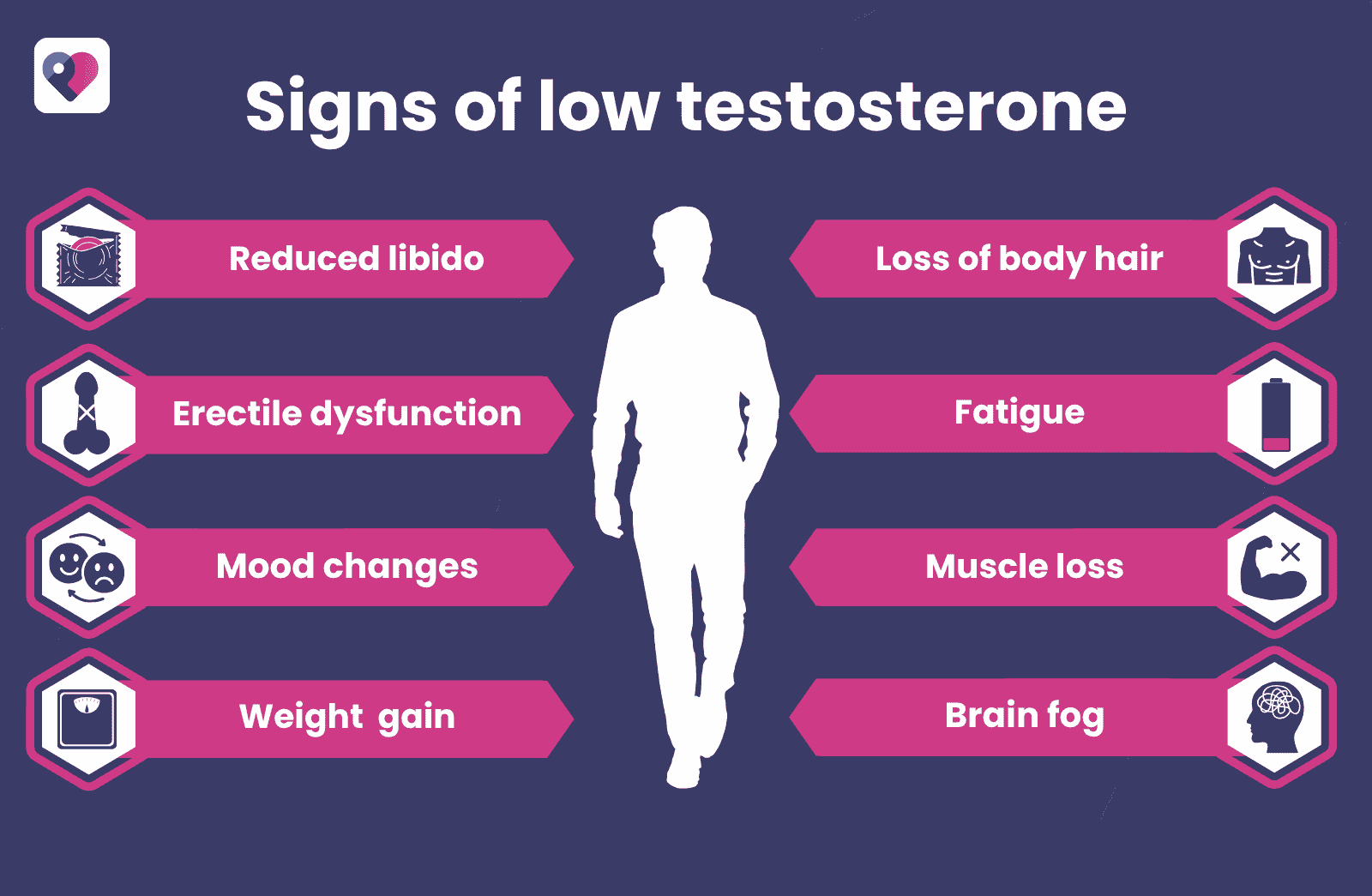
Graphic: Heather Ainsworth
What are the signs of low testosterone?
1. Reduced libido
Low testosterone can directly affect your sex drive (libido)2. Men with reduced hormone levels often notice a decreased interest in sexual activity or intimacy, which can impact relationships and overall quality of life.
2. Loss of body hair
Testosterone helps regulate hair growth3. A drop in levels can lead to thinning or loss of hair on the face, chest, or body over time.
3. Fatigue
Feeling unusually tired (fatigue), even after enough sleep, is a common symptom of low testosterone4. It can reduce energy levels and make everyday tasks feel more exhausting than usual.
4. Depressed mood
Hormonal changes can influence brain chemistry. Men with low testosterone may experience irritability, sadness, or even depression5, sometimes without realising the hormonal link.
5. Loss of muscle mass and strength
Testosterone plays a key role in building and maintaining muscle1. Lower levels can make it harder to gain or retain muscle, and strength may decline over time.
6. Increase in body fat
A drop in testosterone can contribute to an increase in body fat, especially around the stomach6. This can also increase the chance of metabolic issues such as insulin resistance.
7. Difficulty concentrating or brain fog
Low testosterone may affect cognitive function, making it harder to focus, remember details, or stay mentally sharp during the day7.
8. Increase in breast tissue
Low testosterone levels can lead to the development of excess breast tissue (gynecomastia) in men8. This is often a gradual change but can be noticeable and sometimes uncomfortable.
9. Erectile dysfunction
Testosterone helps regulate sexual function, including erections. Low levels may make it harder to achieve or maintain an erection9, though other health factors can also contribute.
How to test for low testosterone
If you think you may have low testosterone, the first step is to speak with a doctor or healthcare professional.
Testing isn’t something you can accurately do at home - your doctor will order a simple blood test that measures your testosterone levels, usually taken in the morning when levels are highest.
Depending on the results, they may repeat the test or check other hormones to get a clearer picture of what’s going on.
From there, your doctor can discuss your options, which may include lifestyle changes, further testing, or potential treatment.
How much testosterone should you have?
Testosterone levels can vary from person to person but for adult men, total testosterone levels typically fall between 300 and 1,000 ng/dL (nanograms per decilitre)2.
However, what matters most is not just the number, but how you feel. Some men may experience symptoms even if their levels are technically within the normal range.
That’s why it’s important to look at both your test results and your day-to-day symptoms if something feels off.
Summary
Low testosterone is a common hormonal imbalance that can impact energy, mood, muscle strength, and overall wellbeing - especially in men over 30.
Symptoms to watch for include fatigue, reduced libido, loss of muscle mass, increased body fat (particularly around the stomach), mood changes such as irritability or depression, loss of body hair, low motivation, and trouble concentrating.
If these signs sound familiar, it may be time to speak with your doctor about testing and treatment options.
Further reading
1. Rojas-Zambrano et al: Benefits of Testosterone Hormone in the Human Body
2. Sizar et al: Male Hypogonadism
3. Inui S, Itami S: Androgen actions on the human hair follicle
5. Shores et al: Low testosterone levels predict incident depressive illness in older men
6. Kelly et al: Testosterone and obesity
8. Robeva et al: Causes and Metabolic Consequences of Gynecomastia in Adult Patients
9. Martínez-Jabaloyas et al: Testosterone levels in men with erectile dysfunction
Patient picks for General men's health

Men's health
What it's like to have breast cancer when you're a man
While breast cancer is often perceived as a women's disease, men can be diagnosed too. We spoke to Tony Herbert, who was diagnosed with breast cancer in 2011.
by Abi Millar

Men's health
What's the average height for men?
How do you measure up against the average height for men in your country? Height has been linked to life expectancy, diseases, and even academic and financial success. Here we explore what can your height and waistline can reveal about your health.
by Amberley Davis
About the authorView full bio

Heather Ainsworth
SEO Manager
BA (Hons) Business and Marketing, IDM Cert DDM, MHFAider®
Heather is the SEO Manager at Patient and a trained Mental Health First Aider. She is also a regular health writer, covering a wide range of topics with a particular interest in mental wellbeing, women's health, and holistic health.
About the reviewerView full bio

Dr Colin Tidy, MRCGP
General Practitioner, Medical Author
MBBS, MRCGP, MRCP (Paediatrics), DCH
Dr Colin Tidy is an NHS Doctor, based in Oxfordshire.
Article history
The information on this page is peer reviewed by qualified clinicians.
Article also available in English, German, Spanish, French, Italian, Portuguese, Hindi, Hebrew, Arabic, and Swedish.
Next review due: 24 Nov 2028
24 Nov 2025 | Originally published
Authored by:
Heather AinsworthPeer reviewed by
Dr Colin Tidy, MRCGP
Join the conversation
Share your thoughts or experiences with others in our patient communities.

Ask, share, connect.
Browse discussions, ask questions, and share experiences across hundreds of health topics.

Feeling unwell?
Assess your symptoms online for free
Sign up to the Patient newsletter
Your weekly dose of clear, trustworthy health advice - written to help you feel informed, confident and in control.
By subscribing you accept our Privacy Policy. You can unsubscribe at any time. We never sell your data.
More in men's health
- Bladder problems men shouldn't ignore
- Do condoms really cause erection problems?
- Do men need to do Kegel exercises?
- How accurate are prostate cancer tests?
- How common are male eating disorders?
- How common is male infertility, and what causes it?
- How to check yourself for testicular cancer
- How your lifestyle may be a cause of low sperm count
- Is it prostate cancer or something else?
- Testicle pain: what could it be?
- What erectile dysfunction could mean for your heart
- What is toxic masculinity and how does it affect men?
- What it's like to have a vasectomy
- What you need to know before you take erectile dysfunction medication
- What's the average height for men?
- Why are men less likely to wear sun cream?
- Why is sexual violence against men on the rise?
- Why is there blood in my semen?
- Why self-care for men is so important
- Will we ever have a male contraceptive pill?