Cosa scatena i disturbi alimentari negli uomini?
Revisione paritaria di Dr Hayley Willacy, FRCGP Autore Dr Sarah JarvisPubblicato originariamente 13 Nov 2017
Rispetta le linee guida editoriali
- ScaricaScarica
- Condividi
- Language
- Discussione
- Versione audio
- Aggiungi alle fonti preferite su Google
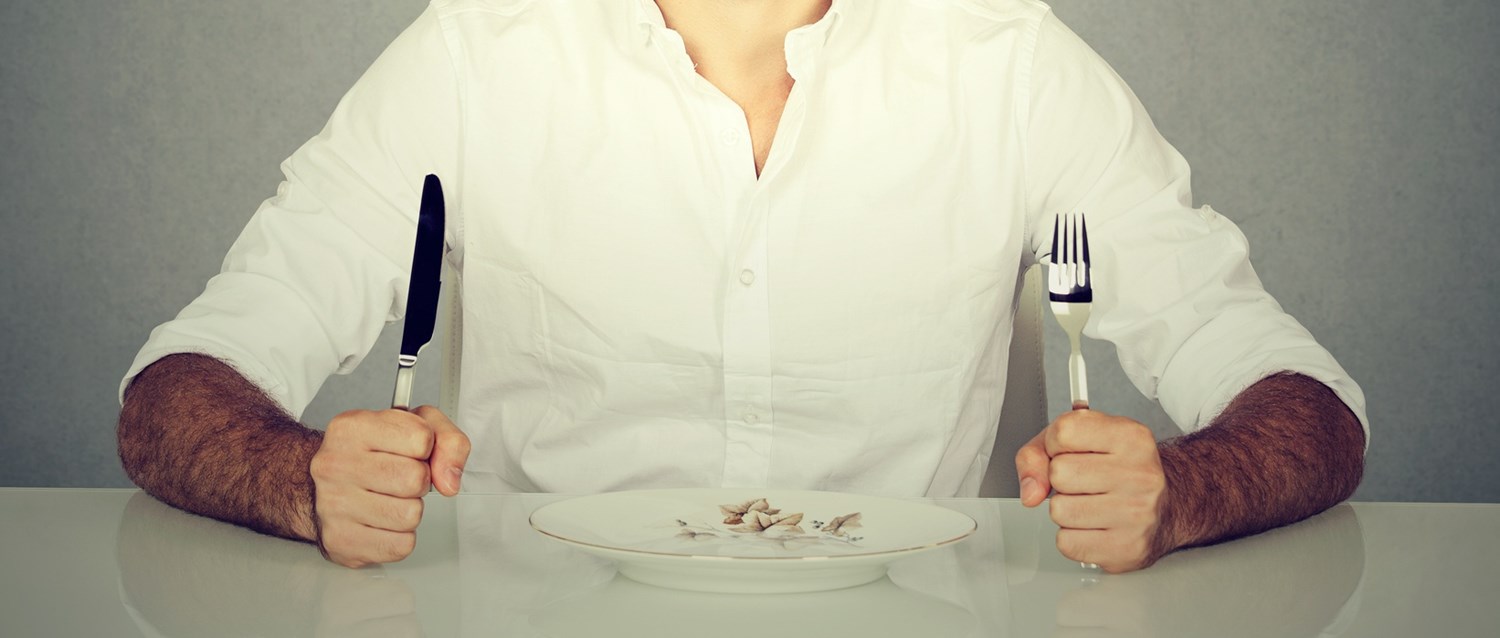
Our image-conscious world puts pressure on both sexes to look perfect, but while for girls and women it's all about being model slender, for men the perfect chiselled, muscular physique is often the Holy Grail. That means that the proportion of men with bulimia or binge eating disorder is much higher than the proportion with anorexia. Men are less likely to purge and more likely to exercise to excess than women are. But the underlying mental suffering is very much the same.
Supporto per la salute mentale di adulti e bambini
Terapia cognitivo-comportamentale (CBT) e psicoterapia online per adulti e bambini dagli 8 ai 17 anni. I professionisti accreditati di Onebright supportano le persone che affrontano ansia, depressione e altre difficoltà emotive.
Oh, it's such a shame
We know that young women with eating disorders often feel intensely ashamed, and may hide their problem. With anoressian, they often cover up with baggy clothes and pretend at mealtimes that they've already eaten. With bulimia, empty food packets can be smuggled into the bin and public toilets used for purging.
But men aren't 'supposed' to worry about their weight, and they certainly aren't expected to show they're vulnerable. Since 'everyone knows that eating disorders are a girl's problem', admitting not only to emotional distress but also to an apparently unmasculine response to it carries a double stigma.
Men are from Mars, women are from Venus
Many of the triggers for eating disorders differ between men and women. Men who develop eating disorders have often been overweight at some point. Women, on the other hand, are more likely to have felt they were overweight when they weren't. Men are also more likely to worry about their weight because of how it might affect their athletic ability: for women, a 'beautiful' body is an issue all by itself.
While most men with eating disorders aren't gay, men who are gay are up to 10 times more likely than heterosexual men to develop an eating disorder. Interestingly, lesbian women are less likely to be concerned about their appearance than gay men.
Muscle dysmorphia - an obsession with developing the right muscles, which has much overlap with eating disorders - is much more common in men than in women. Closely linked to this is the use of anabolic steroids, as common in men as anorexia and bulimia combined in women.
Media madness
If a fitness instructor asked a video company to produce an exercise video in which they deliberately covered up their toned physique, chances are they'd be sent packing in very short order, or dismissed as mad. In the same way, no magazine is going to let a photo go out on their front page in which the model has a flabby stomach protruding from under her shirt: everyone knows that beauty sells. And Photoshop® means they don't have to.
Few icons have either the power or the inclination to fight back - when Kate Winslet announced that she was refusing to allow her photos in a recent cosmetic advert to be photoshopped, it made international headlines. Yet young women who watch exercise videos led by an instructor in a body-contour outfit are more likely to feel unhappy afterwards, compared to doing the same workout while watching the same instructor covered up.
Men and media
Men, too, are more likely to be dissatisfied with their bodies when they're exposed to images of muscular, idealised men. These same images are more likely to causemento drive themselves at the gym to increase their own muscularity - and, as we've seen above, a desire for the perfect muscular body is often a precursor to an eating disorder in men.
Then there's social media - do endless carefully vetted images of everyone you know having a marvellous time, or pictured only in the most flattering poses, play a role? Dr Sandeep Ranote is a consultant child and adolescent psychiatrist, who has specialised in eating disorders for 15 years. She warns that we ignore this element at our peril. "We would be naive to say that there is no link between social media and eating disorders as well as other mental health problems like low self-esteem, depression and self-harm. We don't have absolute proof yet, and we don't know how to deal with it - but we definitely need to keep looking at it."
What's the solution?
As in so many walks of life, forewarned is forearmed. Doctors have a duty to recognise that men may well show different first signs of an eating disorder than women, and to keep it in mind as a possible diagnosis.
The fashion industry pays lip service to behaving responsibly where body image is concerned: I have seen endless stories over the years about fashion houses 'joining forces to ban size zero models', yet they constantly creep back in. For men, it may be more difficult still. in a world where obesity levels are sky-rocketing, fitness carries huge social cachet and the finely-honed athlete's physique is unlikely to become unpopular any time soon.
Dr Ranote is convinced that who gives the message is crucial. "Using role models is, if anything, more important for boys and men than for girls and women. Men will engage with their stories - the Campagna Stato Mentale, set up six years ago by the Rugby League e Rugby Union, has done amazing work in raising awareness of mental health problems. They've largely focused on depressive disorders, but they're starting to look at eating disorders as well, getting people to start conversations at local club level. The Football Association (FA) is also working at local levels to raise awareness - I would love to see the FA working with the Collegio Reale degli Psichiatri so we can maximise our impact. I would love the English Cricket Board doing more - they have the power to get through to men in a way that doctors never could."
There are other shining examples of how we can beat the stigma. The brave decision of the international rugby referee Nigel Owens to share his 27-year battle with bulimia is a case in point. You don't get much more manly than a rugby referee. And if it could happen to him, it could happen to anyone.
Scelte del paziente per Disturbi alimentari
Salute mentale
Connessioni tra 'alimentazione sana' e ortorexia
Sulla superficie, mangiare in modo sano sembra una scelta positiva per la salute. Tuttavia, è una scelta che nasconde il potenziale di causare gravi preoccupazioni per la salute a lungo termine.
di Rose Constantine Smith, ANutr

Salute mentale
Come aiutare se tuo figlio ha un disturbo alimentare
Around 1.25 million people in the UK have an eating disorder. They can start at any age but most often develop during adolescence. And despite greater awareness, the number of children and young people living with an eating disorder has increased by 55% in just two years, figures released by NHS England reveal. Perhaps surprisingly, anorexia is the least common eating disorder (behind bulimia and binge eating disorder), accounting for just 10% of cases, yet it has the highest mortality rate of any psychiatric illness. Early intervention dramatically increases the chances of a full recovery, so it's crucial that parents know the warning signs, and how to tackle them.
di Allie Anderson
Informazioni sull'autoreVisualizza il profilo completo
Autore

Dr Sarah Jarvis
Consulente Clinico
MA (Cantab), BM, BCh (Oxon), DRCOG, FRCGP, MBE
Dopo aver completato la formazione in medicina a Cambridge e Oxford, la Dott.ssa Sarah Jarvis MBE è diventata un medico di base.
Informazioni sul recensoreVisualizza il profilo completo

Dr Hayley Willacy, FRCGP
Medico di base, Autore medico
MBChB (1992), DRCOG, DFFP, MRCOG (Part 1) MRCGP (2007), DFSRH (2013), MSc - medical education (2020)
La Dott.ssa Hayley Willacy era un medico di base del NHS che lavorava nel nord-ovest dell'Inghilterra, e si è ritirata dalla pratica clinica nel 2022 dopo 30 anni.
Storia dell'articolo
Articolo disponibile anche in Inglese, Tedesco, Spagnolo, Francese, Italiano, Portoghese, Hindi, Ebraico, Arabo, and Svedese.
13 Nov 2017 | Pubblicato originariamente
Autore:
Dr Sarah JarvisRevisione paritaria di
Dr Hayley Willacy, FRCGP
Partecipa alla conversazione
Condividi i tuoi pensieri o esperienze con gli altri nel nostro comunità di pazienti.

Chiedi, condividi, connettiti.
Esplora le discussioni, fai domande e condividi esperienze su centinaia di argomenti di salute.

Non ti senti bene?
Valuta i tuoi sintomi online gratuitamente
Iscriviti alla newsletter di Patient
La tua dose settimanale di consigli sulla salute chiari e affidabili - scritti per aiutarti a sentirti informato, sicuro e in controllo.
Abbonandoti accetti i nostri Informativa sulla Privacy. Puoi annullare l'iscrizione in qualsiasi momento. Non vendiamo mai i tuoi dati.