
Cost of living crisis: is our health paying the price?
Peer reviewed by Dr Krishna Vakharia, MRCGPLast updated by Amberley DavisLast updated 10 Oct 2023
Meets Patient’s editorial guidelines
- DownloadDownload
- Share
- Language
- Discussion
- Audio Version
- Add to preferred sources on Google
Two years into the cost of living crisis, we look at how soaring food, energy, and fuel prices are affecting our health, and the practical tips that can help us protect it.
Why is there a cost of living crisis?
The cost of living crisis refers to the fall in disposable income, caused by tax increases and the rising costs of typical goods and services - known as inflation - since late 2021.
These changes were triggered by the COVID-19 pandemic lockdowns, which froze economies around the world. It can take a while for economies to bounce back, and so as the world reopened and demand for goods and services returned to previous levels, crucial shortages - including oil, gas, and lorry drivers - drove prices up.
Since 2021, several other factors have made the situation worse. At the forefront is the war between Russia and Ukraine. Fuel supplies and other essential industrial goods from these countries are either suffering shortages due to factory closures (from Ukraine) or have been intentionally cut off (from Russia).
In the UK in 2022, food and energy prices continued to rise - 9.6% by October 2022, which was the fastest rate in four decades. Since then, while inflation has continued its annual pace has slowed down. In the UK in August 2023, this was 6.3%1.
What is the impact on health and quality of life?
In the UK, the rising cost of living continues to affect many people's health and quality of life.
In a 2023 UK cost of living survey2:
Two thirds of Brits felt that it has negatively affected their health.
Over one third reported that their physical health has deteriorated.
One third also reported worsening mental health.
Health inequalities between richer and poorer people are also apparent, with the latter experiencing a greater toll on their health. Sadly, the differences in health and healthcare access between different socio-economic groups is a long-standing issue, with the impact of these differences worsening due to the cost of living crisis.
It's also thought that health inequalities are costing the NHS in England £4.8 billion a year. People from the most deprived fifth of neighbourhoods in the UK have 72% more emergency hospital visits and 20% more planned visits than people living in the most affluent 20% of neighbourhoods.
"The surprise of the cost of living crisis is that people in above-average income groups are affected, too," adds Professor Sir Michael Marmot, director of the UCL Institute of Health Equity. "Food, heating, and transport appear to be having the greatest effect."
Cost of living - heating
Poorer health is partly linked to the rising cost of heating. The price cap rise of gas in April 2022 increased the maximum amount suppliers could charge you for each unit of energy you use. This caused an unprecedented rise in UK household energy bills - the average UK bill increasing by a whopping 54%. This pushed the number of homes living in fuel poverty to 6.3 million3.
In October 2023 this UK price cap will drop - a reduction of around £151 a year for a typical household - but experts warn that energy still remains expensive, and could rise again mid-winter4.
The health risks
As autumn and winter approach, people who try ot use small amounts of heating to afford their bills are at risk of cold-related health problems. Elderly people are particularly vulnerable because they lose body heat faster5.
An older person with a body temperature below 35C is at risk of health problems such as:
Liver damage.
Kidney problems.
A cold house can also exacerbate less serious yet uncomfortable complaints, such as skin conditions like ulcers.
Heating tips
Keep your home heated to at least 18°C and not below 16°C if you're elderly or have impaired mobility.
If you really need to reduce your heating bill, on milder days turn down your thermostat by one degree at a time, wait, and see if you need to do it again. This is better than dropping the temperature dramatically.
Check your boiler pressure isn't too low as this can cause your radiators to be less efficient.
Keep the area around your radiators clear.
Cost of living - food
In the UK in 2022, food prices increased at the fastest rate for 40 years.
Grocery inflation
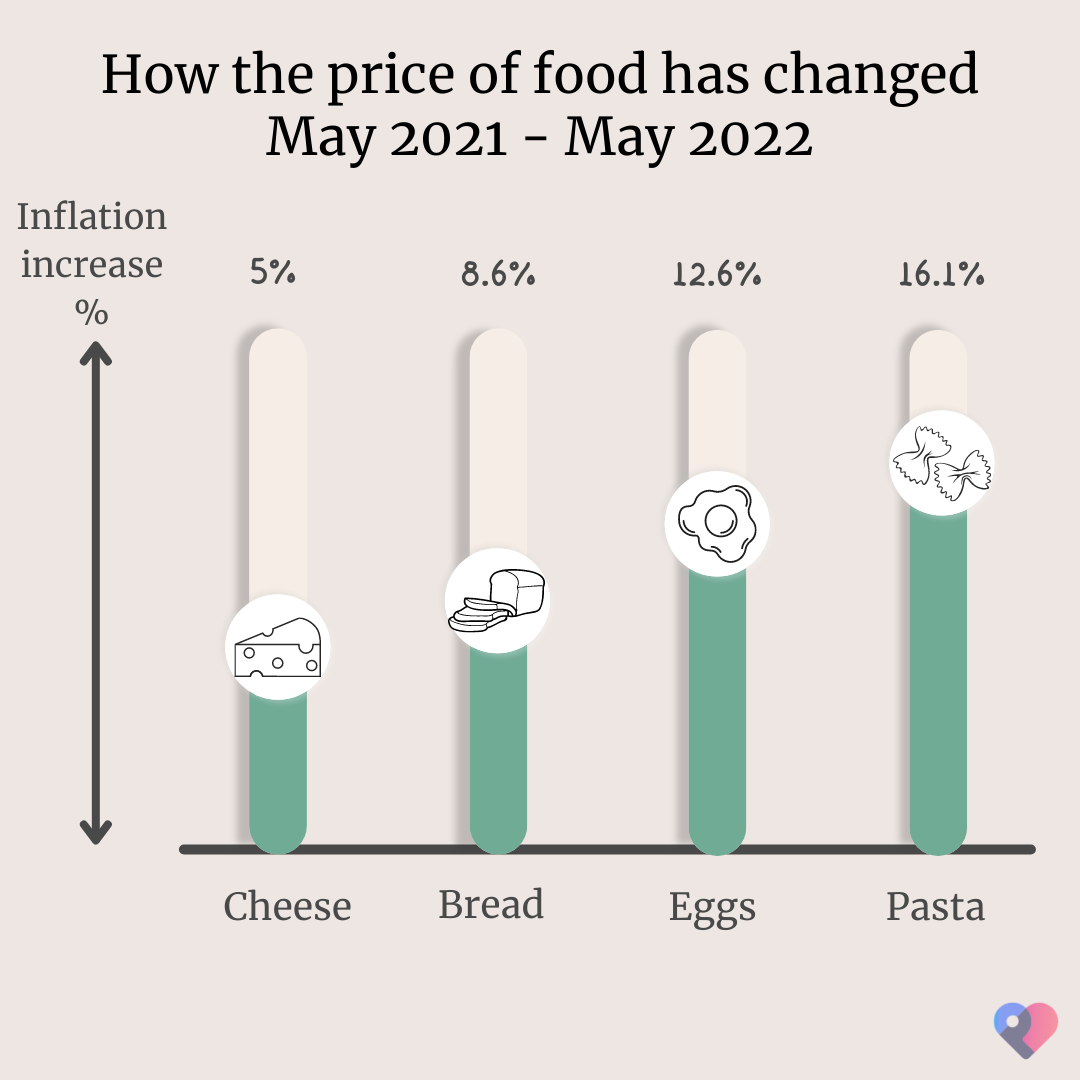
Although the rate of price increases have slowed in 2023, food shopping remains expensive. Inflation is pushing fresh and less processed foods further out of reach for wide stretches of the public. Instead, many are turning to cheaper, less nutritious options such as microwave meals, or cutting back on food completely6.
The health risks
A diet with lower nutritional quality increases the risk of many health issues, such as:
Heart disease and stroke.
Some cancers - for example, obesity increases the risk of many cancers, including of the colon, kidney, and breast.
Nutrient deficiencies - for example, iron-deficiency anaemia.
Food tips
Nutritious yet affordable recipes can be found on anti-poverty campaigner Jack Monroe's website Cooking on a Bootstrap.
Food waste prevention apps like Olio allow you to pick up as well as share food that would otherwise have been thrown away for free.
Cost of living - transport
The cost of living crisis is also having an impact on our health in less direct ways. With oil driving up fuel prices, nearly all of us are feeling the pinch.
The risk of isolation for those unable to travel as much, as well as the stress many of us experience each time we fill up our vehicle tanks, are also likely to affect our mental health in a big way.
The health risks
Inaccessibility to healthcare - resulting in late/missed diagnosis and prevention of treatment.
Increased isolation and loneliness - this can lead to depression, and anxiety, and increase the risk of mental decline in older people7.
Stress - financial stress can reduce quality of life.
Travel tips
Walk or cycle where you can - these also have other health benefits.
Check for bus discounts.
Invest in a railcard if you travel by train regularly.
Buy train tickets in advance where possible.
Shop around for better fuel prices.
Use apps like AppyParking to find free local parking, or Parkopedia for the cheapest nearby car parks.
Don't underestimate financial stress
As wages fail to keep up with the cost of these essential amenities - as well as many other factors such as housing costs, swelling interest rates, and council tax rises - financial health, stability, and quality of life are on a lot of people's minds.
Mortgage rates also skyrocketed in 2021 and still remain high in late 2023. Homeowners coming off fixed-rate deals that were made before the cost of living crisis are now facing a very different landscape, and the price increase of their new deals may massively increase their outgoings and reduce their spare cash.
In the UK in May 20228:
77% of adults reported feeling either somewhat or very worried about the cost of living crisis.
50% of those who were very worried felt these worries almost every day.
Health risks
Financial stress shouldn't be underestimated. In itself, stress can have a massive impact on our day-to-day lives and reduce our quality of life. Long-term, unmanaged stress can help to develop or worsen several mental and physical health conditions, including:
Cardiovascular disease (conditions of the heart and surrounding blood vessels).
Chronic (long-term) pain.
Stress management
Some helpful habits to ease stress include:
Calming breathing exercises, mindfulness, and meditation.
Talking to friends or family about how you feel.
If stress and anxiety are dominating your life, these helplines can also offer support:
Mind UK: 0300 123 3393
Samaritans: 116 123
Anxiety UK: 03444 775 774
Further reading
Patient picks for Healthcare

General health and lifestyle
What it's like to work in mental health services when you have a mental illness
When we seek help from mental health services, the staff are there to help and support us. However, we can forget that healthcare professionals also have their own struggles, and it can be easy to assume they have everything together. 1 in 4 people in the UK experience a mental health problem each year. In this piece, we're going to explore what it's like to work in mental health services when you have a mental illness yourself.
by Emily Jane Bashforth

General health and lifestyle
How is technology helping to put patients in charge of their own health?
Thanks to developments in technology, patients can manage their health better than ever without needing to leave the comfort of their home. Particularly through the pandemic, technology has been a saviour for many patients needing to consult their GPs and order medication. But how else has technology revolutionised healthcare and empowered patients to take charge of their conditions?
by Emily Jane Bashforth
About the authorView full bio
Updated by

Amberley Davis
Senior writer
BA (Hons), CPD
Amberley is a senior writer with Patient and has written extensively on a range of health and wellbeing topics.
Authored by
Amberley Davis
Senior writer
BA (Hons), CPD
Amberley is a senior writer with Patient and has written extensively on a range of health and wellbeing topics.
About the reviewerView full bio

Dr Krishna Vakharia, MRCGP
Chief Medical Officer for Health, Optum UK
MBChB, MRCGP(2013), BMedSci (hons), DFSRH, DRCOG, PGDipDerm (Distn)
Dr Krishna Vakharia is an NHS GP. She is also a regular examiner for the postgraduate Diploma in Practical Dermatology at Cardiff University as well as being the Chief Medical Officer for health at Optum UK.
Join the conversation
Share your thoughts or experiences with others in our patient communities.

Ask, share, connect.
Browse discussions, ask questions, and share experiences across hundreds of health topics.

Feeling unwell?
Assess your symptoms online for free
Sign up to the Patient newsletter
Your weekly dose of clear, trustworthy health advice - written to help you feel informed, confident and in control.
By subscribing you accept our Privacy Policy. You can unsubscribe at any time. We never sell your data.