
What to do when your child has a rash
Peer reviewed by Dr Sarah JarvisLast updated by Gillian HarveyLast updated 30 Apr 2019
Meets Patient’s editorial guidelines
- DownloadDownload
- Share
- Language
- Discussion
- Audio Version
- Add to preferred sources on Google
As a parent, it's hard not to panic when your child develops a rash. But these disturbing skin flare-ups are often nothing to worry about. Follow our troubleshooting guide to see what to do about your child's rash.
Is it a non-blanching rash?
The first thing to do when your child develops a rash is to reach for a tumbler. Run the glass over the rash to see whether it disappears under this mild pressure. If it doesn't, it's a known as a non-blanching rash and can be a sign of serious infection.
"Having a non-blanching rash can be a sign of sepsis - in particular meningococcal sepsis - and that's an emergency: the child needs to go straight to hospital and be assessed there," explains Dr Tamara Bugembe, paediatrician and founder of childcare service Helper Bees.
Does your child have a fever?
If the rash disappears when you run a glass over it, the most likely cause of your child's rash is a viral infection. The next question to ask is whether your child has an associated fever, and whether it's low or high grade.
"A low-grade fever will be anything between 37.5°C and 38.5°C," explains Bugembe. "Anything above this is quite a raging fever."
Fever isn't always a cause for concern. "If your child has a fever, it may just be that it's something the body needs to do in order to destroy an intruder," explains Bugembe. "That doesn't always mean something sinister, it just alerts us to pay attention."
The younger the child, the more potentially serious a fever is. For instance, any fever above 38°C in a child aged under 3 months, or above 39°C in a child aged 3-6 months, should be checked out by a doctor.
Can you tell where the fever is coming from?
When a child has a fever, it's often easy to tell where the source of the problem is.
"If your child is coughing or complaining of an earache or sore throat then that's helpful," explains Bugembe. "A rash can occur in children as part of the body's immune response. They can get a rash that looks like hives, that appear like wheals and move - there's one on the chest and one on the arm - that's what is known as a migrating rash which can be part of a viral infection with a temperature."
"As long as it settles over a couple of hours, that's fine. It will often wax and wane - it will come, it will disappear and that's fine."
When you can't tell
If you can't tell where the fever is coming from, and the rash continues to spread and not disappear, it's time for a visit to the doctor.
"They will have a look in the ear and the throat, and let you know how long any infection is likely to last, or whether it's a condition that requires antibiotics, such as scarlet fever," explains Bugembe.
No fever? Is it an allergic reaction?
If they don't have a fever you need to find out whether the rash is itchy or not, and keep track of how quickly it's spreading, as such a rash could signal an allergic reaction.
The first thing to do if you suspect an allergic reaction is to dose with an antihistamine such as Piriton®, if you have it to hand. "If it's spreading rapidly, you need to give them some antihistamine and get them reviewed if it doesn't settle down," advises Bugembe.
Children aged over 3
"If the child is over 3, and they have an itchy rash but no difficulty breathing, no coughing and no swelling around the lips, it's advisable to give the antihistamine and wait an hour, as it will take about 40 minutes for the antihistamine to get into the blood system and start working," she says.
If the anti-histamine doesn't help, it's time to call the GP.
"However, if the child is experiencing any difficulty breathing, or experiencing swelling around the lips then this is a medical emergency and it's time to head to A&E," explains Bugembe.
Children aged under 3
In a younger child, a more rapid response is required.
"If the child is under 3, give them the antihistamine if you have it and take them to A&E immediately. If it settles while you're in A&E, they may then agree that you can go home," advises Bugembe. "Because the airways are so small in very young children and you don't know if a similar reaction is happening inside, such a swelling could quickly narrow their already tiny airways."
What else should I do?
If your child has a viral rash, chances are some of the children he or she has been associating with will have it too.
"You can often get a clue about the cause of the rash by asking around people who your child has been in contact with. in conditions such as hand, foot and mouth or slapped cheek, there will usually be an outbreak locally so it's worth asking around anyone your child has been around to get some idea about how long the fever and rash lasted with others. And then if there's anything unusual, if your child doesn't match the others, then also get a review, as you can have two things at the same time," explains Bugembe.
Warn those at risk
If your child has been in contact with a pregnant woman, a baby under a week old or anyone undergoing chemotherapy, it's important to inform that person or their responsible adult of the potential risk so that they can seek advice from their healthcare advisor.
Potential causes of childhood rashes
Chickenpox
Chickenpox is a common childhood illness characterised by its itchy, fluid-filled, blister-like spots. The spots can appear anywhere in the body, including inside the mouth. It's usually manageable at home, although there can be complications. "If your child still has a fever four days after the first spot has appeared, is extremely miserable or irritable, or becomes dehydrated, then you need to seek medical attention," explains Bugembe.
Hand, foot and mouth disease
Hand, foot and mouth disease causes spots on the hands and feet, as well as painful mouth ulcers. Whilst the condition can be distressing for children, the virus should clear up on its own within 7-10 days.
Scarlet fever
Scarlet fever causes a rough-feeling dark pink rash, which often causes itching. Children usually experience a temperature, as well as a headache and sore throat a few days before developing the rash. See your GP, as your child may need antibiotics.
Measles
Measles is characterised by red-brown blotches, accompanied by fever. Whilst it usually passes in just over a week, there can be complications. Call your GP if you suspect your child has measles.
Heat rash
This rash can be identified by its small spots which can make a child's skin feel prickly or stingy. It may occur when a child gets too hot in their clothing, or when the weather is hot or humid outside.
Slapped cheek disease
As you might imagine, the rash for slapped cheek appears on one or both cheeks. It usually clears up in a short period without needing additional treatment.
Meningitis
Meningitis is a serious infection and needs immediate treatment. One of the most serious bacterial causes of meningitis is a germ called the meningococcus. If it gets into the bloodstream (septicaemia) is can cause a rash. This is characterised by small, red spots that often look like pinpricks to begin with. These spread rapidly and become larger, darker and blotchier in appearance. If your child develops this rash, it's important to do the glass test and seek medical attention immediately.
Patient picks for Skin rashes
Skin, nail and hair health
Rosacea treatments: which is right for you?
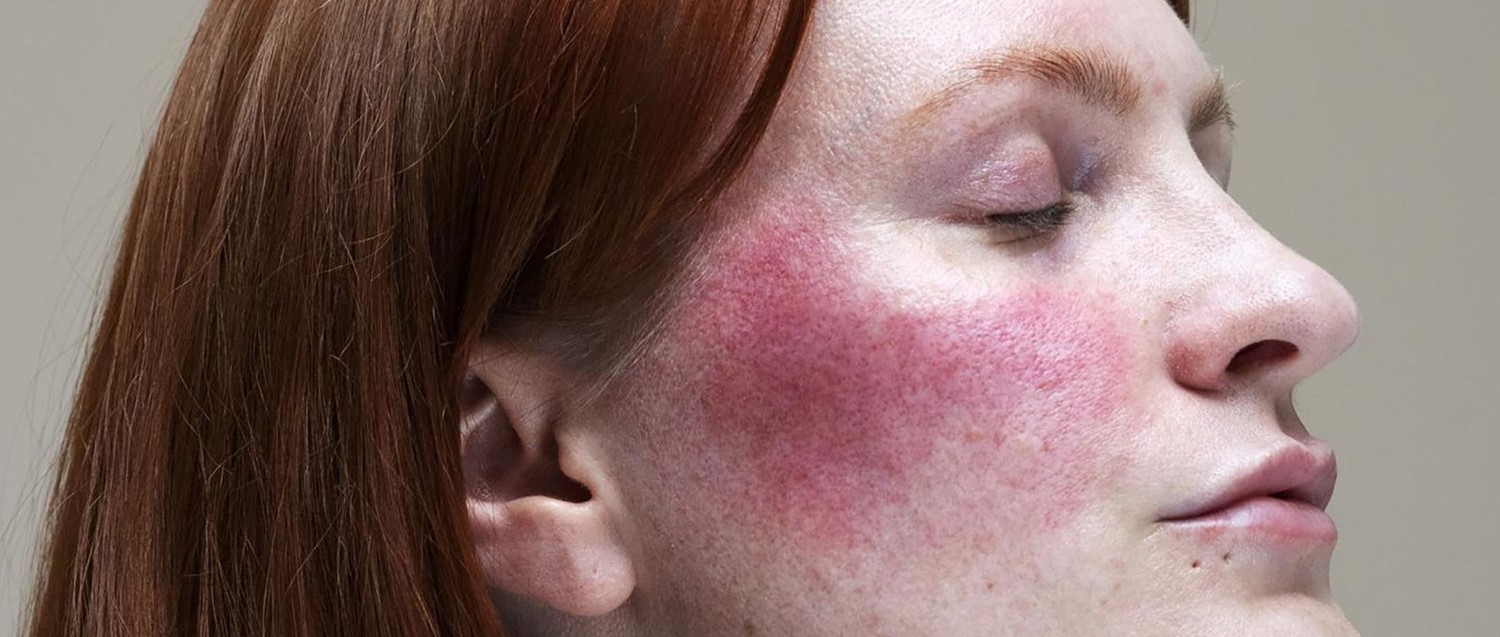
Living with rosacea can be difficult. It can be a great source of stress and really impact your quality of life when you have to deal with any facial skin problems. Sadly, 10% of the population experience this skin condition, but the good news is that there are many treatment options. The right one for you will depend on which symptoms you have.
by Amberley Davis

Skin, nail and hair health
What are the common causes of summer rashes?
Higher temperatures or sun exposure can sometimes be bad news for skin, resulting in summer rashes. Skin rashes can be more common in hot or humid conditions - particularly heat rash - so if you or your child have a new rash at this time of year there could be a number of different causes.
by Lawrence Higgins
About the authorView full bio

Gillian Harvey
Freelance Writer
BA (Hons) English
Gillian is a freelance writer and columnist for a variety of national newspapers and magazines.
About the reviewerView full bio

Dr Sarah Jarvis
Clinical Consultant
MA (Cantab), BM, BCh (Oxon), DRCOG, FRCGP, MBE
After training in medicine at Cambridge and Oxford, Dr Sarah Jarvis MBE became a GP.
Article history
The information on this page is peer reviewed by qualified clinicians.
Article also available in English, German, Spanish, French, Italian, Portuguese, Hindi, Hebrew, Arabic, and Swedish.
30 Apr 2019 | Latest version
Join the conversation
Share your thoughts or experiences with others in our patient communities.

Ask, share, connect.
Browse discussions, ask questions, and share experiences across hundreds of health topics.

Feeling unwell?
Assess your symptoms online for free
Sign up to the Patient newsletter
Your weekly dose of clear, trustworthy health advice - written to help you feel informed, confident and in control.
By subscribing you accept our Privacy Policy. You can unsubscribe at any time. We never sell your data.
More in skin, nail and hair health
- Chemical peels: benefits, costs, risks, and recovery
- Does caffeine shampoo really work for hair loss?
- Does the menopause cause hair loss?
- Foods that help improve skin problems
- How the seasons affect your eczema
- How to avoid tick bites and Lyme disease
- How to keep your feet problem-free
- Is coconut oil good for your hair?
- Is your exercise routine giving you acne?
- Micellar water: skincare benefits and uses
- The health benefits of seawater
- The simplest men's skincare routine
- What does aftersun do and do you really need it?
- What does vitamin C serum do?
- UpdatedWhat is exfoliation, and why is it important?
- What it's really like to live with rosacea
- What to do if you have an infected ingrown hair
- What to do if you're stung by a sea urchin
- Why do we have nails?
- NewWhy losing weight can cause hair loss - and what to do about it