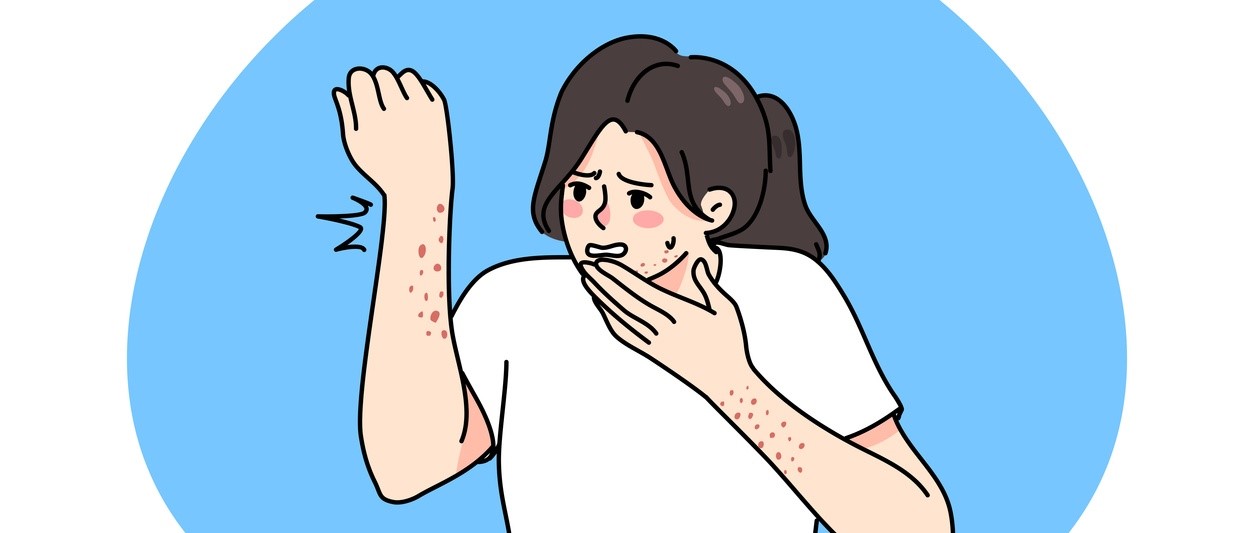
Aumento dei casi di scabbia nel Regno Unito
Revisione paritaria di Dr Krishna Vakharia, MRCGPAutore Amberley DavisPubblicato originariamente 4 Jan 2024
Rispetta le linee guida editoriali
- ScaricaScarica
- Condividi
- Language
- Discussione
- Versione audio
- Aggiungi alle fonti preferite su Google
The number of people with scabies is around double the expected amount for this time of year. We explain what scabies is, how to spot it, and what to do about it.
Doctors report surge in scabies
According to a new report from the British Association of Dermatologists (BAD), 8 out of the 9 regions across the UK have seen an increase in scabies this year.
Professor Kamila Hawthorne, chair at the Royal College of General Practitioners (RCGP) commented on the surge: "Since July, GPs have seen a growing rate of scabies - at a consistently higher level than the five-year average and the seasonal norm. At the end of November, the rate of scabies was double the seasonal average."
The North of England appears to be most affected. Due to the highly contagious nature of scabies, outbreaks in nursing homes, care homes, and university accommodation are more common, where people are closer together.
How to prevent scabies
Scabbia is an intensely itchy skin condition caused by tiny insects known as mites, which are almost invisible to the naked eye. It can spread between people through close skin contact.
Therefore, the best way to protect yourself against scabies is to:
Avoid touching someone who shows the symptoms below.
Avoid sharing clothes, towels, and bedsheets with them.
Hot wash your bedding and towels at 50°C or above if they have been used by them.
Anyone can get scabies, so it's important to know the signs so it can be treated and prevented from spreading.
How to spot scabies
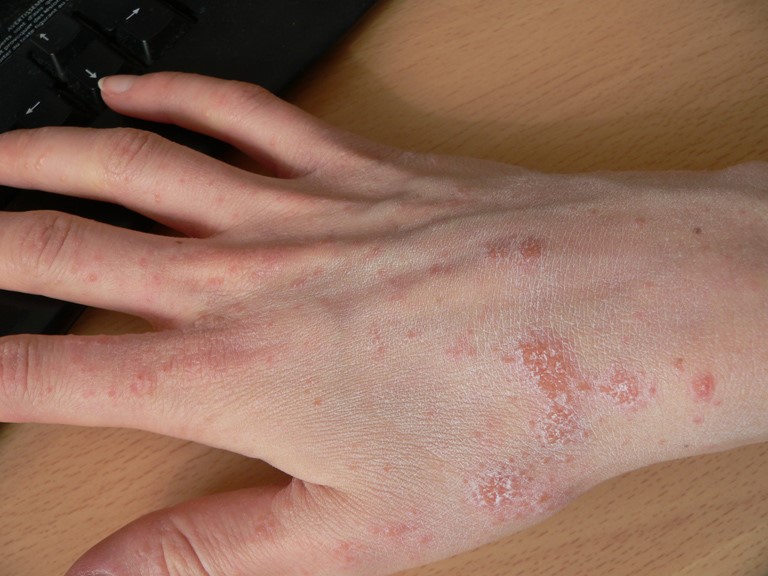
Scabies appears as blotchy, lumpy red rashes. It's common to first notice them on your hands, and they also tend to form on the stomach, lower back, and thighs - although they can appear anywhere on your body.
These rashes are often very itchy and cause you to scratch the affected areas, which can further damage your skin. It might be that this itchiness starts in one place, and then spreads to other areas you touch.
You might also see small dark-grey lines on your skin, most commonly in between your fingers, on your wrists, and in the palms of your hands. However, these aren't always visible.
Scabies rash on hand
What to do if you have scabies
If you think you might have scabies:
It's important to get treatment to help prevent the condition spreading to others.
Try and avoid skin contact with other people as much as possible.
Either your pharmacist or GP can diagnose this condition based on how your rash looks.
Treatment involves a cream or lotion you apply to your skin.
In the UK, the two main treatment creams are called permethrin and malathion. These are usually available in pharmacies and GP surgeries, however the surge in scabies cases comes during a shortage of both medicines.
This is thought to be due to the increase in demand, supply chain issues, a rise in the cost of raw materials, and the war in Ukraine, according to BAD1.
Currently, the availability of scabies treatment will depend on where you are, so it's important that you try your pharmacist or doctor, instead of suffering this uncomfortable condition and possibly passing it on to others.
If you have problems getting treatment, home remedies like neem, tea tree oil, and clove oil may help ease your itching in the meantime but it won't get rid of the mites.
Ulteriori letture
Scelte del paziente per Eruzioni cutanee

Salute della pelle, delle unghie e dei capelli
Fattori scatenanti comuni della rosacea e come evitarli
One in ten people in the UK are thought to be suffering from rosacea - a condition that causes redness and flushing of the skin. Like many skin conditions, its exact cause is unknown. But the good news is that treatments are available, and people living with rosacea can take steps to minimise redness and flare-ups.
di Gillian Harvey
Salute della pelle, delle unghie e dei capelli
Com'è davvero vivere con la rosacea
When Lex Gillies was 21, she went to the doctor with symptoms she describes as 'unbearable'. Over the previous three years, her always-sensitive skin had become increasingly prone to flushing, and that flushing was taking longer to go down.
di Abi Millar
Informazioni sull'autoreVisualizza il profilo completo

Amberley Davis
Scrittore senior
BA (Hons), CPD
Amberley è una scrittrice senior presso Patient e ha scritto ampiamente su una gamma di argomenti relativi alla salute e al benessere.
Informazioni sul recensoreVisualizza il profilo completo

Dr Krishna Vakharia, MRCGP
Direttore Sanitario per la Salute, Optum UK
MBChB, MRCGP(2013), BMedSci (hons), DFSRH, DRCOG, PGDipDerm (Distn)
La Dott.ssa Krishna Vakharia è un medico di base del NHS. È anche un'esaminatrice regolare per il Diploma post-laurea in Dermatologia Pratica presso l'Università di Cardiff, oltre ad essere il Direttore Medico per la salute presso Optum UK.
Storia dell'articolo
Le informazioni su questa pagina sono revisionate da clinici qualificati.
Articolo disponibile anche in Inglese, Tedesco, Spagnolo, Francese, Italiano, Portoghese, Hindi, Ebraico, Arabo, and Svedese.
4 Jan 2024 | Pubblicato originariamente
Autore:
Amberley DavisRevisione paritaria di
Dr Krishna Vakharia, MRCGP

Chiedi, condividi, connettiti.
Esplora le discussioni, fai domande e condividi esperienze su centinaia di argomenti di salute.

Non ti senti bene?
Valuta i tuoi sintomi online gratuitamente
Iscriviti alla newsletter di Patient
La tua dose settimanale di consigli sulla salute chiari e affidabili - scritti per aiutarti a sentirti informato, sicuro e in controllo.
Abbonandoti accetti i nostri Informativa sulla Privacy. Puoi annullare l'iscrizione in qualsiasi momento. Non vendiamo mai i tuoi dati.
Più sulla salute della pelle, delle unghie e dei capelli
- Ritorno a scuola: come controllare tuo figlio per pidocchi e lendini
- Biotina: le vitamine per la crescita dei capelli funzionano davvero?
- La forfora e il prurito del cuoio capelluto possono portare alla perdita di capelli?
- NuovoLe maschere facciali a LED funzionano davvero?
- Bio-Oil aiuta a ridurre le cicatrici da acne?
- Bio-Oil funziona sulle smagliature?
- Piani di gestione dell'eczema: aiutano a controllare il tuo eczema?
- Alimenti che aiutano a migliorare i problemi della pelle
- Acido glicolico: benefici per la pelle, effetti collaterali e altro
- Come evitare le punture di zecche e la malattia di Lyme
- Come prendersi cura della pelle in inverno
- Come scegliere la crema solare giusta
- Come proteggere i tuoi bambini dal sole quest'estate
- Come prendersi cura della propria pelle durante la chemioterapia
- Come gestire i problemi della pelle in menopausa
- L'aloe vera fa bene alla tua pelle?
- Retinolo: benefici per la cura della pelle, effetti collaterali e altro
- I migliori modi per eliminare i pidocchi
- Cosa provoca la comparsa di orticaria sulla nostra pelle?
- AggiornatoCosa fa l'aftersun e ne hai davvero bisogno?