Calcoli tonsillari
Tonsilloliti
Revisione paritaria di Dr Toni Hazell, FRCGPUltimo aggiornamento di Dr Philippa Vincent, MRCGPUltimo aggiornamento 17 Dic 2024
Rispetta le linee guida editoriali
- ScaricaScarica
- Condividi
- Language
- Discussione
- Versione audio
- Aggiungi alle fonti preferite su Google
In questa serie:Mal di golaTonsilliteTonsillectomiaFebbre ghiandolare
I calcoli tonsillari sono pietre che possono formarsi nella parte posteriore della gola all'interno delle tonsille. Non sono gravi ma a volte possono causare problemi come mal di gola o alito cattivo.
A colpo d'occhio
Tonsil stones are white or yellow collections of debris at the back of the throat.
Sono composti da minerali, cellule, tessuti e batteri che si induriscono nelle fessure delle tonsille.
I sintomi possono includere alito cattivo, difficoltà a deglutire o una tosse irritante.
Una buona igiene orale, i gargarismi e l'evitare di fumare possono aiutare a prevenirli.
Alcuni calcoli tonsillari possono essere rimossi a casa utilizzando gargarismi o un'irrigazione delicata.
Cosa sono i calcoli tonsillari?
I calcoli tonsillari, altrimenti noti come tonsilloliti, sono un accumulo bianco o giallo di detriti nella parte posteriore della gola. Tendono a verificarsi in persone che hanno tonsille grandi o irregolari.
Le tonsille sono le masse morbide nella parte posteriore della gola, una su ciascun lato. Sono linfonodi che a volte si ingrossano per aiutare a combattere le infezioni.
Non tutti hanno le tonsille visibili - le persone le cui tonsille non sono visibili è improbabile che sviluppino tonsilloliti. Alcune persone hanno tonsille grandi con creste frastagliate.
Come appaiono i calcoli tonsillari?
Calcoli tonsillari
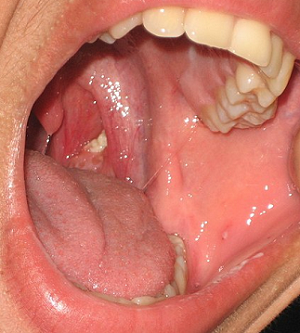
Sembrano piccoli ciottoli bianchi, gialli o grigio chiaro, negli angoli e nelle fessure delle tonsille.
Cosa causa i calcoli tonsillari?
Tonsil stones are made up of minerals - mainly calcium salts. Debris from the surrounding cells, tissues and bacteria gets stuck in the crevices of the tonsils and then hardens (becomes calcified). They can be hard, like tiny rocks, or quite soft. They are usually quite small, but can sometimes get bigger.
They are not cancerous growths, and they are not attached to the tissues around them, but instead are stuck in the crevices of the tonsils.
Le calcolosi tonsillare può in realtà aiutare il sistema immunitario bloccando batteri e virus dall'entrare nel corpo.
I tonsilloliti possono verificarsi a qualsiasi età, ma sono più comuni negli adulti che nei bambini. Alcune persone ne sviluppano solo uno, mentre altre possono averne più di uno alla volta. In alcune persone, quando ne eliminano uno, un altro si forma in un'altra parte delle loro tonsille.
Perché continuo a formare calcoli tonsillari?
Some people are more prone than others to developing tonsil stones.
I fattori di rischio includono:
Fumo.
Scarsa igiene orale.
Infezioni ricorrenti delle tonsille.
Avere cripte tonsillari.
Le cripte tonsillari sono le pieghe, le fessure e le crepe che si trovano nelle tonsille di alcune persone. Sono più comuni nelle tonsille più grandi o dall'aspetto irregolare.
Quali sono i sintomi dei calcoli tonsillari?
Spesso non ci sono sintomi di calcoli tonsillari, ma quando ci sono possono includere:
Una sensazione di qualcosa bloccato in fondo alla gola.
Disagio nella deglutizione.
Un cattivo sapore in bocca.
Una tosse irritante.
Mal d'orecchio (sometimes a problem in the mouth can 'radiate' to the ear due to the way that the pain signal is carried along nerves).
Sono necessari test per i calcoli tonsillari?
Di solito i calcoli tonsillari (tonsilloliti) possono essere visti nella parte posteriore della bocca e non sono necessari test speciali. A volte vengono visti casualmente su radiografie o scansioni effettuate per altri motivi.
Come eliminare i calcoli tonsillari
In molti casi i calcoli tonsillari possono essere rimossi a casa. Il trattamento non è necessariamente necessario, soprattutto se non ci sono sintomi.
Salt water gargle. Prova a fare gargarismi con un collutorio o una soluzione di acqua salata. Questo potrebbe rimuovere i calcoli tonsillari.
Gentle irrigation. Questo comporta il getto delicato di acqua nella parte posteriore della bocca per cercare di rimuovere i calcoli tonsillari. È possibile acquistare una siringa appositamente per questo scopo, che ha una punta curva, o un kit di irrigazione. È importante seguire attentamente le istruzioni, poiché è possibile danneggiare le tonsille se si utilizza troppa forza. Questo può causare dolore e sanguinamento.
Cotton swabbing. Massaggiare delicatamente intorno alle tonsille con un bastoncino di cotone può staccare il calcolo tonsillare.
Surgical removal. Un chirurgo otorinolaringoiatra (ORL) può rimuovere i calcoli tonsillari che causano problemi, ma questo verrà fatto solo se i calcoli tonsillari sono:
Di grandi dimensioni.
Doloroso.
Causando infezioni batteriche ripetute e mal di gola.
A dentist may be able to help with the problem and can make the referral if needed.
Come prevenire i calcoli tonsillari
Una buona igiene orale helps with preventing tonsil stones. Teeth should be brushed twice a day, as advised by dentists, including the spaces in between them, to stop any debris accumulating.
Consider a raschietto per la lingua to keep the tongue clear of any gunk or germs which might contribute to a stone forming.
Gargarismi regolari with a mouthwash or salt water solution may also help.
Evita fumare e l'eccesso di alcol which can cause the mouth to be dry and may make tonsilloliths or tonsil stones more likely to build up.
For some people, an operation to flatten the surfaces of the tonsils may help to stop persisting problems with tonsilloliths recurring. This is called criptolisi and can be done either by laser treatment or another type of treatment called coblation cryptolysis. Questo potrebbe richiedere un'anestesia generale ma non è disponibile tramite il NHS.
Occasionalmente, la rimozione delle tonsille (tonsillectomia) è raccomandato per prevenire problemi continui con i calcoli tonsillari.
Scelte del paziente per Gola e tonsille

Orecchio, naso e gola
Tonsillectomia
Una tonsillectomia è un'operazione per rimuovere le tonsille dalla parte posteriore della gola. Altri opuscoli spiegano di più sulle tonsille, i mal di gola e le infezioni della gola. Questo opuscolo copre i rischi e i benefici dell'operazione e cosa aspettarsi prima, durante e dopo una tonsillectomia. Nota: le informazioni di seguito sono solo una guida generale. Le disposizioni spesso variano tra i diversi ospedali. Segui sempre le istruzioni fornite dal tuo medico o dall'ospedale locale.
di Dr Colin Tidy, MRCGP

Orecchio, naso e gola
Laringite
La laringite è un'infiammazione delle membrane mucose della tua scatola vocale (laringe), che ti provoca una voce rauca. È più comunemente dovuta a un'infezione, di solito un virus.
di Dott.ssa Rosalyn Adleman, MRCGP
Domande frequenti
I calcoli tonsillari sono un segno di qualcosa di serio?
No, i calcoli tonsillari generalmente non sono un segno di una condizione sottostante grave. Non sono crescite cancerose. Sono semplicemente accumuli di detriti, minerali e batteri che si induriscono nelle fessure delle tue tonsille.
I calcoli tonsillari possono essere dolorosi?
Sebbene molte persone non manifestino sintomi, i calcoli tonsillari possono talvolta causare disagio. Questo potrebbe includere una sensazione di qualcosa bloccato in gola, difficoltà a deglutire o persino mal d'orecchio, poiché i segnali del dolore possono irradiarsi attraverso i nervi.
Quanto sono comuni i calcoli tonsillari?
I calcoli tonsillari possono verificarsi a qualsiasi età, ma tendono ad essere più comuni negli adulti che nei bambini. Alcuni individui possono svilupparne solo uno, mentre altri potrebbero avere più calcoli contemporaneamente o sperimentarne la ricomparsa dopo la rimozione di uno.
Un medico generico può rimuovere i calcoli tonsillari?
L'articolo non afferma esplicitamente se un medico di base possa rimuovere i calcoli tonsillari. Tuttavia, menziona che un chirurgo otorinolaringoiatra (ORL) può rimuovere i calcoli tonsillari problematici e un dentista potrebbe anche essere in grado di assistere o fare un rinvio se necessario. Per la rimozione a casa, sono suggeriti metodi come gargarismi, irrigazione delicata o tamponamento con cotone.
Le tonsille criptiche diventano più grandi col tempo?
I calcoli tonsillari sono solitamente piuttosto piccoli. Tuttavia, l'articolo osserva che a volte possono diventare più grandi con l'accumulo continuo di minerali e detriti.
Ulteriori letture e riferimenti
- Bamgbose BO, Ruprecht A, Hellstein J, et al; La prevalenza di tonsilloliti e altre calcificazioni dei tessuti molli nei pazienti che frequentano la clinica di radiologia orale e maxillofacciale dell'università dell'Iowa. ISRN Dent. 22 gennaio 2014;2014:839635. doi: 10.1155/2014/839635. eCollection 2014.
- Alitosi; NICE CKS, settembre 2024 (accesso solo Regno Unito)
- Shikino K, Ikusaka M; Tonsillolith. Clin Case Rep. 2021 Jun 22;9(6):e04243. doi: 10.1002/ccr3.4243. eCollection 2021 Jun.
Informazioni sull'autoreVisualizza il profilo completo
Aggiornato da

Dr Philippa Vincent, MRCGP
Medico di base, Autore medico
MB BS, Bsc, MRCGP (2000), DCH, DFSRH, DRCOG
Dr Philippa Vincent è un medico di base del NHS che lavora nel nord di Londra.
Autore

Dr Mary Harding, MRCGP
Medico di base, Autore medico
BA, MA, MB, BChir, MRCGP, DFFP
La Dott.ssa Mary Harding si è laureata alla facoltà di medicina dell'Università di Cambridge nel 1989.
Informazioni sul recensoreVisualizza il profilo completo

Dr Toni Hazell, FRCGP
MBBS, BSc, FRCGP, DFSRH, Dip GU med, DRCOG, DCH (London, UK, 2000)
La Dott.ssa Toni Hazell si è laureata presso la St. Mary’s Hospital Medical School e ha completato il suo VTS al Northwick Park Hospital.
Storia dell'articolo
Articolo disponibile anche in Inglese, Tedesco, Spagnolo, Francese, Italiano, Portoghese, Hindi, Ebraico, Arabo, and Svedese.
Prossima revisione prevista: 16 Dic 2027
17 Dic 2024 | Ultima versione
13 Sept 2018 | Pubblicato originariamente
Autore:
Dr Mary Harding, MRCGP
Partecipa alla conversazione
Condividi i tuoi pensieri o esperienze con gli altri nel nostro comunità di pazienti.

Chiedi, condividi, connettiti.
Esplora le discussioni, fai domande e condividi esperienze su centinaia di argomenti di salute.

Non ti senti bene?
Valuta i tuoi sintomi online gratuitamente
Iscriviti alla newsletter di Patient
La tua dose settimanale di consigli sulla salute chiari e affidabili - scritti per aiutarti a sentirti informato, sicuro e in controllo.
Abbonandoti accetti i nostri Informativa sulla Privacy. Puoi annullare l'iscrizione in qualsiasi momento. Non vendiamo mai i tuoi dati.