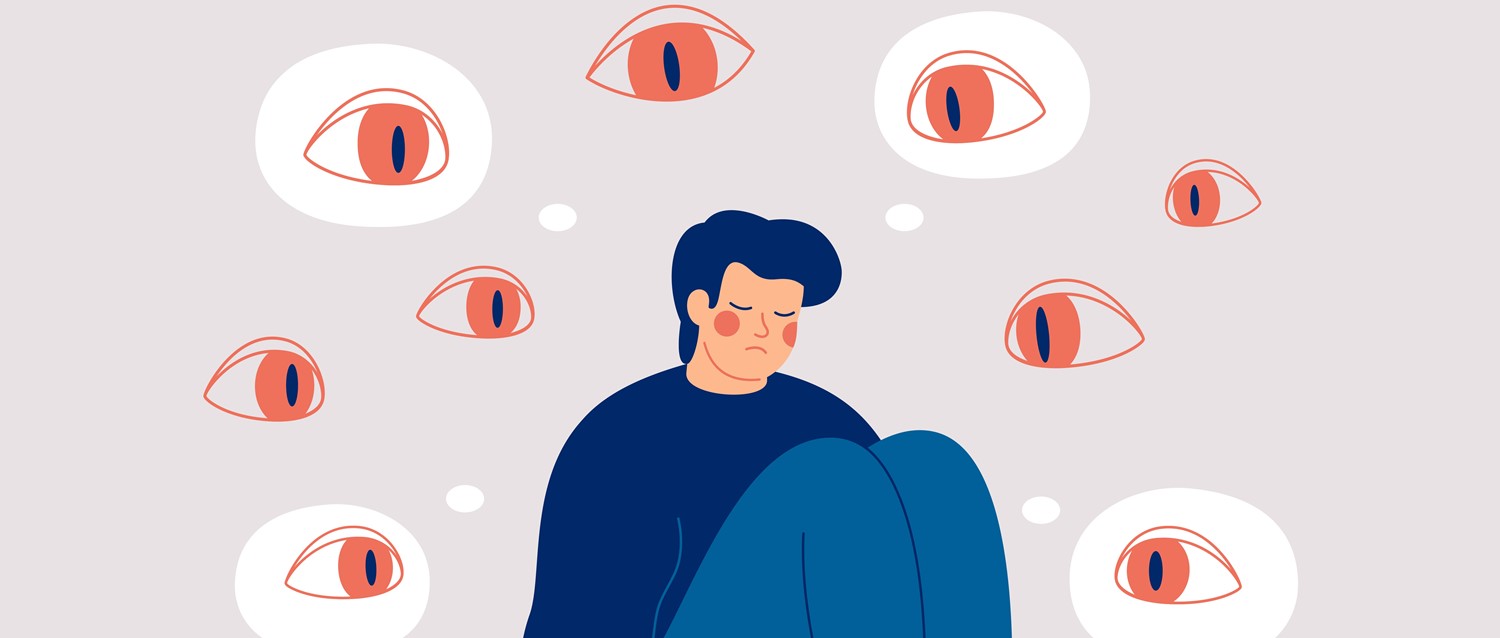
What it's like living with schizophrenia
Peer reviewed by Dr Krishna Vakharia, MRCGPAuthored by Emily Jane BashforthOriginally published 8 Jul 2022
Meets Patient’s editorial guidelines
- DownloadDownload
- Share
- Language
- Discussion
- Audio Version
- Add to preferred sources on Google
Despite the fact that millions of people have schizophrenia, it is still widely misunderstood. In this article, we're going to explore what living with schizophrenia is like from the perspective of someone who was diagnosed over 30 years ago.
Mental health support for adults and children
Online CBT and psychological therapy for adults and children aged 8–17. Onebright’s accredited clinicians support people experiencing anxiety, depression and other emotional challenges.
Trigger warning: this article contains references to self-harm and suicide
.
What is schizophrenia?
Schizophrenia is a long-term mental health disorder. While its cause is not clear, we do know that the symptoms of schizophrenia include hallucinations, delusions, disordered thinking, trouble conveying and processing feelings, and problems with behaviour and motivation.
Schizophrenia is treated by medication and social support.
According to the World Health Organization (WHO)1, schizophrenia affects approximately 24 million people worldwide. This rate is 1 in 222 people (0.45%) among adults.
Meet Graham ...
Meet Graham Morgan

Graham Morgan is 59 years old. He was diagnosed with schizophrenia over 30 years ago after an initial diagnosis of borderline personality disorder. He describes his younger self as ridden with "angst, loneliness, fear, and anger", as he grew up to believe there was "no point in life". He struggled with self-harm and suicide attempts, as well as admission to a psychiatric hospital.
A few years after his initial diagnosis of schizophrenia, Graham had travelled, participated in voluntary work, married and welcomed a child. However, he harboured a lot of anxieties about being a father, a partner, and his ability to work.
He experienced intrusive thoughts that told him he was a bad person, but he did not want to think this way. As part of his hallucinations, he became convinced that there were spirits in his home. Eventually, Graham was sectioned.
Getting diagnosed with schizophrenia
"Getting diagnosed with schizophrenia was not a surprise. I worked in mental health and sort of knew the likelihood of this news," admits Graham.
However, the process wasn't easy, as he had a short appointment with a psychiatrist and didn't feel as supported as he would've liked.
"Those days are vague in my mind, but I saw a psychiatrist every couple of months, maybe every month. I still needed support in coming to terms with my past but, since this was 30 years ago, at the time there didn't seem to be much available in terms of research into psychosis. The main concern of practitioners was that I took medication. Unfortunately, I often didn't and suffered as a consequence, so I was put on to a depot injection."
A depot injection is a slow-release form of medication. They can be used for various types of drugs, including some antipsychotics.
Pursuing schizophrenia treatment and rebuilding a life
Graham spent the next few years in and out of hospitals and was sectioned again. He had support from the Community Mental Health Team and continued to work and help raise his child, but still felt that his life was "falling to pieces".
He says his family life became toxic and, soon enough, he had no contact with either his ex-wife or his son. This took a huge mental toll on Graham, so he started seeing a Community Psychiatric Nurse (CPN), who he says was very good at supporting him and helping him work through his emotions.
After leaving the hospital, Graham was put on a community-based Compulsory Treatment Order. This is where conditions are set for his treatment. He has remained on this treatment plan for the last 12 years.
"I bought a very small house and regained a relationship with my family which had been shaky before I left my wife. I started to make friends in my own right and started to live more independently. I gained another wonderful CPN, saw a psychologist, and began tackling my drinking problem too," Graham shares.
He now lives with his partner, Wendy, and her twins, along with Dash the dog, and two rabbits. He works part-time, has written three books and is gearing up to celebrate his 60th birthday next year, which at one point in time he didn't think would be possible.
"My life is wonderful. I get good support from the mental health team, but I also love going to a well-being hub local to me. My main support is from my family and the network of friends I have."
A typical day living with schizophrenia
Graham says there is no "typical" day with schizophrenia, and each can be different. Some days he engages in activism work, speaking at conferences, and meeting with others who have mental health disorders. Other days, Graham does mundane things such as taking his partner to the station for work and meeting up with friends.
Graham also has fortnightly appointments for therapy and has extra support from a specialist team to tackle elements of his past. He adds that these spaces are important to him, as they make him feel safe to cry and talk about his feelings.
"When I feel low, I remind myself that soon Wendy will be home; we will kiss and cuddle and talk about work and I will annoy her by asking what to make for tea. The children might be with their dad, but they give me a big hug when they come back, and we share inside jokes."
Graham still struggles with alcohol dependency - which he says worsened following the death of his dad - and has disturbed sleep. He often feels detached from his emotions and struggles with feeling like global catastrophes are solely his fault. Luckily, he has people in his life who are able to notice when he is not engaged and to remind him of the joys of everyday life.
"I now feel like I have purpose and I realise that my life is immensely privileged. I have at long last realised that my family has always loved me despite some of the sadness in my life, and my professional support means I feel less alone," he says.
What other people should know about schizophrenia
Something Graham wants other people to know about schizophrenia is that life can still be wonderful alongside a diagnosis. However, it's important to understand that life isn't easy for everyone and showing compassion and dismantling misconceptions around schizophrenia are important.
"Sometimes my life has been horrendous, but despite that I have skied in the mountains, sailed over oceans, and walked in meadows. But that isn't everyone's reality - far from it. The illness is horrendous, but the prejudice and the way we are often treated by society can leave us lonely, poor, and incredibly sad indeed.
"I would love to see my peers given more chances and possibilities and helped to realise that they are valuable wonderful people."
If you suspect that you have schizophrenia, you should consult your GP as soon as possible - the earlier schizophrenia is diagnosed and treatment is started, the better. You can be referred for a mental health assessment by a team of professionals who will review your symptoms and check that they aren't the result of other causes. They may also assess you for other mental disorders.
If you suspect schizophrenia in a loved one and they are reluctant to seek help, it might be worth persuading them to see their GP or, in the instance of a rapidly worsening schizophrenic episode, you may need to go to A&E. In severe cases, people can be compulsorily detained in hospital under the Mental Health Act (2007)2.
Whatever your situation, whether a loved one or a patient, it's important to remember that you aren't alone.
Further reading
Patient picks for Other mental health problems

Mental health
How to stop procrastinating
From struggling to start that New Year's fitness resolution to delaying exam revision, procrastination can get in the way of your success. While it's perfectly normal to procrastinate every now and then, it can sometimes become a problem that impacts your health and achievements. By identifying the factors blocking your motivation, you can take steps to break the habit.
by Amberley Davis

Mental health
How borderline personality disorder affects your life
Borderline personality disorder (BPD) - also called emotionally unstable personality disorder - is a mood condition that can affect how someone interacts with other people. Yet despite BPD affecting an estimated one in 100 people, according to the charity Rethink Mental Illness, it is still commonly misunderstood. People with BPD may struggle with the way they think and feel about themselves and other people, which can impact many aspects of their lives.
by Lydia Smith
About the authorView full bio
Authored by

Emily Jane Bashforth
Feature Writer
NCTJ
Emily is a Feature Writer with Patient, writing articles on a variety of topics relating to health and well-being.
About the reviewerView full bio

Dr Krishna Vakharia, MRCGP
Chief Medical Officer for Health, Optum UK
MBChB, MRCGP(2013), BMedSci (hons), DFSRH, DRCOG, PGDipDerm (Distn)
Dr Krishna Vakharia is an NHS GP. She is also a regular examiner for the postgraduate Diploma in Practical Dermatology at Cardiff University as well as being the Chief Medical Officer for health at Optum UK.
Article history
Article also available in English, German, Spanish, French, Italian, Portuguese, Hindi, Hebrew, Arabic, and Swedish.
8 Jul 2022 | Originally published
Authored by:
Emily Jane BashforthPeer reviewed by
Dr Krishna Vakharia, MRCGP
Join the conversation
Share your thoughts or experiences with others in our patient communities.

Ask, share, connect.
Browse discussions, ask questions, and share experiences across hundreds of health topics.

Feeling unwell?
Assess your symptoms online for free
Sign up to the Patient newsletter
Your weekly dose of clear, trustworthy health advice - written to help you feel informed, confident and in control.
By subscribing you accept our Privacy Policy. You can unsubscribe at any time. We never sell your data.