Palpebra gonfia
Revisione paritaria di Dr Toni Hazell, FRCGPUltimo aggiornamento di Dr Caroline Wiggins, MRCGP Ultimo aggiornamento 27 May 2026
Rispetta le linee guida editoriali
- ScaricaScarica
- Condividi
- Language
- Discussione
- Versione audio
- Aggiungi alle fonti preferite su Google
A swollen eyelid is very common and is usually due to allergy, inflammation, infection, or injury. It can affect either the upper or lower eyelid, or both.
Punti chiave
Swollen eyelids are a common symptom of many conditions and are usually caused by infections, inflammation, allergies, or injury.
Symptoms include redness, puffiness, pain, itching, or a visible lump on the eyelid.
Il gonfiore delle palpebre può essere trattato con un impacco caldo, rimedi da banco come colliri o antistaminici e una pulizia regolare dell'area interessata.
Cause delle palpebre gonfie
A swollen eyelid is usually caused by inflammation from allergies, infection, or injury.
Swelling occurs when inflammation causes fluid to leak from blood vessels into the surrounding tissue, which is especially noticeable in the thin skin of the eyelids.
In some cases, swelling may be the only symptom, but it can also be accompanied by redness, itching, a gritty sensation, or soreness depending on the cause.
Cause comuni di palpebre gonfie includono:
Conjunctivitis (pink eye) which may be congiuntivite allergica oppure la congiuntivite infettiva.
Infezioni cutanee.
Eye irritation or rubbing.
Lesioni.
These causes are discussed in more detail below.
Calazio
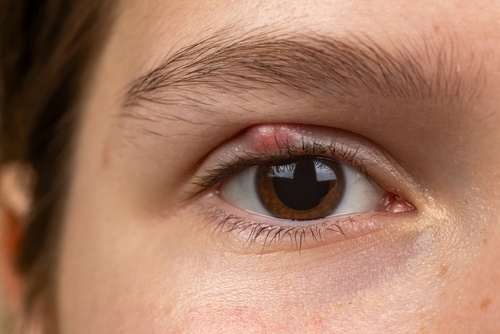
A chalazion is a small lump or swelling in the eyelid, sometimes causing the whole lid to swell if it becomes inflamed or infected.
It happens when an oil gland in the eyelid gets blocked, forming a small fluid-filled cyst (about 2-8 mm).
It’s more common on the upper eyelid and usually isn’t painful or itchy.
The area can look red or slightly darker than the surrounding skin.
Orzaiolo
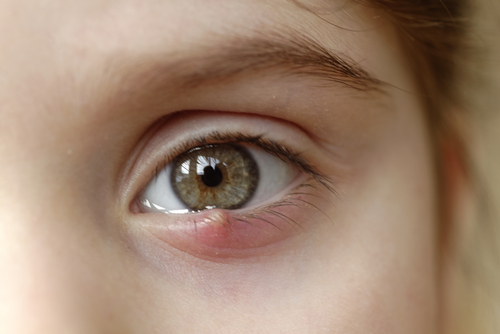
A stye is a common, painful infection at the base of an eyelash.
It appears as a red, swollen, pus-filled spot along the edge of the eyelid.
The infection and inflammation can spread, sometimes making the whole eyelid swell.
The eyelid is usually red, swollen, and can feel sore or tender.
© Di Andre Riemann, Pubblico dominio, tramite Wikimedia Commons
Blefarite
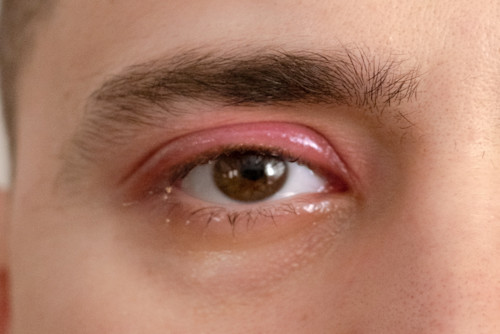
Blefarite is inflammation of the eyelids that can make the eyes feel sore, irritated, and gritty.
The eyelids often look puffy, pink-red, and slightly swollen, especially along the edges.
It can be a persistent or recurring problem.
It’s sometimes linked with skin conditions such as rosacea oppure dermatite seborroica.
© By clubtable, Public domain, via Wikimedia Commons
Congiuntivite (occhio rosa)
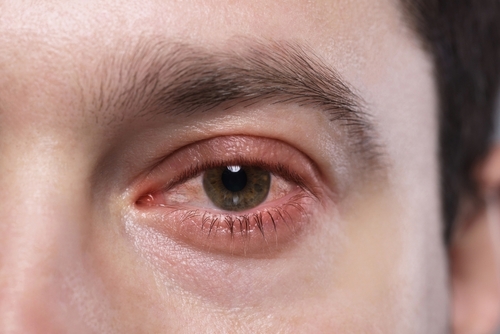
Conjunctivitis (pink eye) is inflammation or infection of the conjunctiva (the thin membrane covering the white of the eye and the inside of the eyelids).
Conjunctivitis can be either congiuntivite allergica, or due to sensitivities (to eye make-up, for example), or la congiuntivite infettiva.
Common symptoms include red/pink eyes, a gritty feeling, and mild soreness.
The eyelids may look puffy and slightly red. The eye can be watery or produce some discharge.
Allergie
Reazioni allergiche to allergens can cause eyelids to swell. An allergen is something which the body's immune system reacts to.
The body reacts to an allergen by releasing chemicals that cause swelling, redness, and itching.
The eyelids may feel tight and can swell enough to make opening the eyes difficult.
Common triggers include pollen (which causes febbre da fieno), pet hair, dust, make-up, shampoo, eye drops, contact lens solutions, and sometimes viruses or bacteria.
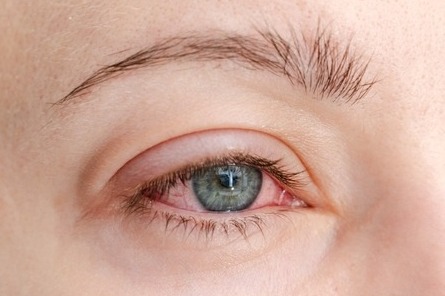
Skin infection
Eyelid skin infections usually cause noticeable swelling, redness, itching, and soreness.
Infection can spread to the eyelids from nearby areas of the face.
Common skin infections include cellulite, impetigine, and erysipelas.
Infection is more likely if the skin is broken or damaged.
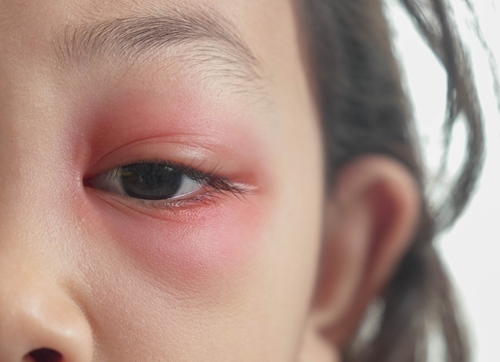
Ectropion ed entropion
Un ectropion occurs when part or all of the lower eyelid turns outwards away from the eye.
Un entropion occurs where the lower eyelid turns in towards the eye, causing the eyelashes to rub against the front of the eye.
The eyelids can occasionally become inflamed and a little swollen, although this is not usually dramatic.
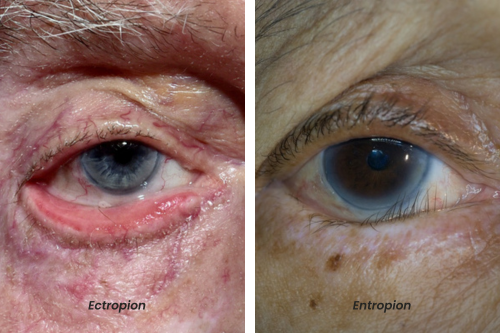
Eyelid irritation and rubbing
Eyelids can become puffy, swollen, and red due to irritation from grit, dust, smoke, or other environmental factors, even without an allergic reaction.
The eyes themselves are often red and watery when irritated.
Rubbing the eyes can make swelling worse by increasing blood flow to the area and causing fluid to leak into the eyelid tissue.
Continuous rubbing may also irritate the skin further, prolonging redness and puffiness.
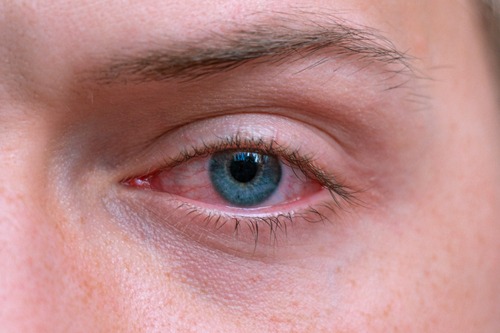
Lesione
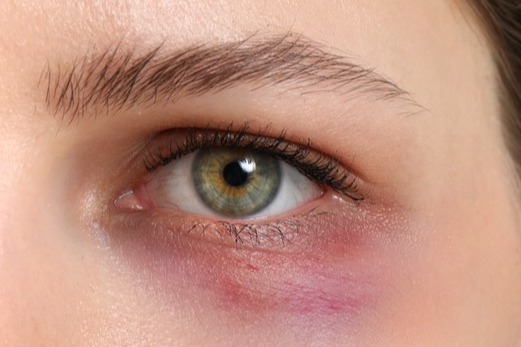
Direct injury to the eyelid usually causes swelling and bruising, which is often worse the day after the injury.
A black eye can result from injury to the eyelid, nose, or forehead.
Loose eyelid skin allows blood to pool easily, which leads to swelling.
As the black eye heals, swelling decreases and bruising changes colour before fading, but full recovery can take a few weeks.
Altre cause
Less common causes of swollen eyelids include:
Angioedema - a skin reaction that causes marked skin swellings in the eyelids and face that can be itchy.
Edema - when fluid builds up in the body, sometimes causing swelling in the eyelids.
Anafilassi (or anaphylactic shock) - a severe allergic reaction that can cause swollen eyelids as an early warning sign.
Sinusite - a sinus infection that can cause puffiness around the eyes, affecting the eyelids. The eyelids are not usually red, sore or itchy.
Scottatura solare - eyelids can easily burn in the sun which causes them to become swollen, red and sore.
Head trauma - significant head injuries, particularly to the forehead, can result in swelling and bruising of the eyelids as the blood moves underneath the skin, down the face due to gravity. A high-impact injury causing a fracture of the base of the skull can cause two swollen black eyes, sometimes called 'raccoon eyes'.
Crying - crying, particularly if it is prolonged, can cause swollen eyelids as the eyelids tend to absorb some of the tears.
Irritazione chimica e ustioni - some chemicals such as certain make-up, soaps, chlorine, tear gas, and cleaners can irritate or burn the eyelids, causing them to swell.
If a chemical gets in the eyes or on the eyelids, rinse immediately with running water for 5-10 minutes before seeking medical help.
Come trattare le palpebre gonfie
Treatment for swollen eyelids involves treating the underlying cause. However, some simple measures may be suggested, such as:
Cleaning the area (using clean cotton wool with very diluted baby shampoo and water).
Utilizzando un impacco caldo e umido.
Avoiding rubbing or touching your eyes.
Eyelid swelling caused by a medical condition may need specific treatment. Further treatment information is available by following the links to specific conditions.
When to seek medical attention for a swollen eyelid
Many cases of a swollen eyelid will get better on their own or can be treated with medication bought from a pharmacy.
You should seek medical attention urgently if:
Your eyesight is significantly impaired (more than just blurry because of a watery eye and recovering fully when you wipe your eyes).
You can feel a deep pain in the eye, rather than a gritty feeling on the surface of the eye.
The whole area around the eye is red and swollen. This may indicate a serious infection.
You are suffering from an allergic reaction called anafilassi as this is a medical emergency.
Who can help treat a swollen eyelid?
An optician, doctor or pharmacist is a sensible first step - they are well trained to deal with these issues and will advise if it is something that can be treated by them.
Prospettive
Most causes of swollen eyelids are not serious. See "When to seek medical attention" above for more information on this. Other causes are often easily treated. Some conditions may cause the swelling to come and go, for example, people who get eyelid swelling with febbre da fieno each year.
Domande frequenti
Quanto durerà una palpebra gonfia?
A swollen eyelid can last for a day, several days, or even several weeks depending on the cause. If your eyelid swelling hasn't improved after 24-48 hours, or is getting worse, you should seek attention from a pharmacist, optician, or doctor depending on your symptoms.
È meglio un impacco caldo o freddo per le palpebre gonfie?
A cold compress helps reduce swelling, puffiness, and redness. A warm compress soothes the eyelid and encourages the glands and pores in the skin to open, which may help to reduce swelling caused by a stye oppure chalazion. Pain may be helped by either a cold or warm compress, depending on the cause.
Il trucco può causare il gonfiore di una palpebra?
Make-up can cause an eyelid to swell due to an allergic reaction to ingredients, irritation because of sensitive skin, or from products contaminated with bacteria.
Can alcohol cause swollen eyelids?
Alcohol can cause your body tissues to hold more water than usual within it. This may be more noticeable in the thin skin of the eyelids than in other body areas.
La Dott.ssa Mary Lowth è un'autrice o l'autrice originale di questo opuscolo.
Scelte del paziente per Problemi alle palpebre

Salute degli occhi
Blefarite
La blefarite significa infiammazione delle palpebre. Provoca irritazione agli occhi e le palpebre possono essere gonfie e rosse. Può essere una condizione fastidiosa e ricorrente senza una cura definitiva. La vista è raramente compromessa.
di Dr Doug McKechnie, MRCGP
Salute degli occhi
Calazio
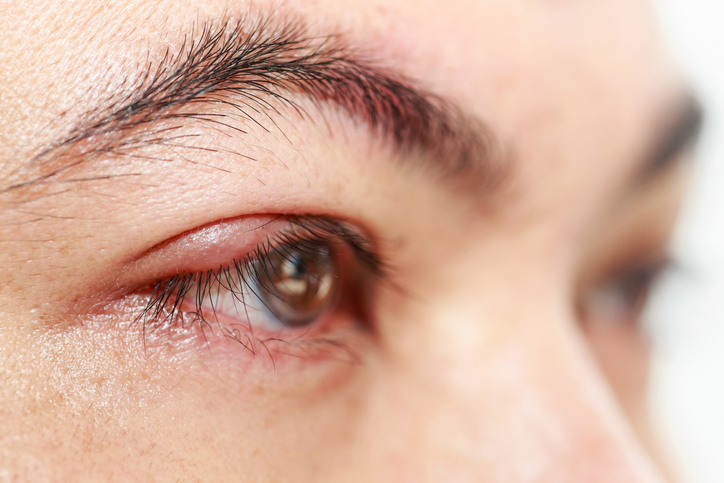
Un chalazion è un piccolo cisti che si forma sulla palpebra quando una ghiandola sebacea si ostruisce o si infiamma. Di solito è indolore e colpisce principalmente la palpebra superiore.
di Dr Philippa Vincent, MRCGP
Informazioni sull'autoreVisualizza il profilo completo

Dr Mary Elisabeth Lowth, FRCGP
MA (Cantab), MB, BChir, DFFP, DRCOG, PG Cert, Med Ed, FRCGP, MA (London)
La dottoressa Mary Lowth è stata medico di base nel Suffolk per 20 anni, specializzandosi in pediatria e protezione dell'infanzia, e successivamente nella documentazione della tortura.
Informazioni sul recensoreVisualizza il profilo completo

Dr Toni Hazell, FRCGP
MBBS, BSc, FRCGP, DFSRH, Dip GU med, DRCOG, DCH (London, UK, 2000)
La Dott.ssa Toni Hazell si è laureata presso la St. Mary’s Hospital Medical School e ha completato il suo VTS al Northwick Park Hospital.
Storia dell'articolo
Le informazioni su questa pagina sono scritte e revisionate da clinici qualificati.
Articolo disponibile anche in Inglese, Tedesco, Spagnolo, Francese, Italiano, Portoghese, Hindi, Ebraico, Arabo, and Svedese.
Next review due: 27 Nov 2030
27 May 2026 | Ultima versione
7 Mar 2018 | Pubblicato originariamente
Autore:
Dr Mary Elisabeth Lowth, FRCGP

Chiedi, condividi, connettiti.
Esplora le discussioni, fai domande e condividi esperienze su centinaia di argomenti di salute.

Non ti senti bene?
Valuta i tuoi sintomi online gratuitamente
Iscriviti alla newsletter di Patient
La tua dose settimanale di consigli sulla salute chiari e affidabili - scritti per aiutarti a sentirti informato, sicuro e in controllo.
Abbonandoti accetti i nostri Informativa sulla Privacy. Puoi annullare l'iscrizione in qualsiasi momento. Non vendiamo mai i tuoi dati.
Più sulla salute degli occhi
- Astigmatismo
- Calazio
- Sindrome di Charles Bonnet
- Lenti a contatto
- Lesione corneale e corpi estranei
- Gestire le lesioni oculari
- Occhi secchi
- Entropion
- Corpi mobili, lampi e aloni
- Infezione oculare (herpes simplex)
- Problemi agli occhi
- Arterite a cellule giganti
- Allergia agli acari della polvere e agli animali domestici
- Occlusione dell'arteria retinica
- Distacco della retina
- Occlusione della vena retinica
- Retinoblastoma
- Sindrome di Sjögren
- Emorragia sottocongiuntivale
- Lacrimazione degli occhi