
A hybrid approach to eating: your guide to the pegan diet
Peer reviewed by Dr Krishna Vakharia, MRCGPAuthored by Victoria RawOriginally published 14 Apr 2025
Meets Patient’s editorial guidelines
- DownloadDownload
- Share
- Language
- Discussion
- Audio Version
- Add to preferred sources on Google
We’re all familiar with hybrid concepts - whether it’s working, cars, or even plants. But have you heard of hybrid eating? The pegan diet is a fusion of two popular approaches - vegan and Paleolithic (Paleo) - that brings together the best of both worlds. This nutrient-rich eating style is quickly gaining traction, so let’s look at what it's all about and how it could benefit your health.
What is the pegan diet?
Developed by American naturopath Dr Mark Hyman, the pegan diet blends core elements from both the vegan and paleo diets, forming its own distinctive approach to healthy eating.
Vegan diet - excludes all animal products and by-products, focussing exclusively on plant-based foods such as fruits, vegetables, grains, legumes, nuts, and seeds.
Paleo diet - sometimes known as 'the Caveman diet' - prioritises foods our ancestors would have naturally hunted or foraged, such as meat, eggs, seafood, fruits, nuts, seeds and vegetables. It excludes processed foods, grains and dairy products.
Debbie Grayson, Pharmacist and Nutritional Therapist, Practice With Confidence, Greater Manchester, UK explains that the pegan diet primarily revolves around eating nutrient-dense foods.
"Its key principles are that 75% of your plate should consist of vegetables, fruits, nuts and seeds," she says. "Additionally, include small portions of high quality, responsibly farmed animal protein, along with healthy fats, and low glycaemic index (GI) carbohydrates. The pegan diet also minimises processed foods and sugar, and avoids dairy and gluten."
Is the pegan diet good for you?
The pegan diet prioritises non-processed foods packed with a rich array of vitamins, minerals, and antioxidants which help safeguard your body from disease, and boost your immune system.
A focus on healthy fats - including omega-3 fatty acids and lean proteins - all helps to maintain good heart health, reduce inflammation, and support muscle repair.
Grayson explains that the pegan diet's low GI content also promotes better blood sugar control. It's high fibre content also supports a healthy weight, keeping you feeling fuller for longer while helping to maintain a healthy gut microbiome.
She adds that while the pegan diet offers obvious health benefits, it comes with some potential drawbacks.
The diet can be restrictive due to the exclusion of dairy products, which may result in deficiencies in essential nutrients such as calcium - a mineral that's vital for your bone health.
Additionally, gluten is prohibited on the pegan diet. Since gluten-containing grains are a valuable source of fibre, eliminating them may reduce potential health benefits such as improved heart health, and a lowered chance of developing type 2 diabetes and certain cancers that can be seen in diets with higher fibre intake.
Grayson says: "Restrictive diets can be particularly problematic for those with a history of eating disorders. Sourcing organic and sustainably produced foods can also be expensive."
What can I eat on the pegan diet?
The pegan diet emphasises nutrient-dense, whole, and minimally processed foods. It blends the strengths of both vegan and Paleo diets while sidestepping some of their more restrictive aspects.
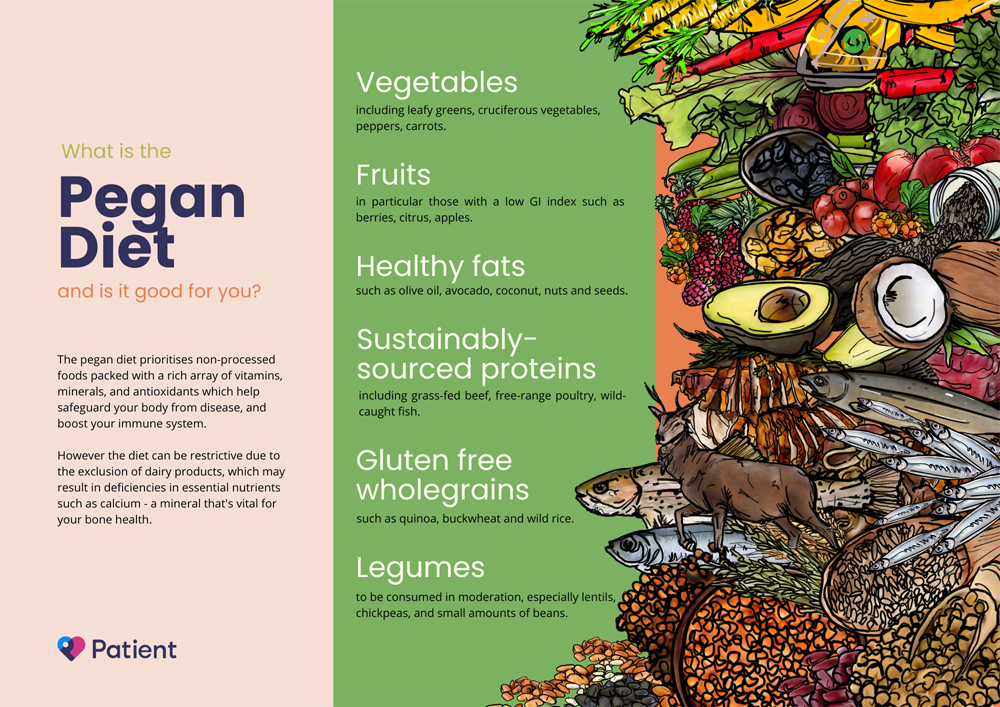
Grayson outlines its core food groups:
Vegetables - including leafy greens, cruciferous vegetables, peppers, carrots.
Fruits - in particular those with a low GI index such as berries, citrus, apples.
Healthy fats - such as olive oil, avocado, coconut, nuts and seeds.
Sustainably sourced protein - including grass-fed beef, free-range poultry, wild-caught fish.
Gluten-free wholegrains - such as quinoa, buckwheat and wild rice.
Legumes - to be consumed in moderation, especially lentils, chickpeas, and small amounts of beans.
What foods to avoid on the pegan diet?
The pegan diet is less prescriptive than its paleo and vegan counterparts. However, it does continue to advise against eating certain foods.
According to Grayson, these include:
Dairy with small amounts of goat or sheep products.
Gluten-based grains.
Processed sugars and artificial sweeteners.
Refined and processed oils - especially vegetable oils.
Pegan diet
Graphic: Ben Hudson
Pegan meal ideas
If you have underlying health conditions, it’s best to talk to your healthcare provide before starting any new diet - especially in light of the potential drawbacks mentioned above.
However, if you're mindful of the these restrictions and have no pre-existing health concerns, here are some pegan-inspired meal ideas to enjoy throughout the day.
Breakfast - fruit salad with strawberries, blueberries, raspberries and fresh mint leaves, topped with sliced almonds and a splash of lemon juice.
Lunch - grilled salmon and creamy avocado served with spinach or mixed greens, finished with a sprinkle of pumpkin seeds.
Dinner - Mushroom stir-fry with red bell peppers, and broccoli florets, with garlic and onions, served on a bed of cauliflower rice.
The pegan diet is overall a pretty healthy way of eating. It may support heart health, reduce inflammation, and help protect against certain diseases. That said, like any diet that cuts out specific foods, it can leave out some important nutrients - so it’s worth taking note of these potential gaps before jumping in.
Patient picks for Diet
Diet and nutrition
Wegovy diet: Foods to eat and avoid
If you’ve started using Wegovy for weight loss, or you’re thinking about it, it’s very normal to wonder what foods you should or should not eat. In this article, Nutrition experts at Genwell offer their advice on what you should really be eating to get the most out of Wegovy.
by Bogomila Tosheva
Diet and nutrition
How diet affects your heart
The expression 'you are what you eat' is most true of all where your heart is concerned. What you put into your body has a huge impact on your liver, your bowel, your kidneys, and your brain - but also on your arteries, which supply all your organs with vital oxygen.
by Josh Alderman
About the authorView full bio
Authored by

Victoria Raw
Feature Writer
BA (Hons), English Literature
Victoria is a content writer at Patient, with special interests spanning mental wellbeing, societal trends and the impact of technology on our health.
About the reviewerView full bio

Dr Krishna Vakharia, MRCGP
Chief Medical Officer for Health, Optum UK
MBChB, MRCGP(2013), BMedSci (hons), DFSRH, DRCOG, PGDipDerm (Distn)
Dr Krishna Vakharia is an NHS GP. She is also a regular examiner for the postgraduate Diploma in Practical Dermatology at Cardiff University as well as being the Chief Medical Officer for health at Optum UK.
Article history
Article also available in English, German, Spanish, French, Italian, Portuguese, Hindi, Hebrew, Arabic, and Swedish.
Next review due: 16 Apr 2028
14 Apr 2025 | Originally published
Authored by:
Victoria RawPeer reviewed by
Dr Krishna Vakharia, MRCGP
Join the conversation
Share your thoughts or experiences with others in our patient communities.

Ask, share, connect.
Browse discussions, ask questions, and share experiences across hundreds of health topics.

Feeling unwell?
Assess your symptoms online for free
Sign up to the Patient newsletter
Your weekly dose of clear, trustworthy health advice - written to help you feel informed, confident and in control.
By subscribing you accept our Privacy Policy. You can unsubscribe at any time. We never sell your data.