
10 rimedi casalinghi per un rapido sollievo dall'emicrania
Migraine remedies
Revisione paritaria di Dr Colin Tidy, MRCGPAuthored by Heather AinsworthPubblicato originariamente 22 Oct 2025
Rispetta le linee guida editoriali
- ScaricaScarica
- Condividi
- Language
- Discussione
- Versione audio
- Add to preferred sources on Google
Migraines are more than ‘just a headache.’ They can be intense, throbbing, and often come with feeling sick, light sensitivity, and the need to shut out the world. If you’ve ever found yourself desperate for relief but unsure about what works - you’re not alone.
Fortunately, there are several effective ways to manage migraines right at home.

In questo articolo:
Video picks for Emicrania
Migraines can strike at the worst times - whether you’re working from home on a deadline, juggling the chaos of parenting, or simply trying to unwind in front of the TV.
The pain, sensitivity to light, and brain fog can make even simple tasks feel impossible. When a emicrania hits, fast relief becomes the top priority.
While not every remedy works for everyone, these home remedies are some of the most effective for easing symptoms and helping you get back on track with your day.
© Paziente / Heather Ainsworth
Continua a leggere sotto
Migraine remedies
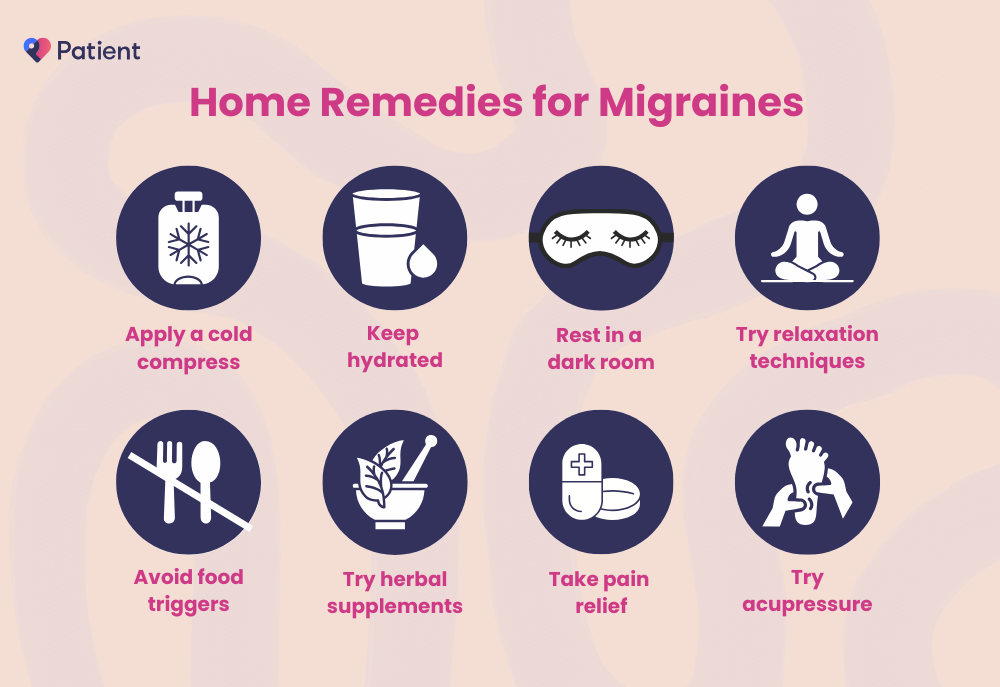
1. Apply a cold compress
Using a cold compress on your forehead, neck, or temples, and moving to a cooler environment may help reduce the severity of a migraine attack.1
Use the cold compress for 15-20 minutes at a time, then take a 15 minute break before reapplying. Always ensure a cold pack is wrapped in a tea towel to avoid damaging your skin.
2. Stay hydrated
Disidratazione can trigger or worsen migraines. 2Sip cold water slowly as rapid drinking can upset your stomach or cause brain freeze.
You can also try drinking coconut water or an electrolyte drink if you’ve been sweating a lot or having trouble eating. Aim to stay consistently hydrated throughout the day to prevent migraines from getting worse or coming back.
3. Rest in a dark, quiet room
Light and noise are major migraine triggers.3 Resting in a dark, quiet room as soon as a migraine starts may help ease symptoms.
Try:
Closing any curtains or blinds, switching off electronics, and resting your head.
Using an eye mask and earplugs for added comfort.
Even 20-30 minutes of rest in a peaceful environment could significantly reduce pain.
4. Try deep breathing or relaxation techniques
Stress is one of the most common migraine triggers.4 Adding relaxation into your daily routine may help prevent and relieve migraines.
Try:
Respirazione profonda: inhale slowly for 4 seconds, hold for 4, and exhale for 4, and repeat.
Gentle yoga or stretching: stretch your neck or shoulders to help remove tension.
Regular relaxation practice could lower stress hormones and improve overall migraine control.
5. Take supplements
Supplements including magnesium, vitamin B2 (riboflavin), coenzyme Q10, vitamin D, and omega-3 may help manage and prevent migraines by improving energy levels in brain cells, calming nerve activity, and reducing inflammation.5
You should take them daily for several months to determine if they are effective.
6. Try acupressure
Applying pressure to specific points on the body may promote relaxation, improve blood flow, and reduce muscle tension, which may lessen the intensity or frequency of migraine pain.6
Common pressure points for migraine relief are the head, face, arms, hands, and feet.
7. Limit screen time
Limiting screen time could help reduce migraines by preventing eye strain, bright light exposure, and overstimulation that can trigger or worsen headache pain.7
If you really need to be viewing a screen, try turning down the brightness to help with light sensitivity.
8. Try herbal remedies
Some herbal remedies such as peppermint, ginger, and lavender oil, might help relieve migraine symptoms by relaxing muscles,8 reducing inflammation,9 and blocking pain signals.10
Try:
Putting a few drops of diluted peppermint oil into a bath.
Taking a ginger supplement or massaging diluted essential ginger oil into your temples.
Adding a few drops of lavender oil into hot water and inhaling the vapour or massaging it into the skin.
9. Avoid food triggers
Avoiding common food triggers such as aged cheeses, processed meats, chocolate, alcohol, caffeine , artificial sweeteners, and pickled or fermented foods, may help prevent migraines from happening or worsening.11
Triggers can vary from person to person, so keeping a food and symptom diary can help identify personal sensitivities.
10. Take non-steroidal anti-inflammatory drugs (NSAIDs)
Sometimes, combining natural remedies with medicine is the most effective approach for quick pain relief.
Common over-the-counter NSAIDs include:
Ibuprofen.
Aspirina.
For best results, take the medicine as soon as symptoms begin. Avoid frequent use - more than twice a week - as overuse can lead to rebound headaches.
When to see a doctor for migraines
Dr Katy Munro, GP and Senior Headache Specialist at the National Migraine Centre, explains: “You should seek urgent medical attention if you experience any of the following:
Sudden, severe headache.
A new headache with fever, neck stiffness, or altered mental status.
Weakness, vision loss, or confusion.
A headache with painful red eye and changes to your vision.
A headache after trauma - such as a fall.
A headache if you have a weak immune system, are pregnant, or have cancer.
Any of these symptoms could be a sign of something serious that requires emergency treatment.
"See a doctor if your migraine is not responding to treatment, is getting worse over time, or lasts longer than 7 days,” she says.
Sommario
Torna ai contenutiFor fast migraine relief at home you should stay hydrated, rest in a dark room, use a cold compress, try relaxation techniques, limit screen time, avoid food triggers, and take NSAIDs.
Everyone’s migraine triggers are different, so try a few strategies to see what works best for you, and keep track of patterns with a migraine trigger diary.
For more information on how to treat migraines, read our information leaflet called migraine treatment.
Patient picks for Emicrania
Cervello e nervi
Vyepti: un nuovo farmaco per prevenire le emicranie
Un nuovo farmaco per l'emicrania cronica potrebbe migliorare l'accesso a un trattamento efficace per la prevenzione dell'emicrania nel Regno Unito. Quanto è efficace Vyepti (eptinezumab)? E chi potrebbe beneficiare del trattamento?
di Amberley Davis

Cervello e nervi
Può una dieta a base di piante migliorare le tue emicranie?
Un nuovo rapporto si aggiunge al crescente corpo di prove che suggeriscono che le emicranie potrebbero essere trattate efficacemente seguendo la dieta a basso contenuto infiammatorio quotidiano (LIFE). Interamente a base vegetale e ricca di verdure a foglia verde scuro, la dieta LIFE potrebbe essere un trattamento estremamente efficace per le emicranie e molte altre malattie croniche.
di Amberley Davis
Ulteriori letture e riferimenti
- 1Sprouse-Blum et al: Targeted Neck Cooling in the Treatment of the Migraine Patient
- Korsha et al: Association of drinking water and migraine headache severity
- Artemenko et al: Migraine and light: A narrative review
- Stubberud et al: Is there a causal relationship between stress and migraine?
- Hajhashemy et al: Practical supplements for prevention and management of migraine attacks
- Hsieh LL et al: Effect of acupressure and trigger points in treating headache
- Roy et al: Increased screen time and its association to migraine and tension-type headache
- Sasannejad et al: Lavender essential oil in the treatment of migraine headache
- Rondanelli et al: Clinical trials on pain lowering effect of ginger
- Rafieian-Kopaei et al: Comparing the Effect of Intranasal Lidocaine 4% with Peppermint Essential Oil Drop 1.5% on Migraine Attacks
- Hindiyeh et al: The Role of Diet and Nutrition in Migraine Triggers and Treatment
Continua a leggere sotto
About the authorView full bio

Heather Ainsworth
SEO Manager
BA (Hons) Business and Marketing, IDM Cert DDM, MHFAider®
Heather is the SEO Manager at Patient. She is also a trained Mental Health First Aider. An experienced digital marketer, Heather has a passion for helping people discover expert health content online. She is also a keen writer and contributes to our wellbeing articles.
About the reviewerView full bio

Dr Colin Tidy, MRCGP
Medico di base, Autore medico
MBBS, MRCGP, MRCP (Paediatrics), DCH
Dr Colin Tidy is an NHS Doctor, based in Oxfordshire.
Storia dell'articolo
Le informazioni su questa pagina sono revisionate da clinici qualificati.
Prossima revisione prevista: 22 ott 2028
22 Oct 2025 | Pubblicato originariamente
Autore:
Heather AinsworthRevisione paritaria di
Dr Colin Tidy, MRCGP

Chiedi, condividi, connettiti.
Esplora le discussioni, fai domande e condividi esperienze su centinaia di argomenti di salute.

Non ti senti bene?
Valuta i tuoi sintomi online gratuitamente
Iscriviti alla newsletter di Patient
La tua dose settimanale di consigli sulla salute chiari e affidabili - scritti per aiutarti a sentirti informato, sicuro e in controllo.
By subscribing you accept our Informativa sulla Privacy. Puoi annullare l'iscrizione in qualsiasi momento. Non vendiamo mai i tuoi dati.