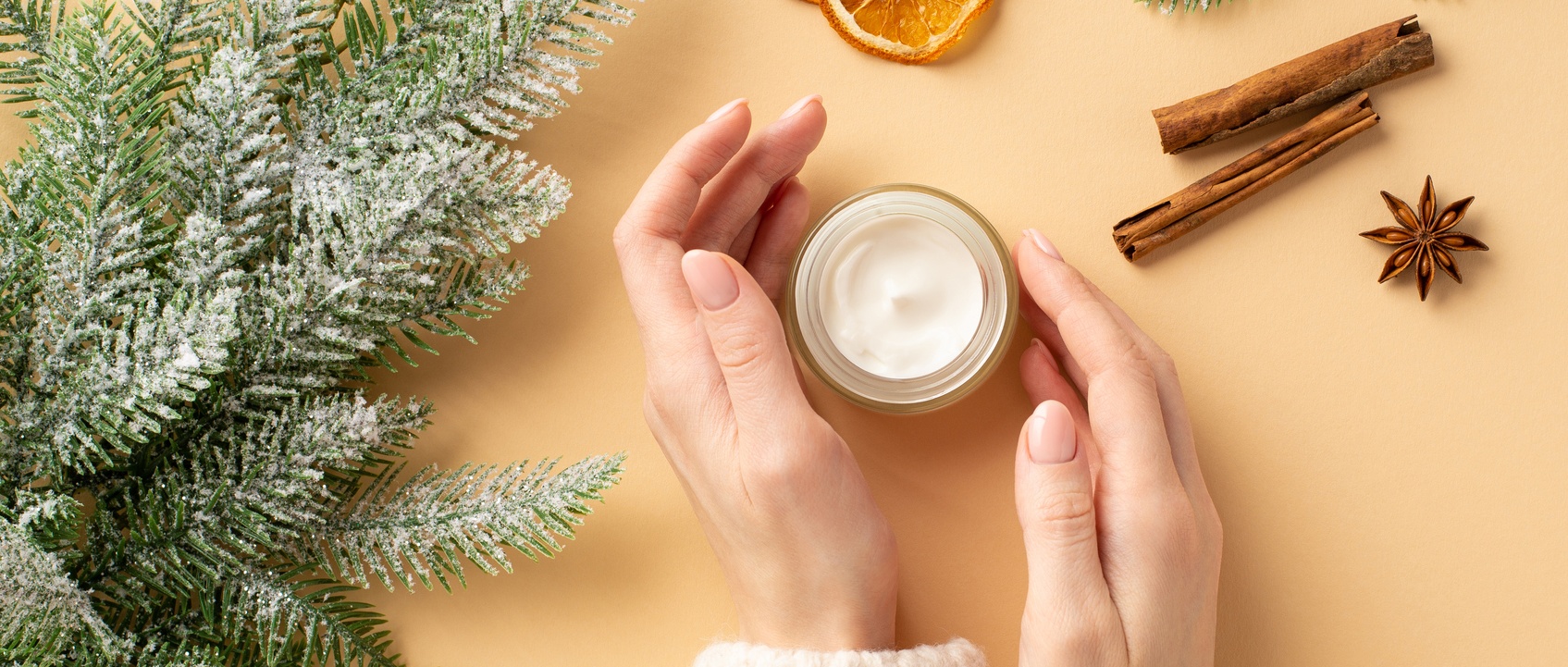
Come impedire alla pelle secca di rovinare il tuo inverno
Revisione paritaria di Dr Krishna Vakharia, MRCGPUltimo aggiornamento di Victoria RawUltimo aggiornamento 13 Nov 2024
Rispetta le linee guida editoriali
- ScaricaScarica
- Condividi
- Language
- Discussione
- Ask Patient
- Versione audio
- Aggiungi alle fonti preferite su Google
Molti di noi hanno un po' di pelle secca di tanto in tanto. Tuttavia, questo può spesso peggiorare durante l'inverno quando siamo esposti a temperature più estreme e agli effetti disidratanti del riscaldamento centralizzato. Qui spieghiamo cosa potrebbe causare la tua pelle secca e il modo migliore per trattarla.
Explore moisturisers for dry skin
Get expert healthcare advice from the comfort of home. Complete a quick online consultation, available 24/7, with your request reviewed by a UK-registered clinician. Next day delivery available on eligible treatments.

Scelte video per Cura della pelleVideo library
What causes dry skin in winter?
Rather than assuming your dry skin is being caused by turning the thermostat a little too high, it's important first to consider what else might be triggering it.
Dr Adam Friedmann, Consultant Dermatologist, The Harley Street Dermatology Clinic says: "Dry skin can have a number of causes. The problem can be related to age, your working environment, or may be the result of a health condition."
Condizioni della pelle
Many of us think of conditions such as eczema as something that first occurs during childhood. However, it's possible to develop the condition - which causes irritation, redness and dry skin - later in life.
"The most common form of disease causing dry skin is eczema," explains Friedmann. "Other causes might be psoriasi, lichen planus or lichen simplex. These are basically all inflammatory skin diseases that can leave your skin a bit - or in some cases very - dry."
Fattori ambientali
As well as central heating, many things in our environment can cause skin problems, so it can be hard to discover the cause.
"If your doctor has ruled out skin diseases, and there are no other telltale symptoms, you would probably benefit from allergy testing," says Friedmann. "These are patch tests to pick up allergies to fragrances or preservatives that you may be coming into contact with. If you do discover such an allergy, then avoiding the trigger should sort the problem out."
However, patch testing is rarely available on the NHS, unless you have severe skin problems, and it may be harder to establish other environmental triggers.
"The environment can be difficult to control," explains Friedmann. "You might find that heaters, water softeners or other environmental issues are OK for some people but not for others. Experimenting with eliminating various things may help you to discover the cause."
Dietary problems
Friedmann says that in extreme cases, you might find skin problems accompanying severe vitamin deficiency, but this would only come about with an incredibly poor diet or absorption problems: "Your diet is unlikely to be the cause, unless you have a low-grade allergy to something you are consuming."
In addition, whilst it may feel that being dehydrated could cause problems with dry skin, this is also unlikely.
Dr Anton Alexandroff, Consultant Dermatologist, Spire Cambridge Lea Hospital says: "Dehydration isn't normally involved in dry skin. It's more about moisture of the outer skin."
How to treat dry skin in winter
If you haven't got an allergy or specific skin disease, the best way to treat your dry skin and prevent further dryness is through regular moisturising.
"Moisturisers are the first line of treatment," explains Alexandroff. "You can choose between creams, ointment or gel. The greasier it is, the more efficient it is. Whilst ointments may be too greasy for some people's taste, the benefit is that you don't need to apply as much, or as frequently."
However, you need to choose your moisturiser wisely, as some ingredients may exacerbate existing problems.
Friedmann says: "Most dermatologists would recommend you avoid fragrances and plant extracts - such as tea tree oil - which may irritate the skin. Instead, we'd suggest you use simple moisturisers such as Vaseline or E45 cream.
"It's also a good idea to wash with moisturiser instead of soap. Soap can often make the problem worse."
Doctors are now advised by the NHS not to prescribe soap substitutes and moisturisers except in severe cases. But a wide variety of moisturisers are available from pharmacists.
Can I over-moisturise?
When it comes to moisturising, it's hard to know exactly how often to do it.
Alexandroff advises: "You should moisturise at least once a day, especially during the winter."
Friedmann adds: "Unless you're someone who gets a reaction to moisturiser - such as an acne sufferer who may find it clogs their pores a little - it's impossible to over-moisturise."
Whilst dry skin can be irritating, with the right care you can keep the problem in check this winter.
Quando consultare un medico
A small amount of dry skin may clear up in a few days and not recur. If it's not too severe, your local pharmacist may be able to help with diagnosis and treatment. But if you're concerned about your skin, it's time to give your doctor a call.
Alexandroff advises: "It's a good idea to see your doctor if you're worried about dry skin. This is especially important if you also have redness, inflammation or prurito."
Your doctor will be able to help diagnose your condition and may refer you to a dermatologist for further investigation.
Scelte del paziente per Cura della pelle
Salute della pelle, delle unghie e dei capelli
Alimenti che aiutano a migliorare i problemi della pelle
Whether it's a pesky patch of dry skin or a sprinkling of acne along the jawline, most of us struggle with our skin from time to time. Visit any pharmacy and you'll find a wealth of products promising to transform your skin from the outside - but what about improving your skin health from within? We speak to the experts to learn how our diet may be affecting our skin.
di Gillian Harvey
Salute della pelle, delle unghie e dei capelli
Lo stress peggiora i problemi della pelle?
Stress and lack of self-confidence are some of the devastating consequences of severe skin conditions. But can stress also be a cause, triggering the problem in the first place?
di Léa Surugue
Informazioni sull'autoreVisualizza il profilo completo
Aggiornato da

Victoria Raw
Scrittore di articoli
Laurea in Lettere (Hons), Letteratura Inglese
Victoria è una scrittrice di contenuti presso Patient, con interessi speciali che spaziano dal benessere mentale, alle tendenze sociali e all'impatto della tecnologia sulla nostra salute.
Autore

Gillian Harvey
Scrittore Freelance
Laurea in Inglese (Hons)
Gillian è una scrittrice freelance e una columnist per una varietà di giornali e riviste nazionali.
Informazioni sul recensoreVisualizza il profilo completo

Dr Krishna Vakharia, MRCGP
Direttore Sanitario per la Salute, Optum UK
MBChB, MRCGP(2013), BMedSci (hons), DFSRH, DRCOG, PGDipDerm (Distn)
La Dott.ssa Krishna Vakharia è un medico di base del NHS. È anche un'esaminatrice regolare per il Diploma post-laurea in Dermatologia Pratica presso l'Università di Cardiff, oltre ad essere il Direttore Medico per la salute presso Optum UK.
Storia dell'articolo
Articolo disponibile anche in Inglese, Tedesco, Spagnolo, Francese, Italiano, Portoghese, Hindi, Ebraico, Arabo, and Svedese.
Prossima revisione prevista: 14 Nov 2027
13 Nov 2024 | Ultima versione
23 Ott 2018 | Pubblicato originariamente
Autore:
Gillian Harvey
Condividi i tuoi pensieri o esperienze con gli altri nel nostro comunità di pazienti.
Iscriviti alla newsletter di Patient
La tua dose settimanale di consigli sulla salute chiari e affidabili - scritti per aiutarti a sentirti informato, sicuro e in controllo.
Abbonandoti accetti i nostri Informativa sulla Privacy. Puoi annullare l'iscrizione in qualsiasi momento. Non vendiamo mai i tuoi dati.