
Cosa fare se hai un pelo incarnito infetto
Revisione paritaria di Dr Krishna Vakharia, MRCGPAutore Matt BinnyPubblicato originariamente 4 Apr 2023
Rispetta le linee guida editoriali
- ScaricaScarica
- Condividi
- Language
- Discussione
- Versione audio
- Aggiungi alle fonti preferite su Google
I peli incarniti si verificano quando il pelo cresce all'interno della pelle anziché verso l'esterno come dovrebbe. Spesso appaiono come piccoli rigonfiamenti rossi che a volte sono pruriginosi. Tuttavia, se un pelo incarnito si infetta, può essere molto doloroso e può portare a problemi più gravi se non trattato. Quindi, cosa dovresti fare se hai un pelo incarnito infetto?
Why do we get ingrown hairs?
An ingrown hair happens when people shave or remove hair, and the new one grows and curls back into the skin. Instead of growing from the follicle through the skin, the hair grows inwards.
There are several reasons why this happens. Sometimes dead skin clogs a follicle and forces the hair inwards, or the end of a cut hair can pierce your skin and begin to grow the wrong way.
Ingrown hairs mainly happen on parts of the body where you shave - such as the face and neck, legs, pubic region and armpits. If you shave regularly, you're more likely to get ingrown and infected ingrown hairs1. This is because shaving and waxing sharpen hair that can then get trapped in the skin. People with coarse or curly hair are also more prone to ingrown hairs, as these hair types tend to curl back rather than outwards.
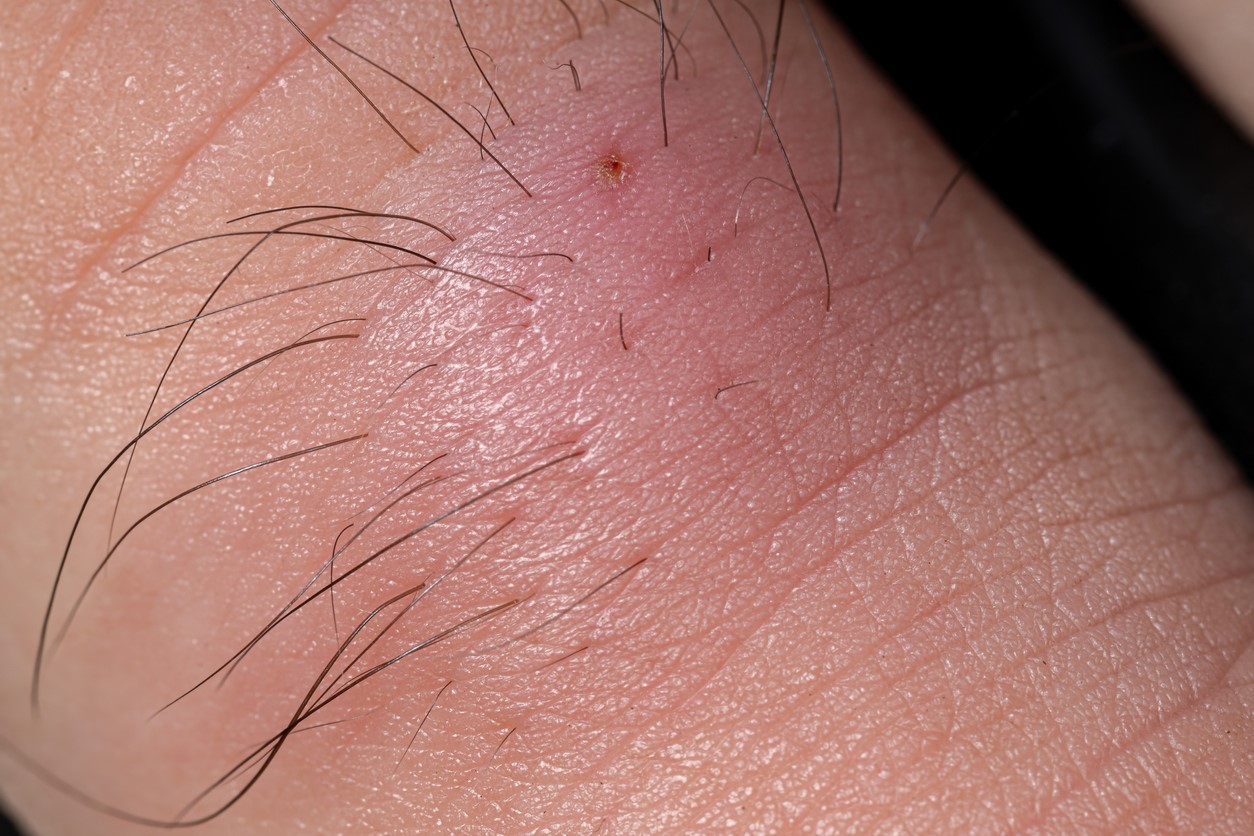
Ingrown hair swelling and redness
How to tell if your ingrown hair is infected?
An ingrown hair looks like an everyday spot or skin bump, varying in size and redness, and it may have swelling. Most ingrown hairs go away on their own if they're left alone and have time to heal. An infected ingrown hair looks similar, but there tends to be more swelling, redness and signs of pus.
Infected ingrown hairs can also be sore to touch. Mild infections are less noticeable and usually clear up without treatment. If you have a more serious infection that doesn't clear up in a few days or worsens, you should contact your doctor.
What's the difference between ingrown hairs and infected ingrown hairs?
Signs of ingrown hair
Small, round skin bumps.
Slightly itchy and sensitive.
Hair is sometimes visible underneath the skin.
Signs of an infetto ingrown hair:
Redness and swelling.
Pain and irritation.
The skin around the bump may feel warm or hot.
Bumps may have a pus-filled head.
How long does an ingrown hair infection last?
Ingrown hairs tend to cure themselves in a few days but this can take longer if you pick, scratch, or interfere with the healing process in any other way.
Infected ingrown hairs take a bit longer to heal as your body is busy helping the ingrown hair exit the skin while fighting the infection. But you should see signs of improvement after a few days.
It’s important that you don’t miss any signs of a severe infection. Speak to your doctor if you have redness that is spreading, the swelling is increasing, your pain is getting worse, or you develop a fever, as these are all signs of a worsening infection.
Should you pop an infected ingrown hair?
You should treat ingrown hairs with caution. Do not pop them - especially those with a pus-filled head as it can lead to infection and scarring. If you have an infected ingrown hair, picking at it risks spreading and worsening the infection.
Infected ingrown hair treatment
Regular ingrown hairs or mildly infected ingrown hairs can be left alone until the condition resolves. It also helps if you don't shave the area or try any other type of hair removal method. However, speak to your doctor if you experience any pain, swelling, heat or feverish symptoms around an ingrown hair.
Trattamento medico
If an ingrown hair becomes infected, your doctor may treat it by:
Prescribing antibiotic medication or creams if you develop more severe ingrown hair issues such as cysts or follicolite.
Giving you a steroid cream if swelling or irritation occurs.
Removing the hair with a surgical blade or sterile needle.
Sending you to the emergency department in hospital if the infection is spreading or there is an abscess that needs lancing.
Rimedi casalinghi
There are ways you can treat infected ingrown hairs at home to help heal and soothe the affected area.
Questi includono:
Keeping the area clean by using small circular motions around the area and surrounding skin to prevent worse or prolonged infection.
Applying anti-bacterial ointment such as tea tree oil to help the infection and ensure it doesn't get worse.
Using over-the-counter products to relieve skin irritation and itching.
How to prevent ingrown hairs
Knowing how to treat and prevent ingrown hairs helps you avoid the hassle it causes and more severe concerns like an infection.
You can prevent ingrown hairs when shaving by:
Using warm water or shaving cream/gel to wet your skin when shaving.
Removing dead skin cells or moisturising if your skin is dry before shaving.
Not shaving too close to your skin.
Shaving in the direction your hair is growing.
Using a sharp razor and rinse after every stroke.
Using aftershave or lotion to soothe and clean the area.
Using alternative hair removal methods such as laser hair removal, chemical hair removal, or electric clippers.
You can't guarantee that these methods will prevent ingrown hairs, but they may reduce the likelihood of them developing and improve your skin's health overall.
Ulteriori letture
Scelte del paziente per Hair and scalp

Salute della pelle, delle unghie e dei capelli
Cause comuni di un cuoio capelluto pruriginoso
Se dici a qualcuno che ti stai grattando la testa, con un po' di fortuna penseranno che sei immerso in una seria riflessione. Tuttavia, è più probabile che tu stia effettivamente soffrendo di un cuoio capelluto pruriginoso. Ci sono molte ragioni per cui il nostro cuoio capelluto può diventare irritato, ma ecco alcune cause comuni e cosa puoi fare al riguardo.
da Dott.ssa Jessica Garner, MRCGP

Salute della pelle, delle unghie e dei capelli
La forfora e il prurito del cuoio capelluto possono portare alla perdita di capelli?
We're all familiar with dandruff; about half of us will experience it at some point. But for some people, a flaky scalp can be more severe, causing soreness, itchiness and even hair loss. So how do you know if it's more than just a bit of irritating dandruff? And what really works for getting rid of the flakes?
di Natalie Healey
Informazioni sull'autoreVisualizza il profilo completo

Matt Binny
Scrittore di articoli
BA Applied Media
Informazioni sul recensoreVisualizza il profilo completo

Dr Krishna Vakharia, MRCGP
Direttore Sanitario per la Salute, Optum UK
MBChB, MRCGP(2013), BMedSci (hons), DFSRH, DRCOG, PGDipDerm (Distn)
La Dott.ssa Krishna Vakharia è un medico di base del NHS. È anche un'esaminatrice regolare per il Diploma post-laurea in Dermatologia Pratica presso l'Università di Cardiff, oltre ad essere il Direttore Medico per la salute presso Optum UK.
Storia dell'articolo
Le informazioni su questa pagina sono revisionate da clinici qualificati.
Articolo disponibile anche in Inglese, Tedesco, Spagnolo, Francese, Italiano, Portoghese, Hindi, Ebraico, Arabo, and Svedese.
Prossima revisione prevista: 2 maggio 2027
4 Apr 2023 | Pubblicato originariamente
Autore:
Matt BinnyRevisione paritaria di
Dr Krishna Vakharia, MRCGP

Chiedi, condividi, connettiti.
Esplora le discussioni, fai domande e condividi esperienze su centinaia di argomenti di salute.

Non ti senti bene?
Valuta i tuoi sintomi online gratuitamente
Iscriviti alla newsletter di Patient
La tua dose settimanale di consigli sulla salute chiari e affidabili - scritti per aiutarti a sentirti informato, sicuro e in controllo.
Abbonandoti accetti i nostri Informativa sulla Privacy. Puoi annullare l'iscrizione in qualsiasi momento. Non vendiamo mai i tuoi dati.
Più sulla salute della pelle, delle unghie e dei capelli
- Problemi comuni della pelle: comprendere la tinea versicolor
- I rimedi naturali funzionano davvero per l'acne?
- Lo shampoo alla caffeina funziona davvero contro la caduta dei capelli?
- La crema idratante con SPF offre una protezione solare sufficiente?
- Pelle secca in inverno: cosa può fare il freddo alla tua pelle
- Alimenti che aiutano a migliorare i problemi della pelle
- Ecco come proteggere una testa calva dal sole
- Quanto spesso dovresti lavare i capelli?
- Come le stagioni influenzano il tuo eczema
- Come prendersi cura della pelle in inverno
- Come eliminare le cicatrici da acne: la tua guida definitiva
- Come l'ambiente influisce sulle condizioni della pelle
- L'aloe vera fa bene alla tua pelle?
- Esiste un legame tra dieta e acne?
- Neurocosmetici: un cambiamento per il tuo cervello e la tua salute?
- Comprendere la perdita di capelli femminile
- Video: Come si diffondono i pidocchi?
- Quali sono i benefici del collagene e può prevenire l'invecchiamento della pelle?
- Cosa dicono le tue unghie sulla tua salute
- Perché l'eczema provoca prurito - e come fermarlo