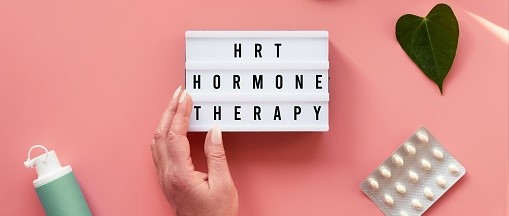
What HRT did for me
Peer reviewed by Dr Krishna Vakharia, MRCGPAuthored by Amberley DavisOriginally published 6 Dec 2022
Meets Patient’s editorial guidelines
- DownloadDownload
- Share
- Language
- Discussion
- Audio Version
- Add to preferred sources on Google
Your experience with menopause will likely be different to your friends - the same is true for Hormone Replacement Therapy (HRT). Yet, sharing and listening to the personal experiences of others can offer knowledge, support, and hope. Here, Louise describes how her life changed for the better on HRT.
Sign up for our free 10-week Menopause course!
Each week, we'll explore different topics to help you better understand and navigate your menopausal journey, including HRT, diet, exercise, and mental health.
By subscribing you accept our Privacy Policy. You can unsubscribe at any time. We never sell your data.
Can HRT improve your life?
"HRT saved my life. During menopause, I went from being a very competent individual - like most women juggling home life, children, and a busy job - to hardly being able to function as a human being," says Louise Gallagher from Derry in Northern Ireland. "Thanks to HRT, the joy in my life has returned."
HRT, or Hormone Replacement Therapy, is the most effective treatment for women who experience painful and disruptive symptoms during menopause - including hot flushes, night sweats, and mood swings.
Over the years, a lot of media attention has been given to the possible health risks of taking HRT. Often this overshadows the capability of HRT to completely transform a person's life.
For Louise, HRT has been a positive life-changing event, and by sharing her experience she wishes to give hope to the women out there with severe menopausal symptoms who may have given up on life.
Louise's story
Louise has been taking HRT for seven and a half years. She started at the age of 43 after her periods went from regularly appearing every 28 days to suddenly ceasing at the age of 42. In the beginning, her HRT was 1 milligram (mg) of Kilofem and is now 2 mg in the form of a daily tablet. This type of HRT contains the hormones oestrogen and progestogen.
Menopause - hardly able to function
"Within a very short space of time - around three months - I went from being a very competent individual to hardly being able to function. I had to leave my job as a call centre manager because the anxiety, depression, and fatigue were so debilitating."
When the mother of two teenagers first approached her GP about her symptoms, she was prescribed antidepressants. At this point, the doctors hadn't identified that it was menopause.
"My symptoms got worse - I wasn't sleeping, I had migraines at least twice a week, I kept getting UTIs, every joint in my body hurt, and my brain fog was so bad I worried I had the onset of dementia."
Starting HRT
Six months after her periods stopped - which Louise initially attributed to the stress her body felt from being unwell - a GP diagnosed Louise as menopausal and started her on HRT.
"Best day ever! Within three days, my brain fog lifted. Gradually over the next year, many of my other symptoms eased. None ever went away completely, but at least I could now get up in the mornings and try to live a little."
Finding the best form of HRT for me
"When I was post-menopausal - over a year had passed since my last period - my memory and concentration still weren't great, so trying to remember to take the HRT tablets every day was an issue. I asked if there was any other type of HRT I could have and was given a patch that you change twice a week. However, I found the patches didn't stick well to my skin and within a few weeks my symptoms got worse again.
"My GP practice didn't have a stronger patch. Instead, they could offer the tablet I had been on but in a stronger dose. I have now been on this for over six years.
"Thankfully, the higher dose helped with my memory and many of my terrible symptoms have been erased - the fatigue, poor sleep, joint pains, UTIs, brain fog, and after about two years, my anxiety lifted."
HRT has been life-changing
"My husband will tell you, I became a shadow of my former self before HRT - I wouldn't leave the house and had no joy in my life. Thankfully, this joy has returned. I will never be my younger self, but am okay with that I have embraced the new me. Doing things like eating healthily and exercising on a daily basis also help."
HRT limitations and lessons
While HRT has been an overall positive experience for Louise, like for many women, it hasn't been a completely straightforward journey or fix-all solution.
Louise points out that:
She still gets some bad symptoms, including weekly migraines and a sore vagina.
The HRT tablet doesn't tend to be the best form of HRT for people with these symptoms, but her GP practice in Northern Ireland isn't able to offer all options, such as other gels, creams, and patches.
Weighing up cost against quality of life can be tricky - a private menopause specialist may provide more HRT options but this can be expensive. In Northern Ireland, there is also only one specialist and travel could be difficult.
Why we need to know about HRT
Just as everyone's experience of menopause is different, every personal journey of HRT is too. However, sharing stories like Louise's can help more women to understand what they could go through during menopause, and how HRT might possibly help.
For Louise, it's about giving hope to the women out there with severe and debilitating menopause symptoms who may feel like they can't cope, who may leave their jobs, or feel like they can't go on in life.
She adds "I hope this information becomes an everyday topic in society, because it affects us all in some way - from the people going through it to the loved ones and friends on the side-line trying to support them and struggling to understand the whole thing themselves."
HRT is considered safe for most people, but as with all long-term treatments you should discuss and consider both the benefits and risks with a healthcare professional.
Patient picks for Menopause and HRT
Hormones
Will HRT for menopause soon be free over the counter?
Following a campaign last year, the government agreed to consider making certain types of hormone replacement therapy (HRT) available directly from pharmacists and to reduce the costs of HRT prescriptions significantly for women in England. But there has been confusion over what these proposed changes really mean in practical terms. We talk to a specialist doctor for more clarity on HRT for menopause.
by Sally Turner

Hormones
The problem with 'bioidentical hormones' for menopause
If you've been struggling with menopausal symptoms and looking into the options, you might well have come across private menopause clinics or compounding pharmacies offering 'bioidentical hormones'. But what exactly are they, and how do they differ from the HRT you'd get from your GP?
by Sarah Graham
About the authorView full bio
Authored by

Amberley Davis
Senior writer
BA (Hons), CPD
Amberley is a senior writer with Patient and has written extensively on a range of health and wellbeing topics.
About the reviewerView full bio

Dr Krishna Vakharia, MRCGP
Chief Medical Officer for Health, Optum UK
MBChB, MRCGP(2013), BMedSci (hons), DFSRH, DRCOG, PGDipDerm (Distn)
Dr Krishna Vakharia is an NHS GP. She is also a regular examiner for the postgraduate Diploma in Practical Dermatology at Cardiff University as well as being the Chief Medical Officer for health at Optum UK.
Article history
Article also available in English, German, Spanish, French, Italian, Portuguese, Hindi, Hebrew, Arabic, and Swedish.
6 Dec 2022 | Originally published
Authored by:
Amberley DavisPeer reviewed by
Dr Krishna Vakharia, MRCGP
Join the conversation
Share your thoughts or experiences with others in our patient communities.

Ask, share, connect.
Browse discussions, ask questions, and share experiences across hundreds of health topics.

Feeling unwell?
Assess your symptoms online for free
Sign up to the Patient newsletter
Your weekly dose of clear, trustworthy health advice - written to help you feel informed, confident and in control.
By subscribing you accept our Privacy Policy. You can unsubscribe at any time. We never sell your data.