The truth about the fat in your diet
Peer reviewed by Dr Sarah JarvisLast updated by Amberley DavisLast updated 22 Feb 2024
Meets Patient’s editorial guidelines
- DownloadDownload
- Share
- Language
- Discussion
- Audio Version
- Add to preferred sources on Google
Dietary fat has received its share of bad press, but not all fat is bad for us. We delve into this important food group, separating the healthy from the unhealthy, and fact from fiction.
What is fat?
What we call fat is actually the family name for a whole host of individual fatty acids. These are split into two groups - saturated and unsaturated - depending on key aspects of their structure.
Saturated fats
Saturated fats are straight, dense chains of molecules and this characteristic makes them typically solid at room temperature. Saturated fats are less healthy for your heart as they push up LDL cholesterol levels - the 'bad' cholesterol that can build up in your arteries and cause problems.
You can find saturated fats in animal products, such as:
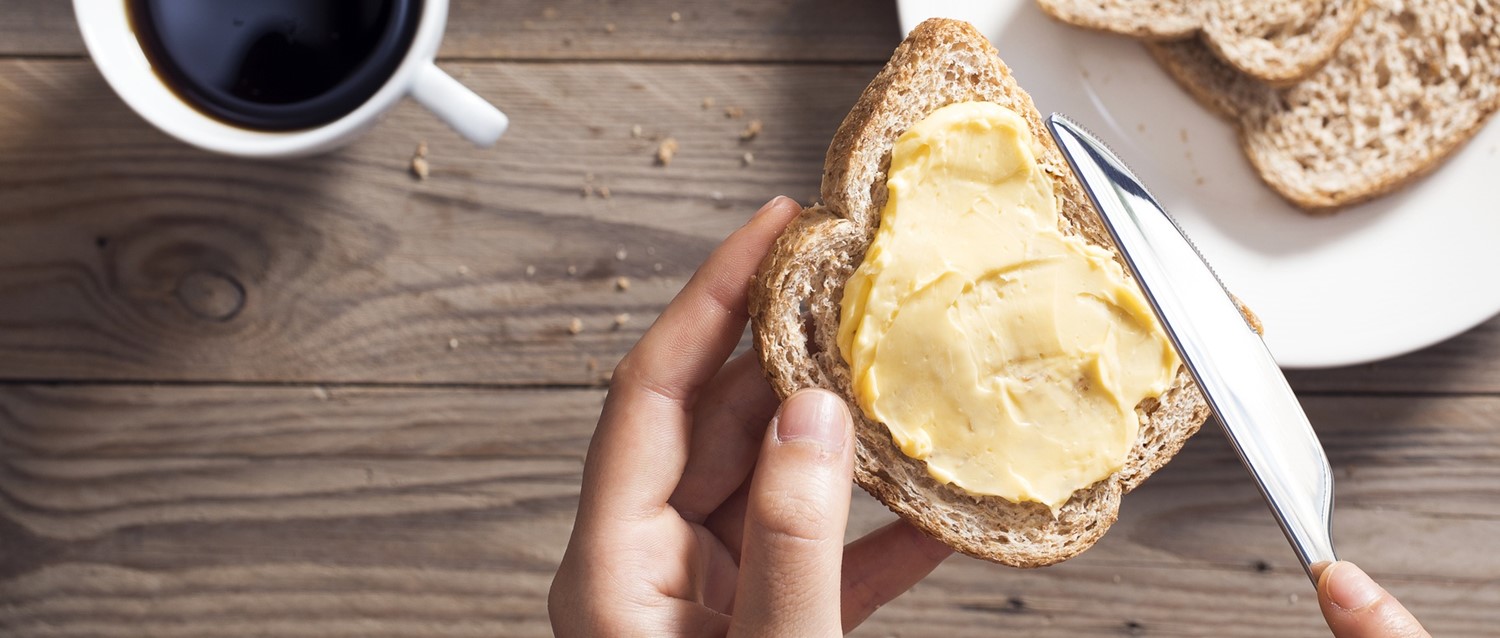
Butter.
Cream.
Lard.
Cheese.
Fatty meats - including lamb, pork and beef.
Processed meats - including sausages, bacon and burgers.
Saturated fats are also in vegetable products, such as:
Coconut fat.
Palm oil.
Processed treats are contributing a large amount of saturated fat to a typical Western diet:
Cakes.
Biscuits.
Pies.
Pastries.
Sweets.
Unsaturated fats
Unsaturated fats are less dense and are liquid at room temperature. Unsaturated fats are believed to be healthier options. Studies have shown that they can reduce your cholesterol levels and protect against cardiovascular disease1.
They are split into monounsaturated fats and polyunsaturated fats, and include:
Nuts.
Seeds.
Avocado.
Oily fish.
Olive, rapeseed, and other vegetable oils - but not palm and coconut oils.
Trans fats
A third group, trans fats, only exist in tiny amounts in a few natural foods, such as:
Ruminant meat - such as meat from cows, sheep, and goats.
Dairy products.
However, in the 1970s, large amounts of trans fats were manufactured by changing the structure of unsaturated fats to force them to be solid at room temperature. These were then added to a range of processed foods, such as:
Margarine.
Cakes.
Biscuits.
In the last few decades, efforts have been made to minimise trans fats in products, due to concerns about their negative effect on blood cholesterol levels and heart disease risk.
Intakes of trans fats in the UK have now reduced to half the maximum limit2. In the UK, there is no legal requirement to list trans fats on labels but you can check product ingredient lists for 'hydrogenated fats/oils' which may contain trans fats. Takeaway foods are also a source, as the high temperature heating of vegetable oil boosts the trans fat content.
Is dietary fat healthy?
There is no need to fear dietary fat as it's essential for health. Fat provides energy, helps to keep us warm, cushions our vital organs, protects our body cells and acts as a carrier for fat-soluble vitamins, such as A, D, E and K. More than half of the brain is fat3 and our cognitive development and brain functions rely on essential fatty acids that cannot be made by our bodies.
However, fats are a rich source of calories, making them easy to overeat. As an example, one 50 g cube of cheddar cheese has the same calories as two medium bananas. Also, several high-fat foods, such as biscuits, cakes, confectionery, desserts, and ice cream, are high in sugar too.
Which types of fats are the healthiest?
We should try to focus on unsaturated fats, while limiting our consumption of saturated and trans fats.
Professor of nutritional immunology, Philip Calder from the University of Southampton, says: "Fats affect the way that cells and tissues in the body work. Some, like omega-3s - which are unsaturated - are better for us because they promote optimal cell and tissue function. Ultimately, this relates to improved wellbeing and less risk of disease."
According to Professor Calder, his top choice would be omega-3s from oily fish, although: "Plant omega-3s from nuts, especially walnuts, and monounsaturated fats like those in olive oil, are important too."
Should we avoid some fats?
Apart from artificial trans fats, there's no need to cut out any particular fats from the diet - but we should limit our saturated fat consumption.
The effect of saturated fats on cholesterol and heart disease has been under debate in recent years4. The confusion may have arisen because scientists now know that individual saturated fatty acids have different effects on the body and are not one entity as previously believed5.
However, in 2019 the UK's Scientific Advisory Committee on Nutrition found that6:
Too much saturated fat increases your chances of cardiovascular disease, coronary heart disease, and high blood pressure.
The average person's intake of saturated fat is too high - and should be reduced to no more than 10% of their total dietary energy.
Saturated fats should be replaced with unsaturated fats, carbohydrates, or proteins.
How to eat the right fats
The best way to do this is to rebalance our fats towards plant sources, choose lean meats, poultry and oily fish, and keep high-calorie fatty foods to a minimum.
Sian Porter, spokesperson for the British Dietetic Association, says: "In the UK we eat too much of the saturated fats found in cakes, biscuits, pies, pastries, confectionery, and fatty meats so we need to cut down these foods."
She adds: "As for cooking, it depends on what you’re making but, in the main, try to use small amounts of unsaturated fats such as olive oil and rapeseed oil.
"Poor storage and constant reuse can change the fatty acids into harmful forms so always store your oils away from sunlight in a cool, dark place and replace regularly.
Butter, ghee, and coconut fat are fine to use occasionally in small amounts if you like the taste but there's no evidence that adding them to your diet offers any benefits."
Further reading
Patient picks for Diet
Diet and nutrition
Mounjaro diet: Foods to eat and avoid
If you’ve started using Mounjaro for weight loss, or you’re thinking about it, it’s very normal to wonder what foods you should or should not eat. A lot of people assume they need a strict diet plan, a list of banned foods, or a very low-calorie intake to “make the most” of the medication. But that often creates more stress than support. In this article, Nutrition experts at Genwell offer their advice on what you should really be eating to get the most out of Mounjaro.
by Bogomila Tosheva
Diet and nutrition
Is the Okinawa diet a recipe for longevity?
Once called the land of immortals, the island of Okinawa is home to some of the world's oldest and healthiest residents. These centenarians grew up eating a traditional Okinawa diet, with the ingredients available to them. We speak to an expert about replicating this way of eating, to promote healthy ageing and longevity - no matter where in the world you are. Hint: it's not just what you eat, but how.
by Lynn Stephen
About the authorView full bio

Dr Carrie Ruxton, PhD, Child Nutrition
Dietitian and Health Writer
PhD, Child Nutrition
Dr Carrie Ruxton qualified as a Dietitian at Queen Margaret University, Edinburgh, before gaining a PhD in Child Nutrition.
About the reviewerView full bio

Dr Sarah Jarvis
Clinical Consultant
MA (Cantab), BM, BCh (Oxon), DRCOG, FRCGP, MBE
After training in medicine at Cambridge and Oxford, Dr Sarah Jarvis MBE became a GP.
Article history
The information on this page is peer reviewed by qualified clinicians.
Article also available in English, German, Spanish, French, Italian, Portuguese, Hindi, Hebrew, Arabic, and Swedish.
Next review due: 22 Feb 2027
22 Feb 2024 | Latest version
16 Feb 2018 | Originally published
Authored by:
Dr Carrie Ruxton, PhD, Child Nutrition
Join the conversation
Share your thoughts or experiences with others in our patient communities.

Ask, share, connect.
Browse discussions, ask questions, and share experiences across hundreds of health topics.

Feeling unwell?
Assess your symptoms online for free
Sign up to the Patient newsletter
Your weekly dose of clear, trustworthy health advice - written to help you feel informed, confident and in control.
By subscribing you accept our Privacy Policy. You can unsubscribe at any time. We never sell your data.
More in diet and nutrition
- 6 deliciously healthy berries and recipes
- 7 iron rich foods to add to your diet
- 9 health benefits of chia seeds
- 10 everyday foods high in vitamin D
- Are ready meals really that bad for you?
- Can changing your diet improve PMS?
- Can kombucha boost your health?
- Can taking supplements help manage diabetes?
- Have a happy and healthy Ramadan
- How healthy is flavoured water?
- How to boost your vitamin D levels this winter
- How to eat a calcium-rich vegetarian diet
- How to manage food guilt over Christmas
- How to stop your sugar cravings
- Kimchi and sauerkraut: What are the benefits of eating fermented foods?
- Managing health conditions during Ramadan
- What is clean eating and how can you start?
- What is your gut microbiome?
- Why fibre is your friend
- Why you don't need to detox