
What is a low-carb diet and is it healthy?
Peer reviewed by Dr Colin Tidy, MRCGPLast updated by Heather AinsworthLast updated 2 Jun 2025
Meets Patient’s editorial guidelines
- DownloadDownload
- Share
- Language
- Discussion
- Audio Version
- Add to preferred sources on Google
When it comes to healthy eating, every food group is important. This includes carbohydrates, the high-energy food group that fuels everything we do, from breathing to running. However, as foods rich in carbohydrates provide a lot of energy, low-carb diets have been adopted by people wishing to achieve significant weight loss.
What is a low-carb diet?
A low-carb diet limits your consumption of foods that are high in carbohydrates (carbs) such as bread, pasta, rice, and sugary foods. When you digest carbs they turn into glucose, a type of sugar that your body uses for energy. For this reason, a low-carb diet might be used to aid general weight loss, or to help people with diabetes manage their blood sugar levels.
How does a low-carb diet work?
When you consume less energy through food than your body needs, it takes and burns the energy it requires from stores of fat - a process known as ketosis1. You can trigger fat burning by reducing your intake of carbs and, therefore, energy. This may result in you losing a significant amount of weight.
Types of low-carb diets
Popular low-carb diets include:
Atkins diet - a low-carb, high protein and fat diet.
Ketogenic diet - a low-carb, high-fat diet.
Dukan diet - a low-carb, high-protein diet.
Paleo diet - a low-carb, high-protein, high fibre diet.
The popularity of such diets - helped in part by the celebrities who promote them - has given carbs a bad reputation, but it's important to understand that there are healthy high-carb foods. The fact of the matter is everyone needs carbs in order to perform essential bodily functions and physical activities.
What are the benefits of a low-carb diet?
Weight loss
Low-carb diets help with weight loss by triggering fat burning instead of storing it. These diets also typically include more protein and healthy fats which help keep you fuller for longer - meaning you'll naturally consume fewer calories as your appetite reduces.
However, it is still possible to gain weight when eating low-carb food. Registered dietitian Rachel Ball explains:
"Reducing carbohydrates in your diet may lead to you increasing your intake of fat, which is actually higher in calories than carbohydrates, gram for gram. If you are looking into a low-carb diet for weight loss alone, remember that it is the total calorie intake that is most important, and that there are risks of nutritional deficiency when cutting down a whole food group."
"A low-carb diet is not special or superior to any other method of reducing calorie intake. Some people may find that limiting their carbohydrate intake helps them lose weight, but you should not cut out all carbohydrates. A better method is to base meals on vegetables and low-fat proteins in order to maintain a calorie deficit."
Managing type 2 diabetes
Carbohydrates are one of the main reasons for a rise in blood sugar levels. By eating fewer carbs you can reduce your blood glucose and HbA1c levels, allowing for better management of type-2 diabetes.
Ball further explains "If your goal is to reverse type 2 diabetes, a low-carb diet is one strategy for rapid and significant weight loss. However, this must be with the support of your doctor and dietitian, as your medication doses may need to be changed."
Improved heart health
Low-carb diets can lower blood pressure and triglyceride levels - the amount of fat in blood, and improve cholesterol levels - which are all important for maintaining a healthy heart.
Fat loss - particularly visceral fat - can have a significant impact on your heart health by reducing the risk of high blood pressure and high cholesterol whilst helping to improve blood vessel function.
How many carbs are in a low-carb diet?
A low-carb diet isn't itself a meal plan with a rigid set of rules. This said, the Scientific Advisory Committee on Nutrition (SACN) has produced a report2 on lower carbohydrate diets for adults with type 2 diabetes in which it uses the following categories:
Very low-carb/keto diet - 20-50 grams of carbs per day (g/day).
Low-carb - 50-130 g/day.
Moderate-carb - 130-230 g/day.
High-carb - more than 230 g/day.
Ball recommends that people who have type 2 diabetes and are overweight should aim for around 50 - 130g of carbs per day.
"However, many low-carb diet plans fail to define the actual foods you're allowed, and so it is unclear how you can get to these results. Some plans may have a target of total carbs in grams, while others may exclude or limit all grains, potatoes, and rice. This is another reason there is no robust agreement in terms of recommended amounts of carbohydrates."
What foods can you eat on a low-carb diet?
Foods that you can eat on a low-carb diet typically include:
Fish and seafoods - salmon, tuna, cod, and mackerel.
Lean meats - chicken breast and pork.
Nuts and seeds - peanuts, walnuts, and pumpkin seeds.
Low-carb fruits - blueberries, strawberries, and watermelon.
Leafy greens - kale, spinach, and cabbage.
Dairy products - cheese, unsweetened yoghurts, and cream.
Eggs.
What to eat on a low-carb diet
What foods should you avoid on a low-carb diet?
Foods you should limit on a low-carb diet typically include:
Breads - white bread, whole wheat bread, multigrain bread, bagels, baguettes, and sourdough.
White pasta and noodles.
Rice - white, brown, basmati, and jasmine.
Sugary cereals and cereal bars.
Baked goods - pastries, pies, muffins, and cakes.
Sugar foods - sweets, chocolate, ice-cream, sweetened yoghurts, honey, and syrup.
Sugary drinks - full-fat soda, fruit juices, smoothies, and energy drinks.
Is a low-carb diet healthy?
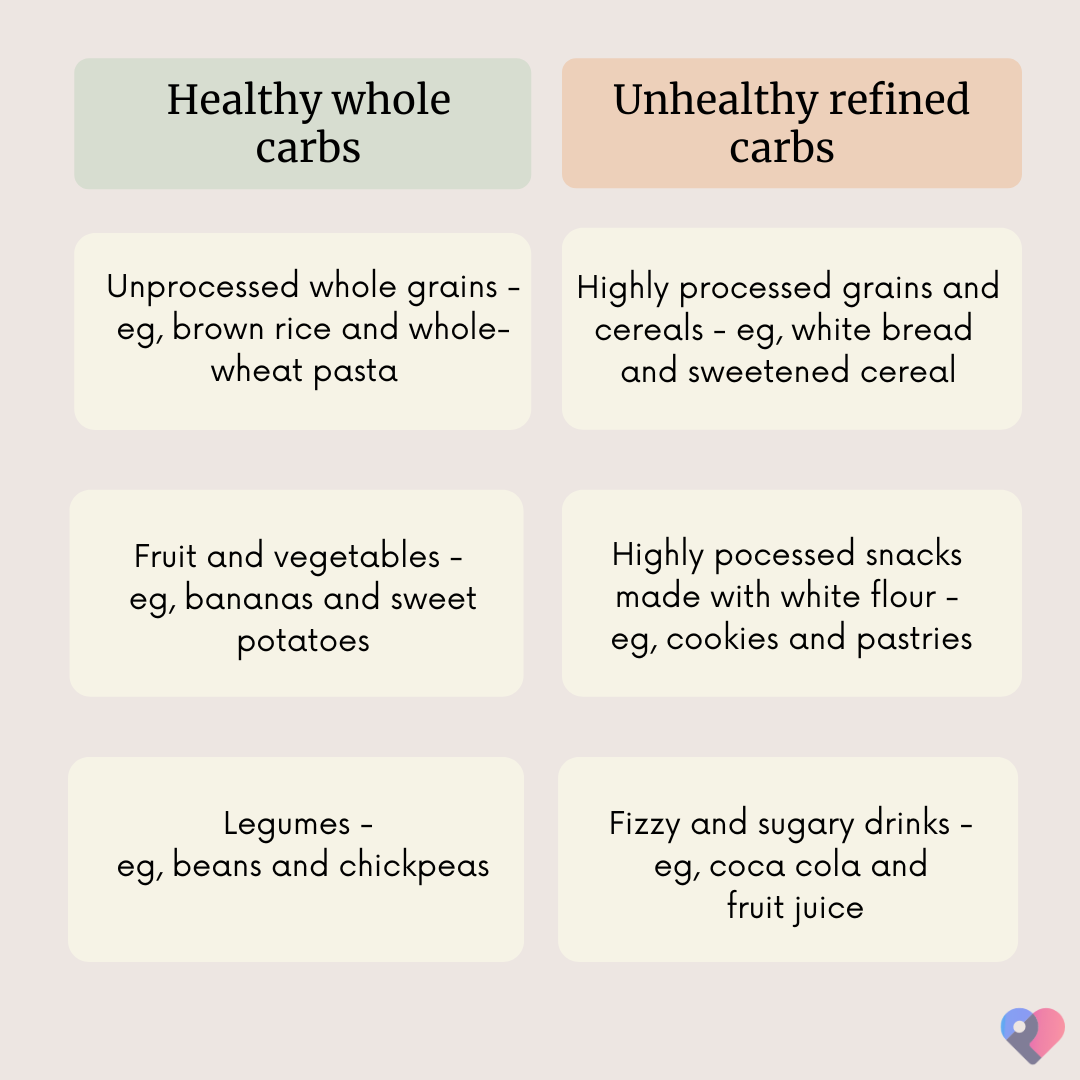
A healthy, well-balanced diet should include all food groups, and so it's important not to take carb restrictions too far. If you are limiting high-carb foods, make sure that you are making healthy carb food choices. The most common forms are sugars, fibres, and starches. These are further divided into:
Whole and complex carbs - these are considered healthy because they are minimally processed and are naturally high in fibre as well as other important vitamins and minerals.
Refined and simple carbs - these have been processed more which removes fibre. Highly processed foods generally lack other nutrients and contain added sugar, which can cause spikes in blood glucose levels. Simple carbs also contain easily digested carbohydrates, making weight gain more likely.
As far as research goes, the safety and risk factors of following a low-carb diet have been a subject of controversy. In part, this is because these diets are often poorly defined, making it hard to compare studies.
What's more, while there is clear evidence that a low-carb diet can aid weight loss, and help to manage blood glucose levels in diabetes, the long-term health effects of following this diet are unknown3.
Many experts believe that a side effect of a low or very low intake of carbs can result in a nutritionally poor diet, and this may affect a person's overall health4.
When is a low-carb diet not always recommended?
If you are underweight - you should avoid all restrictive diets, including low-carb diets, as this can seriously damage your health, including health problems related to nutritional deficiencies and to your body functions working properly.
If you have experienced an eating disorder - you should avoid all diets as this could cause a relapse of your condition.
If you have type 1 diabetes - the most important factor for managing blood glucose for this form of diabetes is the appropriate insulin dose. Low-carb diets could be dangerous if you are taking insulin, so always discuss dietary changes with your diabetes healthcare professionals.
It's not always appropriate if you have type 2 diabetes - your healthcare professional will advise on the best treatment options for you, including other lifestyle factors and medications.
It's not always appropriate if you are overweight or obese and at a high risk of developing type 2 diabetes - making certain lifestyle changes while maintaining a diet relatively rich in good carbs is generally considered to be a safe and effective strategy in the prevention of type 2 diabetes4. If you have been told you are at risk of type 2 diabetes, always follow the medical advice of your healthcare professional.
Further reading
Patient picks for Diet

Diet and nutrition
Why you don't need to detox
Detox diets and cleanses, which are often celebrity endorsed, promise a significant weight loss in a short space of time. But is this quick fix better than going to a gym and putting in the hard work?
by Victoria Raw

Diet and nutrition
What is the Atlantic diet?
The Atlantic diet is all about fresh, simple ingredients and social, sustainable eating. It shares many similarities with its popular southern cousin, the Mediterranean diet - but there are some key differences. Is the Atlantic diet as healthy as the highly praised Mediterranean diet? And why is it so good for both people and planet?
by Amberley Davis
About the authorView full bio
Updated by

Heather Ainsworth
SEO Manager
BA (Hons) Business and Marketing, IDM Cert DDM, MHFAider®
Heather is the SEO Manager at Patient and a trained Mental Health First Aider. She is also a regular health writer, covering a wide range of topics with a particular interest in mental wellbeing, women's health, and holistic health.
Authored by

Amberley Davis
Senior writer
BA (Hons), CPD
Amberley is a senior writer with Patient and has written extensively on a range of health and wellbeing topics.
About the reviewerView full bio

Dr Colin Tidy, MRCGP
General Practitioner, Medical Author
MBBS, MRCGP, MRCP (Paediatrics), DCH
Dr Colin Tidy is an NHS Doctor, based in Oxfordshire.
Article history
Article also available in English, German, Spanish, French, Italian, Portuguese, Hindi, Hebrew, Arabic, and Swedish.
Next review due: 2 Jun 2028
2 Jun 2025 | Latest version
25 Jun 2022 | Originally published
Authored by:
Amberley Davis
Join the conversation
Share your thoughts or experiences with others in our patient communities.

Ask, share, connect.
Browse discussions, ask questions, and share experiences across hundreds of health topics.

Feeling unwell?
Assess your symptoms online for free
Sign up to the Patient newsletter
Your weekly dose of clear, trustworthy health advice - written to help you feel informed, confident and in control.
By subscribing you accept our Privacy Policy. You can unsubscribe at any time. We never sell your data.