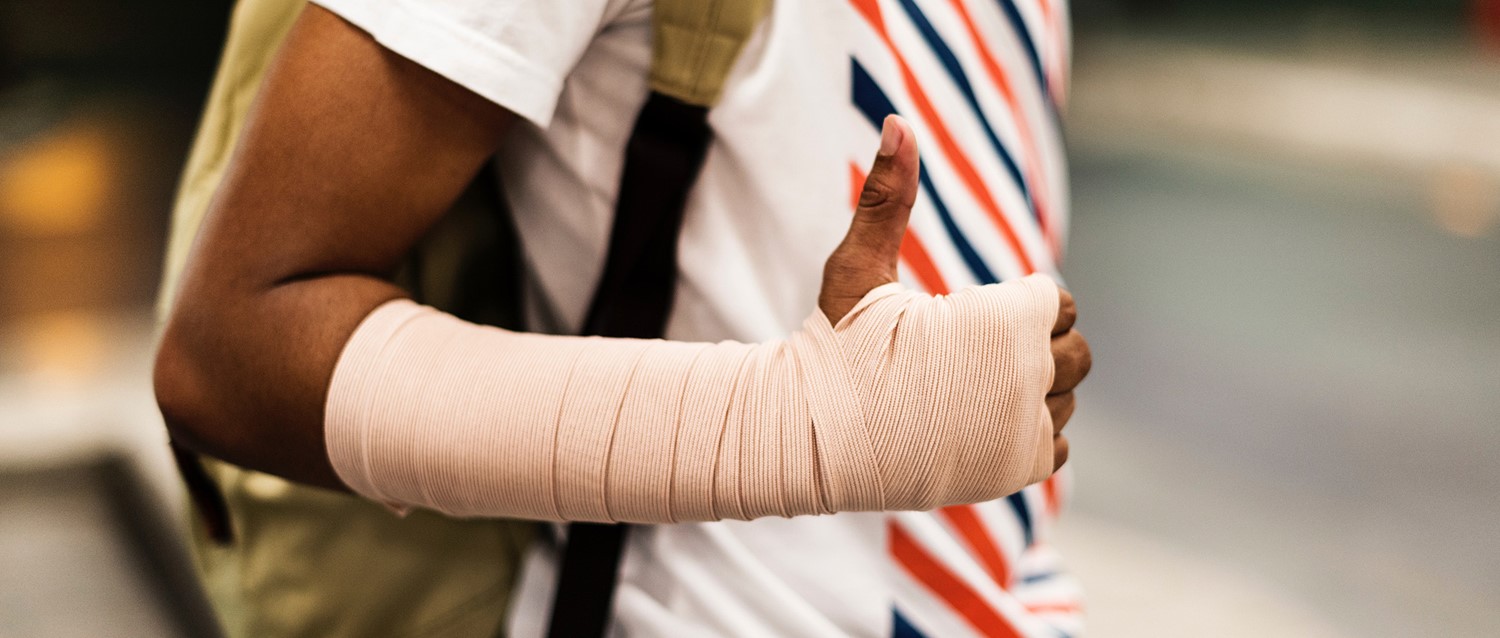
Recupero da un infortunio sportivo
Revisione paritaria di Dr Sarah JarvisAutore Danny ChadburnPubblicato originariamente 20 Set 2017
Rispetta le linee guida editoriali
- ScaricaScarica
- Condividi
- Language
- Discussione
- Ask Patient
- Versione audio
- Aggiungi alle fonti preferite su Google
A serious sports injury can have a huge impact on your life, especially if it affects your mobility. However frustrating the situation might be, it's still important to take your time and gradually rebuild your strength to avoid risk of further injury.
If you do get injured and you're out of action for a period of time, there are many things that can be done to help speed up recovery. In the early stages of an injury it is massively important to look after it.
So for ankle and knee ligament injuries, a lot of ice is needed to help reduce swelling and compression is also often tried to aid this treatment. It's also helpful to keep the leg up (ideally above the level of your hip) and to try to keep off your feet as much as possible. Your physiotherapist (if you have one), will usually tell you what you need to do and when. Short-term recovery is all about PRICE - Protecting your joint, Rest, Ice, Compression and Elevation.
Rest and relaxation are extremely important but it is understandable that some people will want to get back on their feet as soon as possible. This needs to be a gradual process that requires a lot of patience. Here are some of the best ways of getting yourself back on your feet.
Stay focused
While you might not be able to pick back up the same exercise routine you had before your injury, it doesn't mean you have to stop altogether. Check with your doctor or physiotherapist what exercises are safe before starting your new routine. Take it slowly at first and don't push yourself too hard - remember you're still in recovery.
Beat the boredom
Recovery periods can be frustrating and boring, especially if your injury is restricting your movement. Don't let it get the better of you. Keep yourself occupied with other activities and pick up a new hobby. You never know, you might discover a whole new talent.
Factor in rest
While it can be tempting to carry on with your usual routine, don't forget your body needs rest. This is even more important during the recovery period, as you'll heal much faster if you listen to what your body's needs.
Keep moving
While rest is important, keeping yourself mobile is also an integral part of recovery. Keeping up with the exercises prescribed by your physiotherapist is vital - once you've established a routine, you should find it easier.
Follow a healthy diet
As tempting as it may be, don't let an injury become an excuse for poor diet. If your mobility has been affected, it can be easy to fall into bad eating habits and gain unwanted weight. Keep yourself occupied, list what you're eating and draw up a meal plan. Your body will thank you for it.
Preventing the injury from recurring
Typically, the areas on your body that become prone to injury more than others are your back, shoulders and knees.
The back is primarily at risk because it's often used (incorrectly) to lift items from the ground while your shoulders and knees are used frequently because of their high ranges of motion.
The most common reason a person exercises is to build muscle in order to become leaner and stronger, but we often forget that the primary area we should focus on is health and prevention. A proper exercise routine is capable of preventing injuries that may pop up along the way because of various reasons such as age or everyday activities. Warming up and stretching help a lot but these top exercises may help you to avoid future injury.
Preventive back exercises
The following back exercises may be of help:
Back raises - this exercise is often performed to strengthen what is known as your erector spinae muscle group, which are muscles and tendons that run alongside of your spine. They support your torso with your abdominal muscles, so both should get equal attention. The stronger your erector spinae, the less likely you are to injure your back.
Straight-leg deadlifts - also known as 'stiffed-leg deadlifts'. The exercise is performed while your knees are slightly bent, and you bend at the hips while your legs are straight to lift the barbell or dumbbells from the ground. Targeted muscle groups are your back and hamstrings but you still get a full body workout because it is a compound lift - meaning it exercises multiple muscle groups.
Preventive shoulder exercises
The following shoulder exercises may be of help:
Shoulder press - the other name you might have heard for this is the military press. The exercise is performed by pressing dumbbells or a barbell over your head, but resistance cables can be used as well. The intent is to help your shoulders strengthen through range of motion. Never lock out your elbows or extend your arms too high because serious injury can occur.
Front and lateral raises - both exercises together target your entire shoulder muscle. They allow your shoulders to strengthen while also creating enough range of motion to basically teach your body to be accustomed to that type of movement. Lateral means you are lifting the weight directly from your sides until parallel with the floor, while front raises start from the front of your body and are lifted to chest level.
Preventive knee exercises
The following knee exercises may be of help:
Squat - another compound lift that is known to be the Holy Grail for leg training. Performing this exercise will strengthen your knees while also keeping the muscles around the joint strong as well. Remember, keep your back straight, chest out, and bend at the hips to lower the weight down. Then, as you lift the weight back up, you drive your hips forward and stop before your knees are locked. Locking your knees can cause serious injury over time.
Leg extensions - your quadriceps (the large upper leg muscles on the front side) are responsible for a lot of the motions your knees go through. Hence the reason for them needing to be strong and placed under their own range of motion. This exercise is great for those who have not experienced severe knee pains, but if you have faced this pain, keep the weights light in order to get used to this muscle-strengthening exercise.
Keeping injuries at bay
The stronger your back, knees and shoulders are, the less likely it is that injuries will come knocking at your door.
Whether you take on some of the exercises above or others that take your fancy, keep in mind that lower weight settings are advised if you are new to fitness training or if you're in recovery. And always seek medical consultation if you have had any serious injuries in the past.
Scelte del paziente per Lesioni sportive

Ossa, articolazioni e muscoli
Perché le lesioni alla testa nello sport devono essere prese più seriamente
Le lesioni alla testa sono comuni nel mondo dello sport. Spesso possono essere molto lievi e i sintomi possono scomparire nel giro di poche ore o giorni. Tuttavia, a volte un colpo alla testa, specialmente se ci sono più colpi in un breve lasso di tempo, può portare a gravi danni cerebrali o addirittura alla morte.
di Milly Evans

Ossa, articolazioni e muscoli
Quando è sicuro tornare a fare sport dopo un infortunio?
Se ti sei infortunato giocando a calcio – o praticando qualsiasi altro sport – probabilmente sei impaziente che l'infortunio guarisca per poter tornare alla normalità. Anche se la situazione è più critica per gli sportivi professionisti, che possono perdere partite importanti o addirittura intere stagioni, può comunque essere difficile per le persone comuni che hanno fatto dello sport una parte importante della loro vita.
di Abi Millar
Informazioni sull'autore
Autore

Danny Chadburn
Responsabile dei Contenuti
Danny era il precedente Responsabile dei Contenuti presso Patient.
Informazioni sul recensoreVisualizza il profilo completo

Dr Sarah Jarvis
Consulente Clinico
MA (Cantab), BM, BCh (Oxon), DRCOG, FRCGP, MBE
Dopo aver completato la formazione in medicina a Cambridge e Oxford, la Dott.ssa Sarah Jarvis MBE è diventata un medico di base.
Storia dell'articolo
Articolo disponibile anche in Inglese, Tedesco, Spagnolo, Francese, Italiano, Portoghese, Hindi, Ebraico, Arabo, and Svedese.
20 Set 2017 | Pubblicato originariamente
Autore:
Danny Chadburn
Revisione paritaria di
Dr Sarah Jarvis
Condividi i tuoi pensieri o esperienze con gli altri nel nostro comunità di pazienti.
Accesso semplice a trattamenti affidabili e servizi sanitari online.
Common conditions
Get help with common conditions through the NHS, without a GP appointment.
 Sinusite acuta
 Tonsillite batterica
 Impetigine
 Punture di insetti
 Fuoco di Sant'AntonioInfezioni delle vie urinarie (IVU)
Iscriviti alla newsletter di Patient
La tua dose settimanale di consigli sulla salute chiari e affidabili - scritti per aiutarti a sentirti informato, sicuro e in controllo.
Abbonandoti accetti i nostri Informativa sulla Privacy. Puoi annullare l'iscrizione in qualsiasi momento. Non vendiamo mai i tuoi dati.