Dolore alla milza
Revisione paritaria di Dr Hayley Willacy, FRCGP Ultimo aggiornamento di Dr Colin Tidy, MRCGPUltimo aggiornamento 14 Mar 2023
Rispetta le linee guida editoriali
- ScaricaScarica
- Condividi
- Language
- Discussione
- Versione audio
- Aggiungi alle fonti preferite su Google
Questo opuscolo fornisce una breve panoramica della milza e delle sue funzioni.
A colpo d'occhio
La milza è un organo delle dimensioni di un pugno chiuso, situato sul lato sinistro della parte superiore dell'addome.
It filters blood, creates new blood cells, stores platelets, and is part of your immune system.
Il dolore alla milza si avverte nella parte superiore sinistra dell'addome, dietro le costole inferiori sinistre.
Le cause del dolore alla milza includono lesioni, malattie del fegato, febbre ghiandolare e malaria.
Il dolore alla milza è solitamente costante, ma la sua intensità può variare.
Che cos'è la milza?
The spleen is an organ about the size of a clenched fist found on the left-hand side of your upper tummy (abdomen). Its main functions are to filter your blood, create new blood cells and store platelets. It is also a key part of the lymph system and part of your body's immune system.
Where is spleen pain felt?
La milza
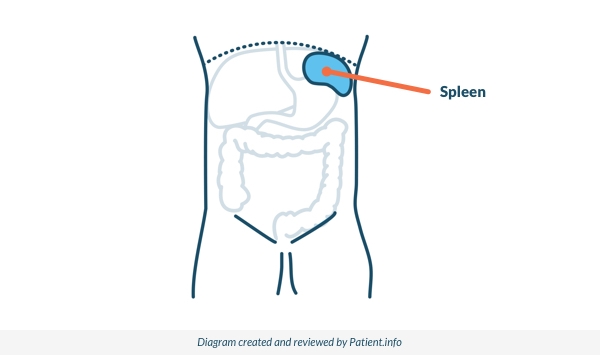
Spleen pain is felt in the upper left side (left upper quadrant) of the tummy (abdomen), behind the lower left ribs. Spleen pain may also cause referred pain in the left shoulder.
Where is the spleen found?
The spleen is found on the upper left side of your body, behind the stomach on a level with the 9th to 11th ribs. It is similar in structure to a lymph node and is the largest lymphatic organ in the body. The spleen contains two main types of tissue - white pulp and red pulp. White pulp is material which is part of the immune system (lymphatic tissue) mainly made up of white blood cells. Red pulp is made up of blood-filled cavities (venous sinuses) and splenic cords. Splenic cords are special tissues which contain different types of red and white blood cells.
What causes spleen pain?
The causes of spleen pain include trauma or rupture of the spleen, which may occur following road traffic accidents (car or bicycle) or any other type of injury such as following an assault. Spleen pain may also be caused by a number of health conditions such as liver disease, mononucleosi, anemia falciforme, malaria or lymphoma (Hodgkin's oppure non-Hodgkin).
Therefore the cause of spleen pain may be obvious following serious injury or may need tests including esami del sangue and scans (such as a tomografia computerizzata oppure Risonanza magnetica) to find the cause.
Can spleen pain come and go?
Spleen pain is usually constant but the severity of pain may vary in intensity, changing between severe and less severe pain.
What does the spleen do?
Blood flows into the spleen where it enters the white pulp. Here, infection-fighting white blood cells called B and T cells screen the blood flowing through. T cells help to recognise invading germs such as bacteria and viruses (pathogens) that might cause illness and then attack them. B cells make antibodies that help to stop infections from taking hold.
Blood also enters red pulp. Red pulp has three main functions:
It removes old and damaged red blood cells. Red blood cells have a lifespan of about 120 days. After this time they stop carrying oxygen effectively. Special cells called macrophages break down these old red blood cells. Haemoglobin is a chemical which carries oxygen. It is found within the cells and is also broken down and then recycled. See the separate leaflet called Hereditary Spherocytosis as an example of a condition with abnormal red blood cells.
It also stores up to one third of the body's supply of platelets. Platelets are fragments of cells circulating in the bloodstream that help to stop bleeding when we cut ourselves. These extra stored platelets can be released from the spleen if severe bleeding occurs.
In unborn babies (fetuses) red pulp can also act like bone marrow, producing new red blood cells. Usually this stops after birth but may start again in some people with certain diseases.
While the spleen performs a number of important functions, it is not essential to life. Other organs such as the liver and bone marrow are able to take over many of its jobs. You can have surgery to have your spleen removed (splenectomy) for various reasons. It may, for example, be removed because of an illness that affects the spleen, you have suffered a ruptured spleen or if it is damaged by an injury. Also, the spleen may not work well in some diseases - for example, anemia falciforme, talassemia and lymphomas.
However, people who have had their spleen removed are more likely to get infections and may be put on long-term antibiotics to prevent this. Consulta l'opuscolo separato intitolato Prevenzione delle infezioni dopo splenectomia per ulteriori dettagli.
Scelte del paziente per Dolore addominale

Salute digestiva
Dolore nel quadrante superiore sinistro
Il dolore nel quadrante superiore sinistro (LUQ) è un dolore localizzato nella parte superiore dell'addome sul lato sinistro. Ci sono molte cause di dolore nel LUQ.
di Dr Hayley Willacy, FRCGP

Salute digestiva
Appendicite
L'appendicite è l'infiammazione dell'appendice, una piccola sacca sulla parete intestinale collegata all'intestino crasso. È un'emergenza medica poiché, se non trattata, l'appendice può rompersi o perforarsi.
di Dr Colin Tidy, MRCGP
Domande frequenti
Che cos'è la splenomegalia?
L'articolo utilizza il termine splenomegalia ma non lo definisce chiaramente. In base al contesto, si riferisce a una milza ingrossata, che può essere un sintomo di varie condizioni di salute come malattie del fegato, febbre ghiandolare, anemia falciforme, malaria o linfoma. Una milza ingrossata potrebbe causare il dolore costante ma di intensità variabile descritto nell'articolo.
Il dolore alla milza peggiora quando respiro?
L'articolo afferma che il dolore alla milza si trova nella parte superiore sinistra dell'addome, dietro le costole inferiori sinistre. Non menziona esplicitamente se il dolore cambia con la respirazione. Questa domanda è inclusa perché è una richiesta comune dei pazienti relativa al dolore addominale e alla sua connessione con i movimenti respiratori, offrendo un'informazione non affrontata direttamente. Il dolore alla milza è solitamente costante, ma la gravità può variare.
Quali esami possono identificare la causa del dolore alla milza?
Se la causa del dolore alla milza non è evidente, come dopo un grave infortunio, i medici possono utilizzare vari test per capire cosa non va. Questi test possono includere esami del sangue per verificare condizioni come infezioni o disturbi del sangue, e scansioni come una TAC o una risonanza magnetica per ottenere immagini dettagliate della milza e delle aree circostanti.
Posso vivere una vita normale senza la milza?
Sì, si può vivere senza milza. Sebbene la milza abbia funzioni importanti, non è essenziale per la vita. Altri organi, come il fegato e il midollo osseo, possono assumere molte delle sue funzioni. Tuttavia, le persone a cui è stata rimossa la milza sono più suscettibili alle infezioni e potrebbero aver bisogno di antibiotici a lungo termine per aiutare a prevenirle.
Quali condizioni potrebbero causare un malfunzionamento della mia milza?
Certe malattie possono causare un funzionamento inefficace della milza, anche se è ancora presente nel corpo. Esempi includono l'anemia falciforme, la talassemia e i linfomi. In tali casi, la milza potrebbe non essere in grado di svolgere correttamente le sue funzioni di filtraggio, immagazzinamento delle cellule del sangue o immunitarie.
Ulteriori letture e riferimenti
- Coco D, Leanza S; Indications for Surgery in Non-Traumatic Spleen Disease. Open Access Maced J Med Sci. 2019 Aug 30;7(17):2958-2960. doi: 10.3889/oamjms.2019.568. eCollection 2019 Sep 15.
- Girard E, Abba J, Cristiano N, et al; Management of splenic and pancreatic trauma. J Visc Surg. 2016 Aug;153(4 Suppl):45-60. doi: 10.1016/j.jviscsurg.2016.04.005. Epub 2016 Jul 9.
Informazioni sull'autoreVisualizza il profilo completo

Dr Colin Tidy, MRCGP
Medico di base, Autore medico
MBBS, MRCGP, MRCP (Paediatrics), DCH
Il Dr Colin Tidy è un medico del NHS, con sede nell'Oxfordshire.
Informazioni sul recensoreVisualizza il profilo completo

Dr Hayley Willacy, FRCGP
Medico di base, Autore medico
MBChB (1992), DRCOG, DFFP, MRCOG (Part 1) MRCGP (2007), DFSRH (2013), MSc - medical education (2020)
La Dott.ssa Hayley Willacy era un medico di base del NHS che lavorava nel nord-ovest dell'Inghilterra, e si è ritirata dalla pratica clinica nel 2022 dopo 30 anni.
Storia dell'articolo
Le informazioni su questa pagina sono scritte e revisionate da clinici qualificati.
Articolo disponibile anche in Inglese, Tedesco, Spagnolo, Francese, Italiano, Portoghese, Hindi, Ebraico, Arabo, and Svedese.
Prossima revisione prevista: 12 Mar 2028
14 Mar 2023 | Ultima versione

Chiedi, condividi, connettiti.
Esplora le discussioni, fai domande e condividi esperienze su centinaia di argomenti di salute.

Non ti senti bene?
Valuta i tuoi sintomi online gratuitamente
Iscriviti alla newsletter di Patient
La tua dose settimanale di consigli sulla salute chiari e affidabili - scritti per aiutarti a sentirti informato, sicuro e in controllo.
Abbonandoti accetti i nostri Informativa sulla Privacy. Puoi annullare l'iscrizione in qualsiasi momento. Non vendiamo mai i tuoi dati.