Impianti dentali
Revisione paritaria di Dr Hayley Willacy, FRCGP Autore Toothpick Pubblicato originariamente 24 Nov 2014
Rispetta le linee guida editoriali
- ScaricaScarica
- Condividi
- Language
- Discussione
- Ask Patient
- Versione audio
- Aggiungi alle fonti preferite su Google
Avviso sui contenuti
Questa pagina non è stata aggiornata di recente, quindi alcune informazioni o alcuni link esterni potrebbero essere cambiati.
Un impianto dentale è un modo moderno per sostituire i denti mancanti. Assume la forma di un perno in titanio che si fissa nell'osso mascellare ed è sormontato da un dente artificiale. La corona del tuo impianto dentale sarà quasi indistinguibile dal resto dei tuoi denti e funzionerà come un dente normale, rendendo gli impianti una soluzione molto attraente e a lungo termine. Il processo può durare tra due e sei mesi, poiché la corona viene montata una volta che il perno in titanio si è integrato con l'osso mascellare. Gli impianti dentali sono generalmente eseguiti da dentisti estetici privati e sono raramente offerti dal SSN. Chiunque abbia denti e gengive sani può farsi applicare un impianto.
A colpo d'occhio
A dental implant replaces a missing tooth's full structure, including the root.
It involves fitting a titanium post into your jawbone, acting as an artificial root.
You need healthy teeth, gums, and jawbone for an implant.
Implants prevent bone loss in the jaw and can last many years with good care.
The procedure usually costs between £1,200 and £3,500 and is not available on the NHS.
Scelte video per Problemi dentaliVideo library
What is a dental implant?
Dental implants offer a modern way to replace missing teeth, with a long-term solution that is as close to your natural teeth as possible.
But what exactly is a dental implant? Essentially, it is a routine dentistry procedure to replace the full structure of a natural tooth. Whereas a denture or crown will fill the gap left by missing teeth, a tooth implant replaces the full root portion of the tooth and is fitted directly to your jawbone, making for a longer lasting, more functional and aesthetically pleasing solution. Millions of patients worldwide have successfully had dental implants fitted.
Can anyone have an implant?
Implant
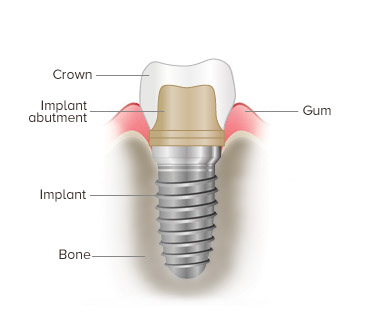
To have an implant and be considered for false teeth, it is important that your teeth and gums are healthy. If there are any other problems, these will need to be treated first.
Given the nature of the procedure, you need to have healthy bone in your jaw in order for the implants to successfully fuse and become strong enough to support the replacement tooth. If you smoke, suffer from diabetes, have advanced gum disease or certain other medical conditions (on which your dentist can advise) the procedure may not be for you.
If you are eligible for an implant, it is highly recommended that you do not delay. Implants should ideally be fitted within one year of losing a tooth, as the jaw bone that surrounds a tooth immediately starts to shrink in size and eventually becomes so small that it will not support an implant.
A dentist requires postgraduate training to perform implant dentistry. Always make sure you see a dentist with ample knowledge and experience for the treatment you require. Feel free to ask how many procedures they have carried out and if other patients who have had the procedure could share their experience.
What are the benefits of having an implant?
The replacement crown of your dental implant will be almost indistinguishable from the rest of your teeth. As dentures can come loose and a bridge may require a clasp to hold it in place, dental implants are the more long-term solution. Furthermore, once in place, as well as being aesthetically pleasing, dental implants are highly functional. Unlike dentures, which can be prone to moving about, teeth attached to an implant work like natural teeth. This means there will be no issues with speech and no discomfort eating harder foods that you might experience with normal dentures.
Another major medical advantage of this form of cosmetic dentistry is that implants put a stop to bone loss. Over time missing teeth can cause atrophy (loss of bone) in the jaw, which may eventually alter the appearance of the face as the area around the mouth starts to sag. Dental implants can actually improve your bone structure by simulating growth. This can radically reduce the ageing effect missing teeth can have on your appearance.
What should I expect from the procedure?
Implants are perfectly safe and there is no need to worry about the procedure. Though the treatment is advanced, it is also very well established and performed frequently.
A tooth implant takes the form of an artificial root - a titanium post that fixes into a space created in in your jawbone. Once the post is in place it will take between two to six months for the implant to integrate with the jawbone, at which point your dentist will ask you to come back so that the teeth can be fitted. A connector called an abutment is attached to the post to hold the false tooth in place.
You can have any number of teeth replaced with implants, from individually missing teeth to a complete set. If the missing teeth are next to each other, you may find that two or more implants may be able to support more than one tooth each, similar to a bridge.
Is it painful to have a dental implant fitted?
As dental implants are usually fitted under local anaesthetic you will not feel any pain during the procedure. It is quite common to experience some soreness in the following days however, but this pain can be controlled with regular anti-inflammatories that your dentist will prescribe.
How long will my implants last?
Dental implants aim to replicate the natural make up of a tooth and so, just as with the rest of your teeth, their durability will depend largely on how well they are maintained. If looked after properly, a dental implant should last for a good many years. That said, they do not come with a lifetime guarantee and neglect can lead to the same problems you might experience with any other tooth.
Cleaning implants requires the same level of dental hygiene as natural teeth, although there may be areas that you could find difficult to reach. Some find that they may need to take more frequent visits to the hygienist to ensure their upkeep.
How much do dental implants cost?
Having dental implants fitted is a multi-staged process and, covering everything from the initial procedure to fit the titanium post, down to the actual crowns, each dental implant will cost between £1,200-£3,500 depending on the exact nature of the work you require. A dentist will always provide a full written quote with a detailed explanation of the procedure before you consent to any treatment. Most people opt for low or zero interest finance that many practices offer to help with the costs. Due to the high success rate, they are better long-term investments than paying to replace dentures or bridges.
Can I have implants on the NHS?
No. NHS dental treatment is only for procedures aimed at stabilising your oral health, and therefore does not cover implant procedures.
In some dental teaching hospitals implant treatment is covered in trauma cases, although this is rare.
This article was provided by Toothpick, the leading provider of appuntamenti dentistici online in the UK.
Scelte del paziente per Problemi dentali

Cura orale e dentale
Protesi dentali
Dentures are removable false teeth made from either acrylic or metal that replace missing teeth. While your dentist will aim for you to keep as many of your own teeth is possible, even people who maintain a good dental health routine may require dentures at some stage in their life. Not only can losing teeth cause problems with your speech and eating, it can also have an emotional impact too. Whatever the reasons for tooth loss, dentures can prevent these problems, restore self-confidence, and enhance your appearance by giving extra support to your cheeks and lips. There are several types of dentures to consider depending on your situation, and costs vary accordingly.
di Toothpick
Cura orale e dentale
Placca dentale e malattie gengivali
Un accumulo di placca e tartaro può portare a gengive infiammate e infette. La malattia gengivale lieve è chiamata gengivite e di solito non è grave. Una malattia gengivale più grave (parodontite) può portare alla caduta dei denti. Una buona igiene orale include la spazzolatura regolare dei denti e la pulizia tra i denti - ad esempio, con il filo interdentale. Questo può solitamente prevenire la malattia gengivale e trattare la malattia gengivale da lieve a moderata. Trattamenti dentali specialistici possono essere necessari per la malattia gengivale grave.
da Dott. Ben Williams, MB ChB
Domande frequenti
What is involved in the 'multi-staged process' of getting implants?
The process involves several stages, starting with the initial fitting of a titanium post into your jawbone. After this, there's a healing period of two to six months for the implant to integrate with the bone. Following successful integration, a connector called an abutment is attached, and finally, the false tooth (crown) is fitted.
If I only have one tooth missing, can I still get a dental implant?
Yes, dental implants can replace individually missing teeth. They are a versatile solution that can address the loss of a single tooth, multiple teeth, or even a complete set.
How do dental implants improve bone structure and prevent facial ageing?
Missing teeth can lead to atrophy, or loss of bone, in the jaw over time, which can alter facial appearance by causing the area around the mouth to sag. Dental implants stimulate bone growth, which helps to improve bone structure and can radically reduce this ageing effect.
Are there different options for the type of false teeth used with an implant?
The false tooth attached to the implant is referred to as a crown. If multiple missing teeth are next to each other, two or more implants might support more than one tooth each, similar to a bridge. The goal is for the replacement crown to be almost indistinguishable from your natural teeth.
Can I eat normally with dental implants, especially harder foods?
Yes, once in place, teeth attached to an implant function like natural teeth. This means you should not have issues with speech or discomfort when eating harder foods, which can sometimes be a problem with dentures.
Informazioni sull'autore
Autore

Toothpick
Informazioni sul recensoreVisualizza il profilo completo

Dr Hayley Willacy, FRCGP
Medico di base, Autore medico
MBChB (1992), DRCOG, DFFP, MRCOG (Part 1) MRCGP (2007), DFSRH (2013), MSc - medical education (2020)
La Dott.ssa Hayley Willacy era un medico di base del NHS che lavorava nel nord-ovest dell'Inghilterra, e si è ritirata dalla pratica clinica nel 2022 dopo 30 anni.
Storia dell'articolo
Articolo disponibile anche in Inglese, Tedesco, Spagnolo, Francese, Italiano, Portoghese, Hindi, Ebraico, Arabo, and Svedese.
24 Nov 2014 | Pubblicato originariamente
Autore:
Toothpick
Revisione paritaria di
Dr Hayley Willacy, FRCGP
Condividi i tuoi pensieri o esperienze con gli altri nel nostro comunità di pazienti.
Accesso semplice a trattamenti affidabili e servizi sanitari online.
Common conditions
Get help with common conditions through the NHS, without a GP appointment.
 Sinusite acuta
 Tonsillite batterica
 Impetigine
 Punture di insetti
 Fuoco di Sant'AntonioInfezioni delle vie urinarie (IVU)
Iscriviti alla newsletter di Patient
La tua dose settimanale di consigli sulla salute chiari e affidabili - scritti per aiutarti a sentirti informato, sicuro e in controllo.
Abbonandoti accetti i nostri Informativa sulla Privacy. Puoi annullare l'iscrizione in qualsiasi momento. Non vendiamo mai i tuoi dati.