Ascesso dentale
Revisione paritaria di Dr Colin Tidy, MRCGPUltimo aggiornamento di Dr Toni Hazell, FRCGPUltimo aggiornamento 16 maggio 2023
Rispetta le linee guida editoriali
- ScaricaScarica
- Condividi
- Language
- Discussione
- Versione audio
- Aggiungi alle fonti preferite su Google
Un ascesso dentale è un accumulo di pus che può causare mal di denti e altri sintomi. Se sospetti di avere un ascesso dentale, consulta un dentista il prima possibile per il trattamento. Senza trattamento, la condizione potrebbe peggiorare e potresti perdere il dente interessato. Le complicazioni sono rare ma possono essere gravi e persino pericolose per la vita. I medici di base non sono formati o assicurati per trattare problemi dentali - non chiamare il tuo medico di base se hai mal di denti.
A colpo d'occhio
A dental abscess is a collection of pus in a tooth or nearby structures, usually caused by bacterial infection.
Symptoms include severe, throbbing pain, gum or facial swelling, sensitivity, and feeling unwell.
See a dentist as soon as possible for diagnosis and treatment.
Treatment typically involves draining the pus, which may be followed by a root canal or other dental procedures.
Untreated abscesses can lead to serious complications, so professional treatment is essential.
Good oral hygiene, regular dental check-ups, and a healthy diet can help prevent abscesses.

What is a dental abscess?
Normal tooth
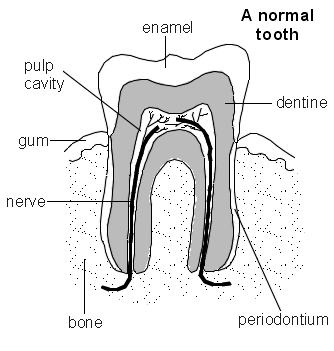
A dental abscess is a localised collection of pus in a tooth or in nearby structures. Pus is a thick fluid that usually contains white blood cells, dead tissue and germs (bacteria). The usual cause of an abscess is a bacterial infection. They are classified into two main types.
Types of dental abscess
Periapical abscess
This type of abscess starts in the centre of the tooth (the dental pulp). This is the most common type. This type of abscess usually develops as a complication of tooth decay (caries). Dental decay is very common. It damages and breaks down (erodes) the protective layers of the tooth (the enamel and dentine). The damage to the tooth allows bacteria to invade the pulp to cause an infection.
An infection in the pulp can progress to form an abscess. Sometimes a periapical abscess develops if the nerve to the tooth dies for any reason. For example, from injury. The dead tissue inside a tooth is more prone to infection.
Periodontal abscess
This type of abscess starts in the supporting structures of the teeth, such as the periodontium which is between the tooth and the gum. It most commonly develops as a complication of gum disease (periodontal disease), which is infection or inflammation of the tissues that surround the teeth.
Gum disease often causes the gum to become slightly detached from the tooth. This causes pockets to form which may get filled with bacteria and progress to form an abscess. A periodontal abscess may also develop as a complication of injury to the gums or periodontium. A periodontal abscess is sometimes called a gum boil as the abscess causes a swelling to develop next to a tooth.
Che cos'è un ascesso dentale?
Dental abscess symptoms
Symptoms typically include one or more of the following:
Pain (toothache) which can quickly become worse. It can be severe and throbbing.
Swelling of the gum, which can be tender.
Swelling of the face. The skin over an abscess may become red and inflamed.
The affected tooth may become tender to touch, and may even become loose.
Alta temperatura (febbre) and feeling generally unwell.
In severe cases, there may be spasm of the jaw muscles.
Sensitivity to hot or cold temperatures.
Dental abscess treatment
Trattamento iniziale
See a dentist as soon as possible. A dentist will normally drain the pus and this often gives great relief of symptoms. This is done either by piercing (lancing) the abscess or by drilling a small hole in the tooth to let the pus escape.
Sometimes, if the infection is not contained, an antibiotico medicine is prescribed for a few days after draining the pus to clear any remaining infection. However, in most cases an antibiotic is probably not needed once the pus is drained. A GP cannot make the decision as to whether an antibiotic is appropriate, and should not prescribe antibiotics for this - it has to be a dentist.
Ulteriore trattamento
Other treatment for a dental abscess includes the following:
Canale radicolare
Root canal treatment is normally given to treat a periapical abscess. This treatment aims to save and restore the damaged or dead inner part of a tooth (the pulp). Briefly - a dentist will drill into the dead tooth and allow pus to escape through the tooth, and then remove the dead pulpal tissue.
A root filling is then placed into the tooth to fill the space and prevent further infection. (Nota: even if pain has gone with an initial emergency drainage of the pus, you are still likely to need root canal treatment. This is because the infection and abscess will almost certainly return unless the dead pulp tissue is dealt with.)
If the infection persists despite root canal treatment, the dentist may have to remove (extract) the tooth.
Drenaggio dell'ascesso
For a periodontal abscess the pus is usually drained. A dentist may also clean the pocket where the abscess had formed. Following this a dentist may smooth out the root surfaces of the tooth to encourage the gum to close back on to the tooth and for any pocket to disappear.
This helps to prevent a recurrence of infection. If you develop repeated periodontal abscesses you may be referred to an oral surgeon. The oral surgeon may carry out a procedure to reshape the gum tissue.
Do you need to see a doctor?
Your GP cannot do anything to help apart from recommend painkillers, which can be bought over the counter. Primary care in the UK is under unprecedented pressure and you should not ring your GP for dental problems, because it takes up a phone call or face to face appointment which could have gone to someone who the GP can help.
You may need painkillers such as paracetamolo oppure ibuprofene until the abscess is drained and treated. These are both available over the counter. (Nota: paracetamol and ibuprofen can be taken together if pain relief with either alone is not enough. Some people require stronger painkillers prescribed by a dentist)
Dental abscess causes
Dental abscesses may occur because a tooth has not properly grown out of the gum (is impacted), because there is tooth decay or gum disease, or because of an injury to the teeth, gums or mouth. They may be more common in those who are having radiotherapy or chemotherapy.
Complications of a dental abscess
Other complications are uncommon. However, they can be serious, even fatal in rare situations, for example, if the infection has spread. They include:
Osteomielite - an infection of the nearby bone.
Sinusite - spread of infection to the nearby sinus in the face bone.
A dental fluid-filled cavity (cyst) which may develop.
Cavernous sinus thrombosis - this is an infection and clotting of a blood vessel in the brain. It is very serious.
A serious, potentially life-threatening infection of the floor of the mouth. This could spread to the face, brain or neck (symptoms of serious infection are listed below).
So, the take home message is - if you have a dental abscess then you should have it treated. This is not only to relieve pain but to prevent possible serious complications. Symptoms that may indicate that a complication is developing and where you should seek medical help urgently are:
If you feel very unwell with a high temperature.
Having difficulty opening your mouth, swallowing or breathing.
Having swelling of the floor of your mouth, face or jaw.
Being in severe pain despite taking painkillers at maximum dose.
Having a spreading infection of your face.
Complications are more likely to develop in people with diabetes and in those with a poorly functioning immune system. For example:
Persone con HIV/AIDS.
People taking chemotherapy.
People who have had their spleen removed.
People taking steroids.
Persone con anemia falciforme (not sickle cell trait).
Prospettive
If treated, the outlook (prognosis) is good. The pus can usually be drained and the tooth can be saved if it is not badly broken down. If left untreated, the abscess may burst on to the skin of the face or into the mouth. This may leave a channel (a sinus tract) between a persistent focus of infection and the skin or mouth, which can discharge pus from time to time.
Preventing a dental abscess
Most dental abscesses are preventable, as most are a complication of tooth decay or gum disease. Both of these can be prevented with good oral hygiene. Briefly, this means regularly brushing your teeth and flossing.
Other things that may help include:
Using mouthwash.
Cleaning your tongue.
Eating a healthy diet.
Limiting sugary drinks and foods.
Stopping smoking (this will improve oral hygiene).
Having a dental check-up at least once a year.
See the separate leaflet called Oral Hygiene for more details.
How to see a dentist
If you suspect that you have a dental abscess, you should see a dentist as soon as possible. To access emergency dental care:
See your own dentist if you are registered with one; oppure
Go to the Accident and Emergency department of a dental hospital (if available); oppure
Go to the local Dental Access Centre (if available); oppure
Dial NHS 111.
Check the NHS Choices 'Find Dentist Services' site online (see link in Further reading below).
If none of the above is available, go to your nearest general hospital Accident and Emergency department; for severe/urgent problems, they may refer you to a hospital oral surgeon.
Dental fees
Scelte del paziente per Dental problems

Cura orale e dentale
Caries dentale
La carie dentale (carie) è la distruzione dei tessuti dentali causata dall'azione dei batteri cariogeni. Questi sono i germi che causano la carie dentale.
da Dott. Ben Williams, MB ChB

Cura orale e dentale
Impianti dentali
A dental implant is a modern way of replacing missing teeth. It takes the form of a titanium post that fixes into your jawbone and is topped by an artificial tooth. The crown of your dental implant will be almost indistinguishable from the rest of your teeth, and will work like a normal tooth - making implants a very attractive, long-term solution. The process can take between two and six months, as the crown is fitted once the titanium post has integrated with the jawbone. Dental implants are generally carried out by private cosmetic dentists, and are rarely offered on the NHS. Anyone with healthy teeth and gums can have an implant fitted.
by Toothpick
Domande frequenti
Can a dental abscess be life-threatening?
While complications are uncommon, some can be very serious, even fatal in rare situations if the infection spreads. These include infections of nearby bone (osteomyelitis), sinuses (sinusitis), or a dangerous blood clot in the brain (cavernous sinus thrombosis). A severe infection of the mouth's floor can also spread to the face, brain, or neck, and these situations require urgent medical attention.
What puts someone at higher risk of complications from a dental abscess?
Complications are more likely to develop in individuals with diabetes or those with a weakened immune system. This includes people with HIV/AIDS, those undergoing chemotherapy, individuals who have had their spleen removed, those taking steroids, and people with sickle cell anaemia.
What is the long-term outcome if a dental abscess is treated?
If a dental abscess is treated, the outlook is generally good. The pus can usually be drained, and in most cases, the affected tooth can be saved if it hasn't been too severely damaged.
What happens if a dental abscess is left untreated?
If left untreated, an abscess may eventually burst either onto the skin of the face or inside the mouth. This can create a channel, called a sinus tract, which may periodically discharge pus from the persistent infection.
How can I prevent a dental abscess from recurring?
Preventing recurrence primarily involves good oral hygiene practices like regular brushing and flossing. Other helpful measures include using mouthwash, cleaning your tongue, maintaining a healthy diet, limiting sugary foods and drinks, stopping smoking, and having a dental check-up at least once a year.
Ulteriori letture e riferimenti
- Robertson DP, Keys W, Rautemaa-Richardson R, et al; Management of severe acute dental infections. BMJ. 2015 Mar 24;350:h1300. doi: 10.1136/bmj.h1300.
- Find a dentist (England); NHS
- Ascesso dentale; NICE CKS, December 2022 (UK Access only)
Informazioni sull'autoreVisualizza il profilo completo

Dr Toni Hazell, FRCGP
MBBS, BSc, FRCGP, DFSRH, Dip GU med, DRCOG, DCH (London, UK, 2000)
La Dott.ssa Toni Hazell si è laureata presso la St. Mary’s Hospital Medical School e ha completato il suo VTS al Northwick Park Hospital.
Informazioni sul recensoreVisualizza il profilo completo

Dr Colin Tidy, MRCGP
Medico di base, Autore medico
MBBS, MRCGP, MRCP (Paediatrics), DCH
Il Dr Colin Tidy è un medico del NHS, con sede nell'Oxfordshire.
Storia dell'articolo
Le informazioni su questa pagina sono scritte e revisionate da clinici qualificati.
Articolo disponibile anche in Inglese, Tedesco, Spagnolo, Francese, Italiano, Portoghese, Hindi, Ebraico, Arabo, and Svedese.
Prossima revisione prevista: 14 Apr 2028
16 maggio 2023 | Ultima versione

Chiedi, condividi, connettiti.
Esplora le discussioni, fai domande e condividi esperienze su centinaia di argomenti di salute.

Non ti senti bene?
Valuta i tuoi sintomi online gratuitamente
Iscriviti alla newsletter di Patient
La tua dose settimanale di consigli sulla salute chiari e affidabili - scritti per aiutarti a sentirti informato, sicuro e in controllo.
Abbonandoti accetti i nostri Informativa sulla Privacy. Puoi annullare l'iscrizione in qualsiasi momento. Non vendiamo mai i tuoi dati.
Più in cura orale e dentale
- Acalasia
- Labbro leporino e palatoschisi
- Placca dentale e malattie gengivali
- Protesi dentali
- Bocca secca
- Disfagia
- Sensazione di globo
- Dente avulso
- Mucositi
- Parotite
- Dermatite periorale
- Disturbi delle ghiandole salivari
- Calcoli delle ghiandole salivari
- Sindrome di Sjögren
- Raddrizzamento dei denti
- Sbiancamento dei denti
- Caries dentale
- Mal di denti
- Denti del giudizio