Atrofia muscolare spinale
Ultimo aggiornamento 7 Nov 2023
Rispetta le linee guida editoriali
- ScaricaScarica
- Condividi
- Language
- Discussione
- Versione audio
- Aggiungi alle fonti preferite su Google
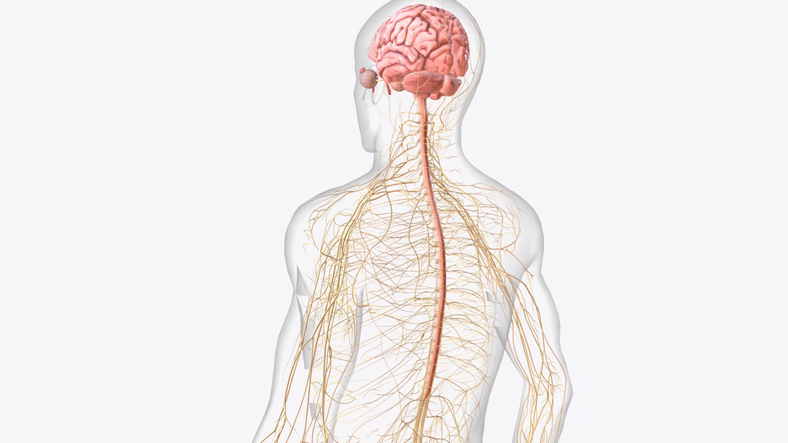
Spinal muscular atrophy is a genetic disorder characterised by weakness and wasting (atrophy) in muscles used for movement (skeletal muscles). It is caused by a loss of specialized nerve cells, called motor neurons that control muscle movement. The weakness tends to be more severe in the muscles that are close to the center of the body (proximal) compared to muscles away from the body's center (distal). The muscle weakness usually worsens with age. There are many types of spinal muscular atrophy that are caused by changes in the same genes. The types differ in age of onset and severity of muscle weakness; however, there is overlap between the types. Other forms of spinal muscular atrophy and related motor neuron diseases, such as spinal muscular atrophy with progressive myoclonic epilepsy, spinal muscular atrophy with lower extremity predominance, X-linked infantile spinal muscular atrophy, and spinal muscular atrophy with respiratory distress type 1 are caused by mutations in other genes.
Descrizione
Spinal muscular atrophy is a genetic disorder characterised by weakness and wasting (atrophy) in muscles used for movement (skeletal muscles). It is caused by a loss of specialized nerve cells, called motor neurons that control muscle movement. The weakness tends to be more severe in the muscles that are close to the center of the body (proximal) compared to muscles away from the body's center (distal). The muscle weakness usually worsens with age. There are many types of spinal muscular atrophy that are caused by changes in the same genes. The types differ in age of onset and severity of muscle weakness; however, there is overlap between the types. Other forms of spinal muscular atrophy and related motor neuron diseases, such as spinal muscular atrophy with progressive myoclonic epilepsy, spinal muscular atrophy with lower extremity predominance, X-linked infantile spinal muscular atrophy, and spinal muscular atrophy with respiratory distress type 1 are caused by mutations in other genes.
Spinal muscular atrophy type 0 is evident before birth and is the rarest and most severe form of the condition. Affected infants move less in the womb, and as a result they are often born with joint deformities (contractures). They have extremely weak muscle tone (hypotonia) at birth. Their respiratory muscles are very weak and they often do not survive past infancy due to respiratory failure. Some infants with spinal muscular atrophy type 0 also have heart defects that are present from birth (congenital).
Spinal muscular atrophy type I (also called Werdnig-Hoffmann disease) is the most common form of the condition. It is a severe form of the disorder with muscle weakness evident at birth or within the first few months of life. Most affected children cannot control their head movements or sit unassisted. Children with this type may have swallowing problems that can lead to difficulty feeding and poor growth. They can also have breathing problems due to weakness of respiratory muscles and an abnormally bell-shaped chest that prevents the lungs from fully expanding. Most children with spinal muscular atrophy type I do not survive past early childhood due to respiratory failure.
Spinal muscular atrophy type II (also called Dubowitz disease) is characterised by muscle weakness that develops in children between ages 6 and 12 months. Children with this type can sit without support, although they may need help getting to a seated position. However, as the muscle weakness worsens later in childhood, affected individuals may need support to sit. Individuals with spinal muscular atrophy type II cannot stand or walk unaided. They often have involuntary trembling (tremors) in their fingers, a spine that curves side-to-side (scoliosis), and respiratory muscle weakness that can be life-threatening. The life span of individuals with spinal muscular atrophy type II varies, but many people with this condition live into their twenties or thirties.
Spinal muscular atrophy type III (also called Kugelberg-Welander disease) typically causes muscle weakness after early childhood. Individuals with this condition can stand and walk unaided, but over time, walking and climbing stairs may become increasingly difficult. Many affected individuals require wheelchair assistance later in life. People with spinal muscular atrophy type III typically have a normal life expectancy.
Spinal muscular atrophy type IV is rare and often begins in early adulthood. Affected individuals usually experience mild to moderate muscle weakness, tremors, and mild breathing problems. People with spinal muscular atrophy type IV have a normal life expectancy.
Modelli di ereditarietà
The source lists the following possible inheritance patterns: Autosomal recessive. More than one pattern can apply in different cases.
Related genes
Altri nomi
5q SMA
Proximal SMA
SMA
SMA-associated SMA
Spinal amyotrophies
Spinal amyotrophy
Spinal muscle degeneration
Spinal muscle wasting
Related patient information and medicines

Patient information leaflet
Pianificare una gravidanza
This leaflet offers advice for women who are planning to become pregnant. The aim is to plan ahead to reduce the risk of any harm to the baby and to reduce the risk of pregnancy complications. Pregnant women need a good supply of folic acid to help with the development of the baby. Folic acid tablets in early pregnancy reduce the risk of having a.
Patient information leaflet
Malattia del motoneurone
Malattia del motoneurone (MND) is a neurological condition causes a progressive weakness and wasting of many of the muscles in the body. There are various types of motor neurone disease. This leaflet is mainly about amyotrophic lateral sclerosis (ALS), which is the most common type of motor neurone disease. Although there is no cure for motor neurone.

Patient information leaflet
Introduzione autonoma dei cibi solidi
Babies who can coordinate eyes, hands and mouth in order to look at food, pick it up and put it ... Read our feature on Spinal Muscular Atrophy to see the muscular milestones your baby should go through. A baby who is ready to eat may lose the reflex that makes them push food out of their mouth with their tongue if you put it there. This means.

Patient information leaflet
Debolezza muscolare
Muscle weakness is a common complaint but the word weakness can mean different things to different people - including tiredness, reduced power and failure to work at all. Condizioni legate alla colonna vertebrale : When nerves sono damaged as they emerge from the spine (such as when people 'slip' a disc in the lower back or neck), weakness can result. W... Other.

Patient information leaflet
Scoliosi e cifosi
Scoliosi is a back condition that causes the (back) spine to curve to the side - either left or right. Most cases develop in children between the ages of 9 and 14 years during the growth spurt of puberty. Scoliosis is usually ... Kyphosis can occur at any age, although it is rare at birth. Adolescent kyphosis, is known as Scheuermann's.

Patient information leaflet
Ernia del disco
A slipped disc is an old-fashioned term and does not truly describe what happens in this condition. It is more common to refer to it as a "disc prolapse", "disc herniation" or "disc bulge". A slipped disc often causes sudden severe lower back pain. The disc often puts pressure on a nerve root which causes pain down one leg. Physical treatments.
Ulteriori letture e riferimenti
- Atrofia muscolare spinale; MedlinePlus, National Library of Medicine.
- Farrar MA, Kiernan MC. The Genetics of Spinal Muscular Atrophy: Progress and Challenges. Neurotherapeutics. 2015 Apr;12(2):290-302. doi: 10.1007/s13311-014-0314-x.
- Fuller HR, Gillingwater TH, Wishart TM. Commonality amid diversity: Multi-study proteomic identification of conserved disease mechanisms in spinal muscular atrophy. Neuromuscul Disord. 2016 Sep;26(9):560-9. doi: 10.1016/j.nmd.2016.06.004. Epub 2016 Jun 7.
- Kolb SJ, Kissel JT. Spinal Muscular Atrophy. Neurol Clin. 2015 Nov;33(4):831-46. doi: 10.1016/j.ncl.2015.07.004.
- Lunn MR, Wang CH. Spinal muscular atrophy. Lancet. 2008 Jun 21;371(9630):2120-33. doi: 10.1016/S0140-6736(08)60921-6.
- Prior TW, Leach ME, Finanger EL. Spinal Muscular Atrophy. 2000 Feb 24 [updated 2026 Feb 12]. In: Adam MP, Bick S, Mirzaa GM, Wallace SE, Amemiya A, editors. GeneReviews(R) [Internet]. Seattle (WA): University of Washington, Seattle; 1993-2026. Available from http://www.ncbi.nlm.nih.gov/books/NBK1352/
- Prior TW, Nagan N. Spinal Muscular Atrophy: Overview of Molecular Diagnostic Approaches. Curr Protoc Hum Genet. 2016 Jan 1;88:9.27.1-9.27.13. doi: 10.1002/0471142905.hg0927s88.
- Prior TW, Swoboda KJ, Scott HD, Hejmanowski AQ. Homozygous SMN1 deletions in unaffected family members and modification of the phenotype by SMN2. Am J Med Genet A. 2004 Oct 15;130A(3):307-10. doi: 10.1002/ajmg.a.30251.
- Wirth B, Brichta L, Schrank B, Lochmuller H, Blick S, Baasner A, Heller R. Mildly affected patients with spinal muscular atrophy are partially protected by an increased SMN2 copy number. Hum Genet. 2006 May;119(4):422-8. doi: 10.1007/s00439-006-0156-7. Epub 2006 Mar 1.
Partecipa alla conversazione
Condividi i tuoi pensieri o esperienze con gli altri nel nostro comunità di pazienti.

Chiedi, condividi, connettiti.
Esplora le discussioni, fai domande e condividi esperienze su centinaia di argomenti di salute.
Iscriviti alla newsletter di Patient
La tua dose settimanale di consigli sulla salute chiari e affidabili - scritti per aiutarti a sentirti informato, sicuro e in controllo.
Abbonandoti accetti i nostri Informativa sulla Privacy. Puoi annullare l'iscrizione in qualsiasi momento. Non vendiamo mai i tuoi dati.