survival of motor neuron 2, centromeric
Last updated 18 Aug 2020
Meets Patient’s editorial guidelines
- DownloadDownload
- Share
- Language
- Discussion
- Audio Version
- Add to preferred sources on Google
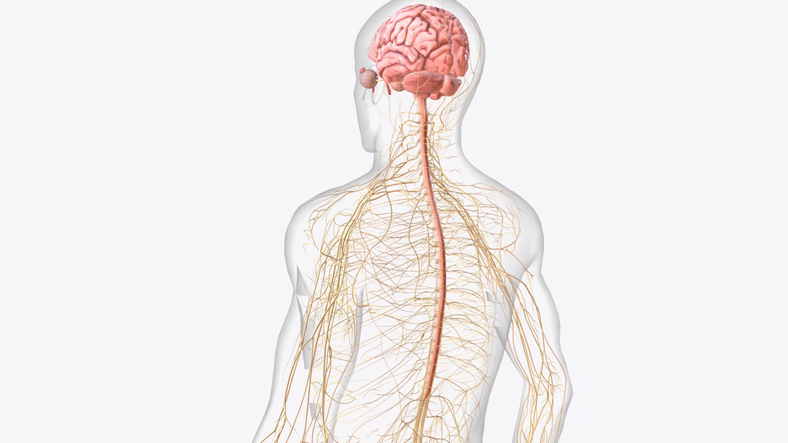
The SMN2 gene provides instructions for making the survival motor neuron (SMN) protein. The SMN protein is found throughout the body, with highest levels in the spinal cord. This protein is one of a group of proteins called the SMN complex, which is important for the maintenance of specialized nerve cells called motor neurons. These cells are located in the spinal cord and the part of the brain that is connected to the spinal cord (the brainstem). Motor neurons transmit signals from the brain and spinal cord that tell skeletal muscles to tense (contract), which allows the body to move.
Normal function
The SMN2 gene provides instructions for making the survival motor neuron (SMN) protein. The SMN protein is found throughout the body, with highest levels in the spinal cord. This protein is one of a group of proteins called the SMN complex, which is important for the maintenance of specialized nerve cells called motor neurons. These cells are located in the spinal cord and the part of the brain that is connected to the spinal cord (the brainstem). Motor neurons transmit signals from the brain and spinal cord that tell skeletal muscles to tense (contract), which allows the body to move.
Several different versions of the SMN protein are produced from the SMN2 gene, but only one version (called isoform d) is full size and functional. The other versions are smaller and quickly broken down. The full-size protein made from the SMN2 gene is identical to the protein made from a similar gene called SMN1; however, only 10 to 15 percent of all functional SMN protein is produced from the SMN2 gene (the rest is produced from the SMN1 gene). Typically, people have two copies of the SMN1 gene and one to two copies of the SMN2 gene in each cell. However, the number of copies of the SMN2 gene varies, with some people having up to eight copies. The more SMN2 gene copies a person has, the more SMN protein they produce.
In cells, the SMN complex plays an important role in processing molecules called messenger RNA (mRNA), which serve as genetic blueprints for making proteins. Messenger RNA begins as a rough draft (pre-mRNA) and goes through several processing steps to become a final, mature form. The SMN complex helps to assemble the cellular machinery needed to process pre-mRNA. The SMN complex is also important for the development of specialized outgrowths from nerve cells called dendrites and axons. Dendrites and axons are required for the transmission of impulses between neurons and from neurons to muscles.
Conditions referring to this gene or chromosome
Other names
BCD541
C-BCD541
centromeric SMN
SMN_HUMAN
SMNC
Related patient information and medicines
Patient information leaflet
Motor neurone disease
Motor neurone disease (MND) is a neurological condition causes a progressive weakness and wasting of many of the muscles in the body. There are various types of motor neurone disease. This leaflet is mainly about amyotrophic lateral sclerosis (ALS), which is the most common type of motor neurone disease. Although there is no cure for motor neurone.

Patient information leaflet
Peripheral neuropathy
Peripheral neuropathy means damage to one or more of ... Diabetes is the most common cause of persistent (chronic) peripheral neuropathy. The symptoms of peripheral neuropathy depend on which type of peripheral nerves are damaged (sensory, motor or autonomic nerves). If not treated, the symptoms then gradually start to move towards the centre of.

Patient information leaflet
End of life care
End of life care is a term used to cover the issues you need to think about and plan for, when you are approaching death. It is a very wide area that... In September 2021 the National Institute for Health and Care Excellence (NICE) issued new quality standards about what everyone should be able to expect from end of life care. For example, a.

Patient information leaflet
COVID-19
COVID-19 is an infectious disease caused by a virus that was first identified in December 2019 in Wuhan, China. Medical treatments causing weakened immune systems (like steroid medicines , antibod... Rare conditions affecting the brain and nerves, like multiple sclerosis , motor neurone disease , Huntington's disease and myasthenia gravis. How to.

Patient information leaflet
Muscle relaxants
Motor neurone disease. ... In most cases it is given as a four-week trial to see if it helps with symptoms, and can be continued if the symptoms have improved by at least 20%, using a numerical rating scale. Motor neurone disease Baclofen, tizanidine, dantrolene, and gabapentin are sometimes used for muscle stiffness or spasticity in people with.

Patient information leaflet
Brain tumours
This leaflet aims to give a brief overview of the various types of brain tumours. The treatment and survival rates vary greatly, depending on factors such as the type of tumour and the location in the brain. Understanding the brain The main parts of the brain include: The cerebrum. This is divided into the right side (right hemisphere) which.
Further reading and references
- survival of motor neuron 2, centromeric; MedlinePlus, National Library of Medicine.
- Cartegni L, Hastings ML, Calarco JA, de Stanchina E, Krainer AR. Determinants of exon 7 splicing in the spinal muscular atrophy genes, SMN1 and SMN2. Am J Hum Genet. 2006 Jan;78(1):63-77. doi: 10.1086/498853. Epub 2005 Nov 16.
- Farrar MA, Kiernan MC. The Genetics of Spinal Muscular Atrophy: Progress and Challenges. Neurotherapeutics. 2015 Apr;12(2):290-302. doi: 10.1007/s13311-014-0314-x.
- Fuller HR, Gillingwater TH, Wishart TM. Commonality amid diversity: Multi-study proteomic identification of conserved disease mechanisms in spinal muscular atrophy. Neuromuscul Disord. 2016 Sep;26(9):560-9. doi: 10.1016/j.nmd.2016.06.004. Epub 2016 Jun 7.
- Gubitz AK, Feng W, Dreyfuss G. The SMN complex. Exp Cell Res. 2004 May 15;296(1):51-6. doi: 10.1016/j.yexcr.2004.03.022.
- Kolb SJ, Battle DJ, Dreyfuss G. Molecular functions of the SMN complex. J Child Neurol. 2007 Aug;22(8):990-4. doi: 10.1177/0883073807305666.
- Kolb SJ, Kissel JT. Spinal Muscular Atrophy. Neurol Clin. 2015 Nov;33(4):831-46. doi: 10.1016/j.ncl.2015.07.004.
- Prior TW, Krainer AR, Hua Y, Swoboda KJ, Snyder PC, Bridgeman SJ, Burghes AH, Kissel JT. A positive modifier of spinal muscular atrophy in the SMN2 gene. Am J Hum Genet. 2009 Sep;85(3):408-13. doi: 10.1016/j.ajhg.2009.08.002. Epub 2009 Aug 27.
- Prior TW, Swoboda KJ, Scott HD, Hejmanowski AQ. Homozygous SMN1 deletions in unaffected family members and modification of the phenotype by SMN2. Am J Med Genet A. 2004 Oct 15;130A(3):307-10. doi: 10.1002/ajmg.a.30251.
- Wirth B, Brichta L, Schrank B, Lochmuller H, Blick S, Baasner A, Heller R. Mildly affected patients with spinal muscular atrophy are partially protected by an increased SMN2 copy number. Hum Genet. 2006 May;119(4):422-8. doi: 10.1007/s00439-006-0156-7. Epub 2006 Mar 1.
Join the conversation
Share your thoughts or experiences with others in our patient communities.

Ask, share, connect.
Browse discussions, ask questions, and share experiences across hundreds of health topics.
Sign up to the Patient newsletter
Your weekly dose of clear, trustworthy health advice - written to help you feel informed, confident and in control.
By subscribing you accept our Privacy Policy. You can unsubscribe at any time. We never sell your data.