Anatomia del seno
Revisione paritaria di Dr Hayley Willacy, FRCGP Ultimo aggiornamento di Dr Laurence KnottUltimo aggiornamento 12 Nov 2018
Rispetta le linee guida editoriali
- ScaricaScarica
- Condividi
- Language
- Discussione
- Versione audio
- Aggiungi alle fonti preferite su Google
Il nome medico per il seno è ghiandola mammaria. Ogni seno è costituito da tessuto che ricopre i muscoli della parete toracica (i muscoli pettorali). Nelle donne, i seni sono composti principalmente da tessuto specializzato (tessuto ghiandolare) che produce latte. La parte rimanente è costituita da tessuto adiposo. Negli esseri umani, il tessuto mammario inizia a ingrandirsi durante la pubertà. Questo è diverso da altri primati, dove il tessuto mammario si ingrandisce solo durante la produzione di latte.
Structure of the breast
Breast cross section
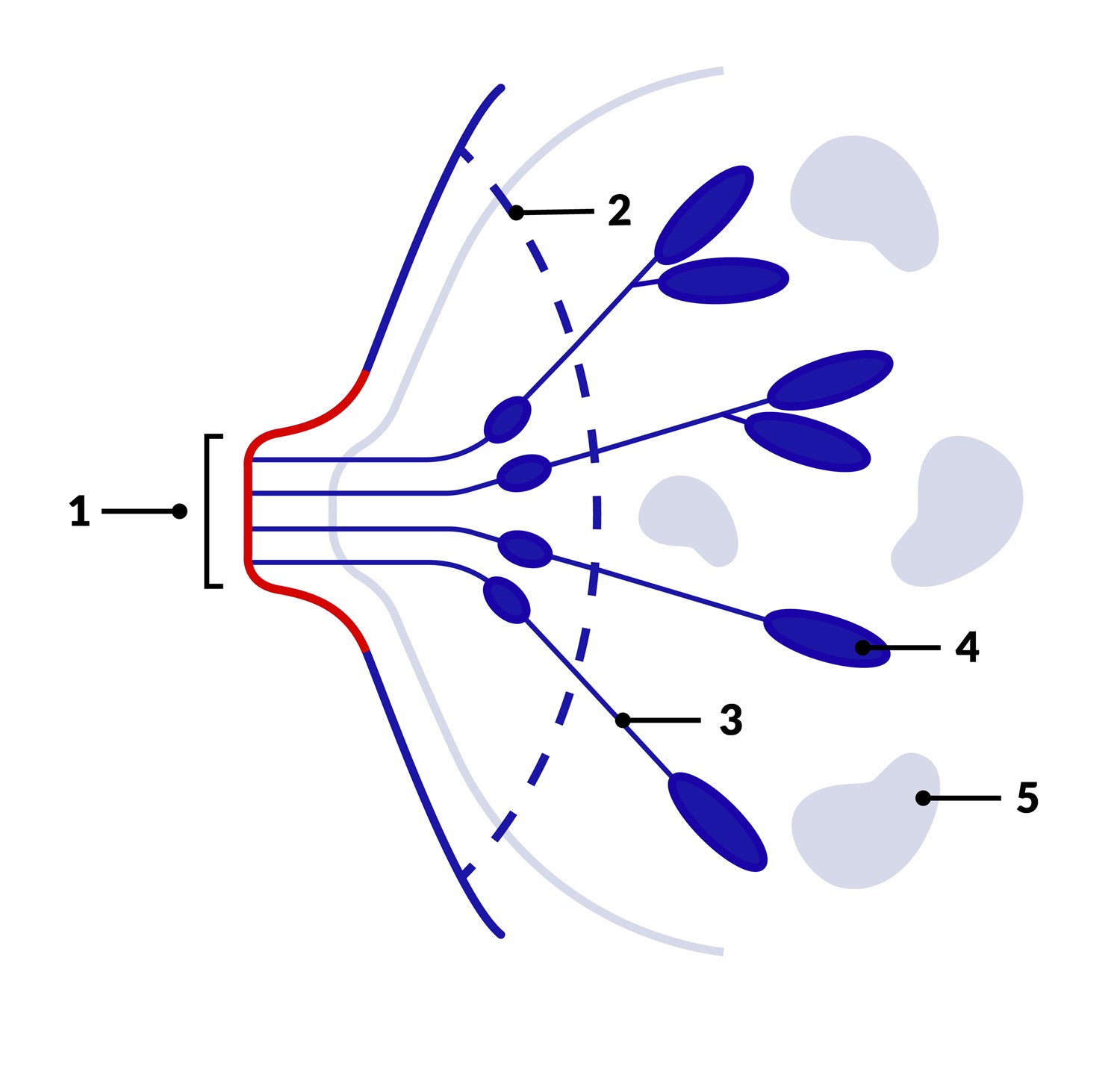
Chiave |
|---|
1. Nipple |
The breast is composed of glandular structures called lobules. In women, the lobules are composed of specialised tissue which can produce milk during periods of lactation. The lobules themselves are organised into lobes. Each lobe contains 15-20 lobules. The space between the lobules is filled with fat cells and connective tissue (the support tissue of the body). Ligaments support the breasts and give them shape. Nerves running through the breasts provide sensation. Lymph vessels are responsible for the circulation of body fluid and drain into the lymph nodes. The lymph nodes draining the breast are located in the armpits and behind the breastbone. Blood vessels circulate blood through the tissues. The amount of fat in the breast is what determines its size.
The breasts do not contain muscle. They sit on top of the pectoral muscles that are part of the chest wall.
The male breast has a similar composition except the tissue making up the lobules has no capacity to produce milk.
In the fetus (the developing unborn baby) the breasts develop along the 'milk lines', tracts of tissue on either side of the body that run from the armpits to the groins. Extra nipples or even entire breasts can develop anywhere along these lines. Extra nipples are common but the presence of a whole additional breast is unusual.
How does lactation work
The lactating tissue of the lobules produces milk. Milk produced by each lobule travels through little tubes called ducts, which open out on to the nipple. The pigmented area of the nipple is called the areola. The areola also contains modified sweat glands called Montgomery's glands. Their purpose is to lubricate the breast during breastfeeding.
Some disorders of the breast
Dolore al seno
Breast pain is a common symptom that most women experience at least some time in their lives. The medical term for it is mastalgia. Most breast pain is cyclical - that is, it occurs on a monthly basis, usually just before a period. The breasts may feel swollen and lumpy around this time. It is thought that cyclical breast pain is caused by the breast tissue becoming extra sensitive to the normal hormone changes that occur around menstruation. There does not seem to be any disorder of the hormone system itself.
Pain that is not related to periods is called non-cyclical. It can be caused by a breast disorder (eg, infection or breastfeeding) or from a problem with the muscles or ribs beneath the breast. It may be worth keeping a diary to see whether your pain is cyclical or non-cyclical.
Cyclical pain may be helped by a good support bra, painkillers such as paracetamolo, non-steroidal anti-inflammatory preparations to apply directly to the surface of the breast - such as ibuprofene oppure diclofenac - and hormone-blocking medicines such as danazolo. Evening primrose oil used to be widely used but is no longer available on prescription, as there is little evidence for its use. However, some women have found it helpful and it can still be bought from a chemist.
Several medicines can cause cyclical breast pain, including hormones, antidepressants and treatments for high blood pressure. Check your medication and talk to your doctor if you think this is the problem.
The treatment of non-cyclical breast pain depends on the cause, although sometimes no cause is found. It may disappear without treatment after a few months. It is sometimes helped by non-steroidal anti-inflammatory medicines taken in tablet form or rubbed on to the skin.
Breast pain and breast cancer
Cancro al seno usually causes a painless lump but this is not a golden rule. If you have any type of breast pain, it's best to get it checked out by your doctor.
Scelte del paziente per Salute del seno
Salute delle donne
Il tuo reggiseno sta danneggiando la tua salute?
Quello che indossi sotto i vestiti potrebbe avere un impatto maggiore sul tuo benessere fisico - e mentale - di quanto pensi. Esploriamo le possibili conseguenze di indossare un reggiseno che non ti calza correttamente.
di Victoria Raw

Salute delle donne
Perché dobbiamo parlare della malattia da protesi mammarie
Hai mai sentito parlare della malattia da impianto mammario? Anche se non ancora riconosciuta come una condizione medica ufficiale, comprendere che questo è un possibile effetto collaterale della chirurgia di impianto mammario può aiutare le persone a prendere decisioni più informate, identificare la causa dei loro problemi di salute e migliorare le loro possibilità di recupero.
di Amberley Davis
Informazioni sull'autoreVisualizza il profilo completo

Dr Laurence Knott
Medico di base, Autore medico
Laurea in Biochimica (con lode), MBBS
Il Dr. Laurence Knott si è qualificato nel 1973 e ha avuto una vasta esperienza come Medico Generico.
Informazioni sul recensoreVisualizza il profilo completo

Dr Hayley Willacy, FRCGP
Medico di base, Autore medico
MBChB (1992), DRCOG, DFFP, MRCOG (Part 1) MRCGP (2007), DFSRH (2013), MSc - medical education (2020)
La Dott.ssa Hayley Willacy era un medico di base del NHS che lavorava nel nord-ovest dell'Inghilterra, e si è ritirata dalla pratica clinica nel 2022 dopo 30 anni.
Storia dell'articolo
Le informazioni su questa pagina sono revisionate da clinici qualificati.
Articolo disponibile anche in Inglese, Tedesco, Spagnolo, Francese, Italiano, Portoghese, Hindi, Ebraico, Arabo, and Svedese.
12 Nov 2018 | Ultima versione

Chiedi, condividi, connettiti.
Esplora le discussioni, fai domande e condividi esperienze su centinaia di argomenti di salute.

Non ti senti bene?
Valuta i tuoi sintomi online gratuitamente
Iscriviti alla newsletter di Patient
La tua dose settimanale di consigli sulla salute chiari e affidabili - scritti per aiutarti a sentirti informato, sicuro e in controllo.
Abbonandoti accetti i nostri Informativa sulla Privacy. Puoi annullare l'iscrizione in qualsiasi momento. Non vendiamo mai i tuoi dati.
Di più sulla salute delle donne
- I test del sangue possono aiutare a gestire la menopausa e la TOS?
- Il tuo PMS potrebbe essere PMDD?
- Controlli il tuo seno?
- Video sull'endometriosi
- Come gli eventi della vita e l'invecchiamento possono cambiare la tua vagina
- Come alleviare il dolore articolare durante la menopausa
- TRH: verifica dei fatti su rischi e benefici
- Il tuo stile di vita ti sta causando la candidosi?
- Miti sul laceramento dell'imene sfatati
- Gomme per la salute vaginale - Perché la tendenza a migliorare le nostre vagine è dannosa
- Quali sono gli effetti collaterali della TOS?
- Cosa causa mestruazioni abbondanti e sanguinamento vaginale anomalo?
- Com'è essere un chirurgo senologo con il cancro al seno
- Cosa aspettarsi quando si prende la pillola del giorno dopo
- Perché stare all'aperto può aiutarti durante la menopausa
- Perché tutti dobbiamo essere 'consapevoli del seno'
- Perché dobbiamo parlare della malattia da protesi mammarie
- Avremo mai una pillola contraccettiva maschile?
- Salute delle donne nello sport: infortuni, mestruazioni e maternità