
The importance of learning CPR
Peer reviewed by Dr Colin Tidy, MRCGPLast updated by Victoria RawLast updated 25 Jun 2026
Meets Patient’s editorial guidelines
- DownloadDownload
- Share
- Language
- Discussion
- Audio Version
- Add to preferred sources on Google
According to the British Heart Foundation (BHF) 30,000 people have a cardiac arrest each year. Fewer than one in ten of these people will survive. Cardiac arrest can happen to anyone, anywhere, at any time - and without warning.
Knowing how to perform CPR could double someone's chances of surviving it. We hear from real-life heroes who've saved lives through CPR. Their stories highlight the vital importance of learning this life-saving skill.
What is CPR?
CPR (cardiopulmonary resuscitation) is an emergency procedure to get your heart beating again when it unexpectedly stops (cardiac arrest). When your heart stops beating it stops pumping blood around your body - starving your brain of oxygen. The longer your brain goes without oxygen, the greater the chance of brain damage and death. CPR can keep your blood pumping until professional medical help arrives.
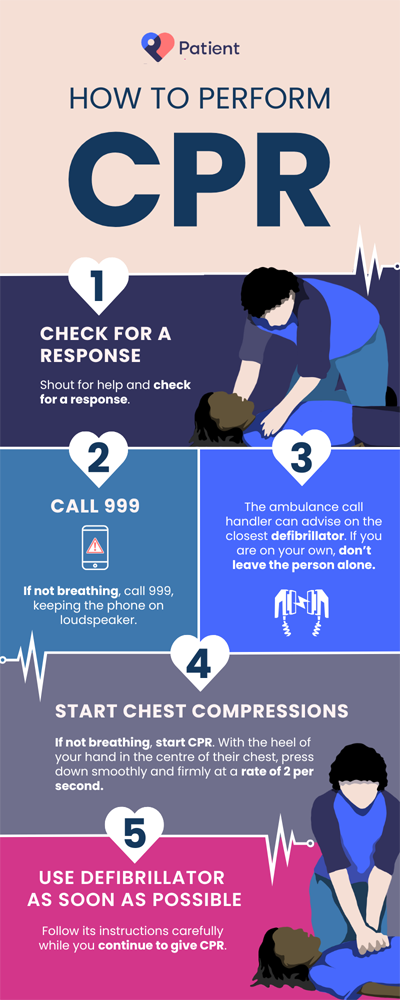
How to perform CPR
Why is learning CPR important?
Without CPR, your chance of dying dramatically increases after cardiac arrest. By learning CPR, you can become a hero and save someone else's life. Minutes spent learning CPR can mean a lifetime saved. The British Heart Foundation's RevivR campaign puts this power in your hands. Taking its free 15-minute online CPR course means you could be ready to act in an emergency.
Andy's story
Andy Bleasby of Wakefield, West Yorkshire, performed life-saving CPR in a familiar yet seemingly unlikely place.
"I was actually in the pub, about to watch a local rugby game," says the father of two. "I was just chatting with my in-laws when my friend told me someone had collapsed around the corner. I thought, "That doesn't sound good", so I got up to see what was happening.
Due to his role as an operating department practitioner (ODP), Andy undergoes yearly CPR training. So when he saw a man lying unconscious and unresponsive on the floor of the pub, his instinctive response was to step in and perform immediate CPR.
"My friend and I took turns performing CPR until the ambulance team arrived. The person survived and is now living a normal life. I even went to his 65th birthday party."
Andy emphasises that knowing how to do CPR was vital in helping to save this person's life.
"There are many organisations running free CPR training and basic life support courses," he says. "So if you have the opportunity to go on one - do it. You never know when it’s going to come in useful. Cardiac arrest can happen to anyone - it may be a stranger in a pub, or it could be a family member in your own house."
If you see someone in cardiac arrest, you should always attempt CPR, even if you're unsure of the correct technique. Performing any type of CPR could save their life - immediate CPR can double or triple the chance of survival from cardiac arrest.
If you feel uncomfortable doing 'rescue breaths', hands only CPR has been shown to be effective. Chest compressions can keep the blood pumping around their body while you wait for the ambulance to arrive.
"Anything you can do is a bonus," says Andy. "Even if you haven't had CPR training - or only watched it on TV - if you can attempt to do what you can do, that's better than nothing. It gives that person a greater chance of survival."
For more inspiring stories about the life-saving power of CPR, tune in to Emma's story.
Patient picks for First aid

Treatment and medication
The importance of learning CPR: Emma tells her story
According to the British Heart Foundation (BHF) 30,000 people have a cardiac arrest each year. Fewer than one in ten of these people will survive. Cardiac arrest can happen to anyone, anywhere, at any time - and without warning. Knowing how to perform CPR could double someone's chances of surviving it. We hear from real-life heroes who've saved lives through CPR. Their stories highlight the vital importance of learning this life-saving skill.
by Victoria Raw

Treatment and medication
What should you do if someone goes into cardiac arrest?
Every year 30,000 people have a cardiac arrest in the UK. If someone is unresponsive and you find they are not breathing, they could be in cardiac arrest. In these situations, it's understandable why we panic and become flustered. However, it's vital we can spot the signs and know exactly what to do to ensure someone has the best chance of survival.
by Emily Jane Bashforth
About the authorView full bio
Updated by

Victoria Raw
Feature Writer
BA (Hons), English Literature
Victoria is a content writer at Patient, with special interests spanning mental wellbeing, societal trends and the impact of technology on our health.
Authored by
Victoria Raw
Feature Writer
BA (Hons), English Literature
Victoria is a content writer at Patient, with special interests spanning mental wellbeing, societal trends and the impact of technology on our health.
About the reviewerView full bio

Dr Colin Tidy, MRCGP
General Practitioner, Medical Author
MBBS, MRCGP, MRCP (Paediatrics), DCH
Dr Colin Tidy is an NHS Doctor, based in Oxfordshire.
Article history
Article also available in English, German, Spanish, French, Italian, Portuguese, Hindi, Hebrew, Arabic, and Swedish.
Next review due: 25 Jun 2029
25 Jun 2026 | Latest version
14 Oct 2024 | Originally published
Authored by:
Victoria Raw
Join the conversation
Share your thoughts or experiences with others in our patient communities.

Ask, share, connect.
Browse discussions, ask questions, and share experiences across hundreds of health topics.

Feeling unwell?
Assess your symptoms online for free
Sign up to the Patient newsletter
Your weekly dose of clear, trustworthy health advice - written to help you feel informed, confident and in control.
By subscribing you accept our Privacy Policy. You can unsubscribe at any time. We never sell your data.