Chetoni nelle urine
Urine ketones
Revisione paritaria di Dr Hayley Willacy, FRCGP Ultimo aggiornamento di Dr Surangi Mendis, MRCGPUltimo aggiornamento 9 Gen 2024
Rispetta le linee guida editoriali
- ScaricaScarica
- Condividi
- Language
- Discussione
- Versione audio
- Add to preferred sources on Google
I chetoni vengono prodotti quando il corpo brucia i grassi per ottenere energia. Normalmente questi chetoni vengono completamente scomposti (metabolizzati) in modo che ci siano pochissimi chetoni nelle urine. Se per qualsiasi motivo il corpo non riesce a ottenere abbastanza glucosio per l'energia, passerà a utilizzare i grassi corporei, causando un aumento dei chetoni nel corpo. Questo si traduce in più chetoni nelle urine.
In questo articolo:
Video picks for Esami delle urine e della vescica
Continua a leggere sotto
Cosa sono i chetoni?
Ketones are produced when the body burns fat for energy. Normally, your body gets the energy it needs from carbohydrate in your diet. But stored fat is broken down and ketones are made if your diet does not contain enough carbohydrate to supply the body with sugar (glucose) for energy or if your body can't use blood sugar (glucose) properly.
Ketones are usually formed in the liver and are broken down so that very small amounts of ketones appear in the urine. However, when carbohydrates are unavailable (for example, in starvation) or can't to be used as an energy source (for example, in diabetes when there is insufficient insulin to create and use glucose in a healthy way), fat becomes the main source of energy and large amounts of ketones are made. Therefore, higher levels of urine ketones indicate that the body is using fat as the major source of energy.
High levels of ketones in your body can cause:
Dolore addominale.
Nausea.
Essere malato (vomito).
Diarrea.
The ketones that most often appear in the urine when fat instead of glucose for energy is used are called acetoacetate and beta-hydroxybutyric acid.
What are the causes of ketones in urine?
Torna ai contenutiThe causes of high levels of ketones and therefore urine ketones include:
Diabetic ketoacidosis (DKA).
Starvation: not eating for prolonged periods (for example, 12 to 18 hours).
Dieta chetogenica (high-fat, low-carbohydrate diet). This can cause an increase in body ketones but much less than DKA and these are not usually harmful to the body. Ketogenic diets are sometimes used as a treatment for epilepsy.
Continua a leggere sotto
How to test for ketones in urine
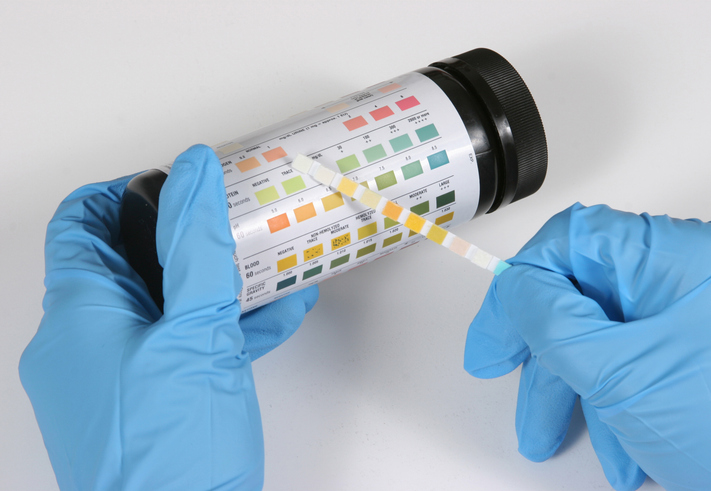
Torna ai contenutiKetones can be tested using a blood test or a urine test. Ketones in urine can be detected using test strips. There are several reasons why a urine ketone test may be needed:
It is a convenient way to monitor diabetes in addition to monitoring blood glucose levels, especially when the glucose levels are high and there is a risk of DKA.
It is also useful for people on a high-fat or low-carbohydrate diet to monitor and check ketone levels.
Ketone testing is also used for someone who cannot eat due to fasting or to eating disorders like anorexia. Pregnant women with diabetes should also be monitored with ketone testing.
Are ketones in urine test strips reliable?
Torna ai contenutiOccasionally the urine ketone strips are positive but there aren't any urine ketones. The causes of this include:
If you are taking some medicines - for example, levodopa, sodium valproate.
If you are taking vitamin C.
If your body is very dry (dehydration).
One of the main problems with urine ketone testing is that there is a delay in the urine becoming positive to ketones. You may have a sudden increase in the level of ketones in your blood but there will usually be a delay in detecting the high level of urine ketones.
Equally your urine may also be positive to ketones because ketones have passed into your urine over the previous few hours, even though your blood ketone levels have already started to fall.
On other occasions the urine ketone strips may be negative when there are actually urine ketones. Most urine testing kits detect acetoacetate, not the main ketone, which is beta-hydroxybutyrate. It is possible for the test to be negative with high levels of beta-hydroxybutyrate.
Continua a leggere sotto
What's the link between diabetes and ketones in urine?
Torna ai contenutiSevere insulin deficiency causes an increase in blood sugar (glucose) levels (hyperglycaemia) and a very high level of ketones in the blood and urine (ketoacidosis). Urine is tested for ketones as part of monitoring of type 1 diabetes mellitus.
Il monitoraggio dei chetoni è importante in tutte le persone con diabete:
When they feel unwell. See the separate leaflet called Diabetes and Illness for more information.
When the diet is low in carbohydrates or they are doing a lot of exercise.
In pregnant women with diabetes and in gestational diabetes.
When blood sugar levels are high (over 15 mmol/L).
If you have diabetes and there is a high level of urine ketones then you should contact your GP or diabetes team immediately. If you feel very unwell or a urine ketone test result is more than 2+ then there's a high chance you have DKA, requiring emergency medical care and treatment in hospital immediately.
Chetosi diabetica
DKA is a serious problem that can occur in people with diabetes if their body starts to run out of insulin. This causes ketones to build up in the body, which can be life-threatening if not spotted and treated quickly. DKA mainly affects people with diabete di tipo 1 but can sometimes occur in people with diabete di tipo 2.
If you have diabetes, it's important to be aware of the risk and know what to do if DKA occurs. Symptoms of DKA include:
Needing to pass more urine than usual.
Feeling very thirsty.
Feeling sick (nausea) and being sick (vomiting).
Dolore addominale.
Your breath smelling fruity (like pear drop sweets).
Your breathing becoming fast and deep.
Feeling very tired and confused and as though you may collapse.
Patient picks for Esami delle urine e della vescica

Test e indagini
Cistoscopia
A cystoscopy is a procedure which looks into the bladder with a special telescope called a cystoscope. Note: the information below is a general guide only. The arrangements, and the way tests are performed, may vary between different hospitals. Always follow the instructions given by your doctor or local hospital.
di Dr Philippa Vincent, MRCGP
Test e indagini
Test con striscia reattiva delle urine
Un test delle strisce reattive delle urine utilizza una striscia di carta speciale immersa in un campione di urine. Il risultato è disponibile quasi immediatamente. A volte viene chiamato test rapido delle urine.
di Dr Philippa Vincent, MRCGP
Ulteriori letture e riferimenti
- Mitchell R, Thomas SD, Langlois NE; Quanto è sensibile e specifico il test delle urine 'dipstick' per la rilevazione di iperglicemia e chetosi? Una verifica dei risultati delle autopsie coronariche. Patologia. 2013 Ott;45(6):587-90. doi: 10.1097/PAT.0b013e3283650b93.
- What is DKA [Diabetic Ketoacidosis]?; Diabetes UK
- Arora S, Henderson SO, Long T, et al; Diagnostic accuracy of point-of-care testing for diabetic ketoacidosis at emergency-department triage: {beta}-hydroxybutyrate versus the urine dipstick. Diabetes Care. 2011 Apr;34(4):852-4. doi: 10.2337/dc10-1844. Epub 2011 Feb 9.
- Dhatariya K; Chetoni nel Sangue: Misurazione, Interpretazione, Limitazioni e Utilità nella Gestione della Chetoacidosi Diabetica. Rev Diabet Stud. Inverno 2016;13(4):217-225. doi: 10.1900/RDS.2016.13.217. Pubblicato online 10 Feb 2017.
- Veneti S, Grammatikopoulou MG, Kintiraki E, et al; Ketone Bodies in Diabetes Mellitus: Friend or Foe? Nutrients. 2023 Oct 16;15(20):4383. doi: 10.3390/nu15204383.
Continua a leggere sotto
About the authorView full bio

Dr Colin Tidy, MRCGP
Medico di base, Autore medico
MBBS, MRCGP, MRCP (Paediatrics), DCH
Dr Colin Tidy is an NHS Doctor, based in Oxfordshire.
About the reviewerView full bio

Dr Hayley Willacy, FRCGP
Medico di base, Autore medico
MBChB (1992), DRCOG, DFFP, MRCOG (Part 1) MRCGP (2007), DFSRH (2013), MSc - medical education (2020)
Dr Hayley Willacy was an NHS GP working in northwest England, who retired from clinical practice in 2022 after 30 years.
Storia dell'articolo
Le informazioni su questa pagina sono scritte e revisionate da clinici qualificati.
Prossima revisione prevista: 5 Gen 2029
9 Gen 2024 | Ultima versione
1 Ago 2017 | Pubblicato originariamente
Autore:
Dr Colin Tidy, MRCGP

Chiedi, condividi, connettiti.
Esplora le discussioni, fai domande e condividi esperienze su centinaia di argomenti di salute.

Non ti senti bene?
Valuta i tuoi sintomi online gratuitamente
Iscriviti alla newsletter di Patient
La tua dose settimanale di consigli sulla salute chiari e affidabili - scritti per aiutarti a sentirti informato, sicuro e in controllo.
By subscribing you accept our Informativa sulla Privacy. Puoi annullare l'iscrizione in qualsiasi momento. Non vendiamo mai i tuoi dati.