Effluvio telogen
Revisione paritaria di Dr Colin Tidy, MRCGPUltimo aggiornamento di Dr Hayley Willacy, FRCGP Ultimo aggiornamento 17 Nov 2024
Rispetta le linee guida editoriali
- ScaricaScarica
- Condividi
- Language
- Discussione
- Versione audio
- Add to preferred sources on Google
Il telogen effluvium (perdita di capelli) è una condizione in cui cadono quantità di capelli superiori al normale. C'è un generale 'assottigliamento' dei capelli. A differenza di altre condizioni dei capelli e del cuoio capelluto, è temporanea e la crescita dei capelli di solito si riprende.
In questo articolo:
Video picks for Problemi di capelli e cuoio capelluto
Continua a leggere sotto
What is telogen effluvium?
Telogen effluvium is rapid hair loss that is caused by stress or a change to your body. It is a temporary condition and the hair growth usually recovers.
Symptoms of telogen effluvium
Torna ai contenutiThe main symptoms of telogen effluvium are:
Increased hair loss from the scalp. This is more than normal and most noticeable when you wash your hair.
Generalised thinning of hair on the scalp.
Dry hair that falls out easily.
However, your scalp and the remaining hair will look healthy. You will not have patches of hair loss (bald patches) but rather a generalised thinning.
There are images of telogen effluvium in the Ulteriori letture references below.
Continua a leggere sotto
Who develops telogen effluvium?
Torna ai contenutiRisk factors for telogen effluvium include:
Female or assigned female at birth (AFAB).
Aged between 30 and 60.
Having major surgery.
Childbirth and postpartum.
Stress psicologico.
Medications, including retinoids, beta-bloccanti, calcium channel blockers, antidepressivi e nonsteroidal anti-inflammatory drugs (NSAIDs).
Telogen effluvium usually occurs about 1-3 months after a major stress to the body. The most common time it occurs is in women about 1-3 months after childbirth. Other times include 1-3 months after a major operation, accident, or illness.
Why does telogen effluvium occur?
Torna ai contenutiA major stressful event such as childbirth or major surgery can interrupt and stop the growth of some hairs. It tends to affect older hairs which are brought to an end of their life cycle earlier than the usual three years or so. Many more hairs than usual are then ready to fall out.
Other events that might trigger telogen effluvium (TE) include sudden feverish illness; severe infection; major surgery; severe trauma; postpartum hormonal changes; hypothyroidism; crash dieting; low protein intake; heavy metals; and iron deficiency.
Suddenly stopping oestrogen-containing medications (such as the combined hormonal contraceptive pill or hormone replacement therapy can also cause TE. Many other medications have been linked to telogen effluvium, but some of the most common are beta-blockers; retinoids, including excess vitamin A (often used for skin problems); anticoagulants (often called blood thinners); propylthiouracil (used for thyroid conditions; carbamazepine (used for seizures); and immunizations.
As many as 1 in 3 cases of telogen effluvium have no obvious cause.
The normal life cycle of scalp hair
Hair is made in tiny pouches in the skin, called hair follicles. Each scalp hair has a normal life cycle. Most scalp hairs last about three years and grow about 1 cm a month. After a period of time (about three years), each hair on the scalp comes to the end of its life and falls out. The hair follicle rests for a short while. It then starts to make a new hair.
All the hairs on the scalp are at different stages in their life cycle.
Each follicle produces a number of hairs during a lifetime. There are three phases:
Anagen or growth phase on the scalp lasts between three and five years and the hair grows at approximately 1 cm a month. The duration of the anagen phase varies from person to person and it determines how long hair will grow if not cut. Usually about 85% is in anagen phase.
Catagen phase follows the anagen phase and is an involutional stage that lasts around two weeks.
Telogen (or dormant) phase lasts about three months. The hair remains in the follicle but does not grow.
At the end of the telogen phase the follicle starts production of new anagen hair.
At any one time about 1 in 100 scalp hairs are at the end of their life ready to fall out. This is why you will commonly find a few hairs on your shoulders and some hairs fall out each time you wash your hair. During telogen effluvium you might lose up to 300 hairs.
Continua a leggere sotto
How is telogen effluvium diagnosed?
Torna ai contenutiTypically, obtaining a detailed history and performing a thorough physical examination are sufficient for diagnosing telogen effluvium. The history and physical examination is grossly normal, as it is difficult for the casual observer to appreciate the volume of hair loss.
Comparing the patient's current appearance with old pictures can be beneficial. If the patient presents during the acute shedding, a gentle pull test results in the removal of at least four hairs with each pull. However, if the patient presents after the acute shedding has passed, the pull test may yield normal results.
A thorough examination of the scalp may reveal an increased percentage of short anagen hairs growing close to the scalp, and no scarring should be evident.
Because nail and hair growth are under the same influences, a problem with hair growth is often mirrored in the nails by a groove across them. This groove will coincide with the time of the shock to the system. It is called a Beau line. The time of the shock can be estimated from the fact that a fingernail takes 5 months to grow from the base (where the cuticle is) to the free edge. So if the groove in the nail is halfway down the nail, the shock must have been two and a half months ago.
If a biopsy is performed during the acute shedding phase (when the pull test is positive), it can confirm an increase in the percentage of telogen hairs.
Testing for underlying hormonal conditions, such as hypothyroidism, chronic metabolic illnesses, or iron deficiency is recommended if there are concerns about these conditions following the history and examination.
What is the treatment for telogen effluvium?
Torna ai contenutiNo treatment is available or required in most cases. Once the stressful event has passed, your hair thickness will usually return to normal within a few months.
Topical minoxidil might be helpful but it has not been proven to promote hair recovery in telogen effluvium. Patients who wish to take an active role in their treatment may choose to try topical minoxidil. Recent trials have proven that oral minoxidil can be an effective and well-tolerated treatment alternative for healthy patients who have difficulty using topical formulations.
Rarely, you may have telogen effluvium caused by zinc deficiency or iron deficiency and taking appropriate supplements cures the problem.
Can telogen effluvium be prevented?
Torna ai contenutiThis is difficult as there are so many different causes and shocks to the system can be hard to predict and avoid. Eating a balanced diet (so avoiding deficiencies and needing to take supplements) is a good start without obvious drawbacks. Looking after your mental health and dealing with stresses, or asking for help are also important.
Qual è la prospettiva (prognosi)?
Torna ai contenutiGood recovery of hair density usually occurs in acute telogen effluvium. Most often cosmetic changes are very difficult to observe. A good cosmetic outcome is also expected in chronic telogen effluvium, even if the hair shedding continues for some time.
Telogen effluvium has the potential to have a significant psychological impact on individuals affected by the disease. If appearance has been altered counselling may be required.
Patient picks for Problemi di capelli e cuoio capelluto

Salute della pelle, delle unghie e dei capelli
Calvizie maschile
La calvizie maschile è il tipo comune di perdita di capelli che si sviluppa nella maggior parte degli uomini a un certo punto. Il termine medico per questo è alopecia androgenetica. Di solito ci vogliono 15-25 anni per diventare calvi, ma può essere più veloce. Tipicamente, all'inizio i capelli iniziano a diradarsi (arretrare) ai lati (tempie). Allo stesso tempo, i capelli di solito diventano sottili sulla parte superiore della testa. Una chiazza calva si sviluppa gradualmente al centro del cuoio capelluto. I lati che arretrano e la chiazza calva sulla parte superiore (la corona) si ingrandiscono gradualmente e si uniscono, lasciando una chiazza sul davanti. Anche la chiazza sul davanti alla fine si dirada. Spesso rimane un bordo di capelli intorno alla parte posteriore e ai lati del cuoio capelluto. In alcuni uomini, anche questo bordo di capelli si dirada e scompare, lasciando un cuoio capelluto completamente calvo.
di Dr Toni Hazell, MRCGP
Salute della pelle, delle unghie e dei capelli
Follicolite
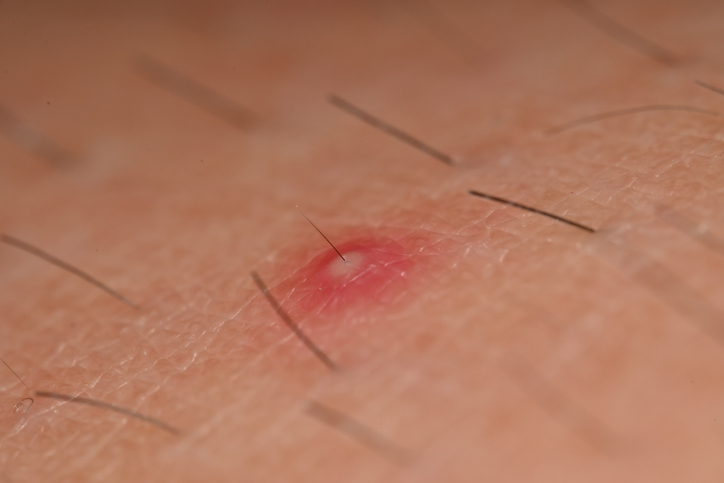
La follicolite significa infiammazione dei follicoli piliferi della pelle. La maggior parte della pelle è coperta da piccoli peli che crescono dai follicoli piliferi. Nella follicolite, molti follicoli piliferi in un'area della pelle sono colpiti.
di Dr Philippa Vincent, MRCGP
Ulteriori letture e riferimenti
- DermNet NZ; Telogen effluvium, November 2019
- Rebora A; Telogen effluvium: a comprehensive review. Clin Cosmet Investig Dermatol. 2019 Aug 21;12:583-590. doi: 10.2147/CCID.S200471. eCollection 2019.
- Asghar F, Shamim N, Farooque U, et al; Telogen Effluvium: A Review of the Literature. Cureus. 2020 May 27;12(5):e8320. doi: 10.7759/cureus.8320.
Continua a leggere sotto
About the authorView full bio

Dr Hayley Willacy, FRCGP
Medico di base, Autore medico
MBChB (1992), DRCOG, DFFP, MRCOG (Part 1) MRCGP (2007), DFSRH (2013), MSc - medical education (2020)
Dr Hayley Willacy was an NHS GP working in northwest England, who retired from clinical practice in 2022 after 30 years.
About the reviewerView full bio

Dr Colin Tidy, MRCGP
Medico di base, Autore medico
MBBS, MRCGP, MRCP (Paediatrics), DCH
Dr Colin Tidy is an NHS Doctor, based in Oxfordshire.
Storia dell'articolo
Le informazioni su questa pagina sono scritte e revisionate da clinici qualificati.
Prossima revisione prevista: 16 Nov 2027
17 Nov 2024 | Ultima versione

Chiedi, condividi, connettiti.
Esplora le discussioni, fai domande e condividi esperienze su centinaia di argomenti di salute.

Non ti senti bene?
Valuta i tuoi sintomi online gratuitamente
Iscriviti alla newsletter di Patient
La tua dose settimanale di consigli sulla salute chiari e affidabili - scritti per aiutarti a sentirti informato, sicuro e in controllo.
By subscribing you accept our Informativa sulla Privacy. Puoi annullare l'iscrizione in qualsiasi momento. Non vendiamo mai i tuoi dati.