Cheratosi pilare
Revisione paritaria di Dr Toni Hazell, FRCGPAutore Dr Philippa Vincent, MRCGPPubblicato originariamente 3 Aug 2026
Rispetta le linee guida editoriali
- ScaricaScarica
- Condividi
- Language
- Discussione
- Ask Patient
- Versione audio
- Aggiungi alle fonti preferite su Google
Keratosis pilaris is a very common skin condition which affects children and teenagers more than adults. It causes rough skin, particularly over the upper arms, outer legs and buttocks.
Explore moisturisers for dry skin
Get expert healthcare advice from the comfort of home. Complete a quick online consultation, available 24/7, with your request reviewed by a UK-registered clinician. Next day delivery available on eligible treatments.

Punti chiave
Keratosis pilaris is a harmless, very common skin condition caused by a build-up of keratin.
It causes rough, small bumps, usually on the upper arms, thighs, face, or buttocks.
Moisturisers and gentle exfoliation can improve its appearance, but there's no cure.
Keratosis pilaris usually improves over time. It often gets worse during colder weather, better in warmer weather.
What is keratosis pilaris?
Keratosis pilaris is a very common skin condition which causes rough skin with raised red bumps. It is caused by "keratin" - the protein that makes your hair, nails, and the outer layer of your skin - building up in the pores of your skin, instead of shedding as normal.
Who gets keratosis pilaris?
Keratosis pilaris is very common. Between five and eight in ten of all teenagers have keratosis pilaris but it is also common in babies and younger children. It tends to settle down after your teenage years; about four in ten adults have keratosis pilaris.
People with all skin types get keratosis pilaris but it seems to be more common in girls and women than in boys and men.
If you have another skin condition, such as eczema or dry skin, you are more likely to get keratosis pilaris. You are also more likely to have keratosis pilaris if other people in your family have it as well.
Can I catch keratosis pilaris?
Keratosis pilaris cannot be caught from someone else. No one knows why it develops or what makes some people get keratosis pilaris and others not.
What does keratosis pilaris look like?
Keratosis pilaris is often described as being like "chicken skin" or "goosebumps". There are lots of tiny bumps over the surface of the skin which feels rough if you run your hand over it. In white or pale skin, these usually look red but in darker skin they can look dark brown or black.
It is most common on the upper arms but it can also occur on:
Face and neck.
Legs, especially thighs.
Back.
Petto.
Glutei.
Forearms.
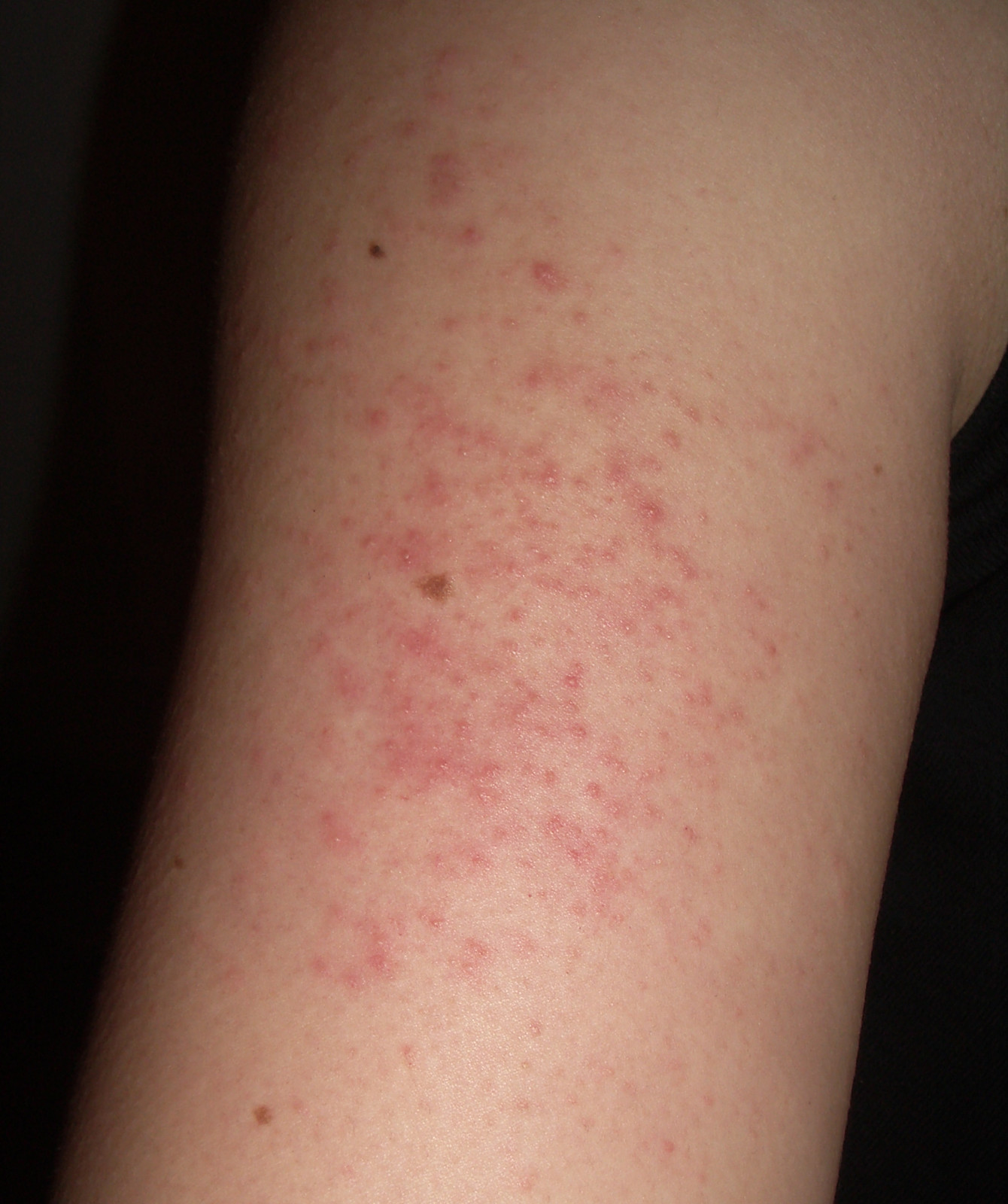
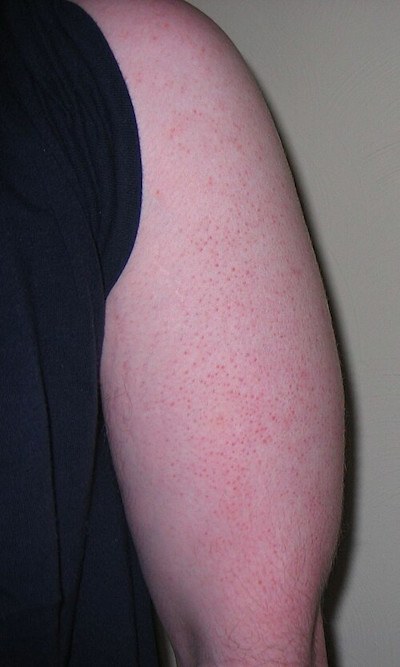
How is keratosis pilaris diagnosed?
There are no tests for keratosis pilaris. You don't need to see a doctor but, if you do, then they will diagnose keratosis pilaris by looking at it.
Treatment of keratosis pilaris
Keratosis pilaris is not harmful. It does not need to be treated. It often gets better in warmer weather and worse in colder weather.
However, some people find that keratosis pilaris makes them feel self-conscious and they want to try and reduce the appearance of it. Although keratosis pilaris can't be cured, there are some treatments which can help.
Some things that can help the appearance of keratosis pilaris include:
Utilizzando emollients or moisturisers regularly to try and soften the skin (but avoid scented products).
Using creams that contain urea, salicylic acid, or lactic acid to try and flatten the bumps.
Using exfoliating pads or mittens.
Having lukewarm showers and avoiding hot baths.
Using a humidifier in winter to stop your skin drying out.
Laser treatment has been shown to be beneficial but is not available on the NHS.
Treatments that have fare affidamento been shown to help include:
Expensive cosmetics which are sold specifically to help with keratosis pilaris.
Vitamin creams.
Scratching or picking at your skin can make keratosis pilaris worse.
How long does it take for keratosis pilaris to get better?
When the treatments above work, it usually takes around six to eight weeks for the skin to start improving. However, even without treatments, it usually gets better with time and is usually much better after the age of 30.
Explore moisturisers for dry skin
Get expert healthcare advice from the comfort of home. Complete a quick online consultation, available 24/7, with your request reviewed by a UK-registered clinician. Next day delivery available on eligible treatments.
Scelte del paziente per Altre condizioni della pelle

Salute della pelle, delle unghie e dei capelli
Idrosadenite suppurativa
L'idrosadenite suppurativa è una condizione della pelle a lungo termine (cronica) che provoca noduli dolorosi e ricorrenti di pus (foruncoli o ascessi). La causa esatta è sconosciuta. La suppurazione significa formazione o scarico di pus. Queste aree (solitamente le ascelle e l'inguine) secernono pus e sono difficili da guarire. Alla fine si formano cicatrici. I trattamenti includono lozioni o farmaci antibiotici, o un intervento chirurgico per rimuovere l'area di pelle interessata. Un trattamento più recente agisce bloccando una sostanza chimica del sistema immunitario che provoca infiammazione nel corpo.
di Dr Colin Tidy, MRCGP

Salute della pelle, delle unghie e dei capelli
Congelamento
Il congelamento è una lesione causata dall'esposizione di parti del corpo al freddo. Esistono diversi gradi di congelamento. Nel congelamento superficiale, la pelle può recuperare completamente con un trattamento tempestivo. Tuttavia, se il congelamento è profondo, il danno ai tessuti può essere permanente e può verificarsi la perdita di tessuto. Il modo più importante per prevenire il congelamento è uscire dal freddo. Se sei esposto al freddo, assicurati di avere un abbigliamento protettivo adeguato.
di Dr Toni Hazell, FRCGP
Ulteriori letture e riferimenti
- Cheratosi pilare; Associazione Britannica dei Dermatologi
- Cheratosi Pilare; DermNet
Informazioni sull'autoreVisualizza il profilo completo
Autore

Dr Philippa Vincent, MRCGP
Medico di base, Autore medico
MB BS, Bsc, MRCGP (2000), DCH, DFSRH, DRCOG
Dr Philippa Vincent è un medico di base del NHS che lavora nel nord di Londra.
Informazioni sul recensoreVisualizza il profilo completo

Dr Toni Hazell, FRCGP
MBBS, BSc, FRCGP, DFSRH, Dip GU med, DRCOG, DCH (London, UK, 2000)
La Dott.ssa Toni Hazell si è laureata presso la St. Mary’s Hospital Medical School e ha completato il suo VTS al Northwick Park Hospital.
Storia dell'articolo
Articolo disponibile anche in Inglese, Tedesco, Spagnolo, Francese, Italiano, Portoghese, Hindi, Ebraico, Arabo, and Svedese.
Next review due: 2 Feb 2031
3 Aug 2026 | Pubblicato originariamente
Autore:
Dr Philippa Vincent, MRCGPRevisione paritaria di
Dr Toni Hazell, FRCGP
Condividi i tuoi pensieri o esperienze con gli altri nel nostro comunità di pazienti.
Accesso semplice a trattamenti affidabili e servizi sanitari online.
Common conditions
Get help with common conditions through the NHS, without a GP appointment.
 Sinusite acuta
 Tonsillite batterica
 Impetigine
 Punture di insetti
 Fuoco di Sant'AntonioInfezioni delle vie urinarie (IVU)
Iscriviti alla newsletter di Patient
La tua dose settimanale di consigli sulla salute chiari e affidabili - scritti per aiutarti a sentirti informato, sicuro e in controllo.
Abbonandoti accetti i nostri Informativa sulla Privacy. Puoi annullare l'iscrizione in qualsiasi momento. Non vendiamo mai i tuoi dati.