ryanodine receptor 2
Ultimo aggiornamento 25 Apr 2023
Rispetta le linee guida editoriali
- ScaricaScarica
- Condividi
- Language
- Discussione
- Versione audio
- Aggiungi alle fonti preferite su Google
L RYR2 gene provides instructions for making a protein called ryanodine receptor 2. This protein is part of a family of ryanodine receptors, which form channels that transport positively charged calcium atoms (calcium ions) within cells.
Normal function
L RYR2 gene provides instructions for making a protein called ryanodine receptor 2. This protein is part of a family of ryanodine receptors, which form channels that transport positively charged calcium atoms (calcium ions) within cells.
Channels made with the ryanodine receptor 2 protein are found in heart (cardiac) muscle cells called myocytes. These channels are embedded in the outer membrane of a cell structure called the sarcoplasmic reticulum, which acts as a storage center for calcium ions. The RYR2 channel controls the flow of calcium ions out of the sarcoplasmic reticulum.
For the heart to beat normally, the cardiac muscle must tense (contract) and relax in a coordinated way. This cycle of muscle contraction and relaxation results from the precise control of calcium ions within myocytes. In response to certain signals, the RYR2 channel releases calcium ions from the sarcoplasmic reticulum into the surrounding cell fluid (the cytoplasm). The resulting increase in calcium ion concentration triggers the cardiac muscle to contract, which pumps blood out of the heart. Calcium ions are then transported back into the sarcoplasmic reticulum, and the cardiac muscle relaxes. In this way, the release and reuptake of calcium ions in myocytes produces a regular heart rhythm.
Conditions referring to this gene or chromosome
Altri nomi
ARVC2
ARVD2
cardiac muscle ryanodine receptor
cardiac muscle ryanodine receptor-calcium release channel
CPVT1
ryanodine receptor 2 (cardiac)
VTSIP
Related patient information and medicines

Patient information leaflet
Mastocitosi e disturbi delle cellule mastocitarie
Mast cells sono hard-working cells that have many functions, including helping to fight infection and. However, mast cell disorders can occur in which too many cells are produced or they become overactive. What are the types of mast cell disorder. Mastocytosis This is the term used when too many mast cells are produced. There are many different.

Patient information leaflet
Malattia renale diabetica
This damage tends to make the glomeruli more 'leaky' which then allows albumin to leak into the urine. In addition, the raised blood glucose level may cause some proteins in the glomeruli to link together. These 'cross-linked' proteins can trigger a localised scarring process. This scarring process in the glomeruli is called glomerulosclerosis. It.

Patient information leaflet
Cancro al seno
Rarely, pain in a breast. Note : pain is not a usual early symptom. Many women develop painful breasts (mastalgia) and this is not usually caused by cancer. The first place that breast cancer usually spreads to is the lymph glands (nodes) in the armpit (axilla). If this occurs, you may develop a swelling or lump in an armpit. If the cancer spreads.
Patient information leaflet
Alfa-bloccanti
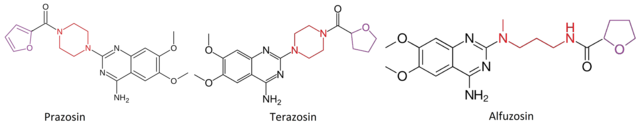
Alfa-bloccanti sono medicinali che sono principalmente utilizzati per treat high blood pressure (hypertension) e problemi con il passaggio dell'urina negli uomini che hanno un ingrossamento della ghiandola prostatica. L'ingrossamento della ghiandola prostatica è anche chiamato iperplasia prostatica benigna (IPB). A cosa servono gli alfa-bloccanti. In passato, alcuni alfa-bloccanti venivano anche usati per trattare.
Patient information leaflet
Miastenia grave
Myasthenia gravis (MG) è a condition where muscles become easily tired and weak. It is due to a problem with how the nerves stimulate the muscles to tighten (contract). The muscles around the eyes are commonly affected first. This causes drooping eyelids and double vision. Treatment is usually effective. However, relapses are common and many.

Patient information leaflet
Medicina per la nausea
Various medicines sono available to treat nausea. They work in different ways to one another. These medicines are not usually started until your doctor is sure what has caused your nausea. This is because knowing the cause helps your doctor to choose the right medicine for you. If they are required then any medicine usually only needs to be taken.
Ulteriori letture e riferimenti
- ryanodine receptor 2; MedlinePlus, National Library of Medicine.
- Bhuiyan ZA, van den Berg MP, van Tintelen JP, Bink-Boelkens MT, Wiesfeld AC, Alders M, Postma AV, van Langen I, Mannens MM, Wilde AA. Expanding spectrum of human RYR2-related disease: new electrocardiographic, structural, and genetic features. Circulation. 2007 Oct 2;116(14):1569-76. doi: 10.1161/CIRCULATIONAHA.107.711606. Epub 2007 Sep 17.
- Cerrone M, Napolitano C, Priori SG. Catecholaminergic polymorphic ventricular tachycardia: A paradigm to understand mechanisms of arrhythmias associated to impaired Ca(2+) regulation. Heart Rhythm. 2009 Nov;6(11):1652-9. doi: 10.1016/j.hrthm.2009.06.033. Epub 2009 Jun 30.
- Gyorke S. Molecular basis of catecholaminergic polymorphic ventricular tachycardia. Heart Rhythm. 2009 Jan;6(1):123-9. doi: 10.1016/j.hrthm.2008.09.013. Epub 2008 Sep 16.
- Liu N, Priori SG. Disruption of calcium homeostasis and arrhythmogenesis induced by mutations in the cardiac ryanodine receptor and calsequestrin. Cardiovasc Res. 2008 Jan 15;77(2):293-301. doi: 10.1093/cvr/cvm004. Epub 2007 Aug 14.
- Paavola J, Viitasalo M, Laitinen-Forsblom PJ, Pasternack M, Swan H, Tikkanen I, Toivonen L, Kontula K, Laine M. Mutant ryanodine receptors in catecholaminergic polymorphic ventricular tachycardia generate delayed afterdepolarizations due to increased propensity to Ca2+ waves. Eur Heart J. 2007 May;28(9):1135-42. doi: 10.1093/eurheartj/ehl543. Epub 2007 Mar 8.
- Postma AV, Denjoy I, Kamblock J, Alders M, Lupoglazoff JM, Vaksmann G, Dubosq-Bidot L, Sebillon P, Mannens MM, Guicheney P, Wilde AA. Catecholaminergic polymorphic ventricular tachycardia: RYR2 mutations, bradycardia, and follow up of the patients. J Med Genet. 2005 Nov;42(11):863-70. doi: 10.1136/jmg.2004.028993.
- Priori SG, Napolitano C, Tiso N, Memmi M, Vignati G, Bloise R, Sorrentino V, Danieli GA. Mutations in the cardiac ryanodine receptor gene (hRyR2) underlie catecholaminergic polymorphic ventricular tachycardia. Circulation. 2001 Jan 16;103(2):196-200. doi: 10.1161/01.cir.103.2.196.
- Tiso N, Stephan DA, Nava A, Bagattin A, Devaney JM, Stanchi F, Larderet G, Brahmbhatt B, Brown K, Bauce B, Muriago M, Basso C, Thiene G, Danieli GA, Rampazzo A. Identification of mutations in the cardiac ryanodine receptor gene in families affected with arrhythmogenic right ventricular cardiomyopathy type 2 (ARVD2). Hum Mol Genet. 2001 Feb 1;10(3):189-94. doi: 10.1093/hmg/10.3.189.
Partecipa alla conversazione
Condividi i tuoi pensieri o esperienze con gli altri nel nostro comunità di pazienti.

Chiedi, condividi, connettiti.
Esplora le discussioni, fai domande e condividi esperienze su centinaia di argomenti di salute.
Iscriviti alla newsletter di Patient
La tua dose settimanale di consigli sulla salute chiari e affidabili - scritti per aiutarti a sentirti informato, sicuro e in controllo.
Abbonandoti accetti i nostri Informativa sulla Privacy. Puoi annullare l'iscrizione in qualsiasi momento. Non vendiamo mai i tuoi dati.