Spinal and bulbar muscular atrophy
Ultimo aggiornamento 18 Ago 2020
Rispetta le linee guida editoriali
- ScaricaScarica
- Condividi
- Language
- Discussione
- Versione audio
- Aggiungi alle fonti preferite su Google
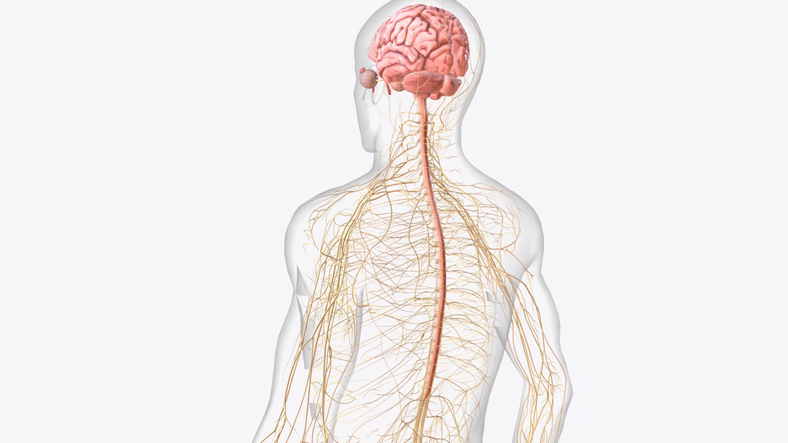
Spinal and bulbar muscular atrophy, also known as Kennedy disease, is a disorder of specialized nerve cells that control muscle movement (motor neurons). These nerve cells originate in the spinal cord and the part of the brain that is connected to the spinal cord (the brainstem).
Descrizione
Spinal and bulbar muscular atrophy, also known as Kennedy disease, is a disorder of specialized nerve cells that control muscle movement (motor neurons). These nerve cells originate in the spinal cord and the part of the brain that is connected to the spinal cord (the brainstem).
Spinal and bulbar muscular atrophy mainly affects males and is characterised by muscle weakness and wasting (atrophy) that usually begins in adulthood and worsens slowly over time. Muscle wasting in the arms and legs results in cramping; leg muscle weakness can also lead to difficulty walking and a tendency to fall. Certain muscles in the face and throat (bulbar muscles) are also affected, which causes progressive problems with swallowing and speech. Additionally, muscle twitches (fasciculations) are common. Some males with the disorder experience unusual breast development (gynecomastia) and may be unable to father a child (infertile).
Modelli di ereditarietà
The source lists the following possible inheritance patterns: X-linked recessive. More than one pattern can apply in different cases.
Related genes
Altri nomi
Bulbospinal muscular atrophy, X-linked
KD
Kennedy disease
Kennedy spinal and bulbar muscular atrophy
Kennedy's disease
SBMA
X-linked spinal and bulbar muscular atrophy
Related patient information and medicines
Patient information leaflet
Malattia del motoneurone
Malattia del motoneurone (MND) is a neurological condition causes a progressive weakness e wasting of many of the muscles in the body. There are various types of motor neurone disease. This leaflet is mainly about amyotrophic lateral sclerosis (ALS), which is the most common type of motor neurone disease. Although there is no cure for motor neurone.

Patient information leaflet
Introduzione autonoma dei cibi solidi
In the UK, Department of Health guidelines recommend the introduction of solid food 'at around 6 months', but that as individual development of babies varies widely, the recommended 'range' of ages is not before 4 months (17 weeks) of age, and not later than 6 months. B... Read our feature on Spinal Muscular Atrophy to see the muscular milestones.

Patient information leaflet
Amiotrofia diabetica
Amiotrofia diabetica è a complication of diabetes mellitus. It affects the thighs, hips, buttocks and legs, causing pain and muscle wasting. What is... Amiotrofia diabetica è a complication of diabetes mellitus. It causes a loss of muscle bulk due to damage to the motor nerve which activates those muscles. It is also called diabetic lumbosacral.

Patient information leaflet
Debolezza muscolare
This leaflet looks at types of muscle weakness and discusses the wide range of problems which can cause them. Neurological conditions : Muscle weakness can be caused by cerebrovascular d... Other uncommon nerve conditions : Multiple sclerosis (MS) : This is caused by damage to nerves in the brain and iniezione spinale cord and can cause sudden paralysis of a.

Patient information leaflet
Pianificare una gravidanza
The aim is to plan ahead to reduce the risk of any harm to the baby and to reduce the risk of pregnancy complications. Pregnant women need a g... Folic acid tablets in early pregnancy reduce the risk of having a baby born with a spinal cord problem such as spina bifida. For most women, the dose is 400 micrograms (0.4 mg) a day. Women on medication.

Patient information leaflet
distrofia muscolare di Duchenne
distrofia muscolare di Duchenne is a condition which causes progressive muscle weakness. It starts in childhood and may be noticed when a child has difficulty standing up, climbing or running. It is a genetic condition and can be inherited. What is Duchenne muscular dystrophy. Duchenne muscular dystrophy (DMD) è an inherited (genetic) condition which.
Ulteriori letture e riferimenti
- Spinal and bulbar muscular atrophy; MedlinePlus, National Library of Medicine.
- Atsuta N, Watanabe H, Ito M, Banno H, Suzuki K, Katsuno M, Tanaka F, Tamakoshi A, Sobue G. Natural history of spinal and bulbar muscular atrophy (SBMA): a study of 223 Japanese patients. Brain. 2006 Jun;129(Pt 6):1446-55. doi: 10.1093/brain/awl096. Epub 2006 Apr 18.
- Finsterer J. Bulbar and spinal muscular atrophy (Kennedy's disease): a review. Eur J Neurol. 2009 May;16(5):556-61. doi: 10.1111/j.1468-1331.2009.02591.x.
- Finsterer J. Perspectives of Kennedy's disease. J Neurol Sci. 2010 Nov 15;298(1-2):1-10. doi: 10.1016/j.jns.2010.08.025. Epub 2010 Sep 16.
- Katsuno M, Banno H, Suzuki K, Adachi H, Tanaka F, Sobue G. Clinical features and molecular mechanisms of spinal and bulbar muscular atrophy (SBMA). Adv Exp Med Biol. 2010;685:64-74. doi: 10.1007/978-1-4419-6448-9_6.
- La Spada A. Spinal and Bulbar Muscular Atrophy. 1999 Feb 26 [updated 2026 Jan 8]. In: Adam MP, Bick S, Mirzaa GM, Wallace SE, Amemiya A, editors. GeneReviews(R) [Internet]. Seattle (WA): University of Washington, Seattle; 1993-2026. Available from http://www.ncbi.nlm.nih.gov/books/NBK1333/
- Monks DA, Rao P, Mo K, Johansen JA, Lewis G, Kemp MQ. Androgen receptor and Kennedy disease/spinal bulbar muscular atrophy. Horm Behav. 2008 May;53(5):729-40. doi: 10.1016/j.yhbeh.2007.12.009. Epub 2008 Jan 5.
- Poletti A, Negri-Cesi P, Martini L. Reflections on the diseases linked to mutations of the androgen receptor. Endocrine. 2005 Dec;28(3):243-62. doi: 10.1385/ENDO:28:3:243.
- Schmidt BJ, Greenberg CR, Allingham-Hawkins DJ, Spriggs EL. Expression of X-linked bulbospinal muscular atrophy (Kennedy disease) in two homozygous women. Neurology. 2002 Sep 10;59(5):770-2. doi: 10.1212/wnl.59.5.770.
Partecipa alla conversazione
Condividi i tuoi pensieri o esperienze con gli altri nel nostro comunità di pazienti.

Chiedi, condividi, connettiti.
Esplora le discussioni, fai domande e condividi esperienze su centinaia di argomenti di salute.
Iscriviti alla newsletter di Patient
La tua dose settimanale di consigli sulla salute chiari e affidabili - scritti per aiutarti a sentirti informato, sicuro e in controllo.
Abbonandoti accetti i nostri Informativa sulla Privacy. Puoi annullare l'iscrizione in qualsiasi momento. Non vendiamo mai i tuoi dati.