Niemann-Pick disease
Ultimo aggiornamento 4 Apr 2025
Rispetta le linee guida editoriali
- ScaricaScarica
- Condividi
- Language
- Discussione
- Ask Patient
- Versione audio
- Aggiungi alle fonti preferite su Google
Niemann-Pick disease is a condition that affects many body systems. It has a wide range of symptoms that vary in severity. Niemann-Pick disease is divided into four main types: type A, type B, type C1, and type C2. These types are classified on the basis of genetic cause and the signs and symptoms of the condition.
Scelte video per Condizioni geneticheVideo library
Descrizione
Niemann-Pick disease is a condition that affects many body systems. It has a wide range of symptoms that vary in severity. Niemann-Pick disease is divided into four main types: type A, type B, type C1, and type C2. These types are classified on the basis of genetic cause and the signs and symptoms of the condition.
Infants with Niemann-Pick disease type A usually develop an enlarged liver and spleen (hepatosplenomegaly) by age 3 months and fail to gain weight and grow at the expected rate (failure to thrive). The affected children develop normally until around age 1 year when they experience a progressive loss of mental abilities and movement (psychomotor regression). Children with Niemann-Pick disease type A also develop widespread lung damage (interstitial lung disease) that can cause recurrent lung infections and eventually lead to respiratory failure. All affected children have an eye abnormality called a cherry-red spot, which can be identified with an eye examination. Children with Niemann-Pick disease type A generally do not survive past early childhood.
Niemann-Pick disease type B usually presents in mid-childhood. The signs and symptoms of this type are similar to type A, but not as severe. People with Niemann-Pick disease type B often have hepatosplenomegaly, recurrent lung infections, and a low number of platelets in the blood (thrombocytopenia). They also have short stature and slowed mineralization of bone (delayed bone age). About one-third of affected individuals have the cherry-red spot eye abnormality or neurological impairment. People with Niemann-Pick disease type B usually survive into adulthood.
The signs and symptoms of Niemann-Pick disease types C1 and C2 are very similar; these types differ only in their genetic cause. Niemann-Pick disease types C1 and C2 usually become apparent in childhood, although signs and symptoms can develop at any time. People with these types usually develop difficulty coordinating movements (ataxia), an inability to move the eyes vertically (vertical supranuclear gaze palsy), poor muscle tone (dystonia), severe liver disease, and interstitial lung disease. Individuals with Niemann-Pick disease types C1 and C2 have problems with speech and swallowing that worsen over time, eventually interfering with feeding. Affected individuals often experience progressive decline in intellectual function and about one-third have seizures. People with these types may survive into adulthood.
Modelli di ereditarietà
The source lists the following possible inheritance patterns: Autosomal recessive. More than one pattern can apply in different cases.
Related genes
Altri nomi
Lipid histiocytosis
Neuronal cholesterol lipidosis
Neuronal lipidosis
NPD
Sphingomyelin lipidosis
Sphingomyelin/cholesterol lipidosis
Sphingomyelinase deficiency
Related patient information and medicines
Patient information leaflet
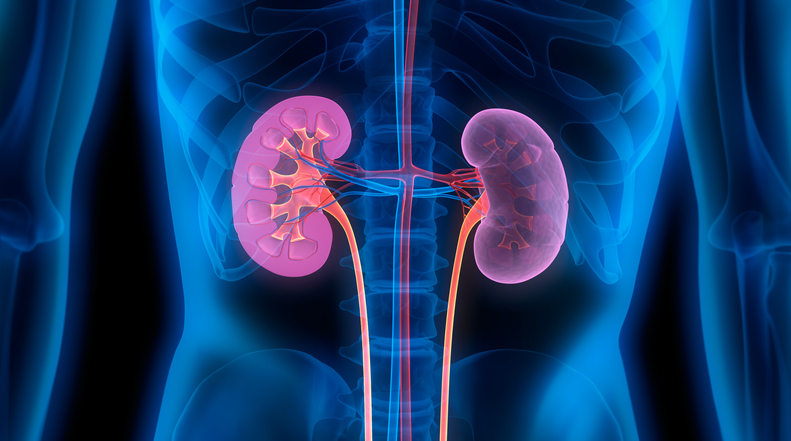
Malattia renale cronica
Malattia renale cronica means that the kidneys are not working as well as would be expected. Various conditions can cause chronic kidney disease. Chronic kidney disease tends to become worse gradually over months or years. What is chronic kidney disease. Chronic kidney disease (CKD) means that the kidneys are not working as well as they used to,.
Patient information leaflet
Dieta nella malattia renale cronica
Chronic kidney disease (CKD) is a common long-term condition where the kidneys aren't working as well as they should be. There are some dietary choices that are recommended for people with early CKD. People with more advanced CKD may be advised to follow a special diet, usually with the support of a specialist dietician. It's important for.

Patient information leaflet
Cardiopatia congenita
Cardiopatia congenita is a condition where an abnormality (defect) develops in the heart before birth. There are a number of types of congenital heart defect. Some are mild and cause few problems; others are life-threatening for the baby. Transposition of the great arteries. The British Heart Foundation also has a series of leaflets about many.
Patient information leaflet
Malattia delle valvole cardiache
Heart valves sit in between the chambers of the heart and control the blood flow through the heart. There are four common types of heart valve problem - mitral stenosis, mitral regurgitation , aortic stenosis and aortic regurgitation. The leaflet called Anatomy of the heart includes details about the function of the heart and how the heart beats..
Patient information leaflet
Nefropatia da IgA
IgA nephropathy is a condition in which a protein causes damage to the kidneys. The protein is called immunoglobulin A or IgA. Nephropathy means an illness that damages the kidney. The main job of the kidneys is to clear waste materials from the body and maintain a normal balance of fluids and chemicals in the body. The kidneys also have other.

Patient information leaflet
Malattia renale policistica
La malattia policistica renale (PKD) provoca lo sviluppo di molte sacche piene di liquido (cisti) nei reni. The most common type of PKD is an inherited condition called autosomal dominant polycystic kidney disease (ADPKD). With ADPKD, problems commonly do not develop until the age of 30-50, with some people never developing any problems. The two common.
Ulteriori letture e riferimenti
- Niemann-Pick disease; MedlinePlus, National Library of Medicine.
- Gabande-Rodriguez E, Boya P, Labrador V, Dotti CG, Ledesma MD. High sphingomyelin levels induce lysosomal damage and autophagy dysfunction in Niemann Pick disease type A. Cell Death Differ. 2014 Jun;21(6):864-75. doi: 10.1038/cdd.2014.4. Epub 2014 Jan 31.
- Garver WS, Francis GA, Jelinek D, Shepherd G, Flynn J, Castro G, Walsh Vockley C, Coppock DL, Pettit KM, Heidenreich RA, Meaney FJ. The National Niemann-Pick C1 disease database: report of clinical features and health problems. Am J Med Genet A. 2007 Jun 1;143A(11):1204-11. doi: 10.1002/ajmg.a.31735.
- Hollak CE, de Sonnaville ES, Cassiman D, Linthorst GE, Groener JE, Morava E, Wevers RA, Mannens M, Aerts JM, Meersseman W, Akkerman E, Niezen-Koning KE, Mulder MF, Visser G, Wijburg FA, Lefeber D, Poorthuis BJ. Acid sphingomyelinase (Asm) deficiency patients in The Netherlands and Belgium: disease spectrum and natural course in attenuated patients. Mol Genet Metab. 2012 Nov;107(3):526-33. doi: 10.1016/j.ymgme.2012.06.015. Epub 2012 Jun 30.
- Irun P, Mallen M, Dominguez C, Rodriguez-Sureda V, Alvarez-Sala LA, Arslan N, Bermejo N, Guerrero C, Perez de Soto I, Villalon L, Giraldo P, Pocovi M. Identification of seven novel SMPD1 mutations causing Niemann-Pick disease types A and B. Clin Genet. 2013 Oct;84(4):356-61. doi: 10.1111/cge.12076. Epub 2013 Jan 4.
- McGovern MM, Aron A, Brodie SE, Desnick RJ, Wasserstein MP. Natural history of Type A Niemann-Pick disease: possible endpoints for therapeutic trials. Neurology. 2006 Jan 24;66(2):228-32. doi: 10.1212/01.wnl.0000194208.08904.0c.
- McGovern MM, Lippa N, Bagiella E, Schuchman EH, Desnick RJ, Wasserstein MP. Morbidity and mortality in type B Niemann-Pick disease. Genet Med. 2013 Aug;15(8):618-23. doi: 10.1038/gim.2013.4. Epub 2013 Feb 14.
- Mengel E, Klunemann HH, Lourenco CM, Hendriksz CJ, Sedel F, Walterfang M, Kolb SA. Niemann-Pick disease type C symptomatology: an expert-based clinical description. Orphanet J Rare Dis. 2013 Oct 17;8:166. doi: 10.1186/1750-1172-8-166.
- Patterson MC, Mengel E, Wijburg FA, Muller A, Schwierin B, Drevon H, Vanier MT, Pineda M. Disease and patient characteristics in NP-C patients: findings from an international disease registry. Orphanet J Rare Dis. 2013 Jan 16;8:12. doi: 10.1186/1750-1172-8-12.
- Sturley SL, Patterson MC, Balch W, Liscum L. The pathophysiology and mechanisms of NP-C disease. Biochim Biophys Acta. 2004 Oct 11;1685(1-3):83-7. doi: 10.1016/j.bbalip.2004.08.014.
- Vance JE. Lipid imbalance in the neurological disorder, Niemann-Pick C disease. FEBS Lett. 2006 Oct 9;580(23):5518-24. doi: 10.1016/j.febslet.2006.06.008. Epub 2006 Jun 15.
- Walkley SU, Suzuki K. Consequences of NPC1 and NPC2 loss of function in mammalian neurons. Biochim Biophys Acta. 2004 Oct 11;1685(1-3):48-62. doi: 10.1016/j.bbalip.2004.08.011.
- Wasserstein MP, Desnick RJ, Schuchman EH, Hossain S, Wallenstein S, Lamm C, McGovern MM. The natural history of type B Niemann-Pick disease: results from a 10-year longitudinal study. Pediatrics. 2004 Dec;114(6):e672-7. doi: 10.1542/peds.2004-0887. Epub 2004 Nov 15.
Condividi i tuoi pensieri o esperienze con gli altri nel nostro comunità di pazienti.
Accesso semplice a trattamenti affidabili e servizi sanitari online.
Common conditions
Get help with common conditions through the NHS, without a GP appointment.
 Sinusite acuta
 Tonsillite batterica
 Impetigine
 Punture di insetti
 Fuoco di Sant'AntonioInfezioni delle vie urinarie (IVU)
Iscriviti alla newsletter di Patient
La tua dose settimanale di consigli sulla salute chiari e affidabili - scritti per aiutarti a sentirti informato, sicuro e in controllo.
Abbonandoti accetti i nostri Informativa sulla Privacy. Puoi annullare l'iscrizione in qualsiasi momento. Non vendiamo mai i tuoi dati.