Microvillus inclusion disease
Ultimo aggiornamento 18 Ago 2020
Rispetta le linee guida editoriali
- ScaricaScarica
- Condividi
- Language
- Discussione
- Ask Patient
- Versione audio
- Aggiungi alle fonti preferite su Google
Microvillus inclusion disease is a condition characterised by chronic, watery, life-threatening diarrhea typically beginning in the first hours to days of life. Rarely, the diarrhea starts around age 3 or 4 months. Food intake increases the frequency of diarrhea.
Scelte video per Condizioni geneticheVideo library
Descrizione
Microvillus inclusion disease is a condition characterised by chronic, watery, life-threatening diarrhea typically beginning in the first hours to days of life. Rarely, the diarrhea starts around age 3 or 4 months. Food intake increases the frequency of diarrhea.
Microvillus inclusion disease prevents the absorption of nutrients from food during digestion, resulting in malnutrition and dehydration. Affected infants often have difficulty gaining weight and growing at the expected rate (failure to thrive), developmental delay, liver and kidney problems, and thinning of the bones (osteoporosis). Some affected individuals develop cholestasis, which is a reduced ability to produce and release a digestive fluid called bile. Cholestasis leads to irreversible liver disease (cirrhosis).
In individuals with microvillus inclusion disease, lifelong nutritional support is needed and given through intravenous feedings (parenteral nutrition).
A variant of microvillus inclusion disease with milder diarrhea often does not require full-time parenteral nutrition. Individuals with the variant type frequently live past childhood.
Modelli di ereditarietà
The source lists the following possible inheritance patterns: Autosomal recessive. More than one pattern can apply in different cases.
Related genes
Altri nomi
Congenital enteropathy
Congenital familial protracted diarrhea with enterocyte brush-border abnormalities
Congenital microvillous atrophy
Davidson disease
Familial protracted enteropathy
Intractable diarrhea of infancy
Microvillous atrophy
Microvillous inclusion disease
Microvillus atrophy with diarrhea 2
MVID
Related patient information and medicines

Patient information leaflet
Malattia celiaca
Malattia celiaca (also spelled celiac disease) mainly affects the part of the gut called the small intestine. Coeliac disease is caused by a reaction of the gut to gluten. What is coeliac disease. Diagram naming the parts of the gut The Gut - simple Coeliac disease is a condition that causes inflammation in the lining of part of the gut (the small.

Patient information leaflet
Malattia di Bowen
Malattia di Bowen è a very early form of skin cancer. It causes one or more small patches of scaly red skin. However, over time, there is a chance that these cells can develop into a different type of skin cancer, which can cause problems. So, Bowen's disease is generally treated to stop this happening. Close follow-up is needed after treatment to.

Patient information leaflet
la malattia di Wilson
Wilson's malattia is a genetic disorder in which copper builds up in the body, mainly in the liver and brain. Without any treatment, the build-up of copper can cause serious symptoms. Treatment is with medication to remove the excess copper and/or to prevent a further build-up of copper. What is Wilson's disease. Wilson's disease is a condition.
Patient information leaflet
Anemia falciforme
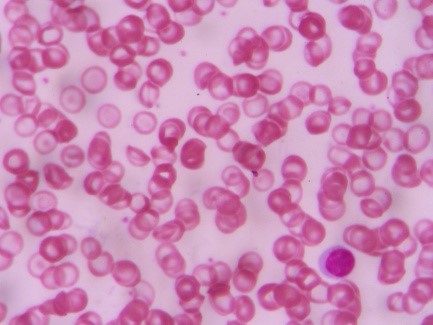
Sickle cell disease (SCD) is a serious, inherited condition affecting the blood and various organs in the body. It affects the red blood cells, causing episodes of 'sickling', which produce episodes of pain and other symptoms. In between episodes of sickling, people with SCD are normally well. Good treatment, started early in life, can prevent.

Patient information leaflet
Placca dentale e malattie gengivali
A build-up of placca e tartar can lead to inflamed and infected gums. Mild gum disease is called gingivitis and is not usually serious. These three tissues are collectively called the peridontium. Gum disease (periodontal disease) is a general term given to an infection or inflammation of the tissues that surround the teeth. There are two main.

Patient information leaflet
Rigurgito mitralico
The mitral valve è a heart valve that lies between the left atrium and left ventricle. The heart - mitral valve incompetence i88_l.jpg What is mitral regurgitation. Mitral regurgitation is sometimes called mitral insufficiency or mitral incompetence. In mitral regurgitation the valve does not close properly. This causes blood to leak back.
Ulteriori letture e riferimenti
- Microvillus inclusion disease; MedlinePlus, National Library of Medicine.
- Al-Daraji WI, Zelger B, Zelger B, Hussein MR. Microvillous inclusion disease: a clinicopathologic study of 17 cases from the UK. Ultrastruct Pathol. 2010 Dec;34(6):327-32. doi: 10.3109/01913123.2010.500447.
- Girard M, Lacaille F, Verkarre V, Mategot R, Feldmann G, Grodet A, Sauvat F, Irtan S, Davit-Spraul A, Jacquemin E, Ruemmele F, Rainteau D, Goulet O, Colomb V, Chardot C, Henrion-Caude A, Debray D. MYO5B and bile salt export pump contribute to cholestatic liver disorder in microvillous inclusion disease. Hepatology. 2014 Jul;60(1):301-10. doi: 10.1002/hep.26974. Epub 2014 May 27.
- Halac U, Lacaille F, Joly F, Hugot JP, Talbotec C, Colomb V, Ruemmele FM, Goulet O. Microvillous inclusion disease: how to improve the prognosis of a severe congenital enterocyte disorder. J Pediatr Gastroenterol Nutr. 2011 Apr;52(4):460-5. doi: 10.1097/MPG.0b013e3181fb4559.
- Khubchandani SR, Vohra P, Chitale AR, Sidana P. Microvillous inclusion disease--an ultrastructural diagnosis: with a review of the literature. Ultrastruct Pathol. 2011 Apr;35(2):87-91. doi: 10.3109/01913123.2010.537438.
- Knowles BC, Roland JT, Krishnan M, Tyska MJ, Lapierre LA, Dickman PS, Goldenring JR, Shub MD. Myosin Vb uncoupling from RAB8A and RAB11A elicits microvillus inclusion disease. J Clin Invest. 2014 Jul;124(7):2947-62. doi: 10.1172/JCI71651. Epub 2014 Jun 2.
- Muller T, Hess MW, Schiefermeier N, Pfaller K, Ebner HL, Heinz-Erian P, Ponstingl H, Partsch J, Rollinghoff B, Kohler H, Berger T, Lenhartz H, Schlenck B, Houwen RJ, Taylor CJ, Zoller H, Lechner S, Goulet O, Utermann G, Ruemmele FM, Huber LA, Janecke AR. MYO5B mutations cause microvillus inclusion disease and disrupt epithelial cell polarity. Nat Genet. 2008 Oct;40(10):1163-5. doi: 10.1038/ng.225. Epub 2008 Aug 24.
- Ruemmele FM, Muller T, Schiefermeier N, Ebner HL, Lechner S, Pfaller K, Thoni CE, Goulet O, Lacaille F, Schmitz J, Colomb V, Sauvat F, Revillon Y, Canioni D, Brousse N, de Saint-Basile G, Lefebvre J, Heinz-Erian P, Enninger A, Utermann G, Hess MW, Janecke AR, Huber LA. Loss-of-function of MYO5B is the main cause of microvillus inclusion disease: 15 novel mutations and a CaCo-2 RNAi cell model. Hum Mutat. 2010 May;31(5):544-51. doi: 10.1002/humu.21224.
- Thoeni CE, Vogel GF, Tancevski I, Geley S, Lechner S, Pfaller K, Hess MW, Muller T, Janecke AR, Avitzur Y, Muise A, Cutz E, Huber LA. Microvillus inclusion disease: loss of Myosin vb disrupts intracellular traffic and cell polarity. Traffic. 2014 Jan;15(1):22-42. doi: 10.1111/tra.12131. Epub 2013 Nov 19.
- Wiegerinck CL, Janecke AR, Schneeberger K, Vogel GF, van Haaften-Visser DY, Escher JC, Adam R, Thoni CE, Pfaller K, Jordan AJ, Weis CA, Nijman IJ, Monroe GR, van Hasselt PM, Cutz E, Klumperman J, Clevers H, Nieuwenhuis EE, Houwen RH, van Haaften G, Hess MW, Huber LA, Stapelbroek JM, Muller T, Middendorp S. Loss of syntaxin 3 causes variant microvillus inclusion disease. Gastroenterology. 2014 Jul;147(1):65-68.e10. doi: 10.1053/j.gastro.2014.04.002. Epub 2014 Apr 12.
Condividi i tuoi pensieri o esperienze con gli altri nel nostro comunità di pazienti.
Accesso semplice a trattamenti affidabili e servizi sanitari online.
Common conditions
Get help with common conditions through the NHS, without a GP appointment.
 Sinusite acuta
 Tonsillite batterica
 Impetigine
 Punture di insetti
 Fuoco di Sant'AntonioInfezioni delle vie urinarie (IVU)
Iscriviti alla newsletter di Patient
La tua dose settimanale di consigli sulla salute chiari e affidabili - scritti per aiutarti a sentirti informato, sicuro e in controllo.
Abbonandoti accetti i nostri Informativa sulla Privacy. Puoi annullare l'iscrizione in qualsiasi momento. Non vendiamo mai i tuoi dati.