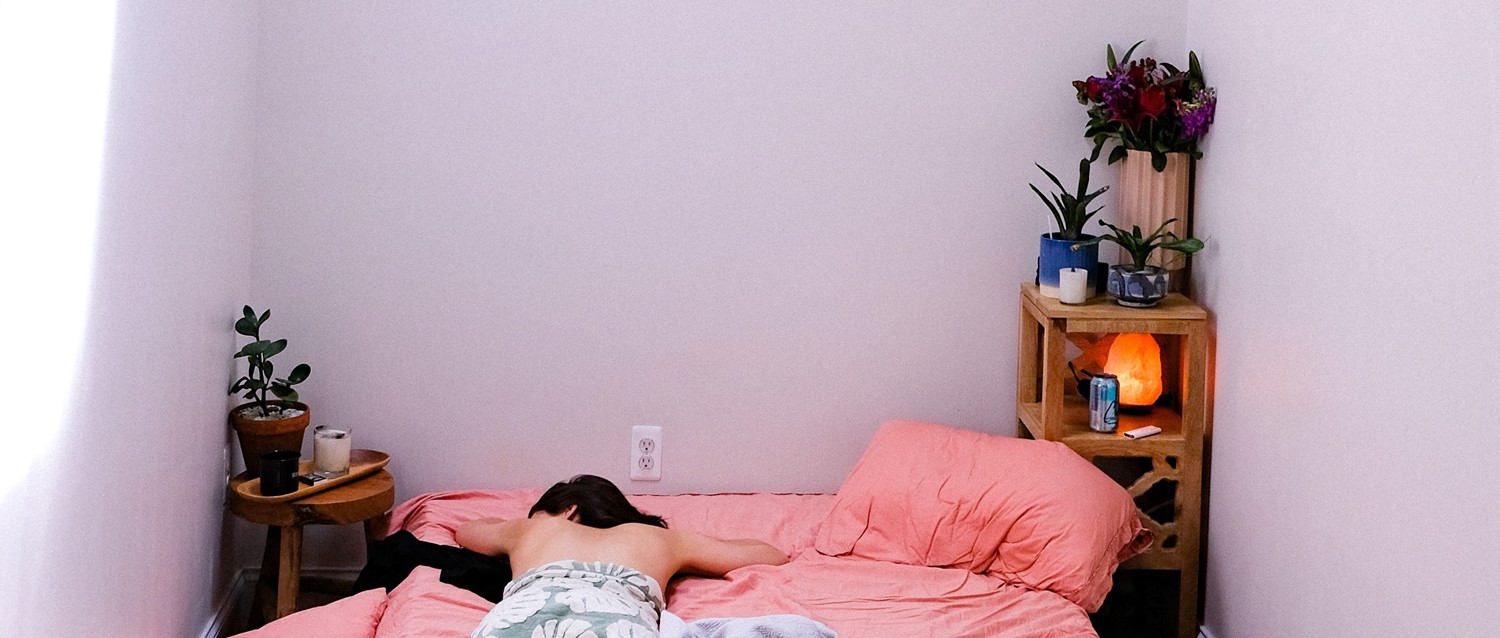
The link between anxiety and insomnia
Peer reviewed by Dr Sarah JarvisAuthored by Lydia SmithOriginally published 28 Mar 2018
Meets Patient’s editorial guidelines
- DownloadDownload
- Share
- Language
- Discussion
- Audio Version
- Add to preferred sources on Google
Not being able to sleep, whether it's not being able to fall asleep or waking up throughout the night, is incredibly frustrating - but the feeling of anxiety that often accompanies it can be debilitating too.
Insomnia is often attributed to anxiety, as many of us brood on worries in the quiet of night. In turn, sleeplessness makes us exhausted, irritable and foggy, which can make anxiety during the day worse. So what is the relationship between the two - and which triggers the other?
Mental health support for adults and children
Online CBT and psychological therapy for adults and children aged 8–17. Onebright’s accredited clinicians support people experiencing anxiety, depression and other emotional challenges.
Why anxiety affects sleep
Anneli Roberts, 28, has anxiety and has had trouble sleeping since she was 16.
"During particularly difficult periods of anxiety, I am regularly up until 3 or 4 am, which is obviously not very good for work," she says.
"Mostly, my insomnia is caused by anxiety and I'm unable to sleep due to worrying - or sometimes the physical symptoms of anxiety can keep me up too. But after a night of being awake, I am far more prone to anxiety during the day."
Professor Kevin Morgan, of the University of Loughborough’s Clinical Sleep Research Unit, explains why anxiety impacts sleep.
"Anxiety in a generalised sense creates what we will refer to as arousal, or excitement or alertness," he says. "If you go to bed intending to go to sleep, but you are anxious - and it doesn't really matter what you pin that anxiety to - you've already diminished your chances of falling asleep effectively."
Stress hormones
Arousal is triggered by the 'fight or flight' response, which releases the stress hormones cortisol and adrenaline and prevents you from falling asleep. It's complicated further as research shows anxiety and stress release similar hormones too.
"We discriminate between problems of getting to sleep, and problems with staying asleep, but basically they are the same thing when it comes to anxiety," Morgan says.
"Waking up in the night - to go to the toilet, for example - is normal. But then a problem arises when you try to get back to sleep.
"If your brain kicks in with a complex of anxiety feelings about things other than going to sleep, then you are going to find it difficult to return to sleep."
Vicious cycle of insomnia
Anxiety and insomnia work in a cyclical way - essentially, it's a two-way street. "One of the consequences of not being able to go to sleep is that it generates anxiety," Morgan explains.
"For people who have got daytime commitments, not being able to go to sleep - when you relentlessly cannot initiate sleep - this generates anxiety specific to sleep. We refer to it as a vicious cycle of insomnia.
"If you can't go to sleep, you start anticipating the impact the sleeplessness will have on your performance the next day," he explains.
The anxiety triggered may encourage you to emphasise your efforts to get to sleep, which is futile.
"If you try to go to sleep, you will almost certainly keep yourself awake. And the reason for that is that trying to go to sleep generates arousal. It makes you more alert," Morgan says.
"If we focus on the arousing qualities of anxiety, then breaking the vicious cycle of insomnia becomes the strongest tool for fixing insomnia."
Not everybody needs eight hours of sleep a night, as some people function well on less and others find they need more. But if you aren't sleeping well, there are steps you can take to address the problem.
Get help for anxiety
Anxiety is a common mental health issue, affecting 5.9 in 100 people, according to the charity Mind. Tackling anxiety can be the first step to sleeping better, which might mean trying self-help techniques such as mindfulness, talking treatments, cognitive behavioural therapy or medication. Sleep anxiety can lead to sleep loss, which can result in various health problems as well as a sleep disorder Your GP will be able to give you medical advice or point you in the right direction to find the best treatment.Your GP will be able to point you in the right direction to find the best treatment for you.
See your GP
Your GP may be able to find out what is causing your sleeping problems, so you can access the right treatment. They may be able to refer you to a therapist for cognitive behavioural therapy, which can help you change the thoughts and behaviours that prevent you from falling asleep.
Sleeping pills are not commonly prescribed unless nothing else has worked, as they can have serious side effects and lead to dependency. They may be prescribed for short periods of time, however, to help you get into a routine of sleeping.
Stick to a routine
Chris Brantner, sleep science coach at Sleepio, says creating a routine nis key to sleeping better.
"Set a bedtime and a wake time and stick to them. About an hour before bed, institute a bedtime routine," he says. "Your routine should start with turning off devices, as they're notorious for keeping us awake. Not to mention, devices like smartphones are often sources of stress and anxiety."
Making the bedroom a sleep-friendly place can also help - which means making sure your bed is comfortable and the room isn't too hot or light.
Make lifestyle changes
Cutting down on caffeinated drinks such as tea, coffee or cola may help you sleep better.
Getting enough physical exercise during the day is also crucial for relieving stress and tension. It can also help with anxiety too - research published in the the American Journal of Psychiatry in 2017 found just one hour of exercise can help your mental well-being.
Avoid alcohol
Although alcohol might make you fall asleep quicker, it impairs the quality of your sleep. Avoid smoking cigarettes because nicotine is a stimulant.
Make time to relax
"Dim the lights and engage in a calming activity. This could be yoga, drinking hot tea, a warm bath," Brantner says.
Meditation or mindfulness can help clear the mind and promote relaxation before bed. Helpful apps such as Headspace provide guided meditations.
Write a to-do list
"Before climbing into bed, create a to-do list for the next day," Brantner says. "Recent research has shown that this will help you offload worries of the next day, thus helping to reduce anxiety and wind down before bed."
Patient picks for Anxiety
Mental health
What to do when the news is making you anxious
Whether we're worried about politics, concerned about crime or feel helpless hearing about natural disasters, many of us have experienced worry when watching or reading the latest news.
by Gillian Harvey

Mental health
What it's like to have muscle dysmorphic disorder
For most people, lifting weights is a healthy part of a balanced life. But for some men, the pursuit of the body beautiful can spiral into a dangerous obsession.
by Abi Millar
About the authorView full bio

Lydia Smith
Feature writer
BA, MA, MSc
Lydia Smith is an award-winning journalist and feature writer who has written extensively on women's health and mental health. She is currently studying for an MSc in psychology.
About the reviewerView full bio

Dr Sarah Jarvis
Clinical Consultant
MA (Cantab), BM, BCh (Oxon), DRCOG, FRCGP, MBE
After training in medicine at Cambridge and Oxford, Dr Sarah Jarvis MBE became a GP.
Article history
Article also available in English, German, Spanish, French, Italian, Portuguese, Hindi, Hebrew, Arabic, and Swedish.
28 Mar 2018 | Originally published
Authored by:
Lydia SmithPeer reviewed by
Dr Sarah Jarvis
Join the conversation
Share your thoughts or experiences with others in our patient communities.

Ask, share, connect.
Browse discussions, ask questions, and share experiences across hundreds of health topics.

Feeling unwell?
Assess your symptoms online for free
Sign up to the Patient newsletter
Your weekly dose of clear, trustworthy health advice - written to help you feel informed, confident and in control.
By subscribing you accept our Privacy Policy. You can unsubscribe at any time. We never sell your data.
More in mental health
- Building healthy boundaries for a fresh start to the new year
- Can anxiety cause cancer?
- Can spring make depression worse?
- Can you have therapy if you don't have a mental health problem?
- Facing your fear of the doctor: tips for easing medical anxiety
- How long is grief supposed to last?
- How to avoid antidepressant withdrawal symptoms
- How to avoid stress over Christmas and the New Year
- How to boost your motivation levels during winter
- How to deal with the death of a pet
- How to get over gym anxiety
- How to support someone with psychosis
- Protecting your mental health during fertility treatment
- Thalassophobia: how to manage your fear of the ocean
- The health benefits of seawater
- What is 'good mental health'?
- What is postmenopausal depression?
- What's the link between mental health and heart disease?
- Why do we feel anxious about calling in sick to work when we are genuinely unwell?
- You don't have to be underweight to have an eating disorder