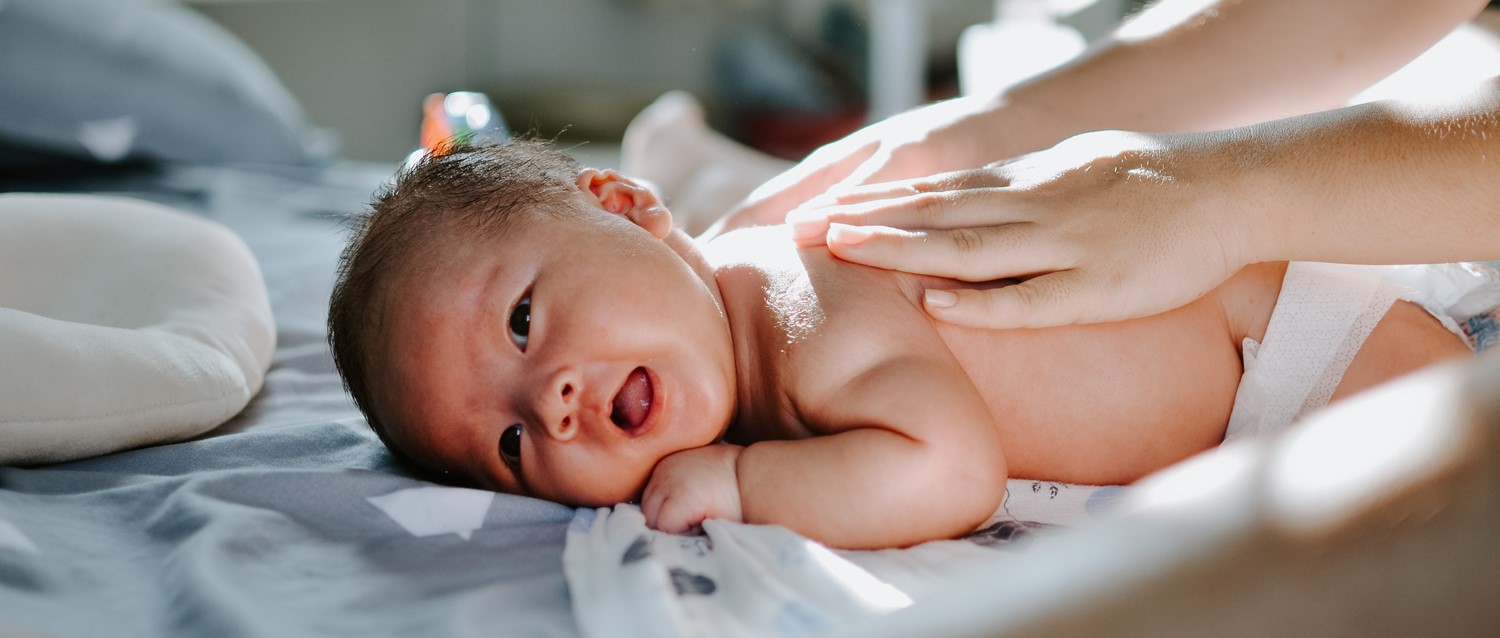
C-section babies have different gut bacteria to those born vaginally
Peer reviewed by Natalie HealeyLast updated by Milly EvansLast updated 19 Sept 2019
Meets Patient’s editorial guidelines
- DownloadDownload
- Share
- Language
- Discussion
- Audio Version
- Add to preferred sources on Google
A new study has found that the method of delivery affects the bacteria in a baby's gut, although the impact of these findings is currently unknown.
Sign up for our free 8-week Healthy Pregnancy course!
Each week we’ll share useful information and essential tips on topics such as nutrition, exercise, mental health, symptoms to look out for, and preparing for childbirth, to help you navigate your pregnancy journey whatever stage you are at.
By subscribing you accept our Privacy Policy. You can unsubscribe at any time. We never sell your data.
The research, published in Nature, found that babies who are born vaginally have different gut bacteria, called the microbiome, than babies delivered by caesarean section.
Babies born by caesarean carried more bacteria associated with the hospital in their guts, whereas babies born vaginally got most of their gut bacteria from their mother.
Currently, the researchers don't know what the impact of the gut microbiome at birth has on future health. Royal College of Obstetricians and Gynaecologists (RCOG) has said that the findings should not deter women from caesarean births.
The gut microbiome is thought to be important for the development of the immune system but there is currently little research into how gut bacteria develop and change in the early stages of life. There is some evidence to show that not exposing a child to the right microbes in childhood could contribute to the development of autoimmune diseases like asthma, allergies and diabetes.
"The first weeks of life are a critical window of development of the baby's immune system, but we know very little about it," said Principal Investigator of the Baby Biome Study, Professor Peter Brocklehurst, of the University of Birmingham. "We urgently need to follow up this study, looking at these babies as they grow, to see if early differences in the microbiome lead to any health issues. Further studies will help us understand the role of gut bacteria in early life and could help us develop therapeutics to create a healthy microbiome."
The researchers studied gut bacteria from faecal (poo) samples from nearly 600 babies and 175 mothers. They found that the gut bacteria found in vaginally delivered babies actually came from the mother's gut rather than her vaginal bacteria. Babies delivered by caesarean section carried more bacteria associated with a hospital environment.
Some babies are swabbed with vaginal bacteria from the mother after a caesarean section as previous studies suggested that vaginal bacteria was swallowed by the baby on its way down the birth canal. However, these new findings highlight that this is likely of no benefit and could in fact be introducing harmful bacteria into the baby's gut.
Mothers who will be delivering by caesarean section are routinely offered antibiotics before the delivery to prevent them developing infections after the operation. The researchers believe that this could play a role in the microbiome of their babies.
Whilst babies born by caesarean section carry different bacteria in the early days of life, the differences in babies' gut microbiomes at birth do eventually level out, leading the researchers to question the overall impact of the findings on a child's future health.
"Our study showed that as the babies grow and take in bacteria when they feed and from everything around them, their gut microbiomes become more similar to each other," said Dr Nigel Field, a senior author on the paper from UCL.
"After they have been weaned, the microbiome differences between babies born via caesarean and delivered vaginally have mainly evened out. We don't yet know whether the initial differences we found will have any health implications."
Because there isn't yet further research into the impact of the baby microbiome, the RCOG has warned not to avoid caesarean sections as a result of the study.
Dr Alison Wright, Vice President of the RCOG, said: "In many cases, a caesarean is a life-saving procedure, and can be the right choice for a woman and her baby. The exact role of the microbiome in the newborn and what factors can change it are still uncertain, so we don't think this study should deter women from having a caesarean. This study shows that more research is required to improve our understanding of this important area."
This study was published in Nature.
Patient picks for Labour and childbirth
Pregnancy
Unassisted birth: is the free birthing trend dangerous?
The trend for 'free birthing', - undergoing childbirth without medical support - is causing worry among midwives and doctors. Here we discuss unassisted births, your rights, and the risks it carries.
by Amberley Davis
Pregnancy
Experts dispute new study linking C-section births to autism
A new review of the evidence has found that caesarean sections are associated with autism and ADHD. But the results are being disputed by clinicians and experts who say that C-sections don't cause developmental disorders.
by Milly Evans
About the authorView full bio

Milly Evans
Editor
Milly writes on a range of health topics, with a particular interest in health inequality and sexual health.
About the reviewerView full bio

Natalie Healey
Freelance journalist
BSc (Hons) Biomedical Science
She is a London-based health journalist who has been writing about science and medicine for several years. She is the former head of editorial at Patient.
Article history
The information on this page is peer reviewed by qualified clinicians.
Article also available in English, German, Spanish, French, Italian, Portuguese, Hindi, Hebrew, Arabic, and Swedish.
19 Sept 2019 | Latest version
Join the conversation
Share your thoughts or experiences with others in our patient communities.

Ask, share, connect.
Browse discussions, ask questions, and share experiences across hundreds of health topics.

Feeling unwell?
Assess your symptoms online for free
Sign up to the Patient newsletter
Your weekly dose of clear, trustworthy health advice - written to help you feel informed, confident and in control.
By subscribing you accept our Privacy Policy. You can unsubscribe at any time. We never sell your data.
More in pregnancy
- Amniocentesis: risks, benefits, and accuracy
- Bacterial vaginosis in pregnancy: What you need to know
- Do anabolic steroids cause infertility?
- Does taking paracetamol in pregnancy lead to behavioural problems in kids?
- How much pregnancy weight gain is normal?
- How to create a birth plan
- Miscarriage: why it's important to break the taboo
- Should you change your contraception to the coil or implant?
- Should you worry about pelvic pain in pregnancy?
- The best and the worst times of year to get pregnant
- The food and drink to avoid on holiday if you’re pregnant
- Video: Can stress cause a miscarriage?
- Video: Is it safe to have sex during pregnancy and other lifestyle questions?
- What do you learn in antenatal classes and what are the benefits?
- What is pre-eclampsia and how can it affect pregnant women?
- What is the difference between implantation bleeding and a period?
- What to do if you need an abortion
- What to expect at your first ultrasound scan
- What your pregnancy cravings could mean
- When to investigate a miscarriage