
What happens during an asthma attack?
Peer reviewed by Dr Hayley Willacy, FRCGP Authored by Dr Laurence KnottOriginally published 24 Apr 2019
Meets Patient’s editorial guidelines
- DownloadDownload
- Share
- Language
- Discussion
- Audio Version
- Add to preferred sources on Google
Asthma is a common condition that affects the smaller airways (bronchioles). From time to time the airways narrow in people who have asthma. The typical symptoms are wheeze, cough, chest tightness, and shortness of breath. The extent of the narrowing, and how long each episode lasts, can vary greatly.
Need treatment for asthma?
Start a quick online consultation through Patient.info, available 24/7.
Reviewed by UK-registered clinicians and powered by Evaro, a UK-regulated healthcare service. Treatment can often be delivered next day.

The normal respiratory system
To understand what happens in asthma you need to be familiar with the normal breathing (respiratory) system and how the lungs and airways are arranged.
Normally, air entering through the mouth and nose travels through the main airway (the trachea) through a series of smaller branching airways called bronchi. The bronchi divide up into even smaller airways called bronchioles, which end in millions of tiny air sacs called alveoli.
When air enters the alveoli, the oxygen it contains passes through the thin membrane covering each sac into surrounding blood vessels. The oxygen attaches itself to red blood cells which then circulate around the body, releasing the oxygen into the body tissues.
What happens during an asthma attack?
An asthma attack starts with exposure to an asthma trigger. Triggers that cause an asthma attack vary from person to person but may be something you are allergic to such as animals or pollen. They can also be viral infections, gastrointestinal reflux, air pollution, cigarette smoke, and stress.
When exposed to a trigger factor, the lining of the airways responds by producing chemicals such as histamine and leukotriene. These chemicals are in part responsible for the changes that happen in the lungs during an asthma attack.
The airway lining becomes inflamed and swells. The production of mucus, normally present in a small amount in the airways, is increased. Typically this results in throat clearing, spitting up phlegm (sputum) and coughing. The muscles wrapped round the bronchioles eventually become constricted or tightened (bronchospasm) and the air passing through the narrowed channels produces a wheeze.
Lungs and alveoli
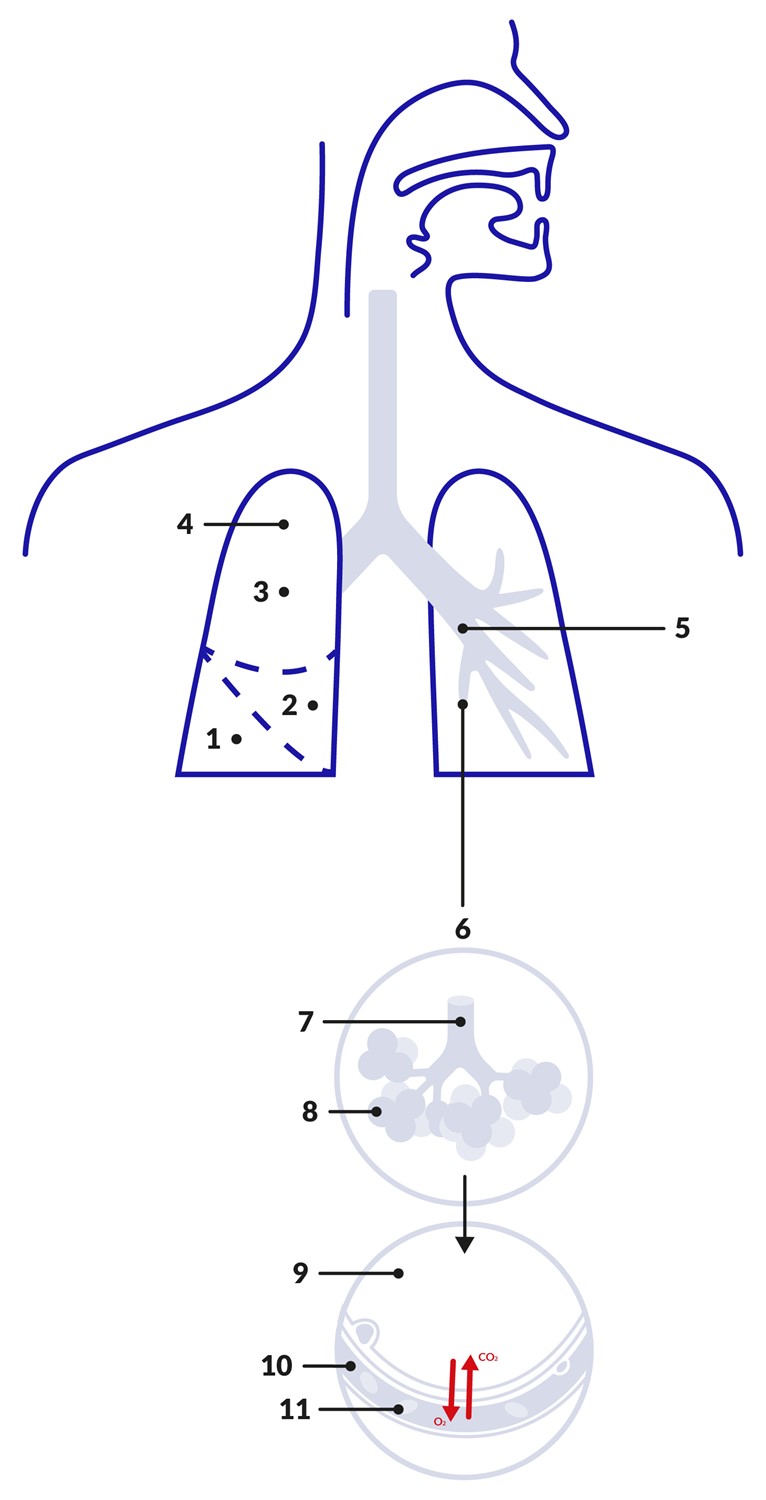
Key | |
|---|---|
1. Lower lobe | 7. Terminal bronchiole |
Cross-section of normal airway
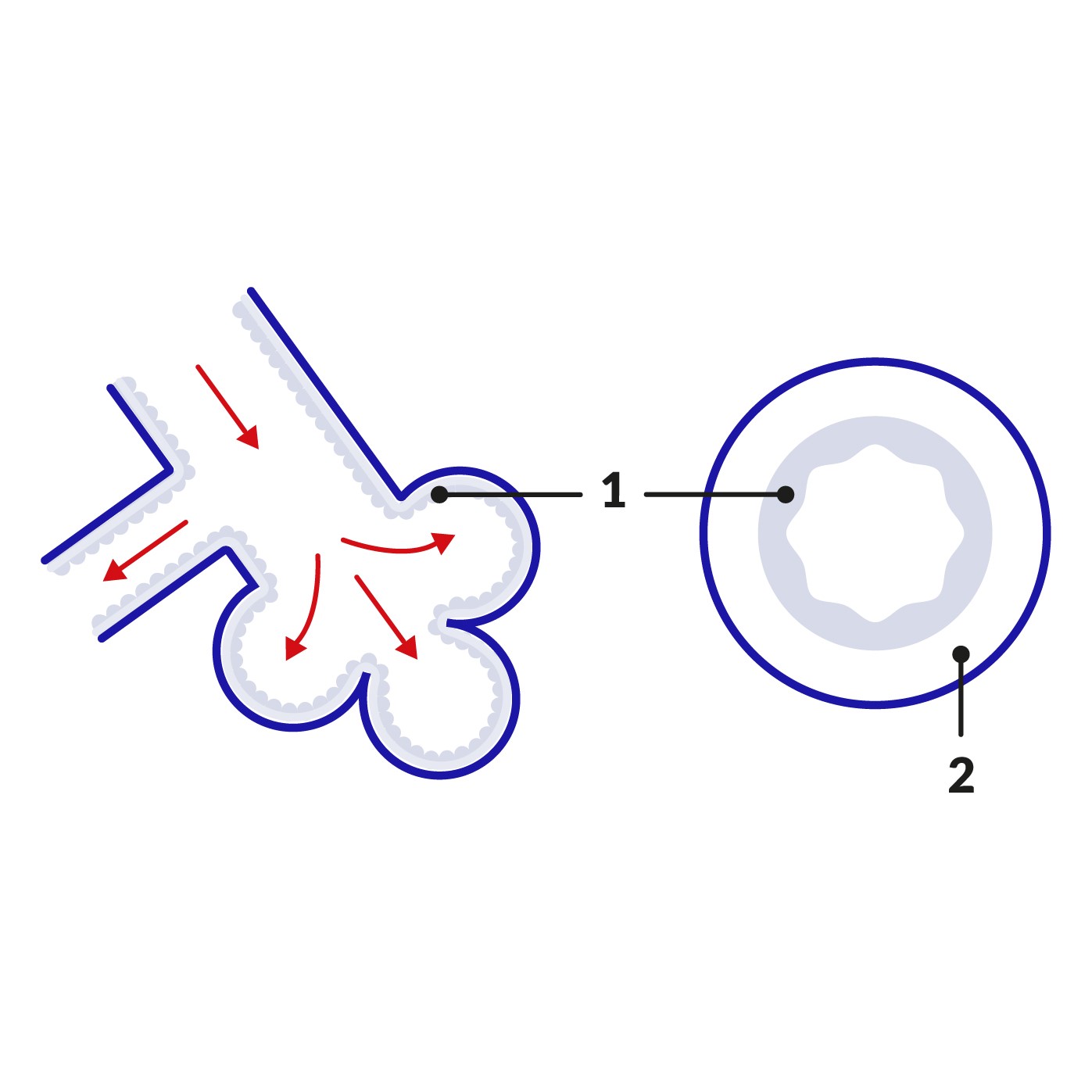
Key |
|---|
1. Small amount of mucus lines the airways |
Cross-section of airway during asthma attack
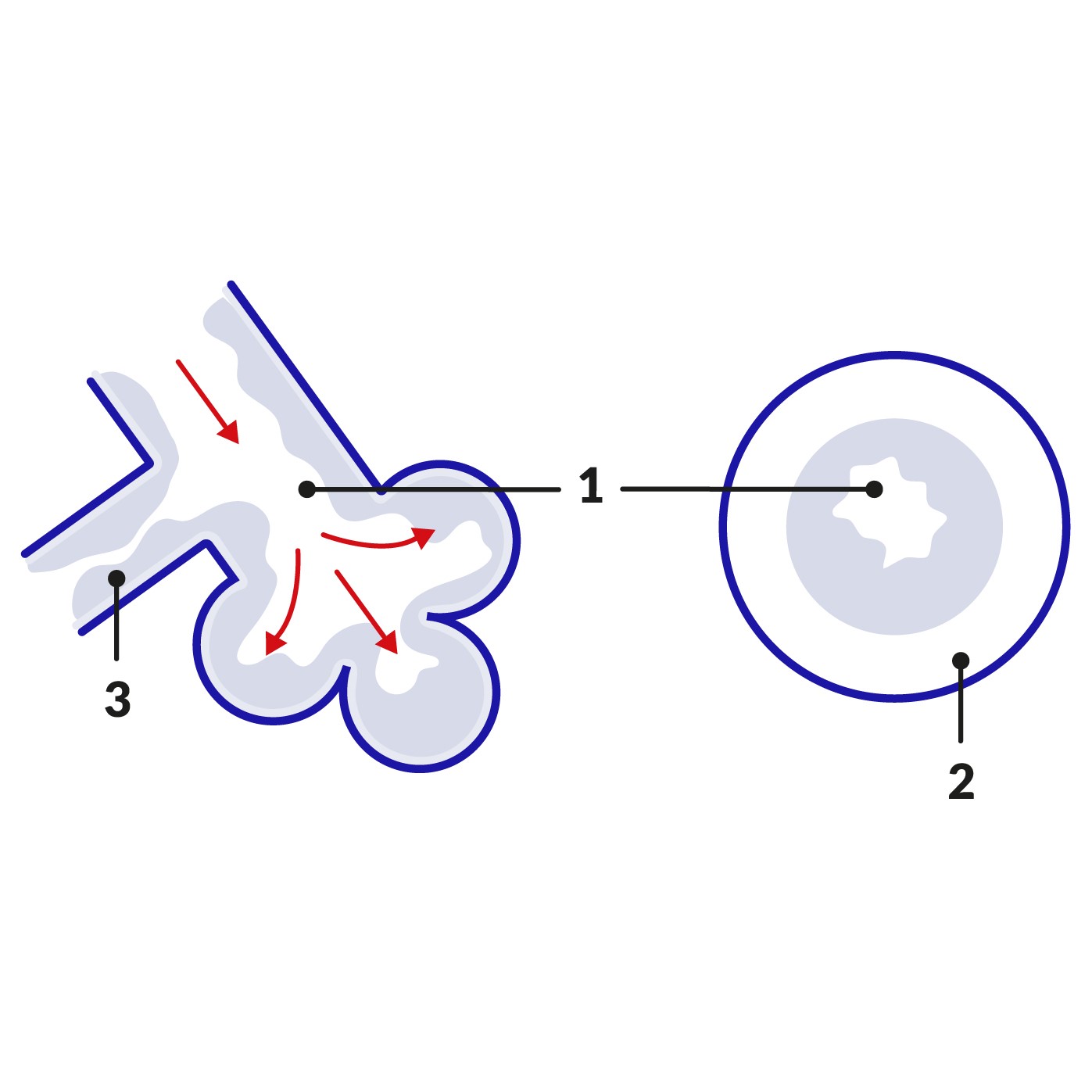
Key |
|---|
1. Reduced flow of air to the alveoli |
So you can see there are three reasons why people who are having an asthma attack become breathless. The swelling of the lining of the airways, the increased mucus production and the bronchospasm all result in less air than normal entering the alveoli. There is therefore a limited amount of oxygen available to pass on to the red blood cells.
Why asthma treatments work
Bronchodilators
Bronchodilators such as salbutamol work by relaxing the muscle of the bronchioles and widening the channels through which the air passes. They are usually administered in the form of inhalers. Salbutamol starts to work within a few minutes and the effect will last between 3-5 hours. Bronchodilator inhalers are referred to as 'reliever' inhalers or 'blue' inhalers. This is because they relieve symptoms of breathlessness, and the inhalers are usually blue in colour. Although they relieve breathlessness, they do not prevent the breathlessness from happening.
Salmeterol works in a similar way to salbutamol but its effects last for about 12 hours.
Steroids
Steroids such as beclometasone work by reducing the inflammation in your airways. When the inflammation has gone, your airways are much less likely to become narrow and cause symptoms such as wheezing. For asthma, steroids are usually prescribed in inhaler form. Although they have no effect during acute asthma attacks, when taken regularly (usually twice daily) they are the inhalers that will stop the attacks from happening. They are usually brown in colour and are known as 'preventer' or 'brown' inhalers. Occasionally, for severe asthma, steroids are prescribed in tablet form.
If your asthma stabilises on steroid and bronchodilator inhalers your doctor may prescribe a combination inhaler to take regularly which contains both medicines.
Other treatments
Antileukotrienes
Antileukotrienes such as montelukast act by blocking the action of leukotriene. Leukotriene is produced when people with asthma come into contact with trigger factors such as substances they are allergic to (such as pollen), or exercise. Leukotriene causes the lining of the bronchioles to become inflamed and swollen and antileukotrienes help to prevent this. Not every person with asthma gets a significant rise in leukotriene production during an attack, which is why antileukotrienes are usually kept in reserve for asthma which does not respond to standard bronchodilator and steroid therapy.
Omalizumab
Omalizumab is a medicine that is only given by injection. It works by interfering with the immune system to reduce inflammation in the airways which is present in asthma. It is reserved for people with severe asthma who do not respond to standard treatment. It can only be started by a specialist.
Patient picks for Asthma

Chest and lungs
Common asthma inhaler mistakes to avoid
Asthma UK estimates that more than a million people in the UK are using their inhalers incorrectly, inadvertently putting themselves at risk. We look at the most common mistakes.
by Kerry Taylor-Smith

Chest and lungs
What are the best forms of exercise if you have asthma?
Physical activity is good for people with asthma. It improves lung function, supports the immune system and helps keep people’s weight down, cutting the risk of an asthma attack. However, since some people with asthma find that exercise triggers their symptoms, they may feel apprehensive about getting started.
by Abi Millar
About the authorView full bio

Dr Laurence Knott
General Practitioner, Medical Author
BSc (Hons) Biochemistry, MBBS
Dr Laurence Knott qualified in 1973 and has had extensive experience as a General Practitioner.
About the reviewerView full bio

Dr Hayley Willacy, FRCGP
General Practitioner, Medical Author
MBChB (1992), DRCOG, DFFP, MRCOG (Part 1) MRCGP (2007), DFSRH (2013), MSc - medical education (2020)
Dr Hayley Willacy was an NHS GP working in northwest England, who retired from clinical practice in 2022 after 30 years.
Article history
Article also available in English, German, Spanish, French, Italian, Portuguese, Hindi, Hebrew, Arabic, and Swedish.
24 Apr 2019 | Originally published
Authored by:
Dr Laurence KnottPeer reviewed by
Dr Hayley Willacy, FRCGP
Join the conversation
Share your thoughts or experiences with others in our patient communities.

Ask, share, connect.
Browse discussions, ask questions, and share experiences across hundreds of health topics.

Feeling unwell?
Assess your symptoms online for free
Sign up to the Patient newsletter
Your weekly dose of clear, trustworthy health advice - written to help you feel informed, confident and in control.
By subscribing you accept our Privacy Policy. You can unsubscribe at any time. We never sell your data.
More in chest and lungs
- 7 everyday habits to improve your lung health
- Air pollution speeds up ageing in the lungs
- Can a new blood test detect lung cancer early?
- Coughs, colds and sore throats: is honey better than over-the-counter treatments?
- How do inhalers work?
- How to avoid catching a cold on public transport
- How to cope with asthma in the summer
- How to look after your child's asthma this summer
- How to stop coughing at night
- Is it indigestion or a heart attack?
- Is it whooping cough or just a cold?
- Lung cancer in non-smokers is more common than you think
- Should parents worry about 'dry drowning'?
- Strep A: what is Strep pneumonia and why are cases rising?
- What is severe asthma and how do you know if you have it?
- What should you do if your child is wheezing?
- What to do if you have an asthma attack
- What to eat when you have a cold
- What you need to know about pneumonia
- Why your favourite perfume could trigger an asthma attack