tumour protein p53
Ultimo aggiornamento 4 maggio 2023
Rispetta le linee guida editoriali
- ScaricaScarica
- Condividi
- Language
- Discussione
- Versione audio
- Aggiungi alle fonti preferite su Google
L TP53 gene provides instructions for making a protein called tumour protein p53 (or p53). This protein acts as a tumour suppressor, which means that it regulates cell division by keeping cells from growing and dividing (proliferating) too fast or in an uncontrolled way.
Normal function
L TP53 gene provides instructions for making a protein called tumour protein p53 (or p53). This protein acts as a tumour suppressor, which means that it regulates cell division by keeping cells from growing and dividing (proliferating) too fast or in an uncontrolled way.
The p53 protein is located in the nucleus of cells throughout the body, where it attaches (binds) directly to DNA. When the DNA in a cell becomes damaged by agents such as toxic chemicals, radiation, or ultraviolet (UV) rays from sunlight, this protein plays a critical role in determining whether the DNA will be repaired or the damaged cell will self-destruct (undergo apoptosis). If the DNA can be repaired, p53 activates other genes to fix the damage. If the DNA cannot be repaired, this protein prevents the cell from dividing and signals it to undergo apoptosis. By stopping cells with mutated or damaged DNA from dividing, p53 helps prevent the development of tumours.
Because p53 is essential for regulating DNA repair and cell division, it has been nicknamed the "guardian of the genome."
Conditions referring to this gene or chromosome
Altri nomi
antigen NY-CO-13
cellular tumour antigen p53
P53
P53 tumour suppressor
P53_HUMAN
phosphoprotein p53
transformation-related protein 53
TRP53
tumour protein p53 (Li-Fraumeni syndrome)
tumour suppressor p53
Related patient information and medicines

Patient information leaflet
Geni BRCA
A mutation ... Over 2,000 different BRCA1 or BRCA2 gene mutations have so far been identified. Other gene mutations that increase the risk of breast cancer include: TP53 mutation: most women with this mutation develop breast cancer by 50 years of age. TP53 is also associated with other cancers, including leucemie e brain tumours. PTEN gene.

Patient information leaflet
Mieloma
They also make a chemical that can damage bone. In time, small parts of bone are destroyed and are called lytic lesions. This is a condition where abnormal protein (amyloid) accumulates in various parts of the body. Sangue tests to measure proteins in the blood, called beta-2 microglobulin e albumin. The levels of these proteins ... Isolated.

Patient information leaflet
Test di funzionalità epatica
They are a sensitive way of looking for liver strain or liver damage, as they often show this well before you get any symptoms or problems with your liver. This means that the cause of li... The bile drainage from your liver is blocked - for example, by a gallstone. There is a swelling inside your liver (for example, an ascesso o un tumour). You.
Patient information leaflet
Disturbi della ghiandola pituitaria
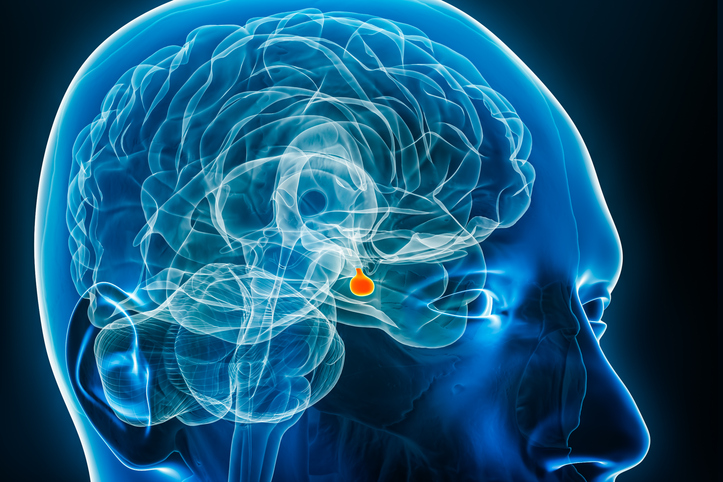
This leaflet gives a brief overview of the problema della ghiandola pituitaria and the hormones it makes. The pituitary gland is found at the base of the brain and is 'pea-sized'. The pituitary gland is an overall controller of a number of other glands in the body, overseeing the function of these organs through hormones. Some of the pituitary gland disorders.

Patient information leaflet
Sindrome dell'intestino irritabile
IBS stands for irritable bowel syndrome, and it is a long-term chronic condition of the gut (bowel) that causes episodes of dolore (abdominal) cramps, bloating and either constipation or diarrhoea. IBS is a problem with how the bowel works. What is IBS. IBS stands for irritable bowel syndrome and may not cause any harm to your body but sometimes.

Patient information leaflet
Diabete insipido
Diabetes insipidus symptoms The main symptoms of diabete insipido are: Passing large amounts of urine (polyuria). People with ... For example, a magnetic resonance imaging (MRI) scan of the brain and pituitary gland. Diabetes insipidus treatment Cranial diabetes insipidus The underlying cause of cranial diabetes insipidus may need treating.
Ulteriori letture e riferimenti
- tumour protein p53; MedlinePlus, National Library of Medicine.
- Cancer Genome Atlas Research Network. Comprehensive molecular profiling of lung adenocarcinoma. Nature. 2014 Jul 31;511(7511):543-50. doi: 10.1038/nature13385. Epub 2014 Jul 9.
- Damineni S, Rao VR, Kumar S, Ravuri RR, Kagitha S, Dunna NR, Digumarthi R, Satti V. Germline mutations of TP53 gene in breast cancer. Tumour Biol. 2014 Sep;35(9):9219-27. doi: 10.1007/s13277-014-2176-6. Epub 2014 Jun 15.
- Loyo M, Li RJ, Bettegowda C, Pickering CR, Frederick MJ, Myers JN, Agrawal N. Lessons learned from next-generation sequencing in head and neck cancer. Head Neck. 2013 Mar;35(3):454-63. doi: 10.1002/hed.23100. Epub 2012 Aug 21.
- Masciari S, Dillon DA, Rath M, Robson M, Weitzel JN, Balmana J, Gruber SB, Ford JM, Euhus D, Lebensohn A, Telli M, Pochebit SM, Lypas G, Garber JE. Breast cancer phenotype in women with TP53 germline mutations: a Li-Fraumeni syndrome consortium effort. Breast Cancer Res Treat. 2012 Jun;133(3):1125-30. doi: 10.1007/s10549-012-1993-9. Epub 2012 Mar 4.
- Masica DL, Li S, Douville C, Manola J, Ferris RL, Burtness B, Forastiere AA, Koch WM, Chung CH, Karchin R. Predicting survival in head and neck squamous cell carcinoma from TP53 mutation. Hum Genet. 2015 May;134(5):497-507. doi: 10.1007/s00439-014-1470-0. Epub 2014 Aug 10.
- Merino D, Malkin D. p53 and hereditary cancer. Subcell Biochem. 2014;85:1-16. doi: 10.1007/978-94-017-9211-0_1.
- National Cancer Institute: Genetics of Breast and Gynecologic Cancers (PDQ®)–Health Professional Version
- Olivier M, Hollstein M, Hainaut P. TP53 mutations in human cancers: origins, consequences, and clinical use. Cold Spring Harb Perspect Biol. 2010 Jan;2(1):a001008. doi: 10.1101/cshperspect.a001008.
- Olivier M, Langerod A, Carrieri P, Bergh J, Klaar S, Eyfjord J, Theillet C, Rodriguez C, Lidereau R, Bieche I, Varley J, Bignon Y, Uhrhammer N, Winqvist R, Jukkola-Vuorinen A, Niederacher D, Kato S, Ishioka C, Hainaut P, Borresen-Dale AL. The clinical value of somatic TP53 gene mutations in 1,794 patients with breast cancer. Clin Cancer Res. 2006 Feb 15;12(4):1157-67. doi: 10.1158/1078-0432.CCR-05-1029.
- Robertson AG, Kim J, Al-Ahmadie H, Bellmunt J, Guo G, Cherniack AD, Hinoue T, Laird PW, Hoadley KA, Akbani R, Castro MAA, Gibb EA, Kanchi RS, Gordenin DA, Shukla SA, Sanchez-Vega F, Hansel DE, Czerniak BA, Reuter VE, Su X, de Sa Carvalho B, Chagas VS, Mungall KL, Sadeghi S, Pedamallu CS, Lu Y, Klimczak LJ, Zhang J, Choo C, Ojesina AI, Bullman S, Leraas KM, Lichtenberg TM, Wu CJ, Schultz N, Getz G, Meyerson M, Mills GB, McConkey DJ; TCGA Research Network; Weinstein JN, Kwiatkowski DJ, Lerner SP. Comprehensive Molecular Characterization of Muscle-Invasive Bladder Cancer. Cell. 2018 Aug 9;174(4):1033. doi: 10.1016/j.cell.2018.07.036. No abstract available.
- Ruijs MW, Verhoef S, Rookus MA, Pruntel R, van der Hout AH, Hogervorst FB, Kluijt I, Sijmons RH, Aalfs CM, Wagner A, Ausems MG, Hoogerbrugge N, van Asperen CJ, Gomez Garcia EB, Meijers-Heijboer H, Ten Kate LP, Menko FH, van 't Veer LJ. TP53 germline mutation testing in 180 families suspected of Li-Fraumeni syndrome: mutation detection rate and relative frequency of cancers in different familial phenotypes. J Med Genet. 2010 Jun;47(6):421-8. doi: 10.1136/jmg.2009.073429.
- Schneider K, Zelley K, Nichols KE, Schwartz Levine A, Garber J. Li-Fraumeni Syndrome. 1999 Jan 19 [updated 2025 May 1]. In: Adam MP, Bick S, Mirzaa GM, Wallace SE, Amemiya A, editors. GeneReviews(R) [Internet]. Seattle (WA): University of Washington, Seattle; 1993-2026. Available from http://www.ncbi.nlm.nih.gov/books/NBK1311/
- Silwal-Pandit L, Vollan HK, Chin SF, Rueda OM, McKinney S, Osako T, Quigley DA, Kristensen VN, Aparicio S, Borresen-Dale AL, Caldas C, Langerod A. TP53 mutation spectrum in breast cancer is subtype specific and has distinct prognostic relevance. Clin Cancer Res. 2014 Jul 1;20(13):3569-80. doi: 10.1158/1078-0432.CCR-13-2943. Epub 2014 May 6.
- Toss A, Tomasello C, Razzaboni E, Contu G, Grandi G, Cagnacci A, Schilder RJ, Cortesi L. Hereditary ovarian cancer: not only BRCA 1 and 2 genes. Biomed Res Int. 2015;2015:341723. doi: 10.1155/2015/341723. Epub 2015 May 17.
Partecipa alla conversazione
Condividi i tuoi pensieri o esperienze con gli altri nel nostro comunità di pazienti.

Chiedi, condividi, connettiti.
Esplora le discussioni, fai domande e condividi esperienze su centinaia di argomenti di salute.
Iscriviti alla newsletter di Patient
La tua dose settimanale di consigli sulla salute chiari e affidabili - scritti per aiutarti a sentirti informato, sicuro e in controllo.
Abbonandoti accetti i nostri Informativa sulla Privacy. Puoi annullare l'iscrizione in qualsiasi momento. Non vendiamo mai i tuoi dati.