Pseudohypoaldosteronism type 2
Ultimo aggiornamento 18 Ago 2020
Rispetta le linee guida editoriali
- ScaricaScarica
- Condividi
- Language
- Discussione
- Versione audio
- Aggiungi alle fonti preferite su Google
Pseudohypoaldosteronism type 2 (PHA2) is caused by problems that affect regulation of the amount of sodium and potassium in the body. Sodium and potassium are important in the control of blood pressure, and their regulation occurs primarily in the kidneys.
Descrizione
Pseudohypoaldosteronism type 2 (PHA2) is caused by problems that affect regulation of the amount of sodium and potassium in the body. Sodium and potassium are important in the control of blood pressure, and their regulation occurs primarily in the kidneys.
People with PHA2 have high blood pressure (hypertension) and high levels of potassium in their blood (hyperkalemia) despite having normal kidney function. The age of onset of PHA2 is variable and difficult to pinpoint; some affected individuals are diagnosed in infancy or childhood, and others are diagnosed in adulthood. Hyperkalemia usually occurs first, and hypertension develops later in life. Affected individuals also have high levels of chloride (hyperchloremia) and acid (metabolic acidosis) in their blood (together, referred to as hyperchloremic metabolic acidosis). People with hyperkalemia, hyperchloremia, and metabolic acidosis can have nonspecific symptoms like nausea, vomiting, extreme tiredness (fatigue), and muscle weakness. People with PHA2 may also have high levels of calcium in their urine (hypercalciuria).
Modelli di ereditarietà
The source lists the following possible inheritance patterns: Autosomal dominant; Autosomal recessive. More than one pattern can apply in different cases.
Related genes
Altri nomi
Familial hyperkalemic hypertension
Familial hyperpotassemia and hypertension
Familial hypertensive hyperkalemia
FHHt
Gordon hyperkalemia-hypertension syndrome
Gordon's syndrome
PHAII
Pseudohypoaldosteronism type II
Related patient information and medicines
Patient information leaflet
Allergia alle proteine del latte vaccino
Allergia alle proteine del latte vaccino is one of the most common allergie alimentari seen in children. It is most commonly seen during the first year of life. Many children who have been allergic to cow's milk protein become tolerant to it by the time they are 5 years old. What is cow's milk protein allergy. Cow's milk protein allergy is an allergic condition.

Patient information leaflet
Cancro alla bocca
The outlook (prognosis) for people with mouth cancer is good if it is diagnosed early. What is mouth cancer. Il cancro orale è un tipo di cancro che può svilupparsi in qualsiasi parte della bocca, inclusa la lingua, le gengive, il palato (tetto della bocca), sotto la lingua, la mucosa che riveste la bocca o le labbra. Mouth cancer is also sometimes called oral cancer..

Patient information leaflet
Diabete di tipo 2
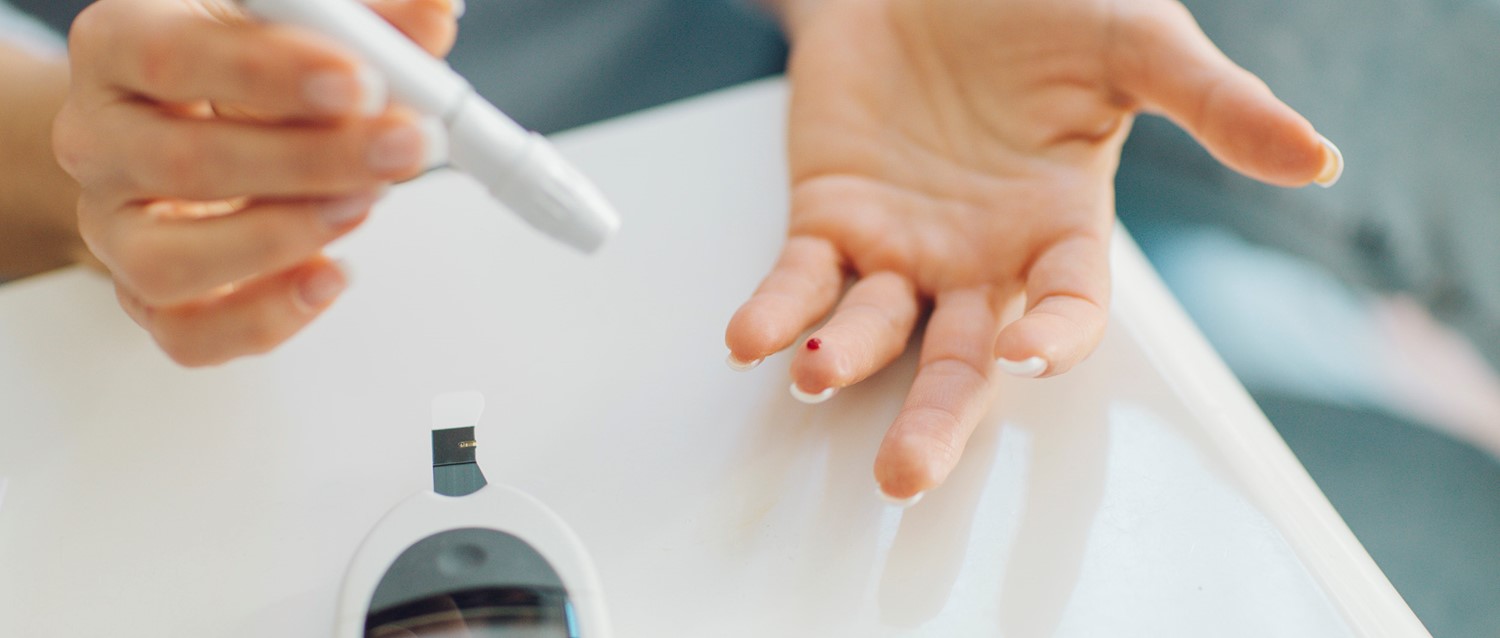
Diabete di tipo 2 can occur at any age, including during childhood, but it occurs mainly in people aged over 40. The first-line treatment is diet, weight control and physical activity. You can learn more about insulin and blood glucose from our separate leaflet called Diabetes (Diabetes Mellitus). However, one important side-effect which can affect.
Patient information leaflet
Diabete
There are two main types of diabetes - type 1 diabete e type 2 diabetes. Type 1 usually first develops in children or in young adults. Less commonly, people with type 2 diabetes may develop a condition with very high blood glucose levels but no ketones (cal... Ipoglicemia Too much insulin (or too high a dose of some of the diabetes tablets).

Patient information leaflet
Trattamento del diabete di tipo 2
Sebbene diabete cannot be cured, it can be trattati successfully. If a high blood sugar level is brought down to a normal level, your symptoms will ease and your risk of long-term complications will be much lower. Managing type 2 diabetes Keeping your blood sugar (glucose) well controlled is key to reducing your risk of long-term complications.
Patient information leaflet
Medicinali per vermi
Worms are parasites that enter the body and are able to live and feed off the person they have entered. The most common worm infection in the UK is threadworms. Medicines to treat worms are sometimes called anthelmintics. Mebendazole (trade names Vermox®, Ovex®) is the most commonly prescribed medicine for worms in the UK. What are worms. Worms.
Ulteriori letture e riferimenti
- Pseudohypoaldosteronism type 2; MedlinePlus, National Library of Medicine.
- Boyden LM, Choi M, Choate KA, Nelson-Williams CJ, Farhi A, Toka HR, Tikhonova IR, Bjornson R, Mane SM, Colussi G, Lebel M, Gordon RD, Semmekrot BA, Poujol A, Valimaki MJ, De Ferrari ME, Sanjad SA, Gutkin M, Karet FE, Tucci JR, Stockigt JR, Keppler-Noreuil KM, Porter CC, Anand SK, Whiteford ML, Davis ID, Dewar SB, Bettinelli A, Fadrowski JJ, Belsha CW, Hunley TE, Nelson RD, Trachtman H, Cole TR, Pinsk M, Bockenhauer D, Shenoy M, Vaidyanathan P, Foreman JW, Rasoulpour M, Thameem F, Al-Shahrouri HZ, Radhakrishnan J, Gharavi AG, Goilav B, Lifton RP. Mutations in kelch-like 3 and cullin 3 cause hypertension and electrolyte abnormalities. Nature. 2012 Jan 22;482(7383):98-102. doi: 10.1038/nature10814.
- Chavez-Canales M, Zhang C, Soukaseum C, Moreno E, Pacheco-Alvarez D, Vidal-Petiot E, Castaneda-Bueno M, Vazquez N, Rojas-Vega L, Meermeier NP, Rogers S, Jeunemaitre X, Yang CL, Ellison DH, Gamba G, Hadchouel J. WNK-SPAK-NCC cascade revisited: WNK1 stimulates the activity of the Na-Cl cotransporter via SPAK, an effect antagonized by WNK4. Hypertension. 2014 Nov;64(5):1047-53. doi: 10.1161/HYPERTENSIONAHA.114.04036. Epub 2014 Aug 11.
- Louis-Dit-Picard H, Barc J, Trujillano D, Miserey-Lenkei S, Bouatia-Naji N, Pylypenko O, Beaurain G, Bonnefond A, Sand O, Simian C, Vidal-Petiot E, Soukaseum C, Mandet C, Broux F, Chabre O, Delahousse M, Esnault V, Fiquet B, Houillier P, Bagnis CI, Koenig J, Konrad M, Landais P, Mourani C, Niaudet P, Probst V, Thauvin C, Unwin RJ, Soroka SD, Ehret G, Ossowski S, Caulfield M; International Consortium for Blood Pressure (ICBP); Bruneval P, Estivill X, Froguel P, Hadchouel J, Schott JJ, Jeunemaitre X. KLHL3 mutations cause familial hyperkalemic hypertension by impairing ion transport in the distal nephron. Nat Genet. 2012 Mar 11;44(4):456-60, S1-3. doi: 10.1038/ng.2218.
- McCormick JA, Ellison DH. The WNKs: atypical protein kinases with pleiotropic actions. Physiol Rev. 2011 Jan;91(1):177-219. doi: 10.1152/physrev.00017.2010.
- Ohta A, Schumacher FR, Mehellou Y, Johnson C, Knebel A, Macartney TJ, Wood NT, Alessi DR, Kurz T. The CUL3-KLHL3 E3 ligase complex mutated in Gordon's hypertension syndrome interacts with and ubiquitylates WNK isoforms: disease-causing mutations in KLHL3 and WNK4 disrupt interaction. Biochem J. 2013 Apr 1;451(1):111-22. doi: 10.1042/BJ20121903.
- Vidal-Petiot E, Elvira-Matelot E, Mutig K, Soukaseum C, Baudrie V, Wu S, Cheval L, Huc E, Cambillau M, Bachmann S, Doucet A, Jeunemaitre X, Hadchouel J. WNK1-related Familial Hyperkalemic Hypertension results from an increased expression of L-WNK1 specifically in the distal nephron. Proc Natl Acad Sci U S A. 2013 Aug 27;110(35):14366-71. doi: 10.1073/pnas.1304230110. Epub 2013 Aug 12.
- Wilson FH, Disse-Nicodeme S, Choate KA, Ishikawa K, Nelson-Williams C, Desitter I, Gunel M, Milford DV, Lipkin GW, Achard JM, Feely MP, Dussol B, Berland Y, Unwin RJ, Mayan H, Simon DB, Farfel Z, Jeunemaitre X, Lifton RP. Human hypertension caused by mutations in WNK kinases. Science. 2001 Aug 10;293(5532):1107-12. doi: 10.1126/science.1062844.
- Wilson FH, Kahle KT, Sabath E, Lalioti MD, Rapson AK, Hoover RS, Hebert SC, Gamba G, Lifton RP. Molecular pathogenesis of inherited hypertension with hyperkalemia: the Na-Cl cotransporter is inhibited by wild-type but not mutant WNK4. Proc Natl Acad Sci U S A. 2003 Jan 21;100(2):680-4. doi: 10.1073/pnas.242735399. Epub 2003 Jan 6.
Partecipa alla conversazione
Condividi i tuoi pensieri o esperienze con gli altri nel nostro comunità di pazienti.

Chiedi, condividi, connettiti.
Esplora le discussioni, fai domande e condividi esperienze su centinaia di argomenti di salute.
Iscriviti alla newsletter di Patient
La tua dose settimanale di consigli sulla salute chiari e affidabili - scritti per aiutarti a sentirti informato, sicuro e in controllo.
Abbonandoti accetti i nostri Informativa sulla Privacy. Puoi annullare l'iscrizione in qualsiasi momento. Non vendiamo mai i tuoi dati.