Fatty liver diet: foods to eat and avoid
Peer reviewed by Dr Colin Tidy, MRCGPAuthored by Josh AldermanOriginally published 5 Dec 2025
Meets Patient’s editorial guidelines
- DownloadDownload
- Share
- Language
- Discussion
- Audio Version
- Add to preferred sources on Google
In this article, we will take a closer look at the foods you should include in your diet, as well as the foods to avoid with fatty liver.
What is fatty liver disease?
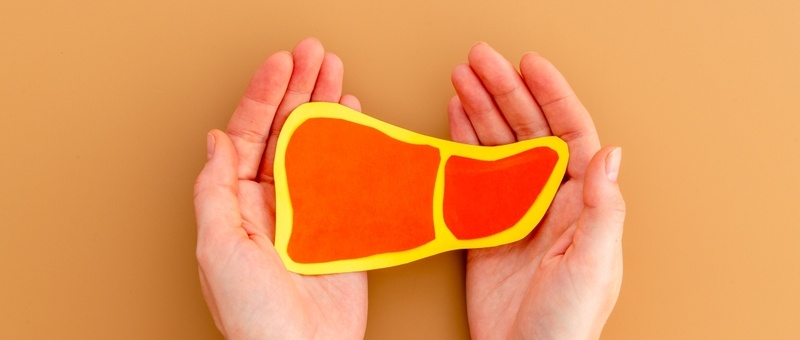
Fatty liver disease, also called hepatic steatosis, happens when fat builds up in the liver. It is increasingly common and can be linked to obesity, high cholesterol, diabetes, and certain lifestyle factors1.
The good news is that what you eat can have a big impact on liver health. A well-planned fatty liver diet can help reduce fat in the liver, improve liver function, and support overall health.
Fatty Liver Disease Diet
Foods to eat on a fatty liver diet
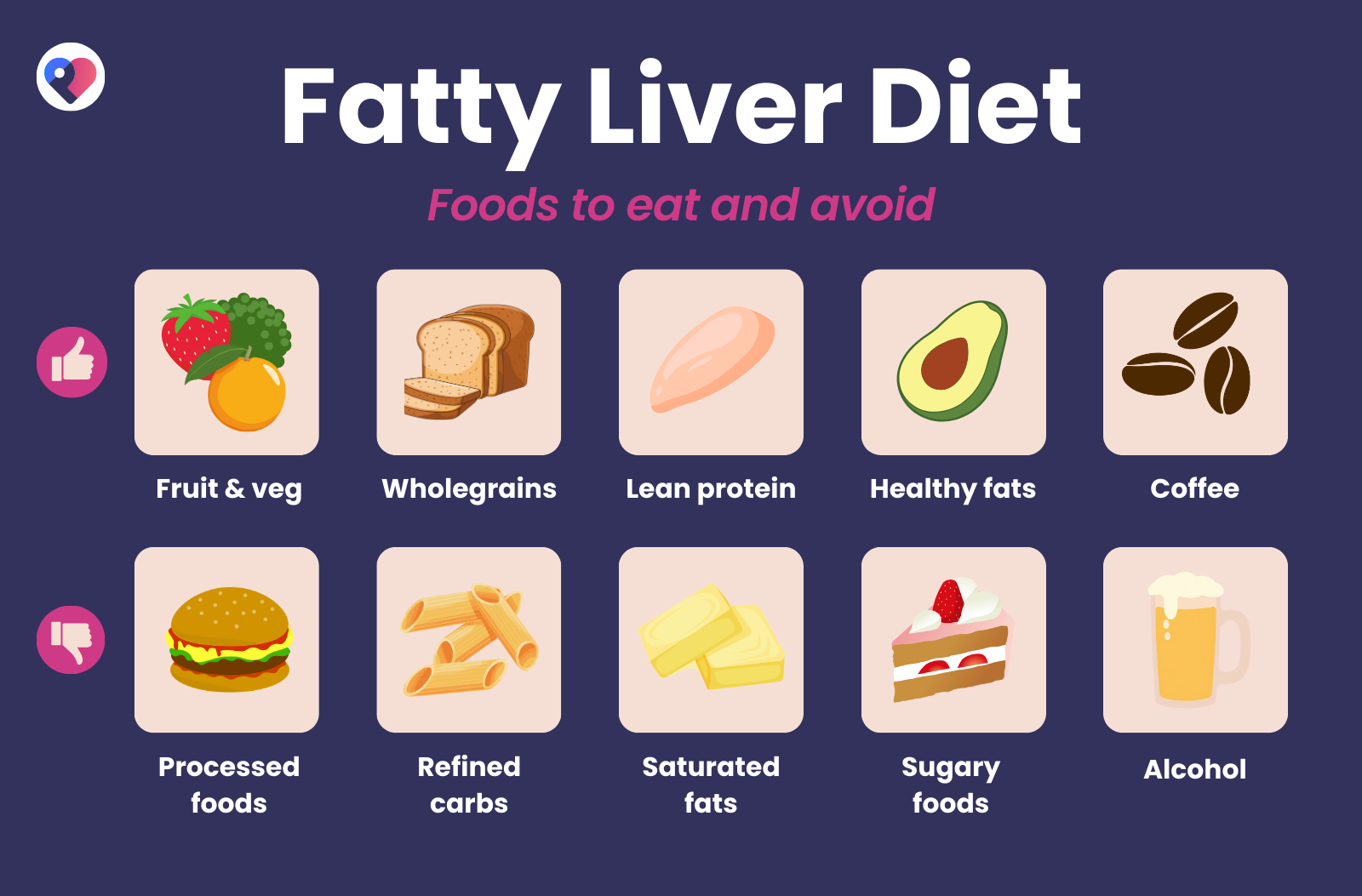
Focusing on a healthy diet can make a real difference. These are the types of foods to prioritise:
1. Fruits and vegetables
Fresh fruits and vegetables are rich in fibre, vitamins, and antioxidants. They can help reduce inflammation and support liver health.
Aim for a variety of colours on your plate, such as berries, oranges, leafy greens, and broccoli.
2. Wholegrains
Wholegrains such as oats, brown rice, whole-wheat bread, and quinoa provide complex carbohydrates and fibre.
They help stabilise blood sugar levels and reduce fat accumulation in the liver.
3. Lean proteins
Protein is important for liver repair. Choose lean sources like skinless chicken, turkey, fish, eggs, and plant-based proteins such as beans, lentils, and tofu.
Fatty fish like salmon, sardines, and mackerel are particularly beneficial due to their omega-3 fatty acids, which may reduce liver fat and inflammation.
4. Healthy fats
Not all fats are harmful. Unsaturated fats found in olive oil, avocado, nuts, and seeds can improve cholesterol levels and support liver health.
Moderation is key, as fats are still high in calories.
5. Coffee
Moderate coffee consumption may protect the liver by reducing fat build-up and lowering the risk of liver disease progression2.
Aim for two to three cups a day, avoiding excessive sugar or cream.
6. Green tea
Green tea is rich in antioxidants called catechins, which may help improve liver function.
Drinking one to two cups a day can be a helpful addition to a fatty liver diet.
Foods to avoid with fatty liver
Certain foods can worsen fat accumulation in the liver. Here are the main culprits:
1. Sugary foods and drinks
High-sugar foods, such as cakes, biscuits, sweets, and sugary drinks, are a major contributor to fatty liver.
Fructose, a type of sugar found in sodas and many processed foods, can increase liver fat.
2. Refined carbohydrates
White bread, pastries, pasta made from white flour, and many breakfast cereals can spike blood sugar and increase fat storage in the liver.
Opt for wholegrain alternatives whenever possible.
3. Saturated and trans fats
Foods high in saturated fats, such as fatty cuts of meat, butter, full-fat cheese, and processed snacks, can worsen liver fat.
Trans fats, found in some margarines and packaged baked goods, are also harmful and should be avoided.
4. Alcohol
Alcohol is processed by the liver, and drinking excessively can accelerate liver damage. For people with fatty liver, it is best to limit alcohol or avoid it altogether.
5. Highly processed foods
Highly processed foods such as fast food, ready meals, and packaged snacks often contain high levels of sugar, salt, and unhealthy fats, all of which can negatively affect liver health.
Tips for following a fatty liver diet
Control portion sizes: Overeating, even healthy foods, can contribute to weight gain and liver fat.
Stay hydrated: Water supports liver function and overall metabolism.
Cook at home: Preparing meals yourself helps you control the ingredients and avoid hidden sugars and unhealthy fats.
Exercise regularly: Diet alone is helpful, but combining it with regular physical activity can accelerate liver fat reduction.
Monitor progress: Regular check-ups with your doctor can help track liver health and ensure your diet is effective.
Summary
A fatty liver diet focuses on whole, nutrient-rich foods while avoiding those that promote fat accumulation and inflammation.
Fruits, vegetables, whole grains, lean proteins, and healthy fats form the foundation of a liver-friendly diet, while sugary foods, refined carbs, alcohol, and processed snacks are best avoided.
By making these changes, it is possible to support liver health, reduce fat build up, and improve overall wellbeing.
Adopting a consistent, balanced approach is key. Small, manageable changes to your eating habits can make a significant difference in managing fatty liver over time.
Pairing dietary improvements with regular exercise and regular medical check-ups will give the best chance of maintaining a healthy liver for the long term.
Patient picks for Condition-specific diets
Diabetes
Diabetes diet: managing type 2 diabetes
If you have type 2 diabetes it is often difficult to know which foods you should or should not eat. Here we explain the key elements of a diabetes diet to help you prevent or delay associated health problems, and address some common myths around eating with type 2 diabetes.
by Lawrence Higgins
Diet and nutrition
Can the MIND diet help keep our brains healthy?
What you eat can help keep your body and brain healthy. And whilst getting older is the biggest risk factor for dementia, research suggests up to 1 in 3 cases may be preventable with lifestyle changes. The MIND diet is touted for its brain-boosting benefits, but what does it include - and can it really help to protect our brains?
by Lynn Stephen
About the authorView full bio

Josh Alderman
SEO Executive
BA (Hons) Media and Print Journalism
Josh is an SEO executive at Patient with over 4 years experience working within the healthcare sphere.
About the reviewerView full bio

Dr Colin Tidy, MRCGP
General Practitioner, Medical Author
MBBS, MRCGP, MRCP (Paediatrics), DCH
Dr Colin Tidy is an NHS Doctor, based in Oxfordshire.
Article history
The information on this page is peer reviewed by qualified clinicians.
Article also available in English, German, Spanish, French, Italian, Portuguese, Hindi, Hebrew, Arabic, and Swedish.
Next review due: 5 Dec 2028
5 Dec 2025 | Originally published
Authored by:
Josh AldermanPeer reviewed by
Dr Colin Tidy, MRCGP
Join the conversation
Share your thoughts or experiences with others in our patient communities.

Ask, share, connect.
Browse discussions, ask questions, and share experiences across hundreds of health topics.

Feeling unwell?
Assess your symptoms online for free
Sign up to the Patient newsletter
Your weekly dose of clear, trustworthy health advice - written to help you feel informed, confident and in control.
By subscribing you accept our Privacy Policy. You can unsubscribe at any time. We never sell your data.
More in diet and nutrition
- 5 warming soup recipes
- 7 easy and delicious keto breakfast ideas
- 9 food swaps for a delicious and healthy Christmas dinner
- Are pumpkin seeds good for you?
- DASH diet - healthy eating that helps lower blood pressure
- Everything you should know about the 3-day sardine fast
- How healthy is flavoured water?
- How to avoid ultra processed foods when you're vegan
- How to boost your vitamin D levels this winter
- How to build muscle on a vegan diet
- How to choose healthy snacks for you and your kids
- How to comfort eat healthily in winter
- How to gain weight healthily
- How to set achievable health goals
- How to stop binge eating
- What is the carnivore diet and is it healthy?
- What is the TLC diet and can it improve your heart health?
- What is the Whole30 diet?
- What's the healthiest high street Christmas sandwich?
- Whole grain heroes: Why eat ancient grains?