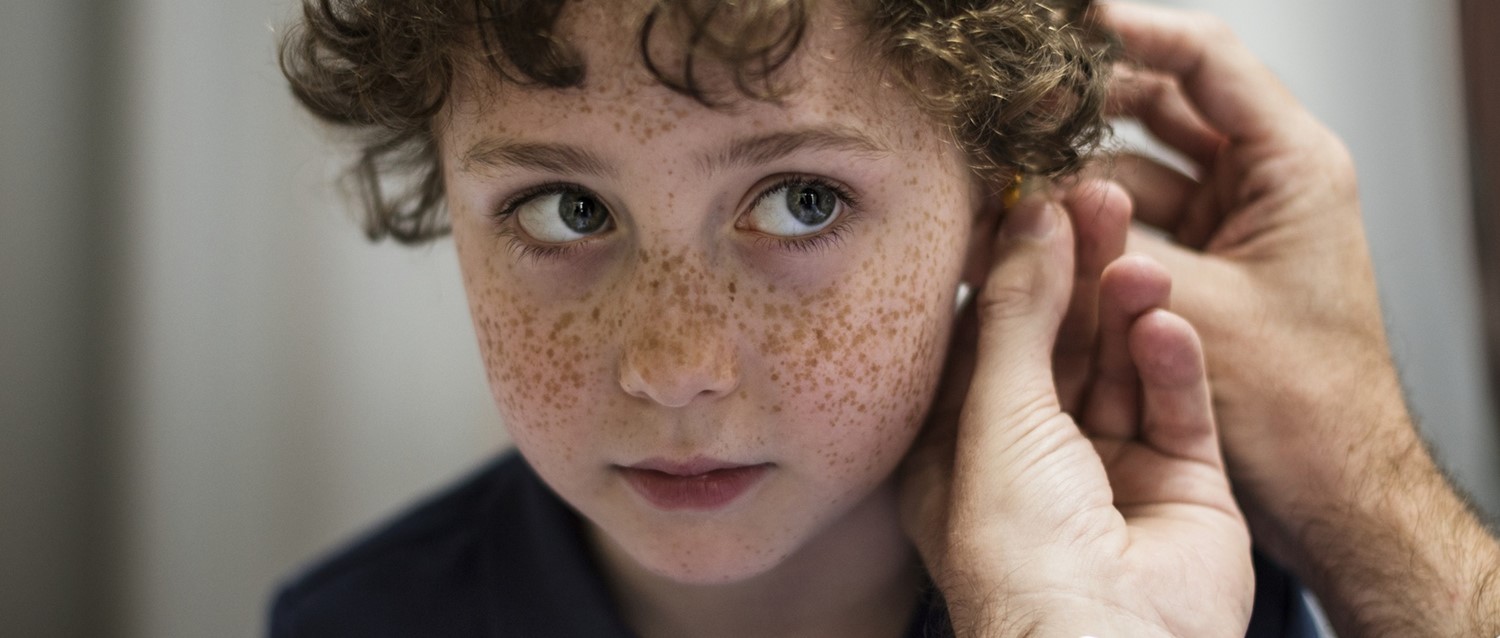
Segni di acufene da osservare nei bambini
Revisione paritaria di Dr Sarah Jarvis MBE, FRCGPUltimo aggiornamento di Natalie HealeyUltimo aggiornamento 6 Feb 2018
Rispetta le linee guida editoriali
- ScaricaScarica
- Condividi
- Language
- Discussione
- Versione audio
Pensando all'acufene, probabilmente assocerai questa condizione uditiva alla generazione più anziana - forse a coloro che hanno partecipato a troppi concerti rock. Ma ripensaci. L'acufene colpisce anche i giovani, con un bambino in ogni classe nel Regno Unito che si stima ne soffra.
In questo articolo:
Video consigliati per Altri segni e sintomi
Continua a leggere sotto
What is tinnitus?
Tinnitus is a ringing, humming, pulsing or hissing sound in your ear. The sounds, which vary from person to person, are created by your own hearing system. It's the feeling of hearing noises when no sound is actually present.
The condition is not just for adults. But often kids think that hearing these sounds is normal, so might not tell their parents. Tinnitus may seem to get worse when they're anxious and could lead to difficoltà a dormire.
But many parents are unaware that children can suffer from tinnitus in the first place. In fact, research published in 2018 from the British Tinnitus Association (BTA) showed worrying statistics around parents' knowledge of the condition. Just under a third (32%) of UK parents are aware that children under the age of 10 can have tinnitus, and just 37% think it can affect children aged 10 to 16 years old.
Signs of tinnitus in children
Torna ai contenutiChildren with tinnitus are often unable to vocalise what it is the're hearing or experiencing, and so often display other more subtle signs of the condition.
"While unsurprisingly, most parents would associate their child reporting sounds in their ears or head with tinnitus - the problem is that children are often unable to explain what it is they're experiencing so unless they are directly asked the question by a parent, teacher or medical professional, it can often be overlooked," says David Stockdale, chief executive of the BTA.
"They may be struggling alone and so may often display more subtle signs, such as appearing distracted or becoming anxious which can also have a real impact on their general quality of life, including their behaviour and learning at school."
Continua a leggere sotto
What causes tinnitus in children?
Torna ai contenutiAs with adults, there are many reasons why children may experience tinnitus.
Veronica Kennedy, consultant audiovestibular physician at Bolton NHS Foundation Trust, and former chair of the BTA's Professional Advisers’ Committee, explains: "For most children there is no significant underlying condition (pathology). Some children can be aware of tinnitus where their ears are blocked due to wax or otite sierosa. Some may have a hearing loss for other reasons."
A temporary hearing loss associated with tinnitus might occur after noise exposure. For instance, the child may have attended a loud concert. But with repeated exposure, this hearing problem can become permanent.
"A very small number of children have tinnitus in association with a medical condition so all children with troublesome tinnitus should be referred to their local paediatric audiology service or ENT clinic," Kennedy stresses.
What parents should do
Torna ai contenutiIf you're concerned that your child may have tinnitus, it's best to visit your GP. Kennedy reveals that in most cases of tinnitus in children, the outcome is positive. But it can also be a source of worry for a child if it's not addressed.
"For most children and teens with tinnitus, an explanation of the condition and reassurance is all that is needed. Some benefit from strategies to help cope with the tinnitus and some need strategies to cope with stress and feelings of anxiety. A small number of children need psychological support."
In one study of tinnitus and anxiety/depression in children, 32% had significant anxiety and 14.5% depression. Those with depression experienced tinnitus for 24 months compared to those without depression (17 months).
"But another feature that indicates a good prognosis is that few adults troubled with tinnitus recall having it as children," Kennedy concludes.
You can contact the BTA for advice and to access resources for children with tinnitus.
Scelte dei pazienti per Altri segni e sintomi

Segni e sintomi
Cosa potrebbe causare le tue formicolii?
Tutti possono provarli occasionalmente, ma le cause di formicolio e intorpidimento non sono sempre dovute a sdraiarsi in modo scomodo su un braccio o una gamba. Qui analizziamo cosa provoca il formicolio e quando preoccuparsi.
di Lawrence Higgins

Segni e sintomi
Perché alcune persone si fanno lividi così facilmente
I lividi sono una conseguenza naturale di lesioni minori. Tuttavia, alcune persone sono più suscettibili di altre e i lividi possono indicare una condizione medica sottostante più grave. Chiediamo il parere di un medico di base.
di Julian Turner
Continua a leggere sotto
Storia dell'articolo
Le informazioni su questa pagina sono revisionate da clinici qualificati.
6 Feb 2018 | Ultima versione

Chiedi, condividi, connettiti.
Esplora le discussioni, fai domande e condividi esperienze su centinaia di argomenti di salute.

Non ti senti bene?
Valuta i tuoi sintomi online gratuitamente
Iscriviti alla newsletter di Patient
La tua dose settimanale di consigli sulla salute chiari e affidabili - scritti per aiutarti a sentirti informato, sicuro e in controllo.
Abbonandoti accetti il nostro Informativa sulla Privacy. Puoi annullare l'iscrizione in qualsiasi momento. Non vendiamo mai i tuoi dati.