
Peak flow diary
Peer reviewed by Prof Cathy Jackson, MRCGPAuthored by Dr Colin Tidy, MRCGPOriginally published 5 Jan 2018
Meets Patient’s editorial guidelines
- DownloadDownload
- Share
- Language
- Discussion
- Audio Version
- Add to preferred sources on Google
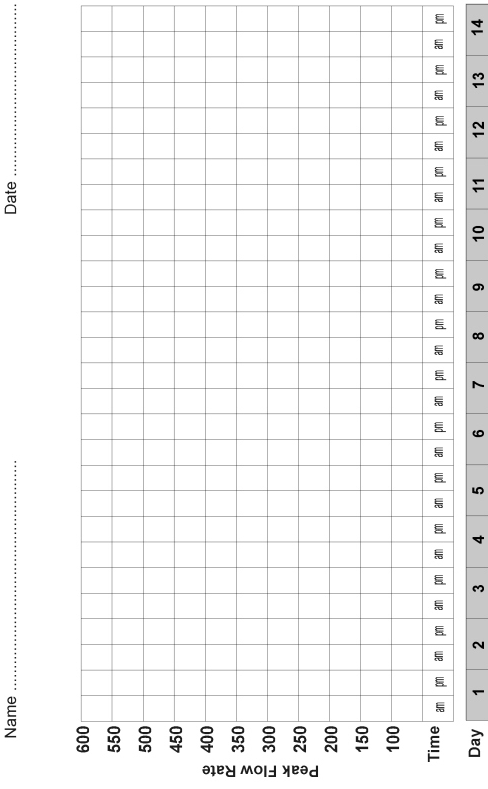
This leaflet is designed to be printed out for people to record their peak flow reading.
Need treatment for asthma?
Start a quick online consultation through Patient.info, available 24/7.
Reviewed by UK-registered clinicians and powered by Evaro, a UK-regulated healthcare service. Treatment can often be delivered next day.

Peak flow diary for printing off
To take a peak flow reading
Put the marker to zero.
Take a deep breath.
Seal your lips around the mouthpiece.
Blow as hard and as fast as you can into the device.
Note the reading.
Repeat three times.
The 'best of the three' is the reading to record on the chart.
What are normal and abnormal peak flow readings?
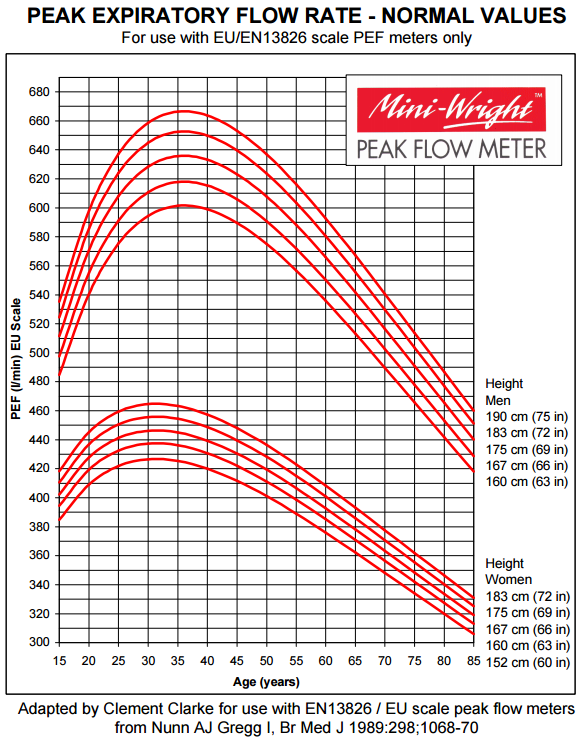
Normal peak flow readings vary, depending on your age, size, and sex. The range of normal peak flow readings is published on a chart, and doctors and nurses refer to the chart when they check your peak flow reading. In healthy people, peak flow readings vary slightly from time to time. The reading is often slightly higher in the evening compared with the morning.
Peak flow normal values
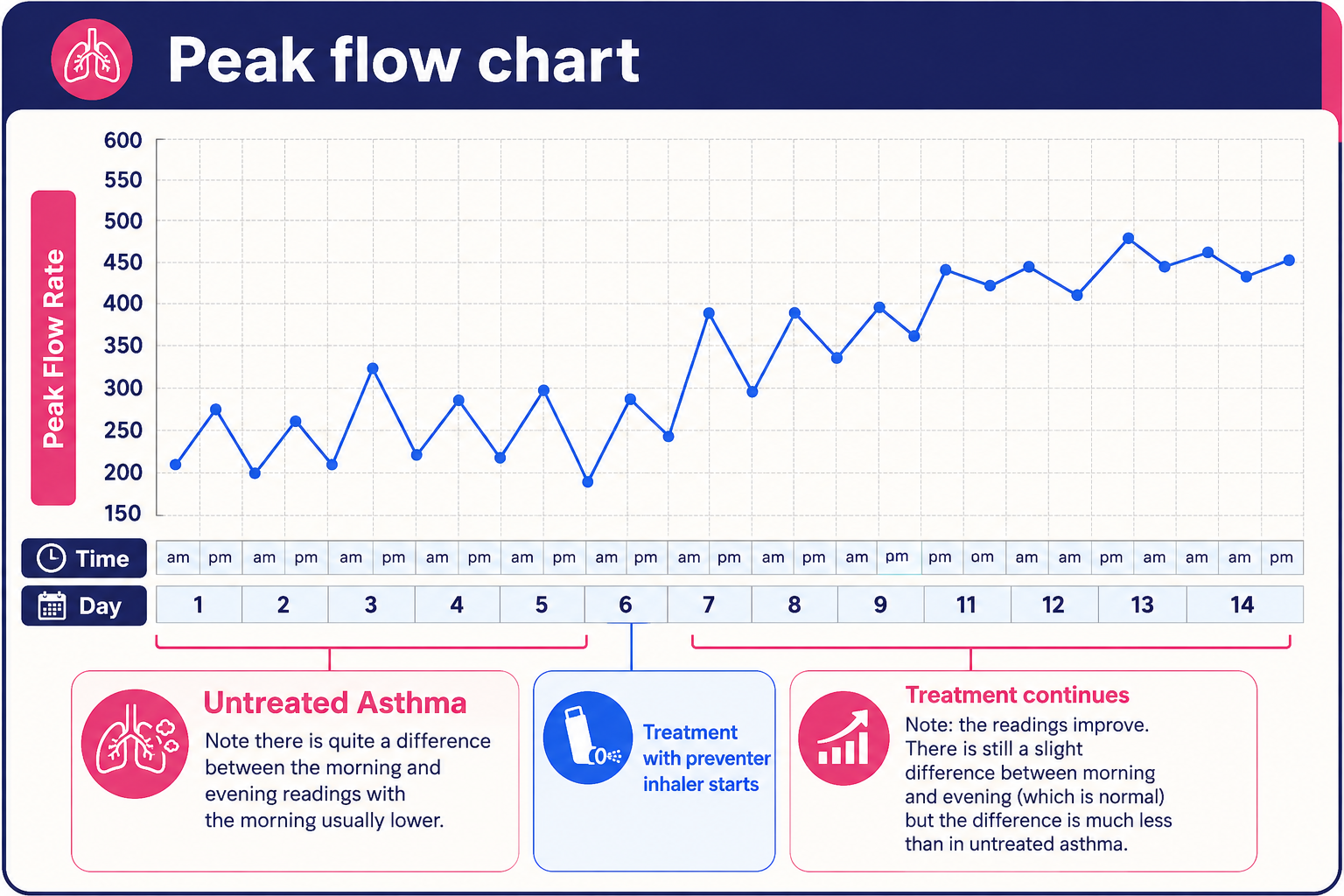
Below is an example of a two-week diary of peak flow readings done by a child who has quite bad asthma.
Peak flow graph
Patient picks for Asthma

Chest and lungs
What are the best forms of exercise if you have asthma?
Physical activity is good for people with asthma. It improves lung function, supports the immune system and helps keep people’s weight down, cutting the risk of an asthma attack. However, since some people with asthma find that exercise triggers their symptoms, they may feel apprehensive about getting started.
by Abi Millar

Chest and lungs
How to cope with asthma in the summer
Asthma in the summer can be miserable, but armed with the correct medicine and a common-sense action plan, you can ease symptoms triggered by pollen and air pollution. Our experts offer advice on how you can manage your summer asthma.
by Lynn Stephen
About the authorView full bio

Dr Colin Tidy, MRCGP
General Practitioner, Medical Author
MBBS, MRCGP, MRCP (Paediatrics), DCH
Dr Colin Tidy is an NHS Doctor, based in Oxfordshire.
About the reviewerView full bio

Prof Cathy Jackson, MRCGP
Medical Author
BSc (Hons) Physiology, MB, ChB, MRCGP, MD
Professor Cathy Jackson graduated from Manchester Medical School having gained a first-class honours degree in physiology along the way.
Article history
Article also available in English, German, Spanish, French, Italian, Portuguese, Hindi, Hebrew, Arabic, and Swedish.
5 Jan 2018 | Originally published
Authored by:
Dr Colin Tidy, MRCGPPeer reviewed by
Prof Cathy Jackson, MRCGP
Join the conversation
Share your thoughts or experiences with others in our patient communities.

Ask, share, connect.
Browse discussions, ask questions, and share experiences across hundreds of health topics.

Feeling unwell?
Assess your symptoms online for free
Sign up to the Patient newsletter
Your weekly dose of clear, trustworthy health advice - written to help you feel informed, confident and in control.
By subscribing you accept our Privacy Policy. You can unsubscribe at any time. We never sell your data.
More in chest and lungs
- Can you really 'grow out' of asthma?
- Coping with grief after losing a loved one to lung cancer
- Coughs, colds and sore throats: is honey better than over-the-counter treatments?
- How do inhalers work?
- How is asthma managed and treated?
- How physiotherapy can help people with lung conditions
- How to handle asthma during the winter months
- How to keep your lungs healthy for life
- How to live healthily with COPD
- Is it whooping cough or just a cold?
- Is your cough really a chest infection?
- Should parents worry about 'dry drowning'?
- The respiratory system
- What are the best forms of exercise if you have asthma?
- What causes wheezing?
- What is eosinophilic asthma and what makes it different?
- What is HMPV and should we be worried?
- What is walking pneumonia?
- What you need to know about pneumonia
- Why your favourite perfume could trigger an asthma attack