Emorragia subaracnoidea
Revisione paritaria di Dr Krishna Vakharia, MRCGPUltimo aggiornamento di Dr Colin Tidy, MRCGPUltimo aggiornamento 13 Dic 2022
Rispetta le linee guida editoriali
- ScaricaScarica
- Condividi
- Language
- Discussione
- Versione audio
- Aggiungi alle fonti preferite su Google
A subarachnoid haemorrhage (SAH) is a form of stroke in which bleeding occurs into the fluid-filled space surrounding the brain (called the subarachnoid space). It is usually caused by the rupture of a small berry-like swelling (called a berry aneurysm) on one of the arteries in the brain.
SAH is a medical emergency. The risk of a further bleed is greatest during the first 24 hours from when the symptoms started.
A colpo d'occhio
A subarachnoid haemorrhage is bleeding around the brain, usually from a burst aneurysm.
The most characteristic symptom is a sudden, explosive, very severe headache.
Other symptoms can include vomiting, seizures, or altered consciousness.
If you have an unusually severe, sudden headache with vomiting, seek medical advice.
Smoking, high alcohol intake, and high blood pressure increase the risk.
Treatment aims to stop further bleeding and prevent brain injury.
What is a subarachnoid haemorrhage?
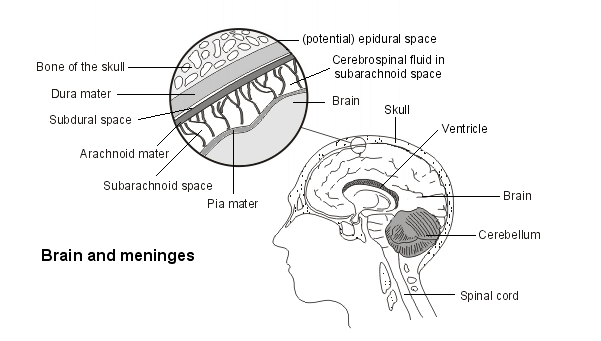
A subarachnoid haemorrhage (SAH) occurs when there is bleeding around the brain into the subarachnoid space. This is a space between two of the protective layers which surround the brain. These are the pia mater, which covers the brain directly, and the arachnoid mater, which is separated from the pia mater by a space filled with fluid. This fluid, the cerebrospinal fluid, is there to cushion and protect the brain from injury.
The bleeding usually comes from a burst (ruptured) berry aneurysm, most commonly at the back of the brain. Berry aneurysms are small berry-shaped swellings on the arteries which supply the brain, usually at a junction where an artery divides into two. These are relatively common in the general population, particularly in older patients, although most never rupture.
Brain and meninges
How serious is a subarachnoid haemorrhage?
Subarachnoid haemorrhage (SAH) is very serious. More than 1 in 4 people with a subarachnoid haemorrhage will die within the first six months after the subarachnoid haemorrhage. Of the survivors, about 1 in 3 are unable to live independently.
Who is affected by subarachnoid haemorrhage?
SAH usually affects adults under the age of 60 years, with the average age of affected patients around 50 years. Children are not usually affected.
Women are affected slightly more often than men.
Patients of African descent are slightly more commonly affected than patients of white descent.
The condition is also more common in Finland and Japan, where the rates are around three times those in Europe.
Patients who smoke, use excessive alcohol or have high blood pressure are at greater risk.
First-degree relatives of people who have had an SAH are at greater risk.
How common is subarachnoid haemorrhage?
Around 8 people out of every 100,000 per year will have an SAH.
SAH causes around 6 out of 100 of all strokes.
How does subarachnoid haemorrhage occur?
More than 8 out of 10 cases of SAH are caused by the bursting (rupture) of berry aneurysms. About 1 in every 25 adults will have one or more berry aneurysms. However, an SAH rupturing is a relatively rare event.
Larger berry aneurysms (bigger than 7 mm) are more likely to rupture (smaller ones can grow larger over time). Rupture is more likely to occur if the elastic tissue in the walls of the berry aneurysm is weakened or strained by:
Uncontrolled high blood pressure.
High alcohol use.
Fumo.
Uso di cocaina.
Certain inherited conditions which cause weakening of the blood vessels. These include autosomal dominant polycystic kidney disease (ADPKD). These conditions cause only 1-2 in every 100 cases of SAH.
Other causes of SAH, accounting for fewer than 2 out of every 10 cases, include:
Head and neck trauma, when bleeding from injury to the brain or the structures around it can track into the subarachnoid space.
Abnormal blood vessels such as those that may be present in a brain tumour.
Brain infection such as encefalite.
Vasculitis, when blood vessels inside the brain become swollen and inflamed. This can occur either due to infection or to conditions affecting the immune system.
Subarachnoid haemorrhage symptoms
Mal di testa
The most characteristic feature is a sudden explosive headache.
The headache is severe, often described as the most severe headache ever experienced. It is sometimes referred to as a thunderclap headache. However, the term thunderclap headache is more commonly used for some other types of sudden headache, including primary sexual headache.
Usually the headache lasts for a week or two. It is usually a dull, all-over headache. It may occasionally last only a few seconds or even less. The person may even look round and accuse someone of hitting him or her on the back of the head.
About 1 in 10 sudden explosive headaches are found to be due to SAH.
If you have an episode of sudden severe headache - coming on in minutes or less and being worse than headaches you have normally experienced - seek medical advice at once.
Essere malato (vomito)
Vomiting is very common in SAH. Vomiting also occurs with migraine and with other severe headaches. However, if you have an unusually severe sudden headache with vomiting you should seek medical advice.
Seizures and altered consciousness
A few people with SAH have a seizure due to irritation of the brain by the bleeding. Confusion or altered consciousness may also develop. If someone is unconscious they cannot tell you they have a headache. If someone complains of a severe headache then becomes unexpectedly drowsy, make sure that medical attendants are aware that the headache came first, as this suggests SAH.
Are there warning symptoms for subarachnoid haemorrhage?
Some people with SAH will have had some warning signs in the days or hours before the SAH occurs. The most common are:
Brief sudden headaches (the most common symptom).
Vertigini.
Eye pain.
Double vision or lost vision.
Loss of sensation or movement.
These symptoms may be caused by early small leaks of blood from the aneurysm as it starts to burst (rupture). However, they may not last long, and of course they may not be recognised as possibly serious by doctors or patients.
Subarachnoid haemorrhage CT scan
If a subarachnoid haemorrhage is suspected then a tomografia computerizzata (TC) should be performed as soon as possible. This will nearly always confirm the diagnosis.
Other investigations may include cerebral angiography. A lumbar puncture (spinal tap) may be needed if the CT scan is normal but a subarachnoid haemorrhage is still suspected.
Subarachnoid haemorrhage treatment
Treatment of SAH
Initial treatment is aimed at:
Stabilising the person.
Preventing further bleeding
Preventing further brain injury.
Medicines are used - for example, to:
Improve blood supply to damaged parts of the brain.
Prevent seizures which can worsen brain damage.
Surgery is used in some patients:
People with SAH are usually referred to a specialist neurosurgical unit.
Treatment usually consists of blocking off the aneurysm, either:
Through blocking it from the inside by using a special platinum coil (endovascular coiling); oppure
Through clipping it closed (neurosurgical clipping).
Patients need to be monitored for some time to avoid complications. These are fluid on the brain (hydrocephalus), further shortage of oxygen to the brain and low blood pressure.
Long-term management of SAH
This is aimed at:
Reducing risk of recurrence - treating high blood pressure, reducing alcohol intake and, if the person smokes, stopping smoking.
Specialist rehabilitation service for disabilities.
What is the outlook for patients with subarachnoid haemorrhage?
About 1 in 4 people die within the first six months after a subarachnoid haemorrhage. About 1 in 8 people die before reaching hospital. However more than 8 out of every 10 people admitted to a neurosurgical unit with a confirmed subarachnoid haemorrhage will survive.
Improvement will continue for about 18 months after the SAH.
Most affected people will have some impairment but some do well.
The things which increase the chance of doing better are:
A smaller bleed.
A younger age.
Remaining conscious at the time of the SAH.
About 1 in 2 people report changes with memory, mood or speech one year after a subarachnoid haemorrhage.
Can subarachnoid haemorrhage be prevented?
It is not known why some people with berry aneurysms in the brain go on to develop SAH. However, it is known that certain avoidable risk factors make it more likely:
Alta pressione sanguigna
Fumare
Excessive alcohol intake
Uso di cocaina
Avoiding these risk factors is the first way to reduce the risk of SAH.
The factors that affect the health of the walls of your brain's (cerebral) blood vessels are the same factors that affect your risk of heart disease (cardiovascular risk). Therefore, lifestyle measures which generally reduce cardiovascular risk will help prevent SAH. These include:
Dieta sana, following a five-a-day healthy eating plan.
Keeping a healthy indice di massa corporea (IMC), which will help prevent SAH.
What should I do if I know I have an aneurysm?
Berry aneurysms are common. They are present in around 4 in every 100 adults, being more common with greater age. They are probably the result of wear and tear on the cerebral arteries at their point of greatest weakness - the point where they divide into two.
Aneurysms less than 7 mm in diameter tend not to burst (rupture). If you have an aneurysm which is less than 7 mm in size, you may be advised that, as long as you keep your blood pressure well controlled and maintain a healthy lifestyle, your risk of SAH is no greater than that of the general population. The decision is more difficult if your aneurysm is larger than 7 mm, or you have several aneurysms. You might be offered repeat scanning, at intervals, to see if your aneurysm is growing, and to review the decision.
The alternative is to clip or block the aneurysm, even whilst it is small. The risks of surgery are significant, particularly if you are older. The risk of rupture also increases with age. These are not easy decisions.
Incidentally found aneurysms
Because they are common, berry aneurysms are often found incidentally. That is, you are found to have a berry aneurysm when having a CT scan for another reason. If this happens you will need specialist advice as to whether you need to consider operative treatment for your aneurysm. Many factors will be taken into account when advising you, including:
La tua età.
The number of aneurysms you have.
Where the aneurysms are.
How large they are.
Any underlying conditions that might put you at greater risk.
People who have had an SAH and who have unruptured aneurysms
Those who have already had an SAH are usually offered treatment for other aneurysms, which is again an option between blocking the aneurysm from the inside using a platinum coil (endovascular coiling) or clipping it closed (neurosurgical clipping).
Screening for aneurysms
Routine testing to check for aneurysms in relatives has not been shown to be of any benefit. Any testing is based on an assessment of each relative's own risk and is usually limited to people with at least two first-degree relatives (father, mother, sister or brother) who have had a subarachnoid haemorrhage.
La Dott.ssa Mary Lowth è un'autrice o l'autrice originale di questo opuscolo.
Scelte del paziente per Lesione alla testa

Cervello e nervi
Ematoma subdurale
Un ematoma subdurale è un accumulo di sangue coagulato che si forma nello spazio subdurale. Questo è lo spazio tra due delle meningi, che costituiscono il rivestimento protettivo che copre il cervello. Di solito si verifica a causa di un trauma cranico. È una condizione grave e potrebbe essere necessario un trattamento d'emergenza. Una scansione TC può mostrare un ematoma subdurale. Potrebbe essere necessario un intervento chirurgico per rimuovere l'ematoma. Molte persone con un piccolo ematoma subdurale possono recuperare rapidamente e completamente.
di Dr Gurvinder Rull, MBBS

Cervello e nervi
Lesioni alla testa
Questa brochure offre consigli per valutare una persona che ha subito un trauma cranico, e per le persone che sono state valutate da un professionista medico dopo un trauma cranico (e per i loro assistenti) ma che sono state autorizzate a tornare a casa. Consultare sempre un medico se si è preoccupati per un trauma cranico.
di Dr Philippa Vincent, MRCGP
Domande frequenti
What is the difference between an SAH and other types of stroke?
A subarachnoid haemorrhage (SAH) is a specific type of bleeding around the brain. While it is classified as a stroke, it differs from the more common ischaemic strokes (which are caused by a blockage of blood supply to the brain). SAH accounts for about 6 out of every 100 strokes.
If I experience a 'thunderclap headache', does it always mean I have a subarachnoid haemorrhage?
No, not always. While a subarachnoid haemorrhage is a common cause of a thunderclap headache – a sudden, explosive, severe headache – this term is also used for other types of sudden headaches. However, if you experience a thunderclap headache, you should seek medical advice immediately.
Why do berry aneurysms tend to rupture at the back of the brain?
The article states that berry aneurysms most commonly rupture at the back of the brain. This is usually at a junction where an artery divides into two, which are points of weakness in the blood vessels.
What are the chances of successfully treating an SAH if I reach hospital?
More than 8 out of every 10 people admitted to a neurosurgical unit with a confirmed subarachnoid haemorrhage will survive. The initial focus of treatment is to stabilise the person, prevent further bleeding, and prevent further brain injury.
Can I prevent berry aneurysms from forming?
It is not known why some people develop berry aneurysms. They are believed to be a result of 'wear and tear' on cerebral arteries, particularly where they divide. However, you can take steps to reduce the risk of a berry aneurysm rupturing (causing an SAH) by avoiding risk factors like high blood pressure, smoking, excessive alcohol intake, and cocaine use. A healthy lifestyle, including regular exercise and a good diet, also helps.
After an SAH, how long does the recovery process take and what kind of long-term effects might I expect?
Improvement following an SAH can continue for about 18 months. While some people do very well, most affected individuals will experience some impairment. About half of all people report changes with memory, mood, or speech one year after an SAH.
Ulteriori letture e riferimenti
- Ziu E, Mesfin FB; Subarachnoid Hemorrhage. StatPearls, 2022.
- Etminan N, Chang HS, Hackenberg K, et al; Worldwide Incidence of Aneurysmal Subarachnoid Hemorrhage According to Region, Time Period, Blood Pressure, and Smoking Prevalence in the Population: A Systematic Review and Meta-analysis. JAMA Neurol. 2019 May 1;76(5):588-597. doi: 10.1001/jamaneurol.2019.0006.
- Ictus e TIA; NICE CKS, agosto 2020 (accesso solo Regno Unito)
- Mal di testa - valutazione; NICE CKS, marzo 2022 (accesso solo nel Regno Unito)
- Subarachnoid haemorrhage caused by a ruptured aneurysm: diagnosis and management; NICE guideline (November 2022)
Informazioni sull'autoreVisualizza il profilo completo

Dr Mary Elisabeth Lowth, FRCGP
MA (Cantab), MB, BChir, DFFP, DRCOG, PG Cert, Med Ed, FRCGP, MA (London)
La dottoressa Mary Lowth è stata medico di base nel Suffolk per 20 anni, specializzandosi in pediatria e protezione dell'infanzia, e successivamente nella documentazione della tortura.
Informazioni sul recensoreVisualizza il profilo completo

Dr Krishna Vakharia, MRCGP
Direttore Sanitario per la Salute, Optum UK
MBChB, MRCGP(2013), BMedSci (hons), DFSRH, DRCOG, PGDipDerm (Distn)
La Dott.ssa Krishna Vakharia è un medico di base del NHS. È anche un'esaminatrice regolare per il Diploma post-laurea in Dermatologia Pratica presso l'Università di Cardiff, oltre ad essere il Direttore Medico per la salute presso Optum UK.
Storia dell'articolo
Le informazioni su questa pagina sono scritte e revisionate da clinici qualificati.
Articolo disponibile anche in Inglese, Tedesco, Spagnolo, Francese, Italiano, Portoghese, Hindi, Ebraico, Arabo, and Svedese.
Prossima revisione prevista: 12 Dic 2027
13 Dic 2022 | Ultima versione
14 Jan 2015 | Pubblicato originariamente
Autore:
Dr Mary Elisabeth Lowth, FRCGP

Chiedi, condividi, connettiti.
Esplora le discussioni, fai domande e condividi esperienze su centinaia di argomenti di salute.

Non ti senti bene?
Valuta i tuoi sintomi online gratuitamente
Iscriviti alla newsletter di Patient
La tua dose settimanale di consigli sulla salute chiari e affidabili - scritti per aiutarti a sentirti informato, sicuro e in controllo.
Abbonandoti accetti i nostri Informativa sulla Privacy. Puoi annullare l'iscrizione in qualsiasi momento. Non vendiamo mai i tuoi dati.