LDL receptor related protein 5
Ultimo aggiornamento 26 Sept 2025
Rispetta le linee guida editoriali
- ScaricaScarica
- Condividi
- Language
- Discussione
- Versione audio
- Aggiungi alle fonti preferite su Google
The LRP5 gene provides instructions for making a protein that is embedded in the outer membrane of many types of cells. This protein is known as a co-receptor because it works with another receptor protein, frizzled-4 (produced from the FZD4 gene), to transmit chemical signals from outside the cell to the cell's nucleus. Frizzled-4 and the LRP5 protein participate in the Wnt signaling pathway, a series of steps that affect the way cells and tissues develop. Wnt signaling is important for cell division (proliferation), attachment of cells to one another (adhesion), cell movement (migration), and many other cellular activities.
Normal function
The LRP5 gene provides instructions for making a protein that is embedded in the outer membrane of many types of cells. This protein is known as a co-receptor because it works with another receptor protein, frizzled-4 (produced from the FZD4 gene), to transmit chemical signals from outside the cell to the cell's nucleus. Frizzled-4 and the LRP5 protein participate in the Wnt signaling pathway, a series of steps that affect the way cells and tissues develop. Wnt signaling is important for cell division (proliferation), attachment of cells to one another (adhesion), cell movement (migration), and many other cellular activities.
The LRP5 protein plays an important role in the development and maintenance of several tissues. During early development, it helps guide the specialization of cells in the retina, which is the light-sensitive tissue that lines the back of the eye. The LRP5 protein is also involved in forming blood vessels in the retina and in the inner ear. Additionally, this protein helps regulate bone mineral density, which is a measure of the amount of calcium and other minerals in bones. The minerals give the bones strength, making them less likely to break.
Conditions referring to this gene or chromosome
Altri nomi
BMND1
EVR1
EVR4
HBM
low density lipoprotein receptor-related protein 5
low density lipoprotein receptor-related protein 7
LR3
LRP5_HUMAN
LRP7
OPS
OPTA1
VBCH2
Related patient information and medicines

Patient information leaflet
Ipercolesterolemia familiare
Familial ... There are three main genes that can be involved in FH: LDL receptor genes: this is the most common faulty gene in FH. It means there aren't enough LDL receptors, so cholesterol builds up in the blood. APOB gene (apolipoprotein B): a fault with this gene means Colesterolo LDL can’t bind well to LDL receptors so that blood levels of LDL.
Patient information leaflet
Malattia renale cronica
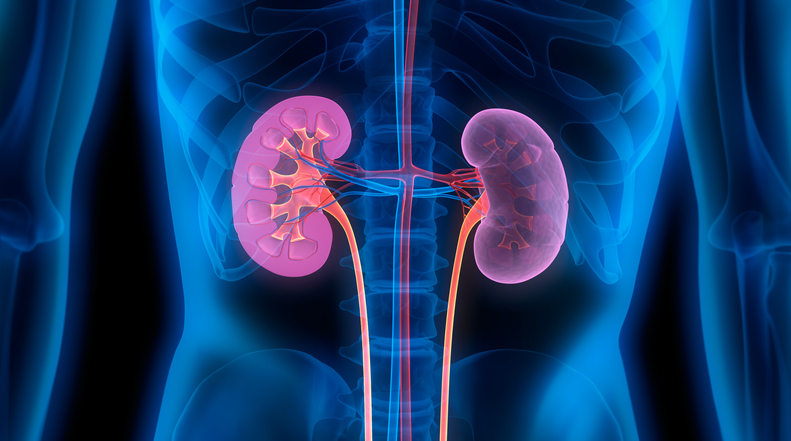
This is because they can prevent further worsening of the kidney function. These medicines are called: Angiotensin-converting enzyme (ACE) inhibitors (for example, captopril, enalapril, ramipril, lisinopril); and Angiotensin receptor blockers (ARBs), such as losartan, valsartan, candesartan, telmisartan). SGLT2 inhibitors. A group of medicines.

Patient information leaflet
Colesterolo alto
Colesterolo is a fat chemical (lipid) that is made in the cells in your body. Many different cells make cholesterol but cells in the liver make about a quarter of the total. You need some cholesterol to keep healthy. What is high cholesterol. High cholesterol refers to elevated levels of cholesterol in the blood. If your cholesterol levels are.

Patient information leaflet
Sindrome nefrosica
Nephrotic syndrome is a condition where the 'filters' in the kidney become 'leaky' and large amounts of proteine leak from the blood into the urine. The main symptom is fluid retention (oedema) which is mainly due to the low protein level in the blood. Various diseases can cause nephrotic syndrome, some more serious than others. Treatment and.

Patient information leaflet
Malattia renale diabetica
Che cos'è diabetica kidney disease. Diabetic kidney disease (diabetic nephropathy) is a complication that occurs in some people with diabetes. Diabetic kidney disease is one of the causes of chronic kidney disease , a long-term condition where the kidneys do not work as well as they should. In diabetic kidney disease, the filters of the kidneys, the.

Patient information leaflet
Beta-bloccanti
Beta-bloccanti are medicines that are used to treat a variety of conditions. Their full correct name is beta-adrenoceptor blocking medicines (or beta-adrenergic blocking agents), but they are commonly just called beta-blockers. How do beta-blockers work. Beta-blockers work by blocking the transmission of certain nerve impulses. The ends of some.
Ulteriori letture e riferimenti
- LDL receptor related protein 5; MedlinePlus, National Library of Medicine.
- Ai M, Heeger S, Bartels CF, Schelling DK; Osteoporosis-Pseudoglioma Collaborative Group. Clinical and molecular findings in osteoporosis-pseudoglioma syndrome. Am J Hum Genet. 2005 Nov;77(5):741-53. doi: 10.1086/497706. Epub 2005 Sep 27.
- Balemans W, Van Hul W. The genetics of low-density lipoprotein receptor-related protein 5 in bone: a story of extremes. Endocrinology. 2007 Jun;148(6):2622-9. doi: 10.1210/en.2006-1352. Epub 2007 Mar 29.
- Boyden LM, Mao J, Belsky J, Mitzner L, Farhi A, Mitnick MA, Wu D, Insogna K, Lifton RP. High bone density due to a mutation in LDL-receptor-related protein 5. N Engl J Med. 2002 May 16;346(20):1513-21. doi: 10.1056/NEJMoa013444.
- Gong Y, Slee RB, Fukai N, Rawadi G, Roman-Roman S, Reginato AM, Wang H, Cundy T, Glorieux FH, Lev D, Zacharin M, Oexle K, Marcelino J, Suwairi W, Heeger S, Sabatakos G, Apte S, Adkins WN, Allgrove J, Arslan-Kirchner M, Batch JA, Beighton P, Black GC, Boles RG, Boon LM, Borrone C, Brunner HG, Carle GF, Dallapiccola B, De Paepe A, Floege B, Halfhide ML, Hall B, Hennekam RC, Hirose T, Jans A, Juppner H, Kim CA, Keppler-Noreuil K, Kohlschuetter A, LaCombe D, Lambert M, Lemyre E, Letteboer T, Peltonen L, Ramesar RS, Romanengo M, Somer H, Steichen-Gersdorf E, Steinmann B, Sullivan B, Superti-Furga A, Swoboda W, van den Boogaard MJ, Van Hul W, Vikkula M, Votruba M, Zabel B, Garcia T, Baron R, Olsen BR, Warman ML; Osteoporosis-Pseudoglioma Syndrome Collaborative Group. LDL receptor-related protein 5 (LRP5) affects bone accrual and eye development. Cell. 2001 Nov 16;107(4):513-23. doi: 10.1016/s0092-8674(01)00571-2.
- Hartikka H, Makitie O, Mannikko M, Doria AS, Daneman A, Cole WG, Ala-Kokko L, Sochett EB. Heterozygous mutations in the LDL receptor-related protein 5 (LRP5) gene are associated with primary osteoporosis in children. J Bone Miner Res. 2005 May;20(5):783-9. doi: 10.1359/JBMR.050101. Epub 2005 Jan 4.
- He X, Semenov M, Tamai K, Zeng X. LDL receptor-related proteins 5 and 6 in Wnt/beta-catenin signaling: arrows point the way. Development. 2004 Apr;131(8):1663-77. doi: 10.1242/dev.01117.
- Korvala J, Juppner H, Makitie O, Sochett E, Schnabel D, Mora S, Bartels CF, Warman ML, Deraska D, Cole WG, Hartikka H, Ala-Kokko L, Mannikko M. Mutations in LRP5 cause primary osteoporosis without features of OI by reducing Wnt signaling activity. BMC Med Genet. 2012 Apr 10;13:26. doi: 10.1186/1471-2350-13-26.
- Levasseur R, Lacombe D, de Vernejoul MC. LRP5 mutations in osteoporosis-pseudoglioma syndrome and high-bone-mass disorders. Joint Bone Spine. 2005 May;72(3):207-14. doi: 10.1016/j.jbspin.2004.10.008.
- Little RD, Carulli JP, Del Mastro RG, Dupuis J, Osborne M, Folz C, Manning SP, Swain PM, Zhao SC, Eustace B, Lappe MM, Spitzer L, Zweier S, Braunschweiger K, Benchekroun Y, Hu X, Adair R, Chee L, FitzGerald MG, Tulig C, Caruso A, Tzellas N, Bawa A, Franklin B, McGuire S, Nogues X, Gong G, Allen KM, Anisowicz A, Morales AJ, Lomedico PT, Recker SM, Van Eerdewegh P, Recker RR, Johnson ML. A mutation in the LDL receptor-related protein 5 gene results in the autosomal dominant high-bone-mass trait. Am J Hum Genet. 2002 Jan;70(1):11-9. doi: 10.1086/338450. Epub 2001 Dec 3.
- Mizuguchi T, Furuta I, Watanabe Y, Tsukamoto K, Tomita H, Tsujihata M, Ohta T, Kishino T, Matsumoto N, Minakami H, Niikawa N, Yoshiura KI. LRP5, low-density-lipoprotein-receptor-related protein 5, is a determinant for bone mineral density. J Hum Genet. 2004;49(2):80-86. doi: 10.1007/s10038-003-0111-6. Epub 2004 Jan 15.
- Qin M, Hayashi H, Oshima K, Tahira T, Hayashi K, Kondo H. Complexity of the genotype-phenotype correlation in familial exudative vitreoretinopathy with mutations in the LRP5 and/or FZD4 genes. Hum Mutat. 2005 Aug;26(2):104-12. doi: 10.1002/humu.20191.
- Qin M, Kondo H, Tahira T, Hayashi K. Moderate reduction of Norrin signaling activity associated with the causative missense mutations identified in patients with familial exudative vitreoretinopathy. Hum Genet. 2008 Jan;122(6):615-23. doi: 10.1007/s00439-007-0438-8. Epub 2007 Oct 23.
- Toomes C, Bottomley HM, Jackson RM, Towns KV, Scott S, Mackey DA, Craig JE, Jiang L, Yang Z, Trembath R, Woodruff G, Gregory-Evans CY, Gregory-Evans K, Parker MJ, Black GC, Downey LM, Zhang K, Inglehearn CF. Mutations in LRP5 or FZD4 underlie the common familial exudative vitreoretinopathy locus on chromosome 11q. Am J Hum Genet. 2004 Apr;74(4):721-30. doi: 10.1086/383202. Epub 2004 Mar 11.
- van Meurs JB, Trikalinos TA, Ralston SH, Balcells S, Brandi ML, Brixen K, Kiel DP, Langdahl BL, Lips P, Ljunggren O, Lorenc R, Obermayer-Pietsch B, Ohlsson C, Pettersson U, Reid DM, Rousseau F, Scollen S, Van Hul W, Agueda L, Akesson K, Benevolenskaya LI, Ferrari SL, Hallmans G, Hofman A, Husted LB, Kruk M, Kaptoge S, Karasik D, Karlsson MK, Lorentzon M, Masi L, McGuigan FE, Mellstrom D, Mosekilde L, Nogues X, Pols HA, Reeve J, Renner W, Rivadeneira F, van Schoor NM, Weber K, Ioannidis JP, Uitterlinden AG; GENOMOS Study. Large-scale analysis of association between LRP5 and LRP6 variants and osteoporosis. JAMA. 2008 Mar 19;299(11):1277-90. doi: 10.1001/jama.299.11.1277.
- Van Wesenbeeck L, Cleiren E, Gram J, Beals RK, Benichou O, Scopelliti D, Key L, Renton T, Bartels C, Gong Y, Warman ML, De Vernejoul MC, Bollerslev J, Van Hul W. Six novel missense mutations in the LDL receptor-related protein 5 (LRP5) gene in different conditions with an increased bone density. Am J Hum Genet. 2003 Mar;72(3):763-71. doi: 10.1086/368277. Epub 2003 Feb 10.
Partecipa alla conversazione
Condividi i tuoi pensieri o esperienze con gli altri nel nostro comunità di pazienti.

Chiedi, condividi, connettiti.
Esplora le discussioni, fai domande e condividi esperienze su centinaia di argomenti di salute.
Iscriviti alla newsletter di Patient
La tua dose settimanale di consigli sulla salute chiari e affidabili - scritti per aiutarti a sentirti informato, sicuro e in controllo.
Abbonandoti accetti i nostri Informativa sulla Privacy. Puoi annullare l'iscrizione in qualsiasi momento. Non vendiamo mai i tuoi dati.