fragile X messenger ribonucleoprotein 1
Ultimo aggiornamento 11 Apr 2023
Rispetta le linee guida editoriali
- ScaricaScarica
- Condividi
- Language
- Discussione
- Ask Patient
- Versione audio
- Aggiungi alle fonti preferite su Google
L FMR1 gene provides instructions for making a protein called FMRP. This protein is present in many tissues, including the brain, testes, and ovaries. In the brain, it may play a role in the development of connections between nerve cells (synapses), where cell-to-cell communication occurs. The synapses can change and adapt over time in response to experience (a characteristic called synaptic plasticity). FMRP may help regulate synaptic plasticity, which is important for learning and memory. The protein's role in the testes and ovaries is not well understood.
Scelte video per GenesVideo library
Normal function
L FMR1 gene provides instructions for making a protein called FMRP. This protein is present in many tissues, including the brain, testes, and ovaries. In the brain, it may play a role in the development of connections between nerve cells (synapses), where cell-to-cell communication occurs. The synapses can change and adapt over time in response to experience (a characteristic called synaptic plasticity). FMRP may help regulate synaptic plasticity, which is important for learning and memory. The protein's role in the testes and ovaries is not well understood.
Researchers believe that FMRP acts as a shuttle within cells by transporting molecules called messenger RNA (mRNA), which serve as the genetic blueprint for making proteins. FMRP likely carries mRNA molecules from the nucleus to areas of the cell where proteins are assembled. FMRP also helps control when the instructions in these mRNA molecules are used to build proteins, some of which may be important for functioning of the nerves, testes, or ovaries.
One region of the FMR1 gene contains a particular DNA segment known as a CGG trinucleotide repeat, so called because this segment of three DNA building blocks (nucleotides) is repeated multiple times within the gene. In most people, the number of CGG repeats ranges from fewer than 10 to about 40. This CGG repeat segment is typically interrupted several times by a different three-base sequence, AGG. Having AGG scattered among the CGG triplets appears to help stabilize the long repeated segment.
Conditions referring to this gene or chromosome
Altri nomi
FMR1_HUMAN
FMRP
FRAXA
Protein FMR-1
Related patient information and medicines

Patient information leaflet
Pianificare una gravidanza
Congenital adrenal hyperplasia Spinal muscular atrophy. Duchenne muscular dystrophy. Duchenne muscular dystrophy Fragile X syndrome. Haemophilias A and B. Glucose-6-phosphate dehydrogenase deficiency. Other medical conditions Other conditions for which it is best to see a doctor before becoming pregnant include: Thyroid problems - an underactive.
Patient information leaflet
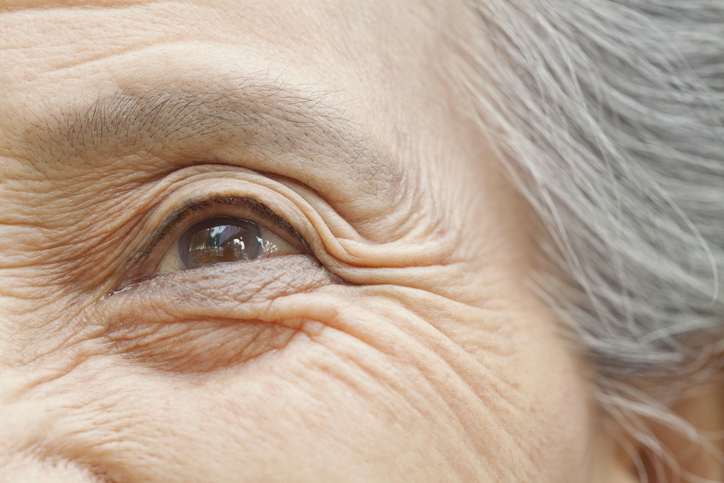
Degenerazione maculare
Wet macular degeneration Wet AMD may also be called neovascular or exudative AMD. It occurs in about 1 in 10 cases. In wet AMD, in addition to the retinal pigment cells degenerating, fragile new blood vessels grow from the tiny blood vessels in the choroid into the macular part of the retina. These vessels tend to leak blood and fluid. This can.

Patient information leaflet
Deficit di alfa-1 antitripsina
If... A1AT helps to balance the protease enzymes in the lungs and stop lung damage. What is alpha-1 antitrypsin deficiency. A1AT deficiency è an inherited genetic condition. A genetic condition is one that can be passed on from parents through genes. It was first described in 1963 by Dr Sten Eriksson, a Danish doctor. In the centre (nucleus) of.

Patient information leaflet
Posso prendere il cohosh nero e la solifenacina insieme?
Taking black cohosh and solifenacin together may increase dello risk of side effects such as a dry mouth, blurred vision, constipation, or feeling overheated. There is also a small possibility that black cohosh could affect how your liver breaks down solifenacin, potentially leading to higher levels of the medicine in your body. Disclaimer This.

Patient information leaflet
Emorragia vitreale
Vitreous haemorrhage occurs when blood leaks into the vitreous humour inside the eyeThe leaked blood most commonly comes from blood vessels at the back of the eye (retinal blood vessels). This is more likely to happen if the blood vessels have been damaged (eg, by trauma) or are particularly fragile (because of eye malattia related to diabetes.
Patient information leaflet
Malattia oculare tiroidea
It is usually (but not always) associated with an overactive thyroid gland (hyperthyroidism) - and most often with one particular cause of an overactive thyroid gland, malattia di Graves (Graves ophthalmology disease). See the separate leaflet called Overactive thyroid gland (Hyperthyroidism) Overactive thyroid gland. Normal eye with muscles Normal.
Ulteriori letture e riferimenti
- fragile X messenger ribonucleoprotein 1; MedlinePlus, National Library of Medicine.
- Bretherick KL, Fluker MR, Robinson WP. FMR1 repeat sizes in the gray zone and high end of the normal range are associated with premature ovarian failure. Hum Genet. 2005 Aug;117(4):376-82. doi: 10.1007/s00439-005-1326-8. Epub 2005 Jun 2.
- Hagerman R, Hagerman P. Advances in clinical and molecular understanding of the FMR1 premutation and fragile X-associated tremor/ataxia syndrome. Lancet Neurol. 2013 Aug;12(8):786-98. doi: 10.1016/S1474-4422(13)70125-X.
- Hagerman RJ, Berry-Kravis E, Hazlett HC, Bailey DB Jr, Moine H, Kooy RF, Tassone F, Gantois I, Sonenberg N, Mandel JL, Hagerman PJ. Fragile X syndrome. Nat Rev Dis Primers. 2017 Sep 29;3:17065. doi: 10.1038/nrdp.2017.65.
- Hagerman RJ, Protic D, Rajaratnam A, Salcedo-Arellano MJ, Aydin EY, Schneider A. Fragile X-Associated Neuropsychiatric Disorders (FXAND). Front Psychiatry. 2018 Nov 13;9:564. doi: 10.3389/fpsyt.2018.00564. eCollection 2018.
- Hessl D, Wang JM, Schneider A, Koldewyn K, Le L, Iwahashi C, Cheung K, Tassone F, Hagerman PJ, Rivera SM. Decreased fragile X mental retardation protein expression underlies amygdala dysfunction in carriers of the fragile X premutation. Biol Psychiatry. 2011 Nov 1;70(9):859-65. doi: 10.1016/j.biopsych.2011.05.033. Epub 2011 Jul 23.
- Hunsaker MR, Greco CM, Spath MA, Smits AP, Navarro CS, Tassone F, Kros JM, Severijnen LA, Berry-Kravis EM, Berman RF, Hagerman PJ, Willemsen R, Hagerman RJ, Hukema RK. Widespread non-central nervous system organ pathology in fragile X premutation carriers with fragile X-associated tremor/ataxia syndrome and CGG knock-in mice. Acta Neuropathol. 2011 Oct;122(4):467-79. doi: 10.1007/s00401-011-0860-9. Epub 2011 Jul 23.
- Hunter JE, Berry-Kravis E, Hipp H, Todd PK. FMR1 Disorders. 1998 Jun 16 [updated 2024 May 16]. In: Adam MP, Bick S, Mirzaa GM, Wallace SE, Amemiya A, editors. GeneReviews(R) [Internet]. Seattle (WA): University of Washington, Seattle; 1993-2026. Available from http://www.ncbi.nlm.nih.gov/books/NBK1384/
- Jacquemont S, Hagerman RJ, Leehey MA, Hall DA, Levine RA, Brunberg JA, Zhang L, Jardini T, Gane LW, Harris SW, Herman K, Grigsby J, Greco CM, Berry-Kravis E, Tassone F, Hagerman PJ. Penetrance of the fragile X-associated tremor/ataxia syndrome in a premutation carrier population. JAMA. 2004 Jan 28;291(4):460-9. doi: 10.1001/jama.291.4.460.
- Kim K, Hessl D, Randol JL, Espinal GM, Schneider A, Protic D, Aydin EY, Hagerman RJ, Hagerman PJ. Association between IQ and FMR1 protein (FMRP) across the spectrum of CGG repeat expansions. PLoS One. 2019 Dec 31;14(12):e0226811. doi: 10.1371/journal.pone.0226811. eCollection 2019.
- Li Y, Jin P. RNA-mediated neurodegeneration in fragile X-associated tremor/ataxia syndrome. Brain Res. 2012 Jun 26;1462:112-7. doi: 10.1016/j.brainres.2012.02.057. Epub 2012 Mar 9.
- Ma L, Herren AW, Espinal G, Randol J, McLaughlin B, Martinez-Cerdeno V, Pessah IN, Hagerman RJ, Hagerman PJ. Composition of the Intranuclear Inclusions of Fragile X-associated Tremor/Ataxia Syndrome. Acta Neuropathol Commun. 2019 Sep 3;7(1):143. doi: 10.1186/s40478-019-0796-1.
- Tassone F, Beilina A, Carosi C, Albertosi S, Bagni C, Li L, Glover K, Bentley D, Hagerman PJ. Elevated FMR1 mRNA in premutation carriers is due to increased transcription. RNA. 2007 Apr;13(4):555-62. doi: 10.1261/rna.280807. Epub 2007 Feb 5.
- Todd PK, Oh SY, Krans A, He F, Sellier C, Frazer M, Renoux AJ, Chen KC, Scaglione KM, Basrur V, Elenitoba-Johnson K, Vonsattel JP, Louis ED, Sutton MA, Taylor JP, Mills RE, Charlet-Berguerand N, Paulson HL. CGG repeat-associated translation mediates neurodegeneration in fragile X tremor ataxia syndrome. Neuron. 2013 May 8;78(3):440-55. doi: 10.1016/j.neuron.2013.03.026. Epub 2013 Apr 18.
- Wang JY, Hessl D, Hagerman RJ, Simon TJ, Tassone F, Ferrer E, Rivera SM. Abnormal trajectories in cerebellum and brainstem volumes in carriers of the fragile X premutation. Neurobiol Aging. 2017 Jul;55:11-19. doi: 10.1016/j.neurobiolaging.2017.03.018. Epub 2017 Mar 18.
- Wheeler A, Raspa M, Hagerman R, Mailick M, Riley C. Implications of the FMR1 Premutation for Children, Adolescents, Adults, and Their Families. Pediatrics. 2017 Jun;139(Suppl 3):S172-S182. doi: 10.1542/peds.2016-1159D.
- Wittenberger MD, Hagerman RJ, Sherman SL, McConkie-Rosell A, Welt CK, Rebar RW, Corrigan EC, Simpson JL, Nelson LM. The FMR1 premutation and reproduction. Fertil Steril. 2007 Mar;87(3):456-65. doi: 10.1016/j.fertnstert.2006.09.004. Epub 2006 Oct 30.
Condividi i tuoi pensieri o esperienze con gli altri nel nostro comunità di pazienti.
Accesso semplice a trattamenti affidabili e servizi sanitari online.
Common conditions
Get help with common conditions through the NHS, without a GP appointment.
 Sinusite acuta
 Tonsillite batterica
 Impetigine
 Punture di insetti
 Fuoco di Sant'AntonioInfezioni delle vie urinarie (IVU)
Iscriviti alla newsletter di Patient
La tua dose settimanale di consigli sulla salute chiari e affidabili - scritti per aiutarti a sentirti informato, sicuro e in controllo.
Abbonandoti accetti i nostri Informativa sulla Privacy. Puoi annullare l'iscrizione in qualsiasi momento. Non vendiamo mai i tuoi dati.