Pelizaeus-Merzbacher-like disease type 1
Ultimo aggiornamento 18 Ago 2020
Rispetta le linee guida editoriali
- ScaricaScarica
- Condividi
- Language
- Discussione
- Ask Patient
- Versione audio
- Aggiungi alle fonti preferite su Google
Pelizaeus-Merzbacher-like disease type 1 is an inherited condition involving the brain and spinal cord (central nervous system). This disease is one of a group of genetic disorders called leukodystrophies. Leukodystrophies are abnormalities of the nervous system's white matter, which consists of nerve fibers covered by a fatty substance called myelin. Myelin insulates nerve fibers and promotes the rapid transmission of nerve impulses. In particular, Pelizaeus-Merzbacher-like disease type 1 involves hypomyelination, which means that the nervous system has a reduced ability to form myelin. The signs and symptoms of this condition are very similar to another leukodystrophy called Pelizaeus-Merzbacher disease, but the two disorders have different genetic causes.
Scelte video per Condizioni geneticheVideo library
Descrizione
Pelizaeus-Merzbacher-like disease type 1 is an inherited condition involving the brain and spinal cord (central nervous system). This disease is one of a group of genetic disorders called leukodystrophies. Leukodystrophies are abnormalities of the nervous system's white matter, which consists of nerve fibers covered by a fatty substance called myelin. Myelin insulates nerve fibers and promotes the rapid transmission of nerve impulses. In particular, Pelizaeus-Merzbacher-like disease type 1 involves hypomyelination, which means that the nervous system has a reduced ability to form myelin. The signs and symptoms of this condition are very similar to another leukodystrophy called Pelizaeus-Merzbacher disease, but the two disorders have different genetic causes.
Beginning in the first few months of life, infants with Pelizaeus-Merzbacher-like disease type 1 typically experience weak muscle tone (hypotonia), involuntary movements of the eyes (nystagmus), and delayed development of speech and motor skills, such as sitting or grasping objects. As children with Pelizaeus-Merzbacher-like disease type 1 get older, hypotonia changes to muscle stiffness (spasticity).
During childhood, individuals with Pelizaeus-Merzbacher-like disease type 1 develop problems with movement and balance (ataxia), difficulty with movements that involve judging distance or scale (dysmetria), tremors that occur mainly during movement (intention tremors), and head and neck tremors (titubation). People with this condition have an inability to perform quick, alternating movements (dysdiadochokinesia), such as quickly tapping different fingers. Some develop involuntary tensing of the muscles (dystonia) and jerking (choreiform) movements. Many people with Pelizaeus-Merzbacher-like disease type 1 develop skeletal issues such as an abnormal curvature of the spine (scoliosis) and require wheelchair assistance from childhood.
Muscle abnormalities can lead to difficulty swallowing and problems producing speech (expressive language), but affected individuals can understand speech (receptive language). Most individuals with Pelizaeus-Merzbacher-like disease type 1 have normal intelligence. Rarely, hearing loss, optic atrophy, and recurrent seizures (epilepsy) can occur.
Modelli di ereditarietà
The source lists the following possible inheritance patterns: Autosomal recessive. More than one pattern can apply in different cases.
Related genes
Altri nomi
HLD2
Hypomyelinating leukodystrophy 2
Pelizaeus Merzbacher like disease
Pelizaeus-Merzbacher-like disease
PMLD - Pelizaeus Merzbacher like disease
PMLD1
Related patient information and medicines

Patient information leaflet
Diabete di tipo 1
Diabete di tipo 1 è the type of diabetes that typically develops in children and in young adults. In type 1 diabetes the body stops making insulin and the blood sugar (glucose) level goes very high. What is type 1 diabetes. What is type 1 diabetes. Dr Parta Kar Type 1 diabetes is the type of diabetes that typically develops in children and in young.

Patient information leaflet
Malattie correlate all'amianto
People exposed to asbestos can develop diseases in later life. These most commonly affect the lungs but can also affect the lining of the tummy (abdomen). Some conditions - for example, mesothelioma or lung cancer - are more serious than others. This leaflet gives a brief overview of the diseases that are related to having an exposure to asbestos.

Patient information leaflet
Nefropatia da IgA
Nefropatia da IgA is a condition in which a protein causes damage to the kidneys. The protein is called immunoglobulin A or IgA. Nephropathy means an illness that damages the kidney. The main job of the kidneys is to clear waste materials from the body and maintain a normal balance of fluids and chemicals in the body. IgA nephropathy may contin....

Patient information leaflet
Malattia celiaca
Malattia celiaca (also spelled celiac disease) mainly affects the part of the gut called the small intestine. Coeliac disease is caused by a reaction of the gut to gluten. (For this reason it is sometimes also called g... In an autoimmune disease, the immune system mistakes part or parts of the body as foreign. Other autoimmune diseases include.

Patient information leaflet
Tipi di cancro
There are more than 100 different types of cancer. ...er/types-of-cancer) Follow Patient: Website: [/](https://patient.info/) Facebook: [https://www.facebook.com/patient](https://www.facebook.com/patient) Twitter: [https://twitter.com/patient](https://twitter.com/patient) Pinterest:.
Patient information leaflet
Tipi di convulsioni
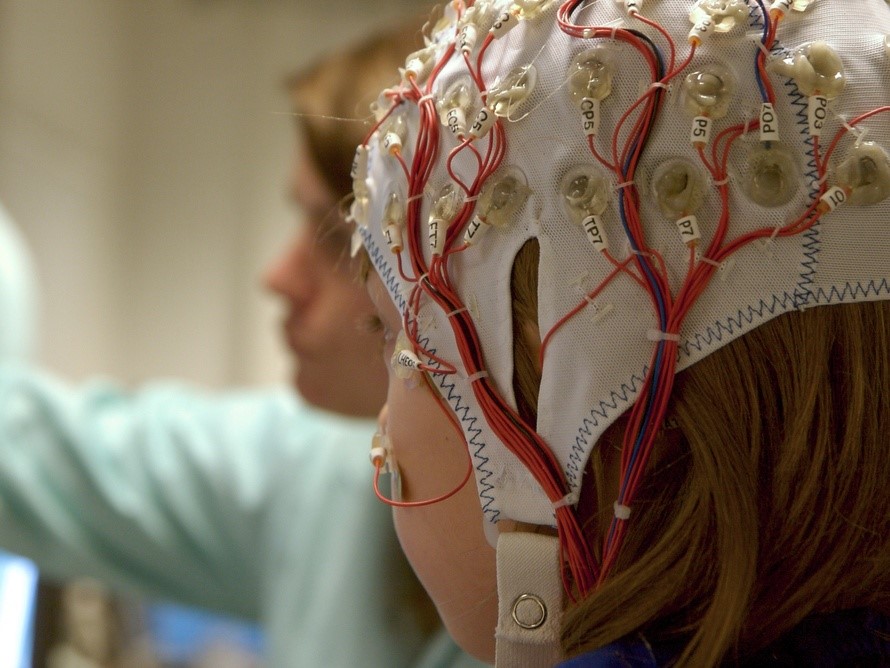
A seizure è a condition caused by a sudden bur. There are different types of seizures. This leaflet gives some information about what your doctor may wish to know and what tests may be advised after such an event. What is a seizure. A seizure is a short episode of symptoms caused by a burst of abnormal electrical activity in the brain. Typically,.
Ulteriori letture e riferimenti
- Pelizaeus-Merzbacher-like disease type 1; MedlinePlus, National Library of Medicine.
- Hobson GM, Garbern JY. Pelizaeus-Merzbacher disease, Pelizaeus-Merzbacher-like disease 1, and related hypomyelinating disorders. Semin Neurol. 2012 Feb;32(1):62-7. doi: 10.1055/s-0032-1306388. Epub 2012 Mar 15.
- Ji H, Li D, Wu Y, Zhang Q, Gu Q, Xie H, Ji T, Wang H, Zhao L, Zhao H, Yang Y, Feng H, Xiong H, Ji J, Yang Z, Kou L, Li M, Bao X, Chang X, Zhang Y, Li L, Li H, Niu Z, Wu X, Xiao J, Jiang Y, Wang J. Hypomyelinating disorders in China: The clinical and genetic heterogeneity in 119 patients. PLoS One. 2018 Feb 16;13(2):e0188869. doi: 10.1371/journal.pone.0188869. eCollection 2018.
- Nahhas N, Conant A, Orthmann-Murphy J, Vanderver A, Hobson G. Pelizaeus-Merzbacher-Like Disease 1. 2017 Dec 21 [updated 2019 Jan 17]. In: Adam MP, Bick S, Mirzaa GM, Wallace SE, Amemiya A, editors. GeneReviews(R) [Internet]. Seattle (WA): University of Washington, Seattle; 1993-2026. Available from http://www.ncbi.nlm.nih.gov/books/NBK470716/
- Orthmann-Murphy JL, Freidin M, Fischer E, Scherer SS, Abrams CK. Two distinct heterotypic channels mediate gap junction coupling between astrocyte and oligodendrocyte connexins. J Neurosci. 2007 Dec 19;27(51):13949-57. doi: 10.1523/JNEUROSCI.3395-07.2007.
- Osaka H, Hamanoue H, Yamamoto R, Nezu A, Sasaki M, Saitsu H, Kurosawa K, Shimbo H, Matsumoto N, Inoue K. Disrupted SOX10 regulation of GJC2 transcription causes Pelizaeus-Merzbacher-like disease. Ann Neurol. 2010 Aug;68(2):250-4. doi: 10.1002/ana.22022.
Condividi i tuoi pensieri o esperienze con gli altri nel nostro comunità di pazienti.
Accesso semplice a trattamenti affidabili e servizi sanitari online.
Common conditions
Get help with common conditions through the NHS, without a GP appointment.
 Sinusite acuta
 Tonsillite batterica
 Impetigine
 Punture di insetti
 Fuoco di Sant'AntonioInfezioni delle vie urinarie (IVU)
Iscriviti alla newsletter di Patient
La tua dose settimanale di consigli sulla salute chiari e affidabili - scritti per aiutarti a sentirti informato, sicuro e in controllo.
Abbonandoti accetti i nostri Informativa sulla Privacy. Puoi annullare l'iscrizione in qualsiasi momento. Non vendiamo mai i tuoi dati.