Isolated growth hormone deficiency
Ultimo aggiornamento 18 Ago 2020
Rispetta le linee guida editoriali
- ScaricaScarica
- Condividi
- Language
- Discussione
- Ask Patient
- Versione audio
- Aggiungi alle fonti preferite su Google
Isolated growth hormone deficiency is a condition caused by a severe shortage or absence of growth hormone. Growth hormone is a protein that is necessary for the normal growth of the body's bones and tissues. Because they do not have enough of this hormone, people with isolated growth hormone deficiency commonly experience a failure to grow at the expected rate and have unusually short stature. This condition is usually apparent by early childhood.
Scelte video per Condizioni geneticheVideo library
Descrizione
Isolated growth hormone deficiency is a condition caused by a severe shortage or absence of growth hormone. Growth hormone is a protein that is necessary for the normal growth of the body's bones and tissues. Because they do not have enough of this hormone, people with isolated growth hormone deficiency commonly experience a failure to grow at the expected rate and have unusually short stature. This condition is usually apparent by early childhood.
There are four types of isolated growth hormone deficiency differentiated by the severity of the condition, the gene involved, and the inheritance pattern.
Isolated growth hormone deficiency type IA is caused by an absence of growth hormone and is the most severe of all the types. In people with type IA, growth failure is evident in infancy as affected babies are shorter than normal at birth.
People with isolated growth hormone deficiency type IB produce very low levels of growth hormone. As a result, type IB is characterised by short stature, but this growth failure is typically not as severe as in type IA. Growth failure in people with type IB is usually apparent in early to mid-childhood.
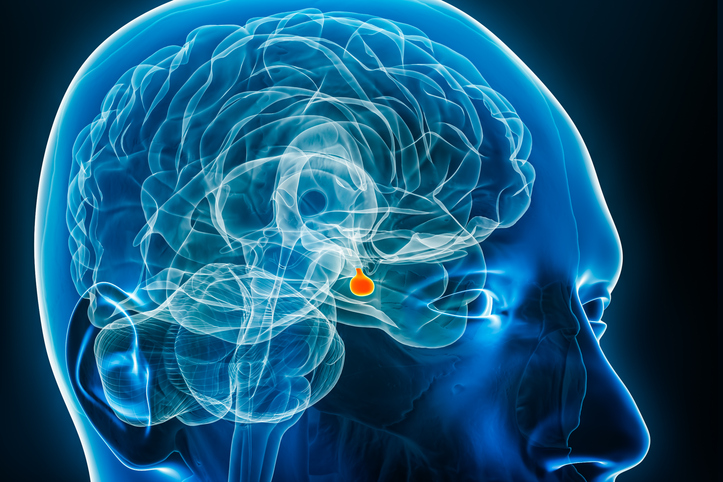
Individuals with isolated growth hormone deficiency type II have very low levels of growth hormone and short stature that varies in severity. Growth failure in these individuals is usually evident in early to mid-childhood. It is estimated that nearly half of the individuals with type II have underdevelopment of the pituitary gland (pituitary hypoplasia). The pituitary gland is located at the base of the brain and produces many hormones, including growth hormone.
Isolated growth hormone deficiency type III is similar to type II in that affected individuals have very low levels of growth hormone and short stature that varies in severity. Growth failure in type III is usually evident in early to mid-childhood. People with type III may also have a weakened immune system and are prone to frequent infections. They produce very few B cells, which are specialized white blood cells that help protect the body against infection (agammaglobulinemia).
Modelli di ereditarietà
The source lists the following possible inheritance patterns: Autosomal dominant; Autosomal recessive; X-linked recessive. More than one pattern can apply in different cases.
Related genes
Altri nomi
Dwarfism, growth hormone deficiency
Dwarfism, pituitary
Growth hormone deficiency dwarfism
Isolated GH deficiency
Isolated HGH deficiency
Isolated human growth hormone deficiency
Isolated somatotropin deficiency
Isolated somatotropin deficiency disorder
Related patient information and medicines
Patient information leaflet
Disturbi della ghiandola pituitaria
This leaflet gives a brief overview of the pituitary gland and the hormones it makes. The pituitary gland is found at the base of the brain and is 'pea-sized'. The pituitary gland is an overall controller of a number of other glands in the b... Acromegaly Cushing's syndrome. Cushing's syndrome Prolactinoma. Prolactinoma Conditions where the.

Patient information leaflet
Crescita limitata
Dwarfism is a medical or genetic condition which causes people to have restricted growth so that they are shorter than average. Disorders which affect ormoni (particularly growth hormone), major organs (for example, kidney diseases), bones or the body's general functioning (metabolism) can slow growth. ServiceUpsellPlaceholder Ho... Trattamento.

Patient information leaflet
Acromegalia
Acromegalia is a rare, progressive condition in which you make too much growth hormone. This causes a range of symptoms that develop gradually, often over several years. The most noticeable symptoms are that your hands and feet become larger and features of your face may become more prominent. The cause is usually a small non-cancerous growth.

Patient information leaflet
Prolattinoma
A prolactinoma is a non-cancerous growth in the pituitary gland that makes a hormone called prolactin. Tucked away deep inside your brain is a gland called your pituitary gland. What is a prolactinoma. Location of pituitary gland Prolactinoma: The pituitary A prolactinoma occurs when some of the cells in the pituitary gland (the ones producing.

Patient information leaflet
Adrenarca
This leaflet was originally provided by Miriam Leach (written when a 4th year MB ChB student at Manchester University), used here with permission. What is adrenarche. Adrenarca (ad-ren-ar-ke) is known to be an ordinary bodily process that happens to boys and girls as they begin to make the transition to being a teenager. When does adrenarche.

Patient information leaflet
Fibromi
A fibroid is a non-cancerous (benign) growth of the womb (uterus). They are also called uterine myomas, fibromyomas or leiomyomas. Their size can vary. Some are the same size as a pea and some can be as big as a melon. Subserous fibroids These grow from the outside wall of the uterus (womb) into the pelvis. Submucous fibroids Subserosal fibroids.
Ulteriori letture e riferimenti
- Isolated growth hormone deficiency; MedlinePlus, National Library of Medicine.
- Alatzoglou KS, Dattani MT. Genetic causes and treatment of isolated growth hormone deficiency-an update. Nat Rev Endocrinol. 2010 Oct;6(10):562-76. doi: 10.1038/nrendo.2010.147.
- Alatzoglou KS, Turton JP, Kelberman D, Clayton PE, Mehta A, Buchanan C, Aylwin S, Crowne EC, Christesen HT, Hertel NT, Trainer PJ, Savage MO, Raza J, Banerjee K, Sinha SK, Ten S, Mushtaq T, Brauner R, Cheetham TD, Hindmarsh PC, Mullis PE, Dattani MT. Expanding the spectrum of mutations in GH1 and GHRHR: genetic screening in a large cohort of patients with congenital isolated growth hormone deficiency. J Clin Endocrinol Metab. 2009 Sep;94(9):3191-9. doi: 10.1210/jc.2008-2783. Epub 2009 Jun 30.
- Hamid R, Phillips JA 3rd, Holladay C, Cogan JD, Austin ED, Backeljauw PF, Travers SH, Patton JG. A molecular basis for variation in clinical severity of isolated growth hormone deficiency type II. J Clin Endocrinol Metab. 2009 Dec;94(12):4728-34. doi: 10.1210/jc.2009-0746. Epub 2009 Oct 16.
- Mullis PE. Genetic control of growth. Eur J Endocrinol. 2005 Jan;152(1):11-31. doi: 10.1530/eje.1.01797.
- Mullis PE. Genetics of isolated growth hormone deficiency. J Clin Res Pediatr Endocrinol. 2010;2(2):52-62. doi: 10.4274/jcrpe.v2i2.52. Epub 2010 May 1.
- Seaver LH, Irons M; American College of Medical Genetics (ACMG) Professional Practice and Guidelines Committee. ACMG practice guideline: genetic evaluation of short stature. Genet Med. 2009 Jun;11(6):465-70. doi: 10.1097/GIM.0b013e3181a7e8f8.
- Wit JM, Kiess W, Mullis P. Genetic evaluation of short stature. Best Pract Res Clin Endocrinol Metab. 2011 Feb;25(1):1-17. doi: 10.1016/j.beem.2010.06.007.
Condividi i tuoi pensieri o esperienze con gli altri nel nostro comunità di pazienti.
Accesso semplice a trattamenti affidabili e servizi sanitari online.
Common conditions
Get help with common conditions through the NHS, without a GP appointment.
 Sinusite acuta
 Tonsillite batterica
 Impetigine
 Punture di insetti
 Fuoco di Sant'AntonioInfezioni delle vie urinarie (IVU)
Iscriviti alla newsletter di Patient
La tua dose settimanale di consigli sulla salute chiari e affidabili - scritti per aiutarti a sentirti informato, sicuro e in controllo.
Abbonandoti accetti i nostri Informativa sulla Privacy. Puoi annullare l'iscrizione in qualsiasi momento. Non vendiamo mai i tuoi dati.