CLN2 disease
Ultimo aggiornamento 18 Ago 2020
Rispetta le linee guida editoriali
- ScaricaScarica
- Condividi
- Language
- Discussione
- Ask Patient
- Versione audio
- Aggiungi alle fonti preferite su Google
CLN2 disease is an inherited disorder that primarily affects the nervous system. The signs and symptoms of this condition typically begin between ages 2 and 4. The initial features usually include recurrent seizures (epilepsy) and difficulty coordinating movements (ataxia). Affected children also develop muscle twitches (myoclonus) and vision loss. CLN2 disease affects motor skills, such as sitting and walking, and speech development. This condition also causes the loss of previously acquired skills (developmental regression), intellectual disability that gradually gets worse, and behavioural problems. Individuals with this condition often require the use of a wheelchair by late childhood and typically do not survive past their teens.
Scelte video per Condizioni geneticheVideo library
Descrizione
CLN2 disease is an inherited disorder that primarily affects the nervous system. The signs and symptoms of this condition typically begin between ages 2 and 4. The initial features usually include recurrent seizures (epilepsy) and difficulty coordinating movements (ataxia). Affected children also develop muscle twitches (myoclonus) and vision loss. CLN2 disease affects motor skills, such as sitting and walking, and speech development. This condition also causes the loss of previously acquired skills (developmental regression), intellectual disability that gradually gets worse, and behavioural problems. Individuals with this condition often require the use of a wheelchair by late childhood and typically do not survive past their teens.
Some children with CLN2 disease do not develop symptoms until later in childhood, typically after age 4. These individuals tend to have milder features overall compared to those diagnosed earlier, but with more severe ataxia. They have a shortened life expectancy, although they tend to survive into adulthood.
CLN2 disease is one of a group of disorders known as neuronal ceroid lipofuscinoses (NCLs), which may also be collectively referred to as Batten disease. All these disorders affect the nervous system and typically cause worsening problems with vision, movement, and thinking ability. The different NCLs are distinguished by their genetic cause. Each disease type is given the designation "CLN," meaning ceroid lipofuscinosis, neuronal, and then a number to indicate its subtype.
Modelli di ereditarietà
The source lists the following possible inheritance patterns: Autosomal recessive. More than one pattern can apply in different cases.
Related genes
Altri nomi
Jansky-Bielschowsky disease
Late-infantile Batten disease
Late-infantile neuronal ceroid lipofuscinosis
LINCL
Neuronal ceroid lipofuscinosis, late-infantile
Related patient information and medicines
Patient information leaflet
Malattia renale cronica
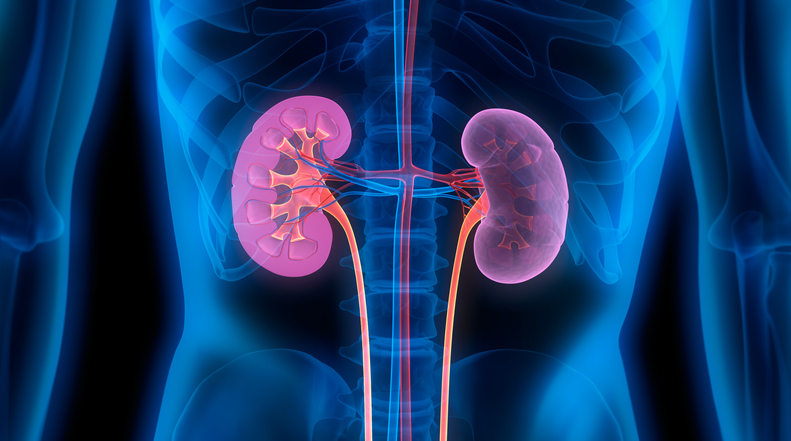
Chronic kidney disease means that the kidneys are not working as well as would be expected. Various conditions can cause chronic kidney disease. Severity can vary but most cases are mild or moderate, occur in older people and do not cause sy... What is chronic kidney disease. Chronic kidney disease (CKD) means that the kidneys are not working as.

Patient information leaflet
Valutazione del rischio per la salute cardiovascolare
A cardiovascular health risk assessment provides an accurate estimate of your risk of developing cardiovascular disease (eg, angina, heart attack, stroke or peripheral arterial disease) ov... Conditions that increase the risk of CVD include hypertension High blood pressure , diabetes mellitus Diabetes , chronic kidney disease Chronic kidney.

Patient information leaflet
Malattia renale diabetica
Malattia renale diabetica is a complication that occurs in some people with diabetes. Treatment aims to prevent or delay the progression of the disease. Diabetic kidney disease (diabetic nephropathy) is a complication that occurs in some people with diabetes. Diabetic kidney disease is one of the causes of chronic kidney disease Chronic kidney.

Patient information leaflet
morbo di Crohn
Crohn's disease is a condition that causes inflammation of the wall of the gut (gastrointestinal tract). Any part of the gut can be affected. What is Crohn's disease. Crohn's disease is a condition that causes inflammation of the wall of the gut (gastrointestinal tract). Any part of the gut can be affected. However, the most common site for the.

Patient information leaflet
Malattie correlate all'amianto
People exposed to asbestos can develop diseases in later life. These most commonly affect the lungs but can also affect the lining of the tummy (abdomen). Some conditions - for example, mesothelioma or lung cancer - are more serious than others. This leaflet gives a brief overview of the diseases that are related to having an exposure to asbestos.

Patient information leaflet
Malattie cardiache
The heart is a muscle pump located in the chest, which pumps blood around the body. It keeps pumping from a few weeks after conception until we die. There are a number of different conditions that can affect how the heart works. What is heart disease. There are many different conditions which can affect the heart, including those which affect the.
Ulteriori letture e riferimenti
- CLN2 disease; MedlinePlus, National Library of Medicine.
- Elleder M, Dvorakova L, Stolnaja L, Vlaskova H, Hulkova H, Druga R, Poupetova H, Kostalova E, Mikulastik J. Atypical CLN2 with later onset and prolonged course: a neuropathologic study showing different sensitivity of neuronal subpopulations to TPP1 deficiency. Acta Neuropathol. 2008 Jul;116(1):119-24. doi: 10.1007/s00401-008-0349-3. Epub 2008 Feb 19.
- Fietz M, AlSayed M, Burke D, Cohen-Pfeffer J, Cooper JD, Dvorakova L, Giugliani R, Izzo E, Jahnova H, Lukacs Z, Mole SE, Noher de Halac I, Pearce DA, Poupetova H, Schulz A, Specchio N, Xin W, Miller N. Diagnosis of neuronal ceroid lipofuscinosis type 2 (CLN2 disease): Expert recommendations for early detection and laboratory diagnosis. Mol Genet Metab. 2016 Sep;119(1-2):160-7. doi: 10.1016/j.ymgme.2016.07.011. Epub 2016 Jul 25.
- Getty AL, Pearce DA. Interactions of the proteins of neuronal ceroid lipofuscinosis: clues to function. Cell Mol Life Sci. 2011 Feb;68(3):453-74. doi: 10.1007/s00018-010-0468-6. Epub 2010 Aug 1.
- Kohan R, Carabelos MN, Xin W, Sims K, Guelbert N, Cismondi IA, Pons P, Alonso GI, Troncoso M, Witting S, Pearce DA, Dodelson de Kremer R, Oller-Ramirez AM, Noher de Halac I. Neuronal ceroid lipofuscinosis type CLN2: a new rationale for the construction of phenotypic subgroups based on a survey of 25 cases in South America. Gene. 2013 Mar 1;516(1):114-21. doi: 10.1016/j.gene.2012.12.058. Epub 2012 Dec 22.
- Moore SJ, Buckley DJ, MacMillan A, Marshall HD, Steele L, Ray PN, Nawaz Z, Baskin B, Frecker M, Carr SM, Ives E, Parfrey PS. The clinical and genetic epidemiology of neuronal ceroid lipofuscinosis in Newfoundland. Clin Genet. 2008 Sep;74(3):213-22. doi: 10.1111/j.1399-0004.2008.01054.x. Epub 2008 Aug 4.
- Schulz A, Kohlschutter A, Mink J, Simonati A, Williams R. NCL diseases - clinical perspectives. Biochim Biophys Acta. 2013 Nov;1832(11):1801-6. doi: 10.1016/j.bbadis.2013.04.008. Epub 2013 Apr 17.
- Sleat DE, Gin RM, Sohar I, Wisniewski K, Sklower-Brooks S, Pullarkat RK, Palmer DN, Lerner TJ, Boustany RM, Uldall P, Siakotos AN, Donnelly RJ, Lobel P. Mutational analysis of the defective protease in classic late-infantile neuronal ceroid lipofuscinosis, a neurodegenerative lysosomal storage disorder. Am J Hum Genet. 1999 Jun;64(6):1511-23. doi: 10.1086/302427.
Condividi i tuoi pensieri o esperienze con gli altri nel nostro comunità di pazienti.
Accesso semplice a trattamenti affidabili e servizi sanitari online.
Common conditions
Get help with common conditions through the NHS, without a GP appointment.
 Sinusite acuta
 Tonsillite batterica
 Impetigine
 Punture di insetti
 Fuoco di Sant'AntonioInfezioni delle vie urinarie (IVU)
Iscriviti alla newsletter di Patient
La tua dose settimanale di consigli sulla salute chiari e affidabili - scritti per aiutarti a sentirti informato, sicuro e in controllo.
Abbonandoti accetti i nostri Informativa sulla Privacy. Puoi annullare l'iscrizione in qualsiasi momento. Non vendiamo mai i tuoi dati.