Spastic paraplegia type 7
Ultimo aggiornamento 25 Jun 2021
Rispetta le linee guida editoriali
- ScaricaScarica
- Condividi
- Language
- Discussione
- Versione audio
- Aggiungi alle fonti preferite su Google
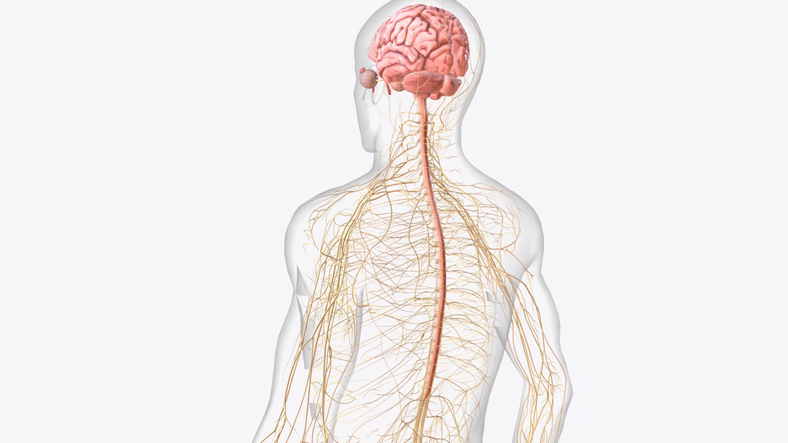
Spastic paraplegia type 7 (also called SPG7) is one of more than 80 genetic disorders known as hereditary spastic paraplegias. These disorders primarily affect the brain and spinal cord (central nervous system),specifically nerve cells (neurons) that extend down the spinal cord. These neurons are used for muscle movement and sensation.Signs and symptoms of hereditary spastic paraplegias are characterised by progressive muscle stiffness (spasticity) in the legs and difficulty walking.
Descrizione
Spastic paraplegia type 7 (also called SPG7) is one of more than 80 genetic disorders known as hereditary spastic paraplegias. These disorders primarily affect the brain and spinal cord (central nervous system),specifically nerve cells (neurons) that extend down the spinal cord. These neurons are used for muscle movement and sensation.Signs and symptoms of hereditary spastic paraplegias are characterised by progressive muscle stiffness (spasticity) in the legs and difficulty walking.
Hereditary spastic paraplegias are divided into two types: pure and complex. The pure types generally involve only spasticity of the lower limbs and walking difficulties. The complex types involve more widespread problems with the nervous system; the structure or functioning of the brain; and the nerves connecting the brain and spinal cord to muscles and sensory cells that detect sensations such as touch, pain, heat, and sound (the peripheral nervous system). In complex forms, there can also be features outside of the nervous system. Spastic paraplegia type 7 can occur in either the pure or complex form.
Like all hereditary spastic paraplegias, spastic paraplegia type 7 involves spasticity of the leg muscles and some muscle weakness. People with this form of spastic paraplegia can also have ataxia; a pattern of movement abnormalities known as parkinsonism; exaggerated reflexes (hyperreflexia) in the arms; speech difficulties (dysarthria); difficulty swallowing (dysphagia); involuntary movements of the eyes (nystagmus); mild hearing loss; abnormal curvature of the spine (scoliosis); high-arched feet (pes cavus); numbness, tingling, or pain in the arms and legs (sensory neuropathy); disturbance in the nerves used for muscle movement (motor neuropathy); and muscle wasting (amyotrophy). The onset of symptoms varies greatly among those with spastic paraplegia type 7; however, abnormalities in muscle tone and other features usually become noticeable in adulthood.
Modelli di ereditarietà
The source lists the following possible inheritance patterns: Autosomal recessive. More than one pattern can apply in different cases.
Related genes
Altri nomi
Hereditary spastic paraplegia, paraplegin type
Spastic paraplegia 7
Related patient information and medicines

Patient information leaflet
Paralisi cerebrale
Cerebral palsy is a problem with muscle function. A main aim of treatment for spastic cerebral palsy is to keep to a minimum the effects of t... Spastic cerebral palsy symptoms This type of cerebral palsy occurs in about 7 in 10 cases. There are different words that are used to describe types of spastic cerebral palsy. For example: Hemiplegia -.

Patient information leaflet
Danno ai nervi dopo iniezione epidurale
Nerve damage is a rare complication of spinal or epidural injection. In the majority of cases, a single nerve is affected, giving a numb area on the skin or limited muscle weakness. What is an epidural injection. An epidural injection is given into the space that surrounds your spinal cord (called the epidural space). A spinal injection is given.

Patient information leaflet
Sollievo dal dolore epidurale dopo l'intervento chirurgico
The content of this leaflet is used with the permission of the Royal College of Anaesthetists , the professional body responsible for the speciality throughout the UK, ensuring the quality of patient care through the maintenance of standards in anaesthesia, critical care and pain medicine. What is an epidural. Other complications Convulsions.

Patient information leaflet
Malattia ossea di Paget
Paget's disease of bone affects the structure of parts of one or more bones. In most cases it causes no symptoms and does not need treatment. Symptoms develop in some cases and pain in the affected part of bone... What is Paget's disease of bone. Paget's disease of bone was primo described by Sir James Paget in 1877. (It is a different condition.

Patient information leaflet
Rosolia infantile
Roseola is a viral infection. It is common and mainly affects young children between the ages of 6 months and 3 years. It is rare in adults, probably because childhood infection gives lifelong immunity to most people. It is usually caused by a virus called human herpesvirus type 6 (HHV-6). It may also be caused by human herpesvirus type 7 (HHV-7)..
Patient information leaflet
Malattia del motoneurone
Motore neurone disease (MND) is a neurological condition causes a progressive weakness and wasting of many of the muscles in the body. There are various types of motor neurone disease. This leaflet is mainly about amyotrophic lateral sclerosis (ALS), which is the most common type of motor neurone disease. Although there is no cure for motor neurone.
Ulteriori letture e riferimenti
- Spastic paraplegia type 7; MedlinePlus, National Library of Medicine.
- Atorino L, Silvestri L, Koppen M, Cassina L, Ballabio A, Marconi R, Langer T, Casari G. Loss of m-AAA protease in mitochondria causes complex I deficiency and increased sensitivity to oxidative stress in hereditary spastic paraplegia. J Cell Biol. 2003 Nov 24;163(4):777-87. doi: 10.1083/jcb.200304112. Epub 2003 Nov 17.
- Coarelli G, Schule R, van de Warrenburg BPC, De Jonghe P, Ewenczyk C, Martinuzzi A, Synofzik M, Hamer EG, Baets J, Anheim M, Schols L, Deconinck T, Masrori P, Fontaine B, Klockgether T, D'Angelo MG, Monin ML, De Bleecker J, Migeotte I, Charles P, Bassi MT, Klopstock T, Mochel F, Ollagnon-Roman E, D'Hooghe M, Kamm C, Kurzwelly D, Papin M, Davoine CS, Banneau G, Tezenas du Montcel S, Seilhean D, Brice A, Duyckaerts C, Stevanin G, Durr A. Loss of paraplegin drives spasticity rather than ataxia in a cohort of 241 patients with SPG7. Neurology. 2019 Jun 4;92(23):e2679-e2690. doi: 10.1212/WNL.0000000000007606. Epub 2019 May 8.
- Hewamadduma CA, Hoggard N, O'Malley R, Robinson MK, Beauchamp NJ, Segamogaite R, Martindale J, Rodgers T, Rao G, Sarrigiannis P, Shanmugarajah P, Zis P, Sharrack B, McDermott CJ, Shaw PJ, Hadjivassiliou M. Novel genotype-phenotype and MRI correlations in a large cohort of patients with SPG7 mutations. Neurol Genet. 2018 Oct 24;4(6):e279. doi: 10.1212/NXG.0000000000000279. eCollection 2018 Dec.
- Patron M, Sprenger HG, Langer T. m-AAA proteases, mitochondrial calcium homeostasis and neurodegeneration. Cell Res. 2018 Mar;28(3):296-306. doi: 10.1038/cr.2018.17. Epub 2018 Feb 16.
- SPG7 mutations are a common cause of undiagnosed ataxia. Neurology. 2015 May 5;84(18):1911. doi: 10.1212/WNL.0000000000001628. No abstract available.
- Wilkinson PA, Crosby AH, Turner C, Bradley LJ, Ginsberg L, Wood NW, Schapira AH, Warner TT. A clinical, genetic and biochemical study of SPG7 mutations in hereditary spastic paraplegia. Brain. 2004 May;127(Pt 5):973-80. doi: 10.1093/brain/awh125. Epub 2004 Feb 25.
Partecipa alla conversazione
Condividi i tuoi pensieri o esperienze con gli altri nel nostro comunità di pazienti.

Chiedi, condividi, connettiti.
Esplora le discussioni, fai domande e condividi esperienze su centinaia di argomenti di salute.
Iscriviti alla newsletter di Patient
La tua dose settimanale di consigli sulla salute chiari e affidabili - scritti per aiutarti a sentirti informato, sicuro e in controllo.
Abbonandoti accetti i nostri Informativa sulla Privacy. Puoi annullare l'iscrizione in qualsiasi momento. Non vendiamo mai i tuoi dati.